

Medical Disclaimer: This content is for educational purposes only. It is not medical advice. Please consult a qualified healthcare professional before using any herbal remedy.
Safety Overview
1.Dionaea Muscipula — Botanical Snapshot
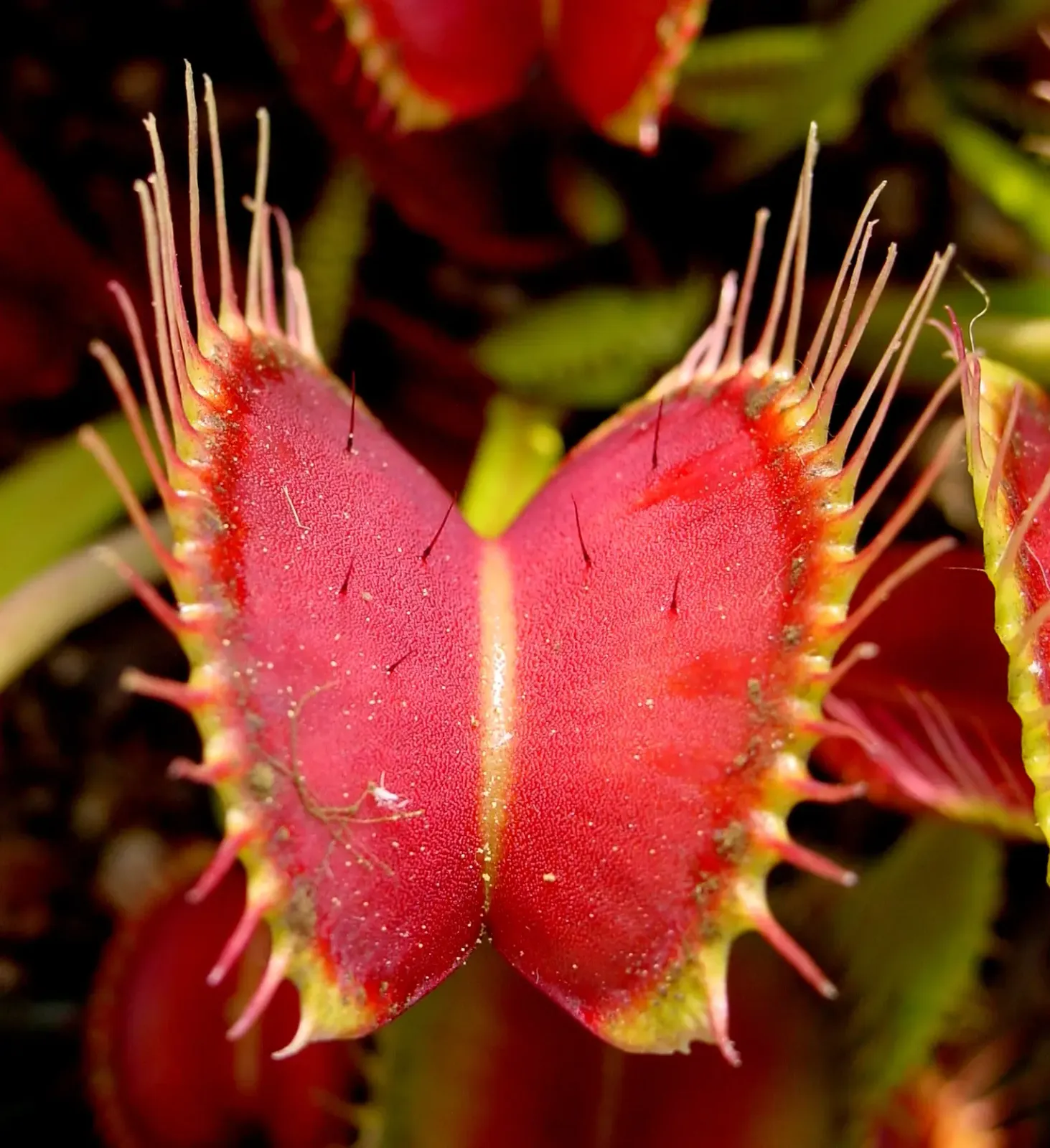
Dionaea muscipula, commonly known as the Venus flytrap, is a remarkable carnivorous plant distinguished by its unique trapping mechanism. It typically forms rosettes of specialized leaves that can reach lengths of up to 25 centimeters (10 inches), with the entire plant growing to about 15 centimeters (6 inches) in height.
Each leaf terminates in a distinctive trap comprising two hinged lobes, fringed with tooth-like cilia, which snap shut rapidly upon stimulation of sensitive trigger hairs located on their inner surfaces. This adaptation allows the plant to capture and digest insects and arachnids, supplementing nutrients from its impoverished natural habitat.
Small, white or pale pink flowers, measuring approximately 5-10 millimeters (0.2-0.4 inches) in diameter, are borne on elongated stalks that rise well above the foliage, typically blooming from late spring to early summer. This elevated position helps prevent pollinators from being inadvertently caught in the traps. The Venus flytrap thrives in nutrient-poor, acidic, and boggy soils characteristic of subtropical wetlands along the East Coast of the United States, primarily found in North Carolina and South Carolina.
It belongs to the Droseraceae family, within the order Caryophyllales, showcasing a fascinating evolutionary path of carnivory among flowering plants. Beyond its ecological significance, Dionaea muscipula is a popular ornamental plant, captivating enthusiasts worldwide with its exotic beauty and interactive predatory behavior, making it a beloved addition to diverse plant collections.
Trusted Scientific References
1. Authoritative external sources for Dionaea muscipula
1.1 Wikipedia — Dionaea muscipula
1.2 Kew POWO (Plants of the World Online)
1.3 PubMed — peer-reviewed research
1.4 NCBI Taxonomy Browser
1.5 GBIF — Global Biodiversity
1.6Dionaea Muscipula should be interpreted through verified botanical identity, practical care, and responsible safety language. This recovery note adds the missing context needed for a complete profile: match light to the plant's habit, use well-drained soil, water according to season, and avoid unsupported medicinal or edible claims. For publishing, the plant can be presented as a source-backed indoor plant with clear care guidance, common problem diagnosis, and conservative safety wording.
1.1.Dionaea Muscipula — Distinguishing Points
- ✓Iconic Carnivorous Plant — Recognizable for its unique active snap-trapping mechanism to catch insects.
- ✓Native to US East Coast — Indigenous to subtropical wetlands of North and South Carolina.
- ✓Nutrient — Poor Soil Adaptations — Thrives in acidic, low-nutrient environments by supplementing its diet with captured prey.
- ✓Rosette Growth Habit — Forms a basal rosette of specialized, modified leaves that serve as traps.
- ✓White to Pale Pink Flowers — Borne on tall stalks above the foliage to avoid trapping beneficial pollinators.
- ✓Contains Bioactive Secondary Metabolites — A source of compounds like plumbagin, which are of significant research interest.
- ✓Investigated for Chemopreventive Potential — Explored for its anti-cancer and cell-modulating properties in preclinical studies.
- ✓Popular Ornamental Plant — Widely cultivated globally for its exotic appearance, interactive nature, and educational value.
- ✓Requires Specific Cultivation — Needs distilled water, abundant light, and a crucial dormancy period for long-term health.
1.2.Dionaea Muscipula — Snapshot Summary
- ✓Iconic carnivorous wetland plant from the US East Coast.
- ✓Famous for its active, insect-snapping traps.
- ✓Primarily valued for its ornamental appeal and unique biology.
- ✓Emerging research explores its bioactive compounds for potential chemopreventive and anti-cancer properties.
- ✓Not traditionally used for medicinal purposes and not safe for human consumption.
- ✓Requires specific cultivation conditions, including high light and purified water.
2.Dionaea Muscipula — Scientific Identity
3.Dionaea Muscipula — Fact Sheet
4.Dionaea Muscipula — Botanical Description
5.Dionaea Muscipula — Ecological Habitat
6.Dionaea Muscipula — Folk Medicine Applications
7.Dionaea Muscipula — Phytochemistry
- ✓Naphthoquinones — Notably plumbagin, a potent compound recognized for its antineoplastic, antimicrobial, and anti-inflammatory activities, which may induce apoptosis and inhibit cell proliferation.
- ✓Flavonoids — A diverse group of polyphenolic compounds, including various glycosides, valued for their antioxidant, anti-inflammatory, and potential chemopreventive effects through free radical scavenging.
- ✓Phenolic Acids — Simple phenolic compounds, such as gallic acid derivatives, contributing significantly to the plant's overall antioxidant capacity and potentially modulating cellular signaling pathways.
- ✓Terpenoids — A broad class of organic compounds that may contribute to the plant's defense mechanisms and have been studied for their anti-cancer and anti-inflammatory properties in other plant species.
- ✓Enzymes — The plant produces various digestive enzymes, including proteases, lipases, and phosphatases, within its traps to break down captured prey and absorb nutrients.
- ✓Waxes and Lipids — Constituents of the plant's cuticular layer and internal structures, playing roles in protection, water retention, and energy storage, with potential for bioactive lipid compounds.
- ✓Carbohydrates — Structural and storage polysaccharides are present, some of which may exhibit immunomodulatory properties, though specific research on Dionaea is limited.
8.Dionaea Muscipula — Scientific Evidence
- ✓Chemoprevention — Research suggests that Dionaea muscipula contains natural molecules with potential to prevent or block the emergence and development of diseases, including cancer, by modulating cellular pathways.
- ✓Anti-tumor Activity — Studies indicate that compounds isolated from the Venus flytrap may exhibit therapeutic effects against tumor growth and proliferation in preclinical models.
- ✓Apoptosis Induction — Specific secondary metabolites within Dionaea muscipula have been observed to induce programmed cell death in abnormal cells, a crucial mechanism against uncontrolled cellular growth.
- ✓Cell Cycle Modulation — Active constituents from the plant may help regulate the cell cycle, potentially inhibiting the uncontrolled cell division characteristic of cancerous growths.
- ✓Anti-angiogenesis — Compounds from the Venus flytrap are being investigated for their ability to interfere with the formation of new blood vessels, a process essential for tumor sustenance and growth.
- ✓Anti-metastatic Potential — Investigations explore a role for Dionaea muscipula extracts in potentially blocking the processes involved in the development and spread of metastases.
- ✓Modulates Mitogenic Signals — Bioactive compounds derived from the plant can influence cellular signaling pathways that drive cell division and survival, offering a targeted approach against abnormal cell proliferation.
- ✓Rich in Bioactive Metabolites — Dionaea muscipula is a source of diverse secondary metabolites, such as naphthoquinones and flavonoids, which are being explored for their potent pharmacological properties.
8.1.Dionaea Muscipula — Reported Uses
9.Dionaea Muscipula — Safety Considerations
9.1.Dionaea Muscipula — Possible Adverse Reactions
- ✓Skin Irritation — Direct contact with plant sap or tissues may cause mild skin irritation or allergic reactions in individuals with sensitive skin.
- ✓Digestive Upset (if ingested) — Ingesting any part of the plant could lead to gastrointestinal distress, nausea, or vomiting, as it is not intended for human consumption.
- ✓Allergic Reactions — Sensitive individuals might experience allergic responses, such as dermatitis or respiratory irritation, from prolonged handling or exposure to plant material.
- ✓Toxicological Unknowns — The full toxicological profile of Dionaea muscipula for human ingestion is largely unknown, posing significant risks if consumed.
- ✓No Established Safe Dosage — There is no scientifically established safe dosage for any preparation of Dionaea muscipula for human use, underscoring the risks of unguided consumption.
9.2.Dionaea Muscipula — Risk Assessment
- ✓Not for Internal Consumption — Dionaea muscipula is not safe for ingestion by humans or animals due to unknown toxicity and a profound lack of clinical safety research.
- ✓External Use Caution — Exercise caution with external contact; wash hands thoroughly after handling the plant to prevent potential skin irritation or allergic responses.
- ✓Keep Away from Children/Pets — Ensure the plant is kept out of reach of children and pets to prevent accidental ingestion or curious handling that could lead to adverse effects.
- ✓No Therapeutic Claims — Do not rely on unproven claims for medicinal use; scientific evidence for therapeutic benefits in humans is currently limited to research on isolated compounds, not the whole plant.
- ✓Consult Healthcare Professional — If considering any plant-based remedy, always consult a qualified healthcare provider, especially with unresearched plants like Dionaea muscipula.
- ✓Research-Only Context — Any exploration of its bioactive compounds for medicinal purposes is strictly within a controlled scientific research environment and not for self-treatment or home application.
10.Dionaea Muscipula — Preparation Methods
- ✓Research Extraction — Bioactive compounds are typically extracted from Dionaea muscipula plant material using specialized laboratory techniques for scientific investigation.
- ✓Topical Preparations (Historical/Anecdotal) — Historically, some anecdotal claims suggest topical application for skin conditions like warts, but this lacks scientific validation and is not recommended for self-treatment.
- ✓Internal Use (Unverified) — Unproven claims exist regarding internal use for serious conditions; however, this is not supported by scientific evidence, carries significant risks, and is strongly discouraged.
- ✓Ornamental Cultivation — Primarily valued and used as an ornamental plant in horticulture, admired for its unique carnivorous trapping mechanism and aesthetic appeal.
- ✓Educational Display — Often utilized in educational settings to demonstrate plant adaptations, carnivorous biology, and ecological interactions, serving as a living example of natural selection.
- ✓Never Self-Medicate — Due to the lack of established safety and efficacy data, Dionaea muscipula should never be used for self-medication or consumed directly in any form.
- ✓Professional Guidance — Any exploration of its potential therapeutic compounds should only occur under strict scientific and medical supervision, not as a home remedy or dietary supplement.
11.Dionaea Muscipula — Cultivation & Care
- ✓Soil Requirements — Thrives in nutrient-poor, acidic substrates; a common, recommended mix is a 1:1 ratio of sphagnum peat moss and perlite or coarse sand, strictly avoiding fertilizers.
- ✓Watering — Requires consistently moist soil, always using distilled water, rainwater, or reverse osmosis water, as minerals in tap water can be detrimental.
- ✓Light — Needs abundant direct sunlight for at least 4-6 hours daily; indoor cultivation often necessitates strong grow lights to maintain health and vibrant trap coloration.
- ✓Humidity — Prefers high humidity levels, typical of its native wetland environments, which can be maintained with pebble trays or by growing in a terrarium.
- ✓Temperature — Tolerates a range but prefers warm conditions during the growing season (20-35°C) and requires a cool dormancy period (0-10°C) in winter.
- ✓Feeding — While it catches its own prey outdoors, indoor plants may benefit from supplemental feeding of small insects (e.g., crickets, mealworms) 1-2 times a month; avoid excessive manual trap triggering.
- ✓Dormancy — Essential for long-term health, requiring reduced light, cooler temperatures, and less water for 3-5 months annually to mimic its natural winter rest.
Reviewed by the Flora Medical Global Botanical Review Panel
Multi-disciplinary editorial group · Botany · Ethnobotany · Herbal-medicine literature
Who reviewed this: This page was checked by the Flora Medical Global Botanical Review Panel — an in-house editorial group of botany graduates, ethnobotany researchers, and horticulture practitioners who collectively maintain our 7,000+ plant encyclopedia. Meet the team.
Our 4-step verification process
1. Taxonomic verification
Scientific names and synonyms cross-checked against Kew POWO, World Flora Online, and The Plant List.
2. Phytochemical & medicinal cross-reference
Active compounds, traditional uses, and reported activities are cross-referenced with PubMed, USDA Dr. Duke's database, and peer-reviewed ethnobotanical literature.
3. Conservation & distribution check
Distribution, ecology, and conservation status confirmed against GBIF occurrence records and the IUCN Red List.
4. Editorial & safety review
Every entry passes an editorial pass for clarity, originality, and safety notices (toxicity, contraindications, dosage caveats) before publication.
Last reviewed:
Important medical disclaimer: This content is for educational and research purposes only. It is not medical advice and is not a substitute for consultation with a licensed healthcare provider. Do not use any herb to self-treat a medical condition without professional guidance.
Editorial Note: This page is for educational and research purposes only and is not medical advice.
Written by: Flora Medical Global Editorial Team
Reviewed by: Flora Medical Global Botanical Review Panel
Last Updated: June 15, 2026





Dionaea Muscipula — Comments & Community Reviews
Rate this plant