


Medical Disclaimer: This content is for educational purposes only. It is not medical advice. Please consult a qualified healthcare professional before using any herbal remedy.
Safety Overview
1.Disanthus Cercidifolius — Introduction & Highlights
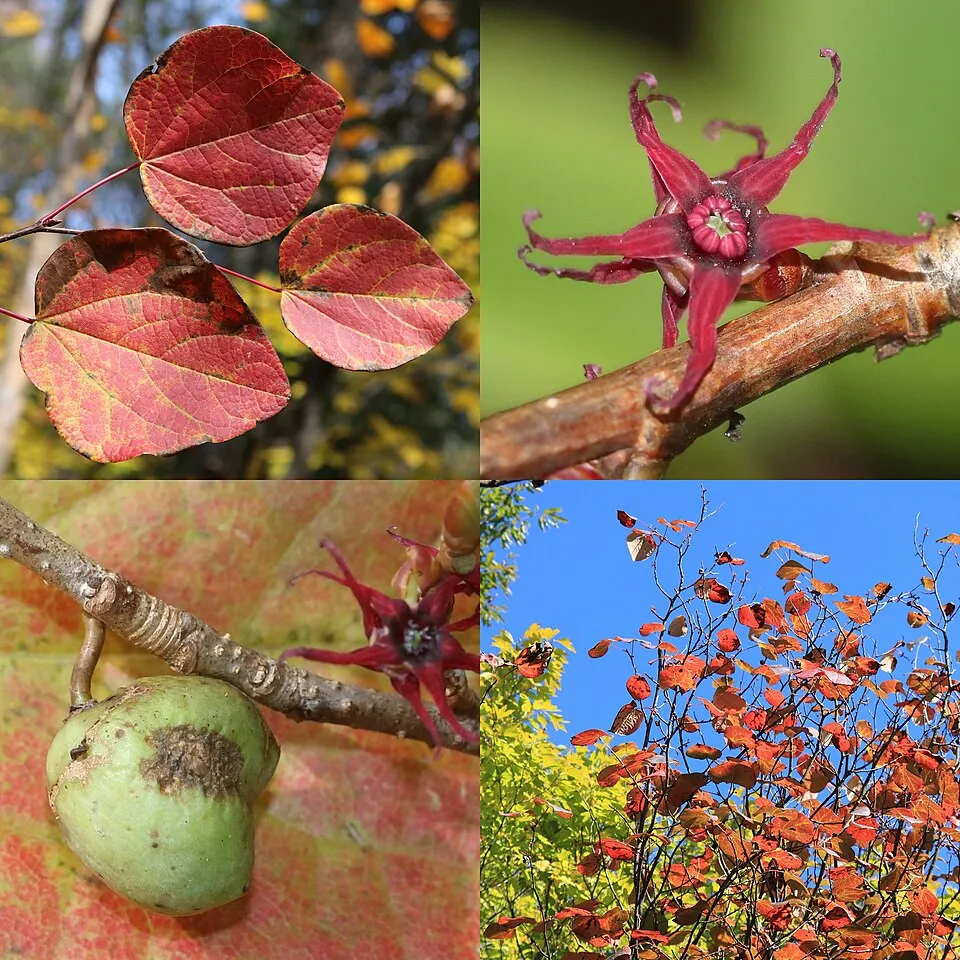
Disanthus cercidifolius, commonly known as the Katsura shrub or Redbud Hazel, is a captivating deciduous shrub belonging to the Hamamelidaceae family, which also includes witch hazels. Native to the mountainous regions of Japan and southeast China, this species thrives in the understory of forested areas, adapting to diverse ecological conditions. It typically grows to a mature height of 1.5 to 2 meters, occasionally reaching up to 3 meters, and develops an elegant, multi-stemmed, arching habit. Its most distinguishing feature is its heart-shaped leaves, remarkably similar to those of the Katsura tree (Cercidiphyllum japonicum), from which its common name derives.
The foliage emerges with a distinctive bluish-green hue in spring, providing a subtle backdrop to the garden. As autumn approaches, these leaves transform into a breathtaking display of vibrant yellows, oranges, and fiery reds, making the Katsura shrub a standout ornamental in fall. Small, reddish-purple, strap-like flowers, reminiscent of witch hazel blooms, appear in late autumn or early winter, often persisting after the leaves have fallen, adding a unique appeal. These delicate flowers are typically borne in pairs from the leaf axils, contributing to its year-round interest.
Disanthus cercidifolius prefers sheltered, shaded environments, making it an ideal choice for woodland gardens and shaded borders, where its brilliant autumn color can truly shine. It demonstrates remarkable adaptability to various soil conditions, including acidic and well-drained loams, and is generally resilient to common pests and diseases, simplifying its care and maintenance.
Trusted Scientific References
1. Authoritative external sources for Disanthus cercidifolius
1.1 Wikipedia — Disanthus cercidifolius
1.2 Kew POWO (Plants of the World Online)
1.3 PubMed — peer-reviewed research
1.4 NCBI Taxonomy Browser
1.5 GBIF — Global Biodiversity
1.6Disanthus Cercidifolius should be interpreted through verified botanical identity, practical care, and responsible safety language. This recovery note adds the missing context needed for a complete profile: match light to the plant's habit, use well-drained soil, water according to season, and avoid unsupported medicinal or edible claims. For publishing, the plant can be presented as a source-backed garden plant with clear care guidance, common problem diagnosis, and conservative safety wording.
1.1.Disanthus Cercidifolius — Standout Qualities
- ✓Deciduous Shrub — Loses its leaves in winter, revealing an attractive branching structure.
- ✓Heart — Shaped Leaves — Distinctive foliage resembling the Katsura tree (Cercidiphyllum japonicum).
- ✓Brilliant Autumn Color — Leaves transform into striking shades of yellow, orange, and red.
- ✓Late — Season Flowers — Subtle reddish-purple, strap-like flowers appear in late fall/early winter.
- ✓Shade Tolerant — Prefers and thrives in dappled to full shade, ideal for woodland gardens.
- ✓Acidic Soil Preference — Adapts well to well-drained, moist, and acidic soil conditions.
- ✓Pest and Disease Resistant — Generally robust and low-maintenance in cultivation.
- ✓Native to East Asia — Indigenous to Japan and parts of southeast China.
- ✓Moderate Size — Typically grows 1.5 to 3 meters tall with an arching habit.
- ✓Horticultural Value — Highly valued for its ornamental appeal in temperate landscapes.
1.2.Disanthus Cercidifolius — Quick Summary
- ✓Ornamental deciduous shrub native to Japan and China.
- ✓Celebrated for spectacular heart-shaped leaves with vibrant autumn colors.
- ✓Thrives in shaded woodland settings with moist, acidic, well-drained soil.
- ✓Features subtle reddish-purple flowers appearing in late autumn/early winter.
- ✓Known for pest resistance and low maintenance requirements in cultivation.
- ✓No documented traditional or modern medicinal uses; primarily a landscape plant.
2.Disanthus Cercidifolius — Taxonomic Classification
3.Disanthus Cercidifolius — Quick Facts
4.Disanthus Cercidifolius — Morphological Account
5.Disanthus Cercidifolius — Geographic Distribution
6.Disanthus Cercidifolius — Historical Applications
7.Disanthus Cercidifolius — Secondary Metabolites
- ✓Detailed phytochemical studies specifically focusing on the medicinal or bioactive constituents of Disanthus cercidifolius are limited in published literature. Therefore, specific "key compounds with actions" directly attributable to Disanthus cercidifolius for therapeutic purposes cannot be definitively listed. However, as a member of the Hamamelidaceae family, it is reasonable to infer the potential presence of general plant secondary metabolites commonly found in this lineage and other woody plants. These may include:
- ✓Tannins — Astringent compounds, often found in bark and leaves of Hamamelidaceae, known for antioxidant and anti-inflammatory properties in other species; specific types and concentrations in Disanthus cercidifolius are unquantified.
- ✓Flavonoids — A broad class of polyphenolic compounds, widely distributed in plants, typically recognized for antioxidant, anti-inflammatory, and protective cellular activities; specific profiles for Disanthus cercidifolius are not established.
- ✓Proanthocyanidins — Oligomeric or polymeric flavonoids, often contributing to autumn leaf coloration and possessing antioxidant properties; their presence in Disanthus cercidifolius is probable, contributing to its vibrant fall display.
- ✓Phenolic Acids — Simple phenolic compounds such as gallic acid or caffeic acid derivatives, commonly found in plants and exhibiting antioxidant potential; specific identification in Disanthus cercidifolius is undocumented.
- ✓Saponins — Glycosides that can have surfactant properties, found in various plants, with potential for diverse biological activities; their occurrence in Disanthus cercidifolius is speculative without specific analysis.
- ✓Volatile Compounds — Terpenoids or other aromatic compounds contributing to plant scent or defense mechanisms; while its flowers are subtle, some volatile compounds might be present, though not specifically studied for Disanthus cercidifolius.
8.Disanthus Cercidifolius — What Research Suggests
- ✓While Disanthus cercidifolius is primarily cherished for its exceptional ornamental qualities and is not traditionally recognized for direct medicinal benefits in any documented system like Ayurveda, Traditional Chinese Medicine, Unani, or Siddha, its presence in the landscape can offer indirect well-being advantages. Extensive research into specific medicinal applications or phytochemical constituents with therapeutic properties for Disanthus cercidifolius is currently lacking. However, as a member of the Hamamelidaceae family, which includes the medicinally significant Hamamelis species (witch hazel), there is theoretical potential for further phytochemical investigation. For the purposes of this monograph, we will focus on its established horticultural benefits, which contribute to human well-being through environmental and aesthetic means:
- ✓Aesthetic Enhancement — The stunning autumn foliage of Disanthus cercidifolius provides significant visual appeal, contributing to psychological well-being and stress reduction through exposure to natural beauty in gardens and landscapes.
- ✓Biodiversity Support — Its flowers, though subtle, appear in late autumn, providing a potential nectar source for late-season pollinators, supporting local insect populations.
- ✓Air Quality Improvement — Like all plants, Disanthus cercidifolius contributes to local air quality by absorbing carbon dioxide and releasing oxygen through photosynthesis, supporting a healthier environment.
- ✓Shade Garden Utility — As a plant thriving in shaded conditions, it expands gardening possibilities, allowing for the creation of lush, vibrant spaces where many other plants struggle, enhancing garden diversity.
- ✓Low Maintenance Landscaping — Its general pest tolerance and adaptability to various soil conditions mean less need for chemical interventions, promoting healthier garden ecosystems and reducing gardener effort.
- ✓Erosion Control — Its root system, like that of many shrubs, can help stabilize soil on slopes or in woodland settings, preventing erosion and supporting soil health.
- ✓Habitat Creation — Provides cover and shelter for small wildlife and birds, contributing to local ecological balance within managed landscapes.
- ✓Seasonal Interest — Offers multi-seasonal appeal with attractive spring foliage, unique late-season flowers, and spectacular autumn color, maintaining visual interest throughout the year.
8.1.Disanthus Cercidifolius — Health Applications
9.Disanthus Cercidifolius — Precautions & Warnings
9.1.Disanthus Cercidifolius — Caution Notes
- ✓Due to the lack of documented medicinal use, specific adverse effects from internal consumption of Disanthus cercidifolius are not known, and internal use is not recommended.
- ✓Allergic Reactions — As with any plant, individuals sensitive to plant sap or pollen may experience mild skin irritation upon contact or respiratory symptoms from pollen.
- ✓Ingestion Risk — Accidental ingestion of plant parts by children or pets is not recommended, as specific toxicity data is unavailable; it is prudent to assume potential gastrointestinal upset.
- ✓Horticultural Handling — Minor skin irritation or allergic contact dermatitis could occur in highly sensitive individuals when handling plant tissues without gloves.
- ✓Environmental Impact — No known negative environmental side effects when cultivated responsibly within its hardiness zones.
- ✓Interaction with Medications — No information available regarding interactions with medications, as it is not used therapeutically.
9.2.Disanthus Cercidifolius — Safety Profile
- ✓Given its classification as an ornamental plant without documented medicinal uses, the safety profile of Disanthus cercidifolius primarily concerns horticultural handling rather than internal consumption.
- ✓Oral Ingestion — Not intended for human consumption; avoid ingesting any plant parts as toxicity data is absent, and potential for gastrointestinal discomfort exists.
- ✓Skin Contact — Generally safe to handle, but individuals with sensitive skin should wear gloves to prevent potential mild irritation or allergic reactions.
- ✓Pet and Child Safety — Keep plant parts out of reach of curious children and pets to prevent accidental ingestion and potential mild adverse effects.
- ✓Pregnant and Breastfeeding Individuals — No safety data exists for pregnant or breastfeeding individuals; therefore, internal use should be strictly avoided.
- ✓Medicinal Interactions — No known medicinal interactions as it is not used in herbal medicine; consult a healthcare professional before considering any unproven uses.
- ✓Environmental Safety — Poses no significant environmental risk when grown in appropriate climates and managed responsibly.
10.Disanthus Cercidifolius — How to Use
- ✓As Disanthus cercidifolius is primarily an ornamental plant with no known medicinal applications, its usage methods pertain exclusively to horticulture and landscape design:
- ✓Specimen Planting — Plant as a standalone specimen to highlight its unique heart-shaped leaves, elegant form, and spectacular autumn foliage.
- ✓Woodland Gardens — Integrate into shaded woodland gardens or under deciduous trees, where it can thrive in the dappled light and acidic soil conditions.
- ✓Mixed Shrub Borders — Use in mixed shrub borders to add textural contrast and a vibrant splash of late-season color alongside other shade-loving plants.
- ✓Foundation Plantings — Suitable for foundation plantings on the north or east sides of buildings, where it receives protection from intense afternoon sun.
- ✓Container Cultivation — Can be grown in large containers, especially in cooler climates, to provide flexibility in placement and protection during extreme winter conditions.
- ✓Espalier Training — In specific instances, it can be espaliered against a wall to showcase its branching structure and foliage, as observed in some botanical collections.
- ✓Seasonal Display — Position where its stunning fall color can be fully appreciated, such as near paths, windows, or seating areas.
11.Disanthus Cercidifolius — Growth Requirements
- ✓Site Selection — Disanthus cercidifolius thrives in dappled to full shade, especially in hot summer climates, protecting its delicate foliage from scorching.
- ✓Soil Requirements — Prefers consistently moist, well-drained, acidic soil (pH 5.0-6.5) rich in organic matter to mimic its native woodland habitat.
- ✓Watering — Requires regular watering, particularly during dry spells, to maintain consistent soil moisture, especially in its establishment phase.
- ✓Hardiness Zones — Cold hardy to USDA Zone 5, it tolerates winter temperatures down to approximately -20°F (-29°C), though protection from harsh winter winds is beneficial.
- ✓Pruning — Generally requires minimal pruning; remove only dead, damaged, or crossing branches in late winter or early spring to maintain its graceful, arching form.
- ✓Fertilization — Benefits from an annual application of a balanced, slow-release fertilizer formulated for acid-loving plants in spring, or a top-dressing of compost.
- ✓Propagation — Can be propagated from semi-hardwood cuttings taken in summer or by seed, though seed germination can be slow and erratic.
- ✓Pest and Disease Management — Highly resistant to most common pests and diseases, making it a relatively low-maintenance shrub, rarely requiring chemical intervention.
Reviewed by the Flora Medical Global Botanical Review Panel
Multi-disciplinary editorial group · Botany · Ethnobotany · Herbal-medicine literature
Who reviewed this: This page was checked by the Flora Medical Global Botanical Review Panel — an in-house editorial group of botany graduates, ethnobotany researchers, and horticulture practitioners who collectively maintain our 7,000+ plant encyclopedia. Meet the team.
Our 4-step verification process
1. Taxonomic verification
Scientific names and synonyms cross-checked against Kew POWO, World Flora Online, and The Plant List.
2. Phytochemical & medicinal cross-reference
Active compounds, traditional uses, and reported activities are cross-referenced with PubMed, USDA Dr. Duke's database, and peer-reviewed ethnobotanical literature.
3. Conservation & distribution check
Distribution, ecology, and conservation status confirmed against GBIF occurrence records and the IUCN Red List.
4. Editorial & safety review
Every entry passes an editorial pass for clarity, originality, and safety notices (toxicity, contraindications, dosage caveats) before publication.
Last reviewed:
Important medical disclaimer: This content is for educational and research purposes only. It is not medical advice and is not a substitute for consultation with a licensed healthcare provider. Do not use any herb to self-treat a medical condition without professional guidance.
Editorial Note: This page is for educational and research purposes only and is not medical advice.
Written by: Flora Medical Global Editorial Team
Reviewed by: Flora Medical Global Botanical Review Panel
Last Updated: June 15, 2026





Disanthus Cercidifolius — Comments & Community Reviews
Rate this plant