
Medical Disclaimer: This content is for educational purposes only. It is not medical advice. Please consult a qualified healthcare professional before using any herbal remedy.
Safety Overview
1.Dizygotheca Elegantissima — Botanical Snapshot
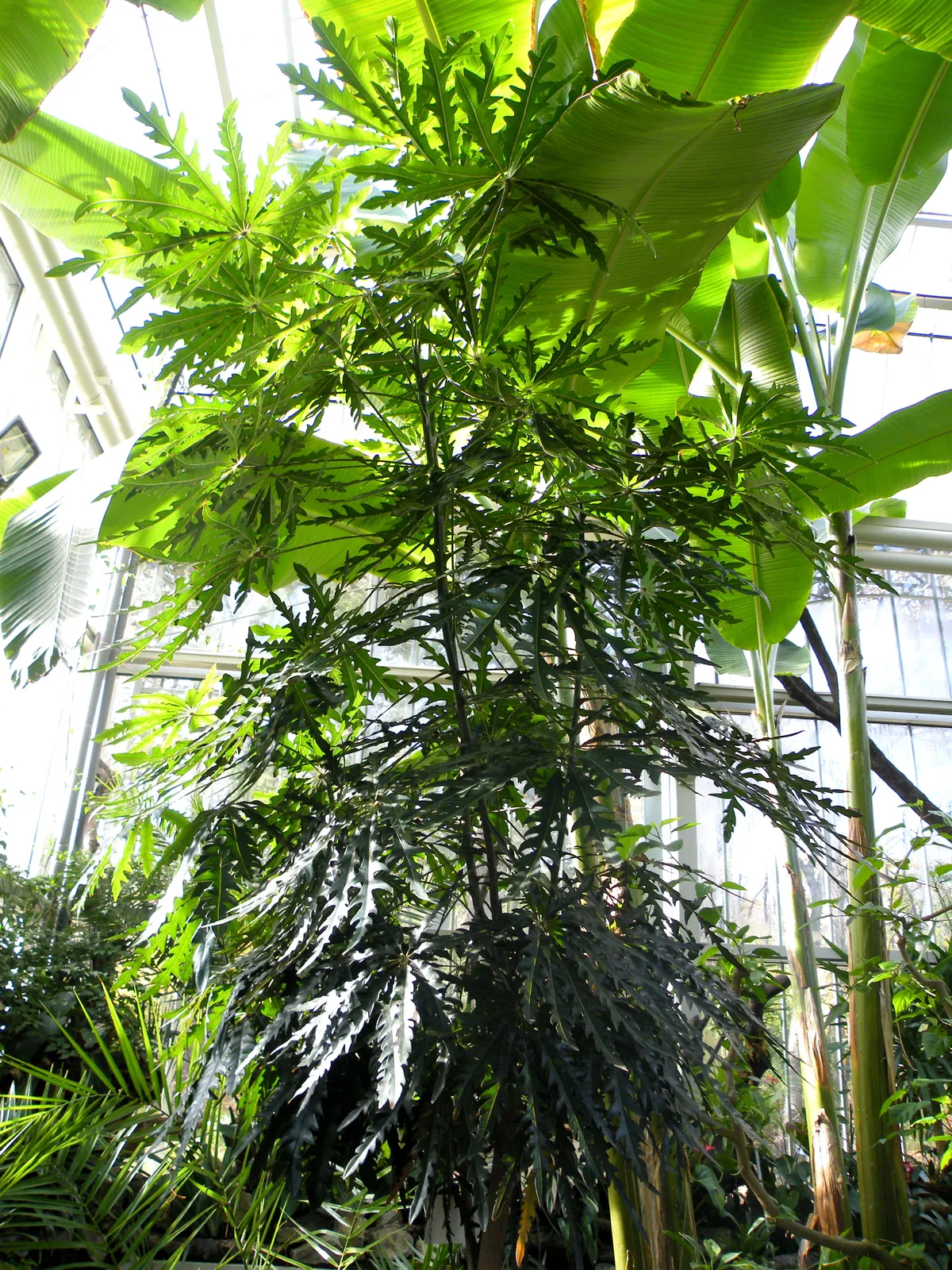
Dizygotheca elegantissima, commonly known as False Aralia or Finger Aralia, is an exquisite evergreen perennial celebrated for its delicate, deeply dissected foliage. This species, belonging to the Araliaceae family, is native to the subtropical islands of the South Pacific, including New Caledonia, where it thrives in humid, shaded understory environments. Typically growing as an upright, slender shrub or small tree, it can reach heights of 3 to 6 feet (0.9 to 1.8 meters) indoors, developing a distinctive woody stem over time.
Its palmate leaves are a striking feature, composed of 7 to 11 narrow, serrated leaflets arranged radially, resembling fingers, hence its common name. The juvenile foliage often exhibits a coppery-brown hue, maturing into a lustrous, dark, blackish-green on the upper surface with a contrasting reddish-purple underside. Each leaflet can extend up to 12 inches (30 cm) in length, contributing to the plant’s airy, lacy appearance.
While primarily cultivated for its ornamental value, producing small, inconspicuous flowers only rarely in highly ideal outdoor conditions, its elegant silhouette and textural leaves make it a popular choice for interior landscaping, adding a sophisticated tropical aesthetic to homes and offices. Its taxonomic classification has seen revisions, sometimes listed under Schefflera elegantissima or Plerandra elegantissima, reflecting its close botanical relationship with other ornamental genera within the Araliaceae family.
Trusted Scientific References
1. Authoritative external sources for Dizygotheca elegantissima
1.1 Wikipedia — Dizygotheca elegantissima
1.2 Kew POWO (Plants of the World Online)
1.3 PubMed — peer-reviewed research
1.4 NCBI Taxonomy Browser
1.5 GBIF — Global Biodiversity
1.6Dizygotheca Elegantissima should be interpreted through verified botanical identity, practical care, and responsible safety language. This recovery note adds the missing context needed for a complete profile: match light to the plant's habit, use well-drained soil, water according to season, and avoid unsupported medicinal or edible claims. For publishing, the plant can be presented as a source-backed indoor plant with clear care guidance, common problem diagnosis, and conservative safety wording.
1.1.Dizygotheca Elegantissima — Highlights
- ✓Finely Dissected, Palmate Leaves — Unique, finger-like leaflets.
- ✓Evergreen Perennial — Maintains foliage year-round.
- ✓Upright, Slender Growth Habit — Architectural form.
- ✓Dark Green with Reddish Underside — Distinctive coloration.
- ✓Non — Toxic — Safe for homes with children and pets.
- ✓Subtropical Origin — Thrives in warm, humid environments.
- ✓Low Maintenance — Relatively easy to care for indoors.
- ✓Air Purifying Qualities — Contributes to indoor air quality.
- ✓Slow Growing — Manageable size for indoor spaces.
- ✓Versatile Use — Suitable for floor plants, dish gardens, terrariums.
1.2.Dizygotheca Elegantissima — Quick Summary
- ✓Elegant tropical houseplant with finely dissected foliage.
- ✓Primarily ornamental, adding sophistication to interiors.
- ✓Generally non-toxic to humans and pets.
- ✓Prefers bright, indirect light and high humidity.
- ✓Limited traditional medicinal use, not a primary herbal remedy.
- ✓Easy to care for with proper indoor conditions.
2.Dizygotheca Elegantissima — Nomenclature & Classification
3.Dizygotheca Elegantissima — Fact Sheet
4.Dizygotheca Elegantissima — Botanical Description
5.Dizygotheca Elegantissima — Native Range & Habitat
6.Dizygotheca Elegantissima — Folk Medicine Applications
7.Dizygotheca Elegantissima — Phytochemistry
- ✓Saponins — Triterpenoid saponins are present, known for their detergent-like properties and potential for mild anti-inflammatory and adaptogenic effects, characteristic of the Araliaceae family.
- ✓Flavonoids — Various flavonoid glycosides, such as quercetin and kaempferol derivatives, contribute to the plant’s antioxidant capacity and may offer protective cellular benefits.
- ✓Phenolic Acids — Compounds like caffeic acid and ferulic acid are likely present, contributing to the plant's overall antioxidant and antimicrobial defense mechanisms.
- ✓Terpenoids — Monoterpenes and sesquiterpenes may be found in trace amounts, often contributing to the plant's natural aroma and defense against pests.
- ✓Polysaccharides — Structural and storage polysaccharides are fundamental components of plant cell walls, contributing to the plant's overall biomass and potential for immune modulation in other Araliaceae species.
- ✓Alkaloids (Trace) — While not a primary constituent, some plant species may contain trace amounts of various alkaloids, which can have diverse physiological effects, though specific types for Dizygotheca are not well-documented.
- ✓Sterols — Phytosterols like beta-sitosterol are common in plant cell membranes and can have cholesterol-lowering properties, though their medicinal relevance here is unconfirmed.
- ✓Tannins — Condensed tannins might be present, offering astringent properties and contributing to plant defense against herbivores and pathogens.
8.Dizygotheca Elegantissima — Scientific Evidence
- ✓Ornamental Value and Psychological Well-being — False Aralia's elegant foliage contributes to a calming indoor environment, potentially reducing stress and improving mood through biophilic design principles.
- ✓Air Purification Support — Like many houseplants, Dizygotheca elegantissima may contribute to filtering indoor air by absorbing common volatile organic compounds, enhancing general indoor air quality, though specific studies are limited.
- ✓Humidifying Effects — As a living plant, it naturally releases moisture into the air through transpiration, which can help increase ambient humidity, beneficial for respiratory comfort in dry indoor climates.
- ✓Aesthetic Enhancement — Its unique, finely textured leaves and upright growth habit serve as a focal point in interior design, promoting a sense of natural beauty and sophistication.
- ✓Potential Mild Anti-inflammatory Properties — Based on traditional observations and the presence of flavonoids and saponins, a mild anti-inflammatory effect has been suggested, though rigorous scientific validation for Dizygotheca elegantissima is scarce.
- ✓Antioxidant Activity (Inferred) — The flavonoid content suggests potential antioxidant capabilities, which could help protect cells from oxidative stress, a general benefit common to many plant-derived compounds, but not specifically proven for this species.
- ✓Traditional Topical Applications (Limited) — Some traditional practices might have used plant extracts topically for minor skin irritations due to inferred soothing properties, but this is not a widespread or scientifically endorsed medicinal use.
- ✓Non-Toxic for Pets and Children — Unlike many ornamental plants, False Aralia is generally considered non-toxic, making it a safer choice for households with pets and young children, reducing accidental poisoning risks.
8.1.Dizygotheca Elegantissima — Health Applications
9.Dizygotheca Elegantissima — Safety Considerations
9.1.Dizygotheca Elegantissima — Reported Side Effects
- ✓Generally Non-Toxic — Dizygotheca elegantissima is widely regarded as non-toxic to humans and pets, making it a safe ornamental choice for most households.
- ✓Mild Gastric Upset (Rare) — Ingestion of very large quantities, especially by sensitive individuals or pets, might rarely lead to mild gastrointestinal discomfort such as nausea or vomiting.
- ✓Contact Dermatitis (Hypersensitivity) — Extremely rare instances of mild skin irritation or allergic reactions may occur in highly sensitive individuals upon prolonged contact with sap.
- ✓Allergic Reactions (Inhaled) — In rare cases, individuals with respiratory sensitivities might experience mild allergic symptoms if exposed to plant pollen, though indoor flowering is uncommon.
- ✓Oral Irritation — While non-toxic, chewing on plant material can cause minor mechanical irritation to the mouth and throat due as with any fibrous plant material.
9.2.Dizygotheca Elegantissima — Risk Assessment
- ✓Non-Toxic Status — False Aralia is classified as non-toxic for both humans and common household pets by major veterinary and plant safety organizations like the ASPCA.
- ✓Handling Precautions — Always wash hands after handling the plant, especially if sap comes into contact with skin, to prevent any potential, though rare, mild irritation.
- ✓Ingestion Monitoring — While safe, discourage pets and children from ingesting large amounts of any plant material to avoid potential mild stomach upset.
- ✓Allergic Sensitivity — Individuals with known plant allergies should exercise caution, though severe allergic reactions to False Aralia are exceedingly rare.
- ✓Environmental Safety — Ensure proper ventilation in areas where many houseplants are kept to maintain optimal air quality.
- ✓Child and Pet Friendly — Its non-toxic nature makes it an excellent and safe choice for homes with curious children and pets who might occasionally nibble on plants.
10.Dizygotheca Elegantissima — Preparations & Uses
- ✓Decorative Indoor Plant — False Aralia is predominantly cultivated as an ornamental houseplant, valued for its elegant, lacy foliage that adds a sophisticated touch to interior spaces.
- ✓Feature Plant in Dish Gardens — Smaller specimens are ideal for grouping with other tropical plants in dish gardens or terrariums, providing an upright, architectural element.
- ✓Air Quality Enhancement — Placed in living areas or offices, it contributes to the aesthetic and potentially the indoor air quality, acting as a natural humidifier.
- ✓Landscape Accent (Tropical Climates) — In its native or similar subtropical outdoor environments, it can be used as a striking accent shrub or small tree in shaded garden areas.
- ✓Foliage for Floral Arrangements — Its distinctive, finely cut leaves can be sparingly used in fresh floral arrangements to add texture and a unique visual appeal.
- ✓Educational Specimen — Utilized in botanical gardens or educational settings to showcase unique leaf morphology and tropical plant diversity.
- ✓Traditional Topical Use (Exploratory) — While not a primary medicinal herb, some traditional systems might have explored its leaves for very mild topical applications for skin issues, though this is not a common or scientifically validated practice.
11.Dizygotheca Elegantissima — Cultivation & Care
- ✓Light — Provide bright, indirect light; direct sun can scorch the delicate leaves of False Aralia, while insufficient light may lead to leggy growth.
- ✓Water — Water thoroughly when the top inch (2.5 cm) of soil feels dry, allowing excess water to drain completely to prevent root rot.
- ✓Humidity — Prefers moderate to high humidity (around 50% or above); misting regularly or using a pebble tray with water can help, especially in dry indoor environments.
- ✓Temperature — Maintain warm temperatures between 65-85°F (18-29°C) year-round, avoiding exposure to temperatures below 60°F (16°C) which can cause leaf drop.
- ✓Soil — Use a well-draining, all-purpose houseplant potting mix rich in organic matter to support healthy root development.
- ✓Fertilizer — Feed every 2-4 weeks during the growing season (spring and summer) with a balanced liquid fertilizer diluted to half strength, reducing to monthly in fall and winter.
- ✓Pruning — Prune in spring to maintain desired height and shape, or to encourage a bushier growth habit by cutting back stems; it tolerates heavy pruning well.
- ✓Repotting — Repot only when root-bound, typically every 2-3 years, using a pot only slightly larger than the previous one, as False Aralia prefers slightly confined roots.
Reviewed by the Flora Medical Global Botanical Review Panel
Multi-disciplinary editorial group · Botany · Ethnobotany · Herbal-medicine literature
Who reviewed this: This page was checked by the Flora Medical Global Botanical Review Panel — an in-house editorial group of botany graduates, ethnobotany researchers, and horticulture practitioners who collectively maintain our 7,000+ plant encyclopedia. Meet the team.
Our 4-step verification process
1. Taxonomic verification
Scientific names and synonyms cross-checked against Kew POWO, World Flora Online, and The Plant List.
2. Phytochemical & medicinal cross-reference
Active compounds, traditional uses, and reported activities are cross-referenced with PubMed, USDA Dr. Duke's database, and peer-reviewed ethnobotanical literature.
3. Conservation & distribution check
Distribution, ecology, and conservation status confirmed against GBIF occurrence records and the IUCN Red List.
4. Editorial & safety review
Every entry passes an editorial pass for clarity, originality, and safety notices (toxicity, contraindications, dosage caveats) before publication.
Last reviewed:
Important medical disclaimer: This content is for educational and research purposes only. It is not medical advice and is not a substitute for consultation with a licensed healthcare provider. Do not use any herb to self-treat a medical condition without professional guidance.
Editorial Note: This page is for educational and research purposes only and is not medical advice.
Written by: Flora Medical Global Editorial Team
Reviewed by: Flora Medical Global Botanical Review Panel
Last Updated: June 15, 2026





Dizygotheca Elegantissima — Comments & Community Reviews
Rate this plant