
Medical Disclaimer: This content is for educational purposes only. It is not medical advice. Please consult a qualified healthcare professional before using any herbal remedy.
Safety Overview
1.Dizygotheca Elegantissima — Plant Snapshot
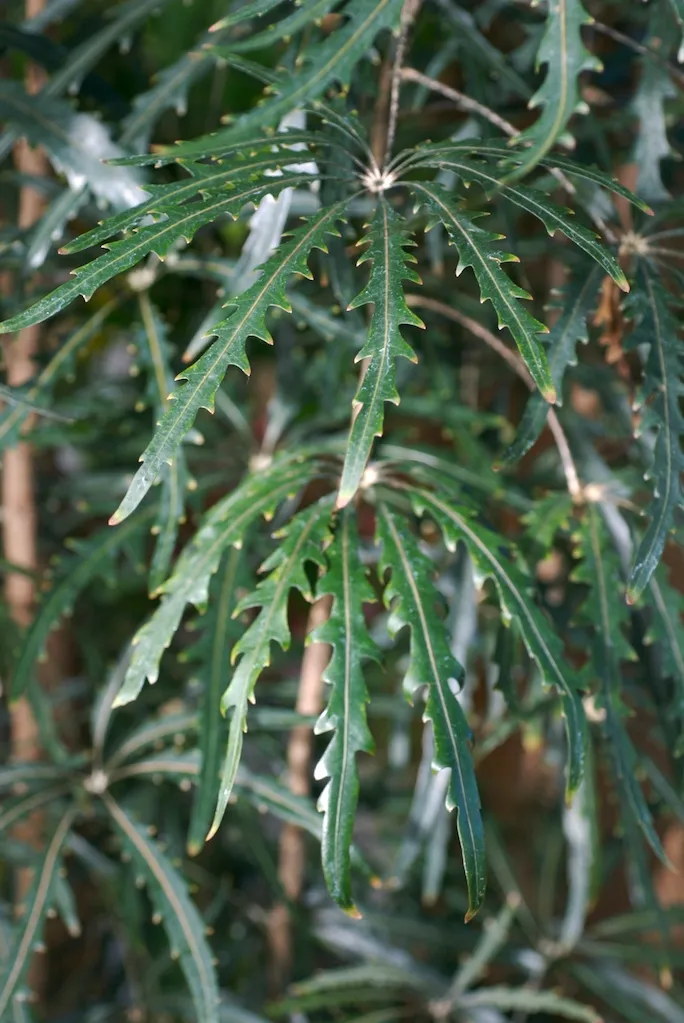
Plerandra elegantissima, commonly known as the False Aralia or formerly as Dizygotheca elegantissima, is a captivating evergreen shrub or small tree belonging to the Araliaceae family. In its native tropical rainforests of Southeast Asia, it can attain heights of up to 3 meters, but when cultivated indoors in temperate climates, it typically remains more compact, usually between 1 to 1.5 meters. This species is celebrated for its distinctive, deeply lobed, palmately compound leaves, which are narrow, oblong, and irregularly serrated, creating an elegant, feathery appearance.
Young leaves exhibit a glossy, dark green hue with coppery-green undersides, measuring up to 7.5 cm (3 inches) long and 1.2 cm (0.5 inch) wide. As the plant matures, the leaves enlarge significantly, reaching up to 30 cm (12 inches) in length and 7.5 cm (3 inches) in width, often losing some of their initial glossiness. While the False Aralia can produce inconspicuous greenish-white flowers, these are rarely observed in indoor settings.
Its smooth, light gray bark is dotted with subtle lenticels, adding to its refined aesthetic. Thriving in warm, humid environments, this plant prefers bright, indirect light and well-drained, rich soils, making it a popular and adaptable choice for interior landscapes in homes and commercial spaces across Hawaii, Florida, California, and beyond.
Trusted Scientific References
1. Authoritative external sources for Plerandra elegantissima
1.1 Wikipedia — Plerandra elegantissima
1.2 Kew POWO (Plants of the World Online)
1.3 PubMed — peer-reviewed research
1.4 NCBI Taxonomy Browser
1.5 GBIF — Global Biodiversity
1.6Dizygotheca Elegantissima should be interpreted through verified botanical identity, practical care, and responsible safety language. This recovery note adds the missing context needed for a complete profile: match light to the plant's habit, use well-drained soil, water according to season, and avoid unsupported medicinal or edible claims. For publishing, the plant can be presented as a source-backed indoor plant with clear care guidance, common problem diagnosis, and conservative safety wording.
1.1.Dizygotheca Elegantissima — Key Features
- ✓Distinctive Pinnate Foliage — Features deeply lobed, palmately compound leaves with a delicate, feathery texture.
- ✓Evergreen Nature — Maintains its lush green leaves throughout the year, providing continuous visual appeal.
- ✓Tropical Origin — Thrives in warm, humid environments, mimicking its native rainforest habitat.
- ✓Adaptable Houseplant — Well-suited for indoor cultivation in temperate regions, tolerating a range of interior conditions.
- ✓Air Purification — Effectively removes certain volatile organic compounds from indoor air.
- ✓Non — Toxic — Safe for homes with common pets like cats, dogs, and horses.
- ✓Low Maintenance — Relatively easy to care for once its basic light and humidity needs are met.
- ✓Vertical Accent Plant — Its upright growth habit makes it an excellent choice for adding vertical interest to interior spaces.
- ✓Elegant Form — Cultivated for its sophisticated appearance, enhancing various interior design styles.
- ✓Family Araliaceae — Shares botanical traits with other notable plants like Ginseng and Ivy.
1.2.Dizygotheca Elegantissima — In Brief
- ✓Elegant ornamental houseplant with unique, feathery foliage.
- ✓Known for its indoor air-purifying capabilities.
- ✓Requires warm temperatures, high humidity, and indirect light.
- ✓Non-toxic to cats, dogs, and horses.
- ✓Enhances aesthetic appeal and promotes well-being.
- ✓A member of the Araliaceae family, native to tropical Southeast Asia.
2.Dizygotheca Elegantissima — Systematic Position
3.Dizygotheca Elegantissima — Quick Facts
4.Dizygotheca Elegantissima — Structural Profile
5.Dizygotheca Elegantissima — Where It Grows
6.Dizygotheca Elegantissima — Ethnobotanical Uses
7.Dizygotheca Elegantissima — Bioactive Constituents
- ✓Flavonoids — These polyphenolic compounds, such as quercetin glycosides, are known for their potent antioxidant and anti-inflammatory properties, protecting cells from oxidative stress.
- ✓Triterpenoid Saponins — Common in the Araliaceae family, these compounds, potentially including araliasaponins, may exhibit adaptogenic, immunomodulatory, and anti-inflammatory effects.
- ✓Phenolic Acids — Compounds like chlorogenic acid contribute to the plant's antioxidant defense mechanisms and may also possess mild antimicrobial activities.
- ✓Polysaccharides — Complex carbohydrates like glucans are often found in plants and can play a role in supporting immune function and cellular communication.
- ✓Phytosterols — Plant sterols such as beta-sitosterol are known for their cholesterol-lowering potential and anti-inflammatory actions.
- ✓Coumarins — Simple phenolic compounds like scopoletin may contribute to anti-inflammatory and antioxidant activities, although their presence and concentration in False Aralia are not extensively documented.
- ✓Volatile Organic Compounds (VOCs) — While also known for absorbing VOCs from the environment, the plant itself may emit certain natural VOCs, contributing to the indoor atmospheric profile.
- ✓Alkaloids — While less prominent in the Araliaceae family compared to other compound classes, certain alkaloid derivatives could be present in trace amounts, potentially influencing various biological pathways.
8.Dizygotheca Elegantissima — What Research Suggests
- ✓Indoor Air Purification — Plerandra elegantissima is recognized for its capacity to absorb common indoor air pollutants, such as formaldehyde and benzene, contributing to healthier living environments.
- ✓Stress Reduction and Mental Well-being — The presence of lush, green houseplants like False Aralia has been linked to reduced psychological stress, improved mood, and enhanced cognitive function through biophilic interaction.
- ✓Aesthetic and Environmental Enrichment — Its unique, elegant foliage provides significant ornamental value, enriching interior spaces and fostering a connection to nature, which can indirectly support overall wellness.
- ✓Humidity Regulation — As a tropical plant, it contributes to ambient humidity through transpiration, which can be beneficial in dry indoor climates, potentially alleviating respiratory discomfort.
- ✓Non-Toxic for Pets — Unlike many houseplants, False Aralia is listed as non-toxic for common household pets like dogs, cats, and horses, making it a safer choice for homes with animals.
- ✓Biophilic Connection Support — Engaging with and caring for plants promotes mindfulness and a sense of responsibility, reinforcing the human-nature bond known to improve mental health.
- ✓Visual Comfort and Focus — The plant's soft, feathery texture and deep green color can create a visually calming focal point, aiding in relaxation and potentially improving concentration in work or study areas.
- ✓Natural Sound Dampening — While minor, the foliage of indoor plants can contribute to slight sound absorption, subtly enhancing the acoustic comfort of a room.
8.1.Dizygotheca Elegantissima — Health Applications
9.Dizygotheca Elegantissima — Adverse Effects
9.1.Dizygotheca Elegantissima — Possible Adverse Reactions
- ✓Skin Irritation — Direct contact with the sap may cause mild skin irritation or dermatitis in sensitive individuals.
- ✓Allergic Reactions — Although rare, individuals with extreme plant sensitivities might experience allergic reactions to airborne particles or plant sap.
- ✓Mild Digestive Upset — Ingestion of plant parts, while not recommended, could lead to mild gastrointestinal discomfort, nausea, or vomiting.
- ✓Respiratory Sensitivity — Highly sensitive individuals might experience minor respiratory irritation from naturally emitted plant volatile organic compounds.
- ✓Eye Irritation — Contact with sap from pruning or handling could cause temporary eye irritation; avoid touching eyes after handling.
9.2.Dizygotheca Elegantissima — Clinical Safety Notes
- ✓External Use Only — This plant is primarily ornamental; avoid internal consumption of any plant parts.
- ✓Keep Out of Reach — Keep away from young children and pets, even though it is considered non-toxic for most animals, to prevent accidental ingestion or choking hazards.
- ✓Handle with Care — Wear gloves when pruning or handling if you have sensitive skin, to prevent potential mild irritation from sap.
- ✓Patch Test — For individuals with known plant allergies, perform a small skin patch test before extensive handling.
- ✓Consult a Professional — Pregnant or nursing individuals, or those with underlying health conditions, should consult a healthcare professional regarding plant exposure.
- ✓Proper Ventilation — Ensure good air circulation in rooms with plants to prevent excessive humidity buildup, which can foster mold growth.
10.Dizygotheca Elegantissima — How to Use
- ✓Indoor Aesthetic Enhancement — Place Plerandra elegantissima in prominent indoor locations to leverage its unique foliage as a decorative centerpiece or accent plant.
- ✓Air Purification Placement — Position the plant in living rooms, offices, or bedrooms to help filter common indoor air toxins and improve air quality.
- ✓Biophilic Design Integration — Incorporate False Aralia into interior designs to foster a connection to nature, promoting relaxation and reducing stress.
- ✓Humidity Boost — Group with other humidity-loving plants or place in naturally humid areas like bathrooms to enhance ambient moisture levels.
- ✓Visual Meditation Aid — Use the plant as a natural focal point for brief moments of visual meditation, appreciating its intricate leaf structure and calming green hues.
- ✓Environmental Enrichment for Wellness — Cultivate False Aralia as part of a holistic approach to home wellness, recognizing its contribution to a healthier and more serene living space.
- ✓Non-Invasive Ornamental — Utilize as a container plant in tubs for commercial or residential interiorscapes, where its elegant form can be appreciated without extensive space requirements.
- ✓Gift for Plant Enthusiasts — Offer as a thoughtful gift, particularly to those seeking unique, non-toxic, and air-purifying houseplants.
11.Dizygotheca Elegantissima — Growth Requirements
- ✓Light — Provide bright, indirect light; direct sun can scorch the delicate foliage.
- ✓Watering — Keep the potting soil consistently moist but not waterlogged; allow the top inch to dry slightly between waterings.
- ✓Humidity — Requires high humidity; mist regularly, use a pebble tray, or place near a humidifier.
- ✓Temperature — Maintain warm temperatures, ideally between 18-29°C (65-85°F); avoid temperatures below 13°C (55°F).
- ✓Soil — Use a rich, well-draining potting mix, ideally peat-based with added perlite or bark for aeration.
- ✓Fertilization — Feed with a balanced liquid fertilizer every 2-4 weeks during the growing season (spring and summer), reducing in fall and winter.
- ✓Pruning — Prune periodically to maintain desired size and shape, encouraging bushier growth by pinching back leggy stems.
- ✓Propagation — Can be propagated through stem cuttings taken in spring or early summer; root in water or moist potting mix with rooting hormone.
Reviewed by the Flora Medical Global Botanical Review Panel
Multi-disciplinary editorial group · Botany · Ethnobotany · Herbal-medicine literature
Who reviewed this: This page was checked by the Flora Medical Global Botanical Review Panel — an in-house editorial group of botany graduates, ethnobotany researchers, and horticulture practitioners who collectively maintain our 7,000+ plant encyclopedia. Meet the team.
Our 4-step verification process
1. Taxonomic verification
Scientific names and synonyms cross-checked against Kew POWO, World Flora Online, and The Plant List.
2. Phytochemical & medicinal cross-reference
Active compounds, traditional uses, and reported activities are cross-referenced with PubMed, USDA Dr. Duke's database, and peer-reviewed ethnobotanical literature.
3. Conservation & distribution check
Distribution, ecology, and conservation status confirmed against GBIF occurrence records and the IUCN Red List.
4. Editorial & safety review
Every entry passes an editorial pass for clarity, originality, and safety notices (toxicity, contraindications, dosage caveats) before publication.
Last reviewed:
Important medical disclaimer: This content is for educational and research purposes only. It is not medical advice and is not a substitute for consultation with a licensed healthcare provider. Do not use any herb to self-treat a medical condition without professional guidance.
Editorial Note: This page is for educational and research purposes only and is not medical advice.
Written by: Flora Medical Global Editorial Team
Reviewed by: Flora Medical Global Botanical Review Panel
Last Updated: June 15, 2026





Dizygotheca Elegantissima — Comments & Community Reviews
Rate this plant