
Medical Disclaimer: This content is for educational purposes only. It is not medical advice. Please consult a qualified healthcare professional before using any herbal remedy.
Safety Overview
1.Dog Tail Cactus — Essential Profile
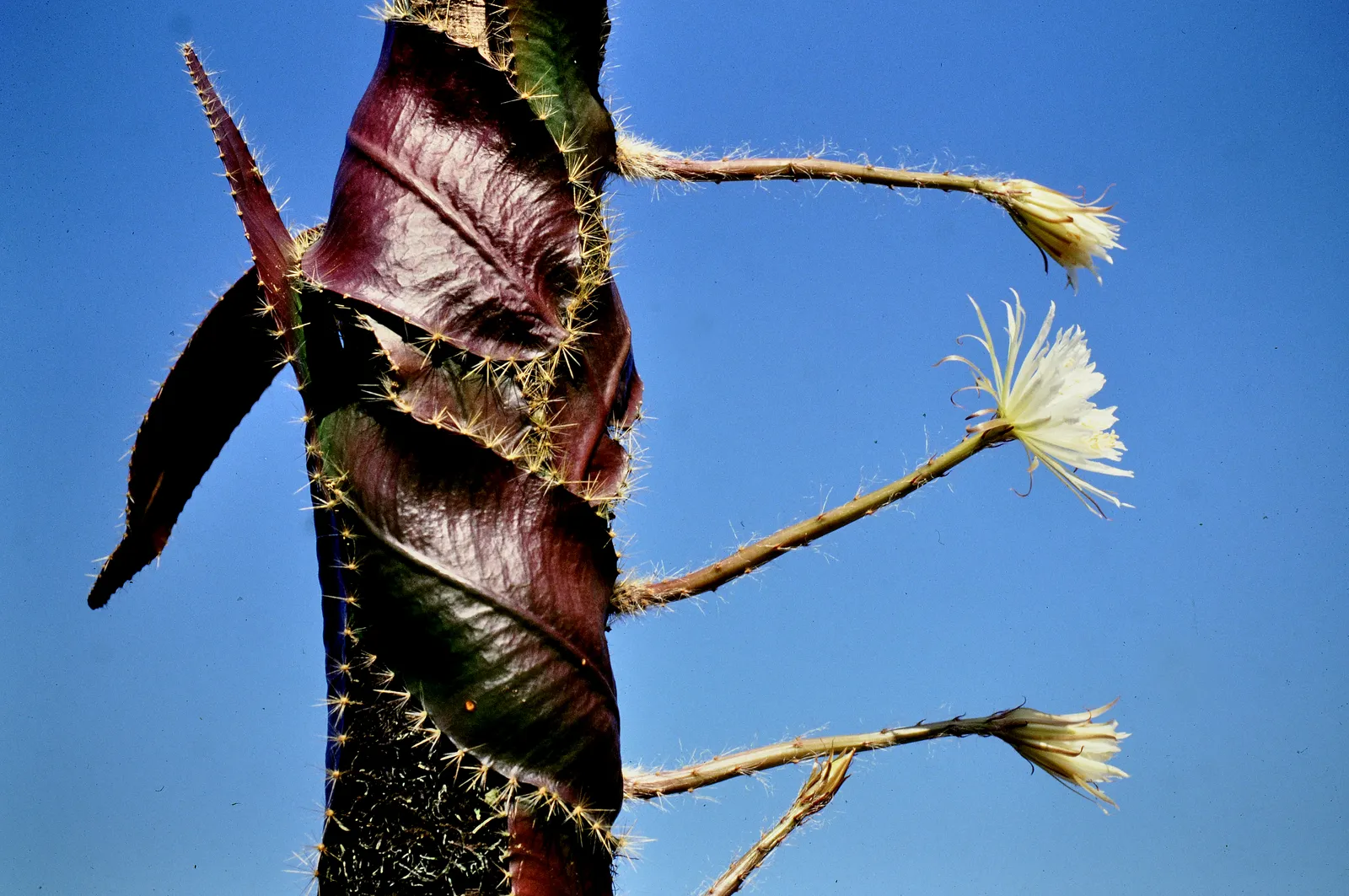
The Dog Tail Cactus, known scientifically as Strophocactus wittii, is an extraordinary epiphytic or lithophytic member of the Cactaceae family, native to the humid tropical forests of South America, primarily found clinging to trees or rocks in regions of Argentina, Bolivia, and Brazil. Unlike many terrestrial cacti, this species thrives in environments with higher humidity and dappled light, often found in the understory of large trees in the Amazon basin, a testament to its unique evolutionary adaptations. Its morphology is striking and highly distinctive, setting it apart from its more upright desert-dwelling relatives. The plant is characterized by its exceptionally long, trailing, and pendent stems, which can extend gracefully up to 2 feet (60 cm) or more, contributing to its common name. These stems are markedly flattened and segmented, typically measuring around 1 inch (2.5 cm) in width, with a vibrant green surface that can sometimes exhibit reddish tints under higher light exposure.
A defining feature is the prominent, spiraled tubercles that adorn the stems, giving them a textured appearance. As the stems mature, they develop a distinctive channeled pattern along their edges, adding to their unique aesthetic. Rather than sharp spines, its areoles typically bear soft, bristle-like spines that are less prominent than those of many other cacti. The stems emerge from a robust, calloused base, an adaptation that not only provides structural stability but also serves as a crucial reservoir for moisture and nutrients, essential for its survival in its native arboreal or rocky niches. When in bloom, the Dog Tail Cactus produces truly spectacular, nocturnal flowers.
These tubular blossoms are predominantly white, often with a delicate hint of pink or cream, and can reach an impressive length of approximately 6 inches (15 cm). The flowers typically emerge in clusters, creating a dramatic and attractive contrast against the verdant stems. Following successful pollination, the plant may produce small, fleshy fruits.
Trusted Scientific References
1. Authoritative external sources for Strophocactus wittii
1.1 Wikipedia — Strophocactus wittii
1.2 Kew POWO (Plants of the World Online)
1.3 PubMed — peer-reviewed research
1.4 NCBI Taxonomy Browser
1.5 GBIF — Global Biodiversity
1.1.Dog Tail Cactus — Distinguishing Points
- ✓Epiphytic/Lithophytic Growth — Thrives naturally on trees or rocks in humid environments.
- ✓Pendent, Trailing Stems — Characterized by exceptionally long stems that can extend over 2 feet.
- ✓Flattened, Segmented Morphology — Distinctive flattened and segmented stem structure.
- ✓Nocturnal, White Flowers — Produces large, fragrant, tubular white flowers that open at night.
- ✓High Humidity Preference — Uniquely adapted to higher humidity levels, unlike many desert cacti.
- ✓Soft Bristle — like Spines — Areoles bear soft, less prominent spines compared to typical cacti.
- ✓Robust Calloused Base — Provides structural stability and acts as a reservoir for moisture and nutrients.
- ✓Native to Amazon Basin — Found in tropical rainforests of Argentina, Bolivia, and Brazil.
- ✓Ornamental Houseplant — Highly valued for its aesthetic appeal in hanging baskets and indoor displays.
- ✓Unique Spiraled Tubercles — Stems feature prominent, spiraled tubercles, giving them a textured appearance.
1.2.Dog Tail Cactus — Quick Summary
- ✓Unique Epiphytic Cactus — Strophocactus wittii is a distinctive trailing cactus native to the Amazonian rainforests, known for its epiphytic or lithophytic growth habit.
- ✓Ornamental Value — Highly prized in horticulture for its long, pendent stems and spectacular, fragrant nocturnal white flowers.
- ✓Specific Care Needs — Requires well-draining soil, more consistent moisture than desert cacti, high humidity, and protection from frost.
- ✓Limited Medicinal Research — There are currently no documented traditional or modern medicinal uses for human consumption for this species.
- ✓Ecological Importance — Plays a vital role in its native rainforest ecosystem, contributing to biodiversity and habitat support.
2.Dog Tail Cactus — Nomenclature & Classification
3.Dog Tail Cactus — Fact Sheet
4.Dog Tail Cactus — Botanical Features
5.Dog Tail Cactus — Ecological Habitat
6.Dog Tail Cactus — Traditional Uses
7.Dog Tail Cactus — Chemical Profile
- ✓Mucilage — Predominantly polysaccharides, these compounds are crucial for water retention and provide structural integrity, typical for cacti adapted to varying moisture levels.
- ✓Flavonoids — A class of phenolic compounds, potentially present in the stems and areoles, which in other plants contribute to antioxidant and anti-inflammatory activities. Specific profiles for S. wittii are largely uncharacterized.
- ✓Triterpenes — These complex steroid-like compounds are found in many plant species, including cacti, potentially playing roles in plant defense and structural components, though specific types in S. wittii require investigation.
- ✓Organic Acids — Such as malic acid, involved in the Crassulacean Acid Metabolism (CAM) photosynthetic pathway, which is characteristic of cacti for efficient water use.
- ✓Polysaccharides (Structural) — Beyond mucilage, various complex carbohydrates form the structural components of cell walls, essential for plant architecture and growth.
- ✓Carotenoids — Pigments present in the green stems, vital for photosynthesis and offering protection against UV radiation, contributing to the plant's overall health.
- ✓Waxes and Lipids — Cuticular waxes on the stem surface play a critical role in reducing water loss through transpiration, a common adaptation in Cactaceae.
- ✓Alkaloids — While some cacti are known for specific alkaloids, there is no documented evidence or traditional use suggesting the presence of medicinally significant alkaloids in Strophocactus wittii.
8.Dog Tail Cactus — Pharmacological Findings
- ✓Antioxidant Potential — Like many plants, some cacti contain phenolic compounds and flavonoids which may offer antioxidant activity, though specific research on Strophocactus wittii is limited.
- ✓Hydration Support — The mucilage found in many cacti could potentially contribute to hydration and soothing properties, though internal use of S. wittii is not traditionally documented.
- ✓Ornamental Therapy — The visual appeal and unique growth habit of the Dog Tail Cactus can contribute to mental well-being and stress reduction in horticultural therapy, promoting a calming environment.
- ✓Ecological Niche Support — Its role as an epiphyte supports biodiversity and ecological balance in its native rainforest habitat, contributing to overall ecosystem health.
- ✓Phytochemical Interest — Its unique adaptations and underexplored nature suggest potential for novel phytochemicals, warranting further scientific investigation into its constituents.
- ✓Bioprospecting Potential — The plant's ability to thrive in specific environmental conditions could hint at compounds with industrial or pharmaceutical applications, subject to rigorous study and isolation.
- ✓Air Quality Contribution — As a living plant, it contributes to minor improvements in indoor air quality through photosynthesis and transpiration, a general benefit of houseplants.
- ✓Horticultural Education — Cultivating this species offers educational benefits, teaching about unique plant adaptations and the diversity of the Cactaceae family.
8.1.Dog Tail Cactus — Conditions Traditionally Used For
9.Dog Tail Cactus — Cautions & Contraindications
9.1.Dog Tail Cactus — Caution Notes
- ✓Skin Irritation — Contact with the plant's soft, bristle-like spines, though less severe than sharp spines, can cause minor skin irritation or discomfort in sensitive individuals.
- ✓Allergic Reactions — While uncommon, individuals with plant sensitivities may experience mild allergic contact dermatitis from direct exposure to plant sap or tissues.
- ✓Root Rot from Overwatering — Improper watering practices, particularly overwatering, can lead to root rot, stem discoloration, and the overall decline of the plant, impacting its vitality.
- ✓Weak Stems from Low Light — Insufficient light exposure can result in etiolated, weak, and pale stems, reducing the plant's aesthetic appeal and health.
- ✓Frost Damage — Exposure to freezing temperatures will severely damage or kill the plant, causing tissue necrosis and stem collapse.
- ✓Pet/Child Safety — Although generally non-toxic, the presence of spines, even soft ones, could pose a minor risk of injury if handled carelessly by pets or small children.
9.2.Dog Tail Cactus — Safety Overview
- ✓Non-Toxic (Generally) — Strophocactus wittii is not reported to be toxic to humans or pets upon ingestion, making it a safe ornamental choice for most households.
- ✓Handling Precautions — Exercise care when handling the plant to avoid contact with its bristle-like spines, especially for individuals with sensitive skin or allergies.
- ✓Environmental Suitability — Best grown in controlled indoor environments or warm, humid climates to ensure optimal health and prevent damage from frost or extreme dry heat.
- ✓Pest Management — Regular inspection for common cactus pests like mealybugs or spider mites is advised, as infestations can weaken the plant and spread to others.
- ✓Water Management — Crucial to allow the potting medium to dry out completely between waterings to prevent fungal diseases and root rot, which are common issues for cacti.
- ✓Light Exposure — Provide bright, indirect light to full sun to ensure robust growth and encourage the spectacular nocturnal blooms.
- ✓No Documented Medicinal Use — There are no traditional or modern medicinal applications for Strophocactus wittii for human consumption; its primary value is ornamental.
10.Dog Tail Cactus — Preparation Methods
- ✓Ornamental Display — Primarily cultivated as an attractive houseplant or conservatory specimen, valued for its unique trailing stems and striking nocturnal flowers.
- ✓Hanging Baskets — Its distinct pendent growth habit makes it an ideal candidate for hanging planters, allowing its long stems to cascade gracefully.
- ✓Epiphytic Mounting — Can be mounted on bark or wood plaques, mimicking its natural arboreal growth in humid environments, creating a living art piece.
- ✓Terrarium/Vivarium Accent — Suitable for large, humid terrariums or vivariums, where it adds a unique structural and botanical element to enclosed ecosystems.
- ✓Botanical Garden Specimen — Valued in botanical collections and public displays for its rarity, distinctive morphology, and educational interest.
- ✓Horticultural Photography — Its unusual form and beautiful, short-lived nocturnal blooms make it a popular and captivating subject for plant photography and enthusiast communities.
11.Dog Tail Cactus — Cultivation & Care
- ✓Light — Prefers full sun to partial sun; in its native habitat, it receives dappled light. Insufficient light can lead to thin, dull stems.
- ✓Soil — Requires a fast-draining cactus mix, ideally two parts mineral (sand, perlite, fine gravel) to one part organic matter, to prevent root rot.
- ✓Water — Needs more water than typical desert cacti, especially during summer. Allow the soil to dry out completely between waterings to avoid overwatering issues.
- ✓Temperature and Humidity — Tolerates temperatures from 40°F to 90°F (4°C to 32°C) but cannot withstand frost. It prefers higher humidity, making it suitable for indoor growth in cooler regions.
- ✓Fertilizer — Once root-bound and established, feed regularly with a diluted cactus-specific fertilizer during active growth periods. A bloom booster can encourage flowering in spring and summer.
- ✓Propagation — Easily propagated from stem cuttings: allow cut pieces to callus for 3-4 days before planting in potting mix. Root division is also effective. Growing from seeds is challenging due to seedling fragility.
- ✓Pruning — Pruning is generally not necessary unless stems are dead, damaged, or excessively long. Carefully remove affected parts at their branch point.
- ✓Overwintering — Best overwintered indoors in cooler climates, ideally near a window or under grow lights, to protect from frost and dampness.
Reviewed by the Flora Medical Global Botanical Review Panel
Multi-disciplinary editorial group · Botany · Ethnobotany · Herbal-medicine literature
Who reviewed this: This page was checked by the Flora Medical Global Botanical Review Panel — an in-house editorial group of botany graduates, ethnobotany researchers, and horticulture practitioners who collectively maintain our 7,000+ plant encyclopedia. Meet the team.
Our 4-step verification process
1. Taxonomic verification
Scientific names and synonyms cross-checked against Kew POWO, World Flora Online, and The Plant List.
2. Phytochemical & medicinal cross-reference
Active compounds, traditional uses, and reported activities are cross-referenced with PubMed, USDA Dr. Duke's database, and peer-reviewed ethnobotanical literature.
3. Conservation & distribution check
Distribution, ecology, and conservation status confirmed against GBIF occurrence records and the IUCN Red List.
4. Editorial & safety review
Every entry passes an editorial pass for clarity, originality, and safety notices (toxicity, contraindications, dosage caveats) before publication.
Last reviewed:
Important medical disclaimer: This content is for educational and research purposes only. It is not medical advice and is not a substitute for consultation with a licensed healthcare provider. Do not use any herb to self-treat a medical condition without professional guidance.
Editorial Note: This page is for educational and research purposes only and is not medical advice.
Written by: Flora Medical Global Editorial Team
Reviewed by: Flora Medical Global Botanical Review Panel
Last Updated: June 15, 2026





Dog Tail Cactus — Comments & Community Reviews
Rate this plant