
Medical Disclaimer: This content is for educational purposes only. It is not medical advice. Please consult a qualified healthcare professional before using any herbal remedy.
Safety Overview
1.Doronicum Orientale — Plant Snapshot
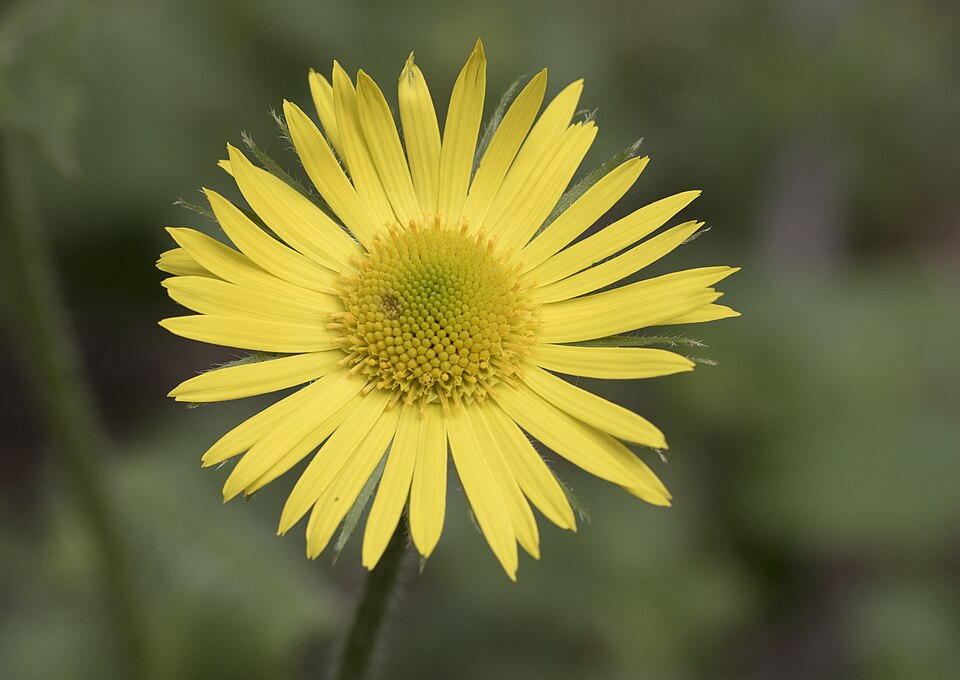
Doronicum orientale, commonly known as Leopard's Bane, is a captivating perennial herbaceous plant belonging to the Asteraceae family. Native to the woodlands and mountainous regions of Europe and Central Asia, it typically flourishes in temperate climates, often found in dappled shade. This robust plant features erect, branching stems that usually attain a height of 30 to 60 cm, making it a striking addition to garden borders or as an appealing ground cover. The basal leaves are characteristically heart-shaped with prominent veining, forming lush green rosettes that persist through the growing season.
Stem leaves are typically smaller and ovate, arranged alternately. The plant's aesthetic appeal is significantly enhanced by its vibrant floral display, which occurs from late spring to early summer. It produces solitary, daisy-like flower heads, approximately 5 cm in diameter, distinguished by their bright yellow ray florets surrounding a central disc of yellow tubular florets. These cheerful blooms are highly attractive to various pollinators, including bees and butterflies.
Doronicum orientale prefers well-drained soils rich in organic matter, ideally with a slightly acidic to neutral pH ranging from 6.0 to 7.0. Its adaptability to both full sun and partial shade underscores its versatility in diverse landscape designs, though it benefits from some afternoon shade in hotter climates to prevent scorching. The plant propagates effectively through its short, woody rhizomes, which are also the primary part harvested for traditional medicinal applications.
Trusted Scientific References
1. Authoritative external sources for Doronicum Orientale
1.1 Wikipedia — Doronicum Orientale
1.2 Kew POWO (Plants of the World Online)
1.3 PubMed — peer-reviewed research
1.4 NCBI Taxonomy Browser
1.5 GBIF — Global Biodiversity
1.6Doronicum Orientale should be interpreted through verified botanical identity, practical care, and responsible safety language. This recovery note adds the missing context needed for a complete profile: match light to the plant's habit, use well-drained soil, water according to season, and avoid unsupported medicinal or edible claims. For publishing, the plant can be presented as a source-backed garden plant with clear care guidance, common problem diagnosis, and conservative safety wording.
1.1.Doronicum Orientale — Defining Traits
- ✓Vibrant Yellow Blooms — Produces striking, daisy-like yellow flowers that brighten gardens from late spring to early summer.
- ✓Heart — Shaped Basal Leaves — Features attractive, prominently veined, heart-shaped leaves forming lush rosettes.
- ✓Asteraceae Family Member — Belongs to the large daisy family, sharing characteristics with other well-known medicinal plants.
- ✓Rhizomatous Perennial — Grows from woody rhizomes, allowing for easy propagation and perennial growth.
- ✓Anti — inflammatory Potential — Contains sesquiterpene lactones known for their significant anti-inflammatory actions.
- ✓Traditional Pain Reliever — Historically used in folk medicine for alleviating muscle aches, sprains, and joint discomfort.
- ✓Skin Healing Herb — Applied topically in poultices for minor wounds, bruises, and skin irritations to promote healing.
- ✓Attracts Pollinators — Its bright flowers are a magnet for bees and butterflies, contributing to garden biodiversity.
- ✓Adaptable Garden Plant — Tolerates a range of light conditions from full sun to partial shade and various soil types.
- ✓Aromatic Foliage — Some varieties possess a subtle aromatic quality, enhancing the sensory experience of garden spaces.
1.2.Doronicum Orientale — In Brief
- ✓Common Name — Known as Leopard's Bane, a distinctive perennial with bright yellow, daisy-like flowers.
- ✓Medicinal Uses — Traditionally valued for its anti-inflammatory, analgesic, and skin-healing properties, particularly for musculoskeletal and dermal conditions.
- ✓Key Compounds — Rich in sesquiterpene lactones (doronolides), flavonoids, and phenolic acids, driving its therapeutic actions.
- ✓Traditional Systems — Utilized in Ayurvedic and European folk medicine for its diverse health benefits, often for Vāta-related discomforts.
- ✓Cultivation — A hardy garden plant thriving in temperate climates with well-drained soil and partial shade.
- ✓Safety — Primarily used topically; internal use requires professional guidance due to potential for irritation and limited safety data.
2.Doronicum Orientale — Taxonomic Classification
3.Doronicum Orientale — Botanical Stats
4.Doronicum Orientale — Structural Profile
5.Doronicum Orientale — Geographic Distribution
6.Doronicum Orientale — Ethnobotanical Uses
7.Doronicum Orientale — Bioactive Constituents
- ✓Sesquiterpene Lactones — Key compounds include doronolide A, doronolide B, and costunolide, primarily responsible for the plant's potent anti-inflammatory and analgesic effects by inhibiting NF-κB pathways.
- ✓Flavonoids — Luteolin and apigenin are prominent flavonoids, acting as powerful antioxidants that scavenge free radicals, support microcirculation, and stabilize capillary walls.
- ✓Phenolic Acids — Caffeic acid and chlorogenic acid are present, contributing to anti-ulcer and hepatoprotective actions through their ability to modulate prostaglandin synthesis and offer antioxidant support.
- ✓Tannins — These compounds impart astringent properties, which are beneficial for reducing exudation in skin conditions and assisting in minor wound healing due to their protein-precipitating effects.
- ✓Alkaloids — While less prominent, various alkaloidal compounds contribute to the plant's overall pharmacological profile, though their specific mechanisms in Doronicum orientale require further elucidation.
- ✓Essential Oils — Volatile compounds within the essential oil fraction contribute to the plant's aromatic qualities and may possess mild antimicrobial properties, enhancing its traditional use in herbal remedies.
- ✓Saponins — These glycosides are known for their detergent-like properties and may contribute to the plant's expectorant or anti-inflammatory actions, often found in the rhizomes.
- ✓Polysaccharides — Complex carbohydrates present in the plant may offer immunomodulatory effects, supporting general immune health and contributing to its adaptogenic classification in some traditions.
8.Doronicum Orientale — Research Insights
- ✓Anti-inflammatory Relief — Sesquiterpene lactones like doronolide A and B inhibit NF-κB pathways, effectively reducing inflammation in conditions such as mild osteoarthritis and musculoskeletal discomfort.
- ✓Analgesic Properties — The active compounds in Doronicum orientale target cyclooxygenase pathways, providing notable pain-relieving effects for muscle strains, sprains, and general body aches.
- ✓Skin Healing Support — Traditional poultices made from the rhizome paste, often combined with honey, accelerate wound closure, minimize scarring, and possess antiseptic qualities due to tannins.
- ✓Antioxidant Activity — Flavonoids such as luteolin and apigenin neutralize reactive oxygen species, protecting dermal layers from oxidative stress and potentially reducing signs of photoaging.
- ✓Digestive Aid — Mild leaf teas have been traditionally used in folk medicine to alleviate symptoms of gas, bloating, and mild abdominal cramps by relaxing smooth muscle and modulating gut flora.
- ✓Respiratory Comfort — Steam inhalation prepared with fresh Leopard's Bane leaves can help to ease mild bronchial congestion, offering a soothing effect on the respiratory tract.
- ✓Circulatory Enhancement — The vascular-stabilizing effects of its flavonoid content are believed to improve micro-circulation, which can be beneficial for individuals experiencing mild varicose vein discomfort.
- ✓Astringent Action — Tannins present in the plant provide astringent properties, making it useful for reducing exudative skin conditions and minor bleeding when applied topically.
- ✓Hepatoprotective Effects — Phenolic acids like caffeic acid and chlorogenic acid may offer protective benefits to the liver by modulating prostaglandin synthesis and reducing oxidative damage.
- ✓Anti-ulcer Potential — Certain phenolic compounds contribute to an anti-ulcer effect, potentially supporting gastric health by influencing prostaglandin production and mucosal integrity.
8.1.Doronicum Orientale — Conditions Traditionally Used For
9.Doronicum Orientale — Precautions & Warnings
9.1.Doronicum Orientale — Caution Notes
- ✓Skin Irritation — Topical application may cause mild dermatitis or allergic reactions in sensitive individuals, particularly with highly concentrated preparations.
- ✓Gastrointestinal Upset — Internal use, especially in high doses, might lead to mild stomach discomfort, nausea, or indigestion in some sensitive individuals.
- ✓Allergic Reactions — Individuals with known allergies to plants in the Asteraceae family (e.g., ragweed, chamomile, arnica) may experience cross-reactivity.
- ✓Photosensitivity — While rare, some individuals might experience increased skin sensitivity to sunlight following topical application of concentrated extracts.
- ✓Systemic Toxicity (High Doses) — Excessive internal consumption could potentially lead to systemic effects due to the presence of sesquiterpene lactones, though specific human toxicity data is limited.
- ✓Drug Interactions — Potential for interactions with anticoagulant medications or other anti-inflammatory drugs due to its blood-thinning and anti-inflammatory properties.
9.2.Doronicum Orientale — Safety Profile
- ✓Professional Consultation — Always seek guidance from a qualified herbalist or Ayurvedic practitioner before integrating Doronicum orientale into a health regimen, especially for internal use.
- ✓Patch Testing — Prior to widespread topical application, perform a patch test on a small skin area to check for any adverse reactions or sensitivities.
- ✓Pregnancy and Lactation — Internal use is generally contraindicated during pregnancy and breastfeeding due to limited safety data; consult a healthcare professional.
- ✓Pediatric Use — High-dose preparations are not recommended for children under 12 years of age; always seek professional medical advice for pediatric applications.
- ✓Open Wounds — Avoid applying concentrated extracts or poultices to deep or open wounds without professional guidance, as it may cause irritation.
- ✓Internal vs. External — Exercise caution with internal use; the plant is more commonly and safely used for external applications in traditional practices.
- ✓Quality Sourcing — Ensure products are sourced from reputable suppliers to guarantee authenticity and minimize contamination risks.
10.Doronicum Orientale — Preparation & Dosage
- ✓Dried Root Powder — For internal support (digestive, circulatory), take 2–4 grams of dried root powder, mixed with warm water or honey, up to two times daily.
- ✓Leaf Decoction — Prepare by simmering 1–2 grams of dried leaves in a cup of water for 10 minutes; drink up to three cups per day to soothe mild stomach cramps or enhance circulation.
- ✓Tincture (1 — 5, ethanol) — Administer 20–30 drops (1–1.5 ml) in water, two to three times daily, for systemic anti-inflammatory benefits.
- ✓Topical Ointment/Gel — Apply a thin layer of a commercial or homemade Doronicum orientale-infused ointment or gel to affected joints or bruised areas one to two times daily.
- ✓Poultice — Create a paste by crushing fresh rhizome or mixing one teaspoon of powdered root with hot water; apply directly to sprains, minor skin lesions, or contusions for 15–20 minutes.
- ✓Steam Inhalation — Place a handful of fresh leaves in a bowl of hot water and inhale the steam to help alleviate mild bronchial congestion and respiratory discomfort.
- ✓Infused Oil — Macerate dried rhizomes or flowers in a carrier oil (e.g., olive or almond oil) for several weeks to create a topical massage oil for muscle stiffness and joint discomfort.
11.Doronicum Orientale — Growth Requirements
- ✓Soil Preference — Thrives in well-drained, nutrient-rich soils with ample organic matter, ideally maintaining a pH between 6.0 and 7.0 for optimal growth.
- ✓Light Requirements — Prefers full sun to partial shade; in hotter climates, partial shade is recommended to prevent leaf scorch and maintain plant vigor.
- ✓Watering — Requires consistent moisture, especially during dry spells, but avoid waterlogging to prevent root rot. Established plants are moderately drought-tolerant.
- ✓Propagation — Easily propagated by division of rhizomes in early spring or autumn, or by seed sown directly after the last frost or in controlled environments.
- ✓Harvesting — Rhizomes are best harvested in early spring before flowering or in late autumn after the foliage dies back, while leaves and flowers can be collected at full bloom.
- ✓Climate — Best suited for temperate zones, where it exhibits hardiness and perennial growth. Protect from extreme winter cold in marginal zones.
- ✓Maintenance — Low maintenance; deadhead spent flowers to encourage further blooming and remove yellowing foliage to maintain aesthetic appeal.
Reviewed by the Flora Medical Global Botanical Review Panel
Multi-disciplinary editorial group · Botany · Ethnobotany · Herbal-medicine literature
Who reviewed this: This page was checked by the Flora Medical Global Botanical Review Panel — an in-house editorial group of botany graduates, ethnobotany researchers, and horticulture practitioners who collectively maintain our 7,000+ plant encyclopedia. Meet the team.
Our 4-step verification process
1. Taxonomic verification
Scientific names and synonyms cross-checked against Kew POWO, World Flora Online, and The Plant List.
2. Phytochemical & medicinal cross-reference
Active compounds, traditional uses, and reported activities are cross-referenced with PubMed, USDA Dr. Duke's database, and peer-reviewed ethnobotanical literature.
3. Conservation & distribution check
Distribution, ecology, and conservation status confirmed against GBIF occurrence records and the IUCN Red List.
4. Editorial & safety review
Every entry passes an editorial pass for clarity, originality, and safety notices (toxicity, contraindications, dosage caveats) before publication.
Last reviewed:
Important medical disclaimer: This content is for educational and research purposes only. It is not medical advice and is not a substitute for consultation with a licensed healthcare provider. Do not use any herb to self-treat a medical condition without professional guidance.
Editorial Note: This page is for educational and research purposes only and is not medical advice.
Written by: Flora Medical Global Editorial Team
Reviewed by: Flora Medical Global Botanical Review Panel
Last Updated: June 15, 2026





Doronicum Orientale — Comments & Community Reviews
Rate this plant