
Medical Disclaimer: This content is for educational purposes only. It is not medical advice. Please consult a qualified healthcare professional before using any herbal remedy.
Safety Overview
1.Dracula Orchid — At a Glance
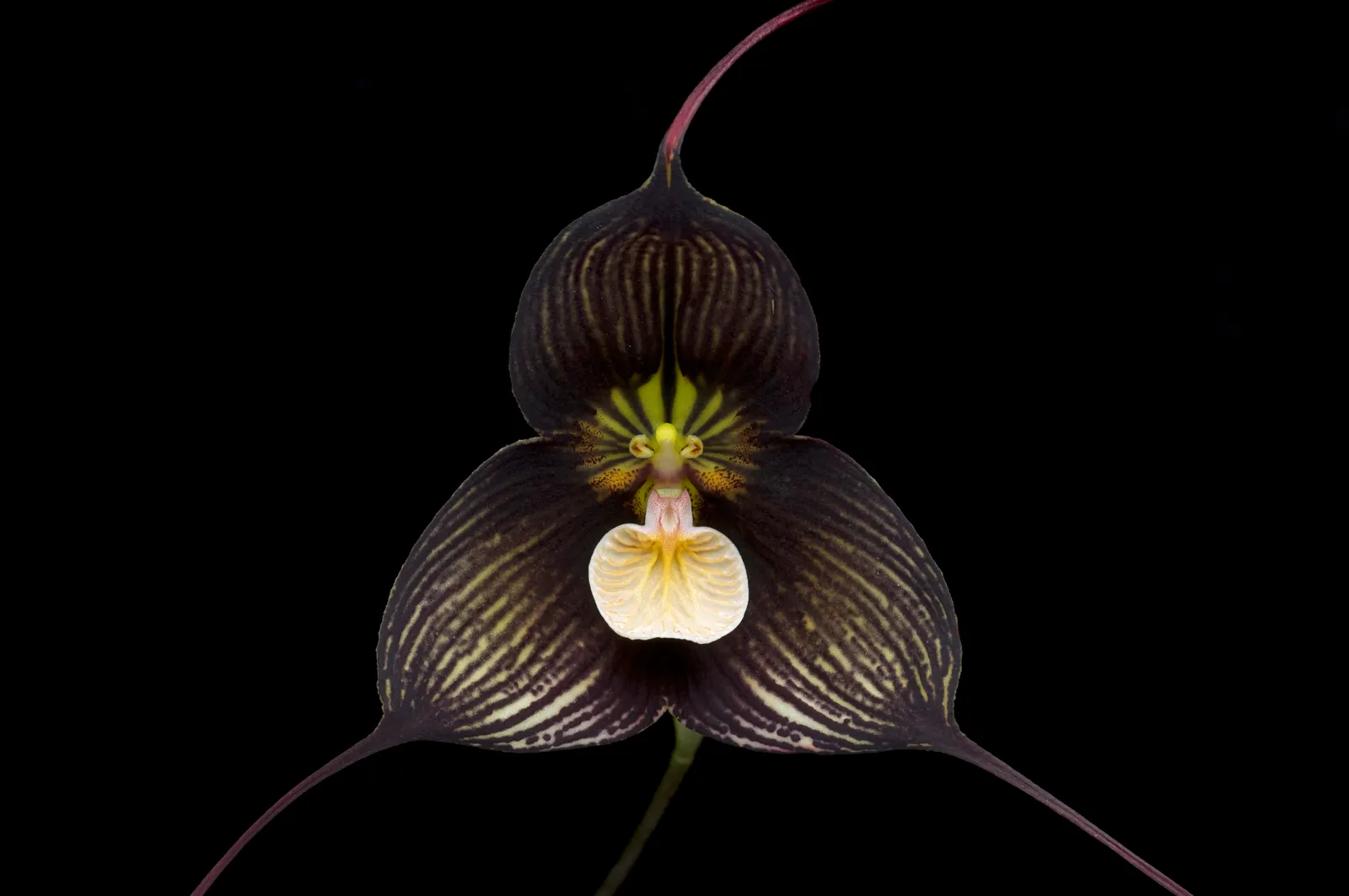
Dracula vampira, commonly known as the Dracula Orchid or Vampire Orchid, is a profoundly unique and captivating species within the genus Dracula, native to the perpetually moist cloud forests of Ecuador and Colombia. This intriguing herbaceous perennial typically reaches a height of up to 30 cm (approximately 12 inches). Its leaves are characteristically thick and leathery, usually dark green, measuring around 10-15 cm (4-6 inches) in length and 3-5 cm (1-2 inches) in width, with a distinct elongated shape optimized for capturing atmospheric moisture in its humid environment. The most striking feature of the Dracula Orchid is its peculiar, bat-like flowers, which often bloom in clusters.
Each blossom showcases deep maroon to dark purple petals with a creamy white and yellow lip, creating an exquisite and eerie contrast. The flowers have a diameter of approximately 5-8 cm (2-3 inches) and are typically held atop slender, often pendent stems that emerge from the basal foliage. A notable morphological trait is the presence of long, slender tails on its sepals, contributing to its dragon-like or 'vampire' appearance, while the apices of the short petals exhibit a warty texture, often interpreted as eye-like structures. The growth habitat of Dracula vampira is primarily shaded, high-humidity montane cloud forests, where it thrives in cool, consistent temperatures with filtered sunlight at elevations ranging from 1,400 to 2,000 meters (4,500–6,500 feet).
Taxonomically, it belongs to the diverse family Orchidaceae, which encompasses a vast array of orchids celebrated for their intricate floral structures and remarkable adaptations to various ecological niches. It predominantly grows as an epiphyte, residing on other plants or rocks, absorbing moisture and nutrients from the air and surrounding detritus, though some species can also be found terrestrially.
Trusted Scientific References
1. Authoritative external sources for Dracula vampira
1.1 Wikipedia — Dracula vampira
1.2 Kew POWO (Plants of the World Online)
1.3 PubMed — peer-reviewed research
1.4 NCBI Taxonomy Browser
1.5 GBIF — Global Biodiversity
1.1.Dracula Orchid — Notable Characteristics
- ✓Bat — like Flowers — Distinctive deep maroon to dark purple blossoms with unique morphology.
- ✓Epiphytic Growth Habit — Thrives on other plants or rocks, absorbing moisture from the air.
- ✓Cloud Forest Native — Indigenous to high-altitude, perpetually humid montane regions.
- ✓Cool — Growing Orchid — Requires consistently cool temperatures for optimal health and flowering.
- ✓High Humidity Dependent — Demands 70-85% relative humidity for survival and vigor.
- ✓Pendent Inflorescences — Flowers often emerge downwards, necessitating specialized potting methods.
- ✓Warty Petal Apices — Unique texture on petals resembling small eyes, adding to its eerie charm.
- ✓Long Sepal Tails — Characteristic elongated sepal tips contribute to its dragon-like appearance.
- ✓Ornamental Value — Highly prized by orchid enthusiasts and collectors for its exotic beauty.
- ✓Genus Dracula — Part of a fascinating group of approximately 134 species, known for their unique floral structures.
1.2.Dracula Orchid — Concise Overview
- ✓Dracula vampira, or Dracula Orchid, is an exotic epiphytic orchid.
- ✓Native to the cloud forests of Ecuador and Colombia.
- ✓Features unique, bat-like, deep maroon flowers with long sepal tails.
- ✓Primarily ornamental, highly prized by orchid collectors for its aesthetic.
- ✓Requires cool temperatures, high humidity, and filtered light for cultivation.
- ✓No significant traditional or modern medicinal uses are documented for this species.
2.Dracula Orchid — Botanical Identity
3.Dracula Orchid — Fact Sheet
4.Dracula Orchid — Physical Description
5.Dracula Orchid — Ecological Habitat
6.Dracula Orchid — Heritage Uses
7.Dracula Orchid — Phytochemistry
- ✓Specific phytochemical analyses for Dracula vampira are largely undocumented due to its primary ornamental status and lack of traditional medicinal use. However, based on general orchid phytochemistry, the following categories of compounds are typically found across the Orchidaceae family and may be present in this species, contributing to its structural integrity and potential biological interactions, though their specific activities in D. vampira remain uninvestigated.
- ✓Flavonoids — Compounds like quercetin and kaempferol are common in orchids, known for their antioxidant and potential anti-inflammatory properties.
- ✓Terpenoids — A diverse group including monoterpenes, sesquiterpenes, and triterpenoids, which can possess various biological activities such as anti-inflammatory or antimicrobial effects.
- ✓Alkaloids — Some orchid genera contain alkaloids, which are nitrogen-containing compounds often associated with specific pharmacological activities.
- ✓Phenolic Acids — Such as gallic acid and caffeic acid, contribute to the plant's antioxidant capacity and defense mechanisms.
- ✓Polysaccharides — Complex carbohydrates found in many orchids, often studied for potential immunomodulatory and prebiotic effects.
- ✓Stilbenoids — Compounds like orchinol and gigantol, found in certain orchids, are known for their antifungal, antioxidant, and potential anti-cancer properties.
- ✓Anthocyanins — Pigments responsible for the deep maroon and purple coloration of the flowers, also potent antioxidants.
- ✓Phytosterols — Plant steroids that are structural components of cell membranes, with some exhibiting anti-inflammatory properties.
- ✓Lipids and Fatty Acids — Essential for cell structure and energy storage, with some fatty acids having bioactive roles.
- ✓Amino Acids and Proteins — Fundamental building blocks for plant growth and enzymatic processes, crucial for overall plant health.
- ✓Volatile Organic Compounds (VOCs) — Responsible for the orchid's subtle fragrance, playing a role in attracting pollinators.
8.Dracula Orchid — Evidence-Based Benefits
- ✓While Dracula vampira is primarily revered for its ornamental value and unique aesthetic, it is not traditionally documented for significant medicinal uses in systems like Ayurveda, Traditional Chinese Medicine (TCM), Unani, or Siddha. However, broader research into the Orchidaceae family suggests potential pharmacological properties in various other orchid species, which are outlined below, though not directly attributed to Dracula vampira.
- ✓Ornamental Value — The striking beauty of the Dracula Orchid provides significant aesthetic pleasure, contributing to psychological well-being and stress reduction through horticultural engagement.
- ✓Potential Anti-inflammatory Effects — Research on certain orchid species suggests the presence of compounds like flavonoids and terpenoids that exhibit in vitro anti-inflammatory activities.
- ✓Potential Antioxidant Activity — Many orchid extracts, though not specifically Dracula vampira, have shown antioxidant properties due to the presence of phenolic compounds, combating oxidative stress.
- ✓Potential Immunomodulatory Properties — Some orchid species, particularly those used in traditional Asian medicine, contain polysaccharides and other compounds that may modulate immune responses.
- ✓Potential Antimicrobial Properties — Extracts from various orchids have demonstrated inhibitory effects against certain bacteria and fungi in laboratory settings, indicating potential antimicrobial applications.
- ✓Anti-cancer Research Interest — Selected orchid species have been the subject of preliminary research for potential anti-cancer compounds, though this is a broad family-level observation.
- ✓Air Quality Improvement (General Plant Benefit) — Like many plants, orchids can contribute to indoor air purification by absorbing certain volatile organic compounds, enhancing living environments.
- ✓Horticultural Therapy — Engaging with the cultivation of unique plants like the Dracula Orchid can offer therapeutic benefits, promoting focus, patience, and a sense of accomplishment.
- ✓Educational and Conservation Value — The plant serves as an important subject for botanical study and a flagship species for cloud forest conservation efforts, raising awareness about biodiversity.
- ✓Symbolic Significance — Culturally, orchids often symbolize beauty, luxury, strength, and refinement, offering indirect psychological benefits through their presence and meaning.
- ✓Habitat Indicator — The presence of Dracula vampira in its natural environment indicates a healthy, specific cloud forest ecosystem, highlighting its ecological importance.
- ✓Aesthetic Enhancement — Its exotic appearance makes it a prized specimen in specialized plant collections, enhancing the aesthetic appeal of a curated indoor garden space.
8.1.Dracula Orchid — Indications & Uses
9.Dracula Orchid — Safety & Side Effects
9.1.Dracula Orchid — Warnings
- ✓Given that Dracula vampira is primarily an ornamental plant with no documented history of medicinal or culinary use, specific side effects from ingestion or application are not established. Potential issues are generally related to horticultural management or general plant interactions.
- ✓No Known Medicinal Toxicity — There are no documented adverse effects from internal medicinal use, as the plant is not traditionally consumed for therapeutic purposes.
- ✓Horticultural Challenges — Improper cultivation conditions (e.g., low humidity, high temperatures, inadequate watering) can lead to plant stress, decline, and eventual loss of the specimen.
- ✓Fungal and Bacterial Diseases — Susceptible to various rots and infections, especially in stagnant, overly humid environments without sufficient air circulation, impacting plant health.
- ✓Pest Infestations — Like many cultivated orchids, Dracula vampira can be prone to common orchid pests such as spider mites, mealybugs, and scale insects if not regularly monitored and treated.
- ✓Allergic Reactions (Rare) — While highly uncommon for this species, contact with plant sap can theoretically cause mild skin irritation or allergic reactions in extremely sensitive individuals.
- ✓Ingestion Risk — Not intended for human or animal consumption; ingestion of any non-food plant material may cause mild digestive upset, though specific toxicity is not reported.
9.2.Dracula Orchid — Risk Assessment
- ✓Dracula vampira is considered safe for its intended purpose as an ornamental plant, with no known toxicity when handled or grown appropriately. Its safety profile is largely defined by its lack of medicinal application.
- ✓Non-Toxic for Ornamental Use — The plant is generally regarded as safe for cultivation and display in homes or greenhouses, posing no known health risks through casual contact.
- ✓No Documented Medicinal Use — Lacks a history of internal medicinal application, therefore, no established safety profile exists for ingestion or therapeutic use.
- ✓Avoid Ingestion — Not for human or animal consumption; it is prudent to keep the plant out of reach of curious children and pets to prevent accidental ingestion.
- ✓Horticultural Best Practices — When handling, especially during repotting, typical gardening precautions like wearing gloves are recommended, although the plant is not known to produce irritating sap.
- ✓Environmental Safety — Ensure responsible cultivation practices; avoid introducing the plant into natural environments outside its native range to prevent ecological disruption.
- ✓Allergy Precaution — Individuals with known sensitivities to plants should exercise caution, though allergic reactions specifically to Dracula vampira are exceptionally rare.
10.Dracula Orchid — Preparation Methods
- ✓Dracula vampira, the Dracula Orchid, is exclusively cultivated for its ornamental appeal and botanical interest, with no established medicinal or culinary uses. Its application centers around its unique horticultural characteristics.
- ✓Ornamental Display — Primarily grown as a spectacular specimen plant for its unusual and striking bat-like flowers in specialized orchid collections and botanical gardens.
- ✓Botanical Study — Utilized in academic and research settings for studies on orchid morphology, taxonomy, ecological adaptations, and conservation biology.
- ✓Hybridization Programs — Employed by experienced orchid breeders to introduce unique floral characteristics and genetic diversity into new Dracula hybrids.
- ✓Terrarium or Wardian Case Cultivation — Ideal for controlled environments like terrariums or Wardian cases, where precise humidity and temperature can be maintained consistently.
- ✓Conservation Efforts — Cultivated ex-situ (outside its natural habitat) by conservationists to preserve genetic material and maintain populations of this threatened species.
- ✓Aesthetic Enhancement — Adds an exotic and captivating element to specialized indoor growing spaces, greenhouses, or climate-controlled orchidariums.
- ✓Educational Tool — Serves as an excellent example for teaching about epiphytic plant adaptations, cloud forest ecosystems, and the intricate biology of the Orchidaceae family.
11.Dracula Orchid — How to Grow
- ✓Cultivating Dracula vampira, the Dracula Orchid, requires meticulous attention to specific environmental conditions to mimic its native cloud forest habitat. This species is often considered challenging for hobbyists but highly rewarding.
- ✓Temperature Range — Maintain cool to intermediate temperatures; ideally 8-12°C (47-54°F) during winter nights and not exceeding 25°C (77°F) during summer days.
- ✓High Humidity — Crucial for survival, consistently maintain 70-85% relative humidity, often requiring ultrasonic foggers or frequent misting throughout the day.
- ✓Shaded Environment — Requires filtered, indirect sunlight; a north or east-facing window or a heavily shaded greenhouse location is ideal to prevent leaf scorch.
- ✓Watering Regime — Keep the substrate continuously moist to wet; Dracula orchids do not tolerate drying out. Use low-salt water such as reverse osmosis, rainwater, or distilled water.
- ✓Substrate Choice — A well-draining yet moisture-retentive mix is essential, typically a 1:1 mixture of New Zealand sphagnum moss and washed coconut chips, with annual repotting.
- ✓Potting System — Use mesh pots or wooden baskets to accommodate the frequently pendent or decumbent inflorescences and ensure adequate air circulation around the roots.
- ✓Air Circulation — Excellent air movement is vital to prevent fungal and bacterial diseases, particularly in high humidity environments; utilize fans in enclosed spaces.
- ✓Nutrient Requirements — Fertilize sparingly every three to four weeks with a very dilute, low-salt fertilizer solution (e.g., 120-130 μS or 60-65 ppm TDS) adjusted to the water quality.
Reviewed by the Flora Medical Global Botanical Review Panel
Multi-disciplinary editorial group · Botany · Ethnobotany · Herbal-medicine literature
Who reviewed this: This page was checked by the Flora Medical Global Botanical Review Panel — an in-house editorial group of botany graduates, ethnobotany researchers, and horticulture practitioners who collectively maintain our 7,000+ plant encyclopedia. Meet the team.
Our 4-step verification process
1. Taxonomic verification
Scientific names and synonyms cross-checked against Kew POWO, World Flora Online, and The Plant List.
2. Phytochemical & medicinal cross-reference
Active compounds, traditional uses, and reported activities are cross-referenced with PubMed, USDA Dr. Duke's database, and peer-reviewed ethnobotanical literature.
3. Conservation & distribution check
Distribution, ecology, and conservation status confirmed against GBIF occurrence records and the IUCN Red List.
4. Editorial & safety review
Every entry passes an editorial pass for clarity, originality, and safety notices (toxicity, contraindications, dosage caveats) before publication.
Last reviewed:
Important medical disclaimer: This content is for educational and research purposes only. It is not medical advice and is not a substitute for consultation with a licensed healthcare provider. Do not use any herb to self-treat a medical condition without professional guidance.
Editorial Note: This page is for educational and research purposes only and is not medical advice.
Written by: Flora Medical Global Editorial Team
Reviewed by: Flora Medical Global Botanical Review Panel
Last Updated: June 15, 2026





Dracula Orchid — Comments & Community Reviews
Rate this plant