
Medical Disclaimer: This content is for educational purposes only. It is not medical advice. Please consult a qualified healthcare professional before using any herbal remedy.
Safety Overview
1.Drosera Garden — At a Glance
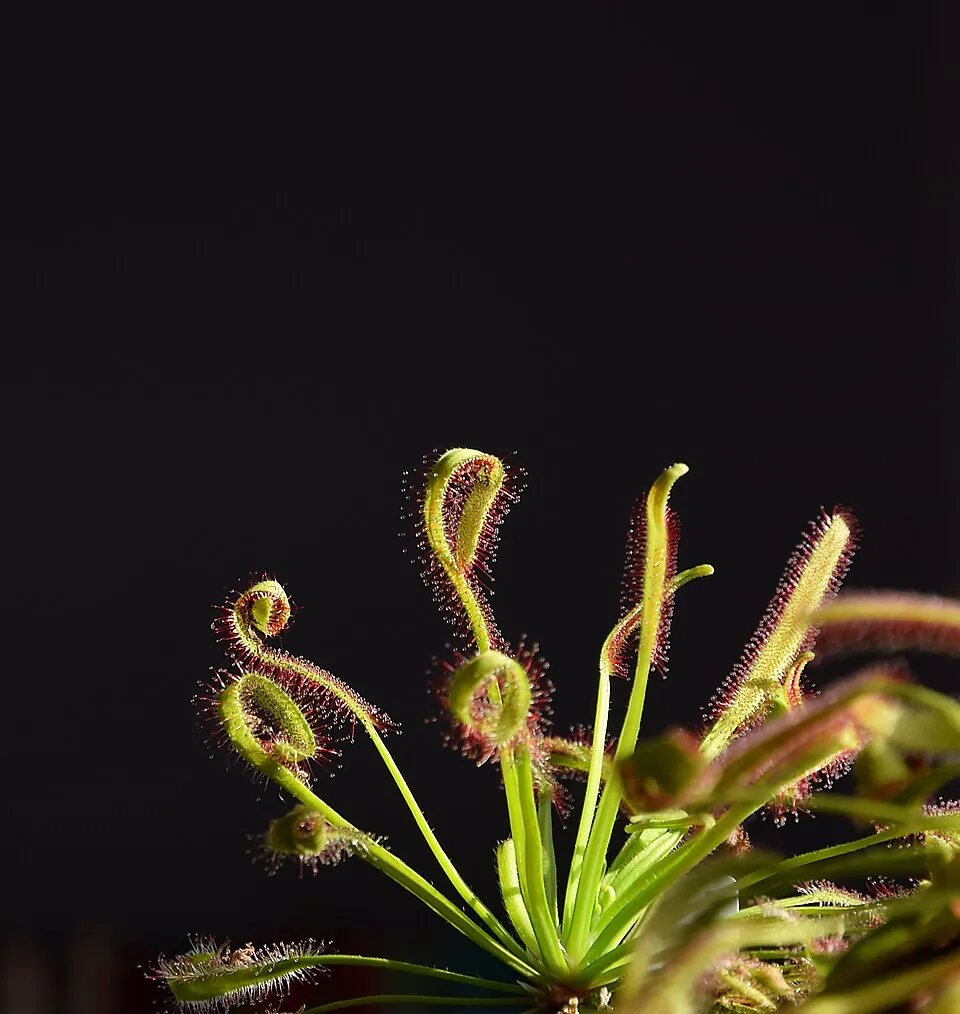
Drosera capensis, commonly known as the Cape Sundew, is a captivating perennial carnivorous plant native to the wetlands and boggy areas of the Cape Province and KwaZulu-Natal in South Africa. This fascinating species typically forms a basal rosette, growing to an average height of 15 to 30 centimeters, though its slender flower stalks can extend significantly taller, reaching up to 60 centimeters. Its distinctive spoon-shaped leaves, which can measure up to 20 centimeters in length, are densely covered with numerous reddish glandular hairs, resembling tiny dewdrops.
These tentacles secrete a sticky mucilage that serves to attract, trap, and digest small insects, providing the plant with essential nutrients, particularly nitrogen, from its nutrient-poor, acidic soil habitat. The plant produces clusters of small, delicate white to pale pink flowers that typically bloom during the summer months. Drosera capensis exhibits a low, creeping growth habit and is renowned for its adaptability, making it a popular and relatively easy-to-grow carnivorous plant for enthusiasts and gardeners worldwide.
Taxonomically, it belongs to the genus Drosera within the family Droseraceae, a diverse group known for its carnivorous adaptations.
Trusted Scientific References
1. Authoritative external sources for Drosera capensis
1.1 Wikipedia — Drosera capensis
1.2 Kew POWO (Plants of the World Online)
1.3 PubMed — peer-reviewed research
1.4 NCBI Taxonomy Browser
1.5 GBIF — Global Biodiversity
1.6Drosera Garden should be interpreted through verified botanical identity, practical care, and responsible safety language. This recovery note adds the missing context needed for a complete profile: match light to the plant's habit, use well-drained soil, water according to season, and avoid unsupported medicinal or edible claims. For publishing, the plant can be presented as a source-backed garden plant with clear care guidance, common problem diagnosis, and conservative safety wording.
1.1.Drosera Garden — Distinguishing Points
- ✓Carnivorous Nature — Traps insects using sticky glandular tentacles on its leaves.
- ✓Respiratory Aid — Renowned in traditional medicine for treating coughs, bronchitis, and asthma.
- ✓Active Compounds — Contains potent naphthoquinones like plumbagin and droserone.
- ✓Demulcent Properties — High mucilage content soothes irritated mucous membranes.
- ✓Endemic to South Africa — Native to the Cape Province and KwaZulu-Natal wetlands.
- ✓Decorative Plant — Highly prized by gardeners for its unique appearance and ease of cultivation.
- ✓Perennial Herb — Grows year-round in suitable tropical or subtropical conditions.
- ✓Adaptable Species — Tolerant of a range of growing conditions compared to other sundews.
- ✓Distinctive Morphology — Features spoon-shaped leaves and tall, slender flower stalks.
1.2.Drosera Garden — Snapshot Summary
- ✓Drosera capensis, or Cape Sundew, is a carnivorous plant native to South Africa.
- ✓Traditionally valued for its potent respiratory benefits, especially for coughs and spasms.
- ✓Rich in naphthoquinones (plumbagin, droserone), flavonoids, and mucilage.
- ✓Requires specific, nutrient-poor, acidic soil and distilled water for cultivation.
- ✓Available as teas, tinctures, and syrups for internal use.
- ✓Contraindicated in pregnancy, lactation, and for those on certain medications.
2.Drosera Garden — Scientific Identity
3.Drosera Garden — Fact Sheet
4.Drosera Garden — Physical Description
5.Drosera Garden — Native Range & Habitat
6.Drosera Garden — Heritage Uses
7.Drosera Garden — Key Phytochemicals
- ✓Naphthoquinones — Key compounds include plumbagin (5-hydroxy-2-methyl-1,4-naphthoquinone) and droserone, known for their potent antimicrobial, anti-inflammatory, and antispasmodic activities.
- ✓Flavonoids — Compounds like hyperoside, quercetin, and kaempferol contribute to the plant's antioxidant and anti-inflammatory properties, supporting cellular health.
- ✓Mucilage Polysaccharides — High content of complex polysaccharides provides demulcent and soothing effects, particularly beneficial for irritated mucous membranes in the respiratory tract.
- ✓Proteolytic Enzymes — Enzymes such as droserin are present, aiding in the digestion of insects; these may contribute to its traditional medicinal uses by breaking down proteins.
- ✓Organic Acids — Includes malic acid, citric acid, and tartaric acid, which contribute to the plant's overall chemical profile and potentially to its expectorant actions.
- ✓Tannins — Possess astringent properties, which can help reduce inflammation and exert mild antimicrobial effects.
- ✓Resins — Contribute to the plant's complex matrix of compounds, potentially enhancing its overall therapeutic synergy.
- ✓Volatile Oils — Present in trace amounts, these contribute to the plant's characteristic scent and may possess mild antiseptic qualities.
- ✓Minerals — Contains various trace minerals absorbed from its environment, contributing to its nutritional profile, though not primary active compounds.
8.Drosera Garden — Evidence-Based Benefits
- ✓Expectorant Action — Drosera capensis is traditionally used to promote the expulsion of mucus from the respiratory tract, easing congestion associated with coughs and colds.
- ✓Antitussive Properties — The plant's compounds help to suppress persistent, spasmodic, and irritating coughs, offering relief from respiratory irritation.
- ✓Antispasmodic Effects — It is valued for its ability to relax the smooth muscles of the bronchi, making it beneficial in conditions involving bronchial spasms like asthma and whooping cough.
- ✓Anti-inflammatory Support — Preliminary research suggests that certain constituents in Drosera capensis may help reduce inflammation in the respiratory system, alleviating symptoms of bronchitis.
- ✓Antimicrobial Activity — Some compounds, such as naphthoquinones, have demonstrated antimicrobial properties, potentially helping to combat respiratory pathogens.
- ✓Bronchodilator Potential — By relaxing the airways, Drosera capensis may contribute to easier breathing, particularly in cases of constricted bronchi.
- ✓Soothing for Sore Throats — The mucilage content provides a demulcent effect, coating and soothing irritated mucous membranes in the throat.
- ✓Immune Modulatory Effects — Certain plant constituents may help modulate the immune response, supporting the body's natural defenses against respiratory challenges.
- ✓Mild Sedative Qualities — Historically, it has been noted to offer a mild calming effect, which can be beneficial in managing the discomfort and anxiety associated with severe coughing fits.
- ✓Digestive Enzyme Support — The plant produces proteolytic enzymes for insect digestion, which might have some, albeit minor, systemic enzymatic benefits when consumed.
8.1.Drosera Garden — Health Applications
9.Drosera Garden — Cautions & Contraindications
9.1.Drosera Garden — Possible Adverse Reactions
- ✓Gastrointestinal Upset — May cause mild nausea, stomach discomfort, or diarrhea in sensitive individuals or with excessive doses.
- ✓Allergic Reactions — Potential for skin irritation, rashes, or respiratory symptoms in individuals sensitive to Drosera or its constituents.
- ✓Skin Irritation — Direct contact with the sticky glandular hairs can cause mild skin irritation or redness in some people.
- ✓Interaction with Medications — May interact with certain medications, particularly blood thinners or immunosuppressants, due to its active compounds.
- ✓Overdose Symptoms — High doses could potentially lead to increased gastrointestinal distress or other systemic effects.
- ✓Photosensitivity — Some naphthoquinones can induce photosensitivity in rare cases, though not commonly reported for Drosera capensis.
9.2.Drosera Garden — Toxicity Assessment
- ✓Pregnancy and Lactation — Contraindicated during pregnancy and breastfeeding due to insufficient safety data and potential uterine stimulant effects.
- ✓Young Children — Use with caution in very young children; always consult a pediatrician or qualified herbalist for appropriate dosing.
- ✓Pre-existing Conditions — Individuals with bleeding disorders, autoimmune diseases, or those on immunosuppressants should avoid use.
- ✓Medication Interactions — Consult a healthcare professional if taking any prescription medications, especially anticoagulants or anti-inflammatory drugs.
- ✓Allergic History — Avoid if known allergies to Drosera or plants in the Droseraceae family exist.
- ✓Professional Guidance — Always seek advice from a qualified medical herbalist or healthcare provider before using Drosera capensis for medicinal purposes.
- ✓Topical Use Caution — Exercise caution with topical applications due to potential skin irritation; perform a patch test first.
10.Drosera Garden — Preparation Methods
- ✓Herbal Infusion (Tea) — Dried leaves can be steeped in hot water to create a tea, often used for respiratory ailments; typically 1-2 teaspoons per cup.
- ✓Tincture — A concentrated alcoholic extract of the fresh or dried plant, taken in drops according to professional guidance.
- ✓Syrup — Infusions or tinctures are often incorporated into honey or sugar syrups to make them more palatable, especially for cough remedies.
- ✓External Poultice — Fresh crushed leaves historically applied as a poultice for skin irritations, though caution is advised due to potential irritation.
- ✓Commercial Extracts — Available as standardized liquid or encapsulated extracts for convenient and measured dosing.
- ✓Homeopathic Preparations — Used in highly diluted forms in homeopathy for similar respiratory indications.
- ✓Dosage — Always adhere to recommended dosages from a qualified herbalist or product instructions, as concentrations can vary.
11.Drosera Garden — Cultivation & Care
- ✓Soil — Use a highly acidic, nutrient-poor substrate, typically a mixture of sphagnum peat moss and perlite or horticultural sand (1:1 ratio).
- ✓Water — Provide consistently moist soil using only distilled water, rainwater, or reverse osmosis water; tap water minerals are detrimental.
- ✓Light — Requires bright, direct sunlight for at least 6 hours daily to maintain vibrant color and robust growth.
- ✓Humidity — Prefers high humidity, which can be maintained by growing in a terrarium or using a humidity tray.
- ✓Temperature — Thrives in moderate temperatures, generally between 18-28°C (65-82°F), but can tolerate cooler conditions.
- ✓Feeding — Do not fertilize; the plant obtains nutrients from insects. Supplement feeding is rarely necessary if grown outdoors or if small insects are occasionally provided.
- ✓Propagation — Easily propagated from seeds, leaf cuttings, or root cuttings, with new plantlets forming readily.
- ✓Dormancy — Drosera capensis is a tropical sundew and generally does not require a dormancy period, growing year-round if conditions are favorable.
Reviewed by the Flora Medical Global Botanical Review Panel
Multi-disciplinary editorial group · Botany · Ethnobotany · Herbal-medicine literature
Who reviewed this: This page was checked by the Flora Medical Global Botanical Review Panel — an in-house editorial group of botany graduates, ethnobotany researchers, and horticulture practitioners who collectively maintain our 7,000+ plant encyclopedia. Meet the team.
Our 4-step verification process
1. Taxonomic verification
Scientific names and synonyms cross-checked against Kew POWO, World Flora Online, and The Plant List.
2. Phytochemical & medicinal cross-reference
Active compounds, traditional uses, and reported activities are cross-referenced with PubMed, USDA Dr. Duke's database, and peer-reviewed ethnobotanical literature.
3. Conservation & distribution check
Distribution, ecology, and conservation status confirmed against GBIF occurrence records and the IUCN Red List.
4. Editorial & safety review
Every entry passes an editorial pass for clarity, originality, and safety notices (toxicity, contraindications, dosage caveats) before publication.
Last reviewed:
Important medical disclaimer: This content is for educational and research purposes only. It is not medical advice and is not a substitute for consultation with a licensed healthcare provider. Do not use any herb to self-treat a medical condition without professional guidance.
Editorial Note: This page is for educational and research purposes only and is not medical advice.
Written by: Flora Medical Global Editorial Team
Reviewed by: Flora Medical Global Botanical Review Panel
Last Updated: June 15, 2026






Drosera Garden — Comments & Community Reviews
Rate this plant