
Medical Disclaimer: This content is for educational purposes only. It is not medical advice. Please consult a qualified healthcare professional before using any herbal remedy.
Safety Overview
1.Drosophyllum — Introduction & Highlights
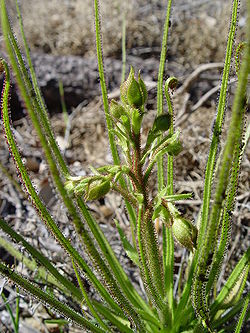
Drosophyllum lusitanicum, commonly known as the Portuguese sundew or Dewy Pine, is a distinctive perennial carnivorous plant indigenous to the arid, sandy, and often acidic coastal regions of southwestern Europe and North Africa, specifically Portugal, Spain, and Morocco. Unlike many of its carnivorous relatives, it thrives in dry, sunny, and open habitats with excellent drainage, demonstrating remarkable drought tolerance. This unique plant typically forms an upright, robust rosette, reaching 30 to 50 centimeters in height, with flowering stalks extending up to 60 centimeters. Its most striking features are its long, slender, linear-lanceolate leaves, ranging from 10 to 40 centimeters in length.
These leaves are densely covered with two types of specialized glandular hairs: stalked glands producing a highly viscous, glistening mucilage to ensnare insects, and sessile glands that secrete potent digestive enzymes. The leaves exhibit a unique spoon-like or channelled morphology, unfurling outwards from the central growth point in a phenomenon known as outward circinate vernation, a characteristic shared only with a few Byblis species. They typically display a vibrant green hue that can deepen to a striking reddish-purple under intense sunlight. The short, woody stem at the base supports the alternately arranged leaf rosette.
Its robust, though relatively shallow, root system efficiently anchors the plant in loose substrates and absorbs surface moisture. During summer, Drosophyllum produces elegant, bright yellow, star-like flowers, usually with five petals, borne on tall, erect stalks to avoid trapping pollinators. Taxonomically, Drosophyllum lusitanicum holds a singular position as the sole species in its genus, Drosophyllum, and the only member of the monotypic family Drosophyllaceae, distinguishing it from the more widespread Droseraceae family and highlighting its evolutionary distinctiveness.
Trusted Scientific References
1. Authoritative external sources for Drosophyllum lusitanicum
1.1 Wikipedia — Drosophyllum lusitanicum
1.2 Kew POWO (Plants of the World Online)
1.3 PubMed — peer-reviewed research
1.4 NCBI Taxonomy Browser
1.5 GBIF — Global Biodiversity
1.1.Drosophyllum — Key Features
- ✓Monotypic Genus and Family — Sole species in Drosophyllum and Drosophyllaceae, highlighting its unique evolutionary path.
- ✓Outward Circinate Vernation — Leaves unfurl outwards from the center, a rare botanical trait shared with few other plants.
- ✓Dual Glandular System — Features stalked mucilage glands for trapping and sessile digestive glands for nutrient absorption.
- ✓Drought Tolerant Carnivore — Exceptionally adapted to dry, nutrient-poor soils, a rarity among carnivorous plants.
- ✓Strong Honey Aroma — Emits a distinct scent to attract a wide range of flying insects.
- ✓Robust Root System — Develops a substantial root network to access deeper moisture in arid conditions.
- ✓Long — Lived Perennial — Can live for many years in suitable cultivation, forming a woody base.
- ✓Bright Yellow Flowers — Produces showy, star-like yellow flowers on tall stalks, preventing pollinator entrapment.
- ✓Coastal Mediterranean Native — Endemic to specific regions of Portugal, Spain, and Morocco.
- ✓Efficient Insect Trapping — Highly effective at capturing and digesting a large volume of insects.
1.2.Drosophyllum — In Brief
- ✓Unique Carnivorous Plant — Drosophyllum lusitanicum, the Portuguese sundew, is a monotypic genus and family.
- ✓Dry Habitat Specialist — Thrives in arid, sandy, full-sun environments, unlike most sundews.
- ✓Sticky Trapping Mechanism — Employs highly viscous mucilage and digestive enzymes to capture and break down insects.
- ✓Honey-Scented Lure — Produces a strong honey aroma to attract prey.
- ✓Horticultural Interest — Prized by enthusiasts for its distinct appearance and cultivation challenges.
- ✓No Traditional Medicinal Use — Not used for human ailments; primarily of ecological and scientific interest.
2.Drosophyllum — Systematic Position
3.Drosophyllum — Quick Facts
4.Drosophyllum — Plant Morphology
5.Drosophyllum — Geographic Distribution
6.Drosophyllum — Historical Applications
7.Drosophyllum — Bioactive Constituents
- ✓Note — Specific phytochemical research on Drosophyllum lusitanicum for medicinal applications is limited. Constituents below are inferred based on its biological function and general plant chemistry.
- ✓Polysaccharides — Comprise the highly viscous mucilage produced by stalked glands, primarily responsible for insect adhesion and entrapment.
- ✓Proteases — Digestive enzymes secreted by sessile glands, crucial for breaking down insect proteins into absorbable nutrients.
- ✓Chitinases — Enzymes also released by sessile glands, responsible for degrading chitin, the primary component of insect exoskeletons.
- ✓Volatile Organic Compounds (VOCs) — Responsible for the strong honey-like aroma emitted by the plant, acting as an attractant for insects, likely a complex mixture of terpenes and esters.
- ✓Flavonoids — Expected to be present as general plant antioxidants and UV protectants, though specific Drosophyllum flavonoids are not widely documented.
- ✓Naphthoquinones — Potentially present, similar to those found in other Droseraceae members like plumbagin, which can exhibit antimicrobial properties, though unconfirmed for Drosophyllum.
- ✓Organic Acids — Likely involved in the digestive process and nutrient assimilation, contributing to the acidic environment for enzyme function.
- ✓Mineral Nutrients — Absorbed from digested insects, including nitrogen, phosphorus, and potassium, essential for plant growth.
8.Drosophyllum — What Research Suggests
- ✓Note — Drosophyllum lusitanicum is primarily known as a carnivorous plant and is not traditionally used in herbal medicine for human consumption. Any potential 'benefits' listed below are speculative, based on general plant biochemistry or ecological roles, and require extensive scientific research.
- ✓Insecticidal Properties — The plant's potent mucilage and digestive enzymes make it highly effective at trapping and breaking down insects, suggesting potential for natural pest control applications in agriculture or horticulture.
- ✓Enzymatic Potential — The sessile glands produce proteases and chitinases, enzymes capable of breaking down proteins and chitin. These enzymes could be of interest for industrial biotechnology or biochemical research, rather than direct human therapeutic use.
- ✓Novel Phytochemicals — As a unique species, Drosophyllum lusitanicum may contain novel secondary metabolites. Research into these compounds could potentially uncover new molecules with unknown biological activities.
- ✓Mucilage Research — The highly viscous mucilage could be studied for its unique adhesive properties, potentially leading to applications in biomaterials science or as a natural adhesive, rather than a medicinal benefit.
- ✓Ecological Indicator — Its specific habitat requirements make it an excellent indicator species for unique Mediterranean ecosystems, contributing to ecological research and conservation efforts.
- ✓Educational Value — As a compelling example of carnivorous adaptation, Drosophyllum serves as an invaluable educational tool for botany, ecology, and evolutionary biology, fostering scientific understanding.
- ✓Ornamental Value — Its striking appearance, unique carnivorous mechanism, and relatively easy cultivation for experienced enthusiasts make it a prized specimen in carnivorous plant collections.
8.1.Drosophyllum — Reported Uses
9.Drosophyllum — Precautions & Warnings
9.1.Drosophyllum — Reported Side Effects
- ✓Note — Drosophyllum lusitanicum is not consumed by humans, so traditional 'side effects' from ingestion are not documented. The following are potential considerations.
- ✓Skin Irritation — Direct and prolonged contact with the sticky mucilage on the leaves may cause mild skin irritation or allergic reactions in sensitive individuals.
- ✓Allergic Reactions — As with any plant, there is a theoretical risk of allergic reactions (e.g., contact dermatitis) from handling plant material.
- ✓Ingestion Toxicity — While not studied, ingestion by humans or pets is highly discouraged and could potentially lead to digestive upset or unknown toxic effects due to digestive enzymes or other compounds.
- ✓Environmental Impact — If introduced outside its native range, there is a remote risk of it becoming invasive, though its specific habitat requirements make this unlikely.
- ✓Respiratory Irritation — Inhaling airborne plant particles (e.g., dried leaves) could potentially cause respiratory irritation in sensitive individuals.
- ✓Interaction with Medications — No known interactions, as it is not used medicinally, but any internal consumption would carry unknown risks.
9.2.Drosophyllum — Clinical Safety Notes
- ✓Not for Internal Consumption — Drosophyllum lusitanicum is a carnivorous plant and is not safe or intended for human ingestion. Its internal effects are unknown and potentially harmful.
- ✓Handle with Care — Avoid prolonged or excessive direct skin contact with the sticky leaves to prevent potential mild irritation or allergic reactions.
- ✓Keep Out of Reach — Ensure the plant is kept away from children and pets to prevent accidental ingestion or contact with the mucilage.
- ✓Allergic Sensitivity — Individuals with known plant allergies should exercise caution when handling, as contact dermatitis is theoretically possible.
- ✓Environmental Responsibility — Do not release Drosophyllum lusitanicum into non-native environments, as it could disrupt local ecosystems, though its specific needs make this a low risk.
- ✓No Medicinal Safety Data — There is no established safety data for Drosophyllum in a medicinal context, as it is not used as a therapeutic agent.
- ✓Avoid Eye Contact — Prevent contact of plant sap or mucilage with eyes, as it could cause irritation.
10.Drosophyllum — Preparation & Dosage
- ✓Note — Drosophyllum lusitanicum is not intended for internal human consumption or traditional medicinal preparations. Its 'usage' is primarily ecological, horticultural, or for scientific study.
- ✓Ecological Insect Control — The plant's natural ability to trap and digest insects makes it a natural, non-toxic form of pest control in its native ecosystems, or potentially in controlled horticultural settings.
- ✓Horticultural Specimen — Cultivated as an ornamental plant by carnivorous plant enthusiasts for its unique appearance and fascinating insect-trapping mechanism.
- ✓Scientific Research — Utilized in botanical studies to understand carnivorous plant evolution, enzyme biochemistry, and adaptation to nutrient-poor environments.
- ✓Educational Display — Featured in botanical gardens and educational institutions to teach about plant diversity, ecological niches, and specialized adaptations.
- ✓Phytochemical Screening — Plant material can be used for laboratory extraction and analysis of its unique chemical constituents, such as enzymes or volatile compounds, for potential industrial or pharmaceutical research.
- ✓Seed Collection and Propagation — Seeds are collected for propagation by enthusiasts and for conservation efforts to maintain genetic diversity.
- ✓Habitat Restoration — In its native range, it can be part of programs aimed at restoring or preserving unique Mediterranean ecosystems.
11.Drosophyllum — Growth Requirements
- ✓Substrate Preparation — Use a well-draining, arid-mimicking mix, typically Cornish grit with a small amount of coarse peat moss to retain minimal moisture.
- ✓Potting — Utilize large, deep containers (e.g., 10-liter plastic pots) to accommodate its substantial root system, crucial for long-term health.
- ✓Light Requirements — Provide full sun exposure; outdoor cultivation during summer encourages compact growth and robust health.
- ✓Watering — Water sparingly; allow the substrate to dry out significantly between waterings, mimicking its natural dry habitat. Only water during exceptionally dry spells.
- ✓Temperature and Frost — Protect from hard frosts; move plants to a frost-free location (minimum 7°C) during cooler months, though light frost may cause minimal damage.
- ✓Propagation by Seed — Seeds are viable for long periods (even years if refrigerated) and germinate easily. Sow single seeds 5mm deep in small fiber pots in a 50:50 peat moss and silver sand mix, standing pots in rainwater in full sun.
- ✓Germination and Transplanting — Expect germination in 4-6 weeks. Transplant seedlings approximately 6 cm tall into larger containers to allow root development.
- ✓Air Circulation — Good air circulation is beneficial to prevent fungal issues, especially in humid environments.
Reviewed by the Flora Medical Global Botanical Review Panel
Multi-disciplinary editorial group · Botany · Ethnobotany · Herbal-medicine literature
Who reviewed this: This page was checked by the Flora Medical Global Botanical Review Panel — an in-house editorial group of botany graduates, ethnobotany researchers, and horticulture practitioners who collectively maintain our 7,000+ plant encyclopedia. Meet the team.
Our 4-step verification process
1. Taxonomic verification
Scientific names and synonyms cross-checked against Kew POWO, World Flora Online, and The Plant List.
2. Phytochemical & medicinal cross-reference
Active compounds, traditional uses, and reported activities are cross-referenced with PubMed, USDA Dr. Duke's database, and peer-reviewed ethnobotanical literature.
3. Conservation & distribution check
Distribution, ecology, and conservation status confirmed against GBIF occurrence records and the IUCN Red List.
4. Editorial & safety review
Every entry passes an editorial pass for clarity, originality, and safety notices (toxicity, contraindications, dosage caveats) before publication.
Last reviewed:
Important medical disclaimer: This content is for educational and research purposes only. It is not medical advice and is not a substitute for consultation with a licensed healthcare provider. Do not use any herb to self-treat a medical condition without professional guidance.
Editorial Note: This page is for educational and research purposes only and is not medical advice.
Written by: Flora Medical Global Editorial Team
Reviewed by: Flora Medical Global Botanical Review Panel
Last Updated: June 15, 2026





Drosophyllum — Comments & Community Reviews
Rate this plant