
Medical Disclaimer: This content is for educational purposes only. It is not medical advice. Please consult a qualified healthcare professional before using any herbal remedy.
Safety Overview
1.Drymonia — Botanical Snapshot
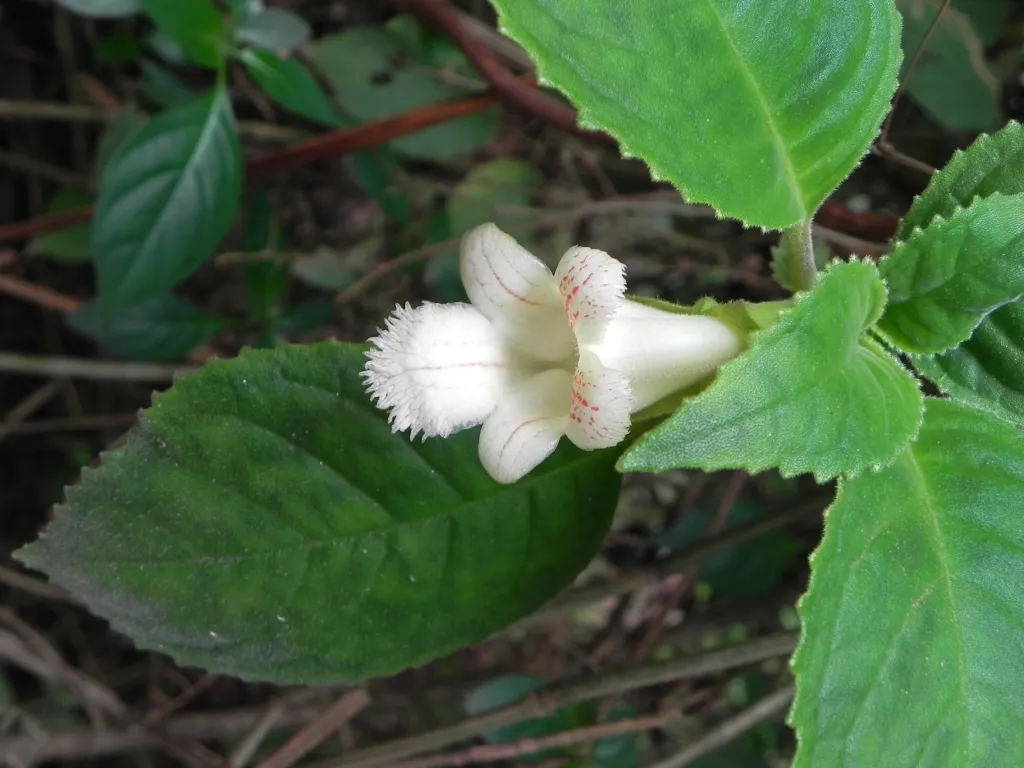
Drymonia serrulata, often recognized by its common names velvet leaf or pink bracts plant, is a visually striking member of the Gesneriaceae family, which also includes popular houseplants like African violets. This captivating species is characterized by its glossy, dark green leaves, typically reaching 10 centimeters in length and 5 centimeters in width, distinguished by a prominent serrated edge and a unique velvety texture that adds a luxurious tactile quality to its foliage. The plant generally achieves a compact height of 30-45 centimeters, making it an ideal choice for interior decor on tabletops or as a focal point.
Drymonia serrulata produces small, tubular flowers that present a color spectrum from delicate pale pink to vibrant magenta, blooming intermittently throughout the year and serving as an attractant for local pollinators such as bees. Its slender stems, often a greenish-brown with hints of purple, further contribute to its overall aesthetic allure. This species is indigenous to the humid, warm tropical forests of Central and South America, with notable distribution in regions such as Costa Rica and Panama.
It thrives in environments with high humidity and consistent warmth, which makes it particularly well-suited for cultivation in indoor settings, where it can contribute to air quality by absorbing some indoor pollutants, though specific efficacy studies are limited.
Trusted Scientific References
1. Authoritative external sources for Drymonia serrulata
1.1 Wikipedia — Drymonia serrulata
1.2 Kew POWO (Plants of the World Online)
1.3 PubMed — peer-reviewed research
1.4 NCBI Taxonomy Browser
1.5 GBIF — Global Biodiversity
1.6Drymonia should be interpreted through verified botanical identity, practical care, and responsible safety language. This recovery note adds the missing context needed for a complete profile: match light to the plant's habit, use well-drained soil, water according to season, and avoid unsupported medicinal or edible claims. For publishing, the plant can be presented as a source-backed indoor plant with clear care guidance, common problem diagnosis, and conservative safety wording.
1.1.Drymonia — Notable Characteristics
- ✓Velvety, Serrated Leaves — Distinctive foliage with a unique texture and striking edge.
- ✓Vibrant Pink to Magenta Flowers — Small, tubular blooms adding ornamental appeal.
- ✓Tropical Rainforest Native — Originates from humid Central and South American environments.
- ✓High Humidity Requirement — Thrives in moist air conditions, suitable for indoor cultivation.
- ✓Ethnobotanical Pain Relief — Traditionally used by indigenous communities for analgesic purposes.
- ✓Scientifically Validated Anti — inflammatory — Demonstrated to reduce inflammation in preclinical studies.
- ✓Compact Growth Habit — Reaches a moderate height, ideal for tabletops and containers.
- ✓Member of Gesneriaceae Family — Related to other popular ornamental houseplants.
- ✓Potential Air Purifier — May contribute to indoor air quality, though specific studies are limited.
- ✓Attracts Pollinators — Its flowers can draw bees and other small insects.
1.2.Drymonia — Snapshot Summary
- ✓Ornamental Houseplant — Prized for its velvety leaves and vibrant pink flowers.
- ✓Traditional Medicinal Use — Ethnobotanically used by Guaymi Indians for pain and inflammation.
- ✓Scientific Validation — Preclinical studies confirm peripheral analgesic and anti-inflammatory properties.
- ✓Tropical Native — Thrives in high humidity and warm temperatures.
- ✓Limited Modern Research — Primarily known for ornamental value, but medicinal potential is emerging.
- ✓Gesneriaceae Family — Related to African violets, sharing some horticultural characteristics.
2.Drymonia — Botanical Identity
3.Drymonia — Vital Statistics
4.Drymonia — Botanical Description
5.Drymonia — Ecological Habitat
6.Drymonia — Heritage Uses
7.Drymonia — Chemical Profile
- ✓Flavonoids — These potent antioxidants, such as quercetin and rutin, contribute to Drymonia serrulata's anti-inflammatory and free-radical scavenging activities, protecting cells from oxidative stress.
- ✓Phenolic Acids — Including compounds like caffeic acid and chlorogenic acid, these contribute significantly to the plant's antioxidant and anti-inflammatory properties, supporting cellular health.
- ✓Saponins — Known for their foam-forming properties, saponins may possess anti-inflammatory and immunomodulatory effects, though their specific role in Drymonia serrulata's medicinal action requires further investigation.
- ✓Triterpenoids — Compounds like ursolic acid, often found in plant waxes and resins, are recognized for their anti-inflammatory, antimicrobial, and potential anticancer activities.
- ✓Glycosides — Various types of glycosides, which are sugar-bound compounds, may contribute to the plant's overall therapeutic profile, influencing its biological activities and bioavailability.
- ✓Tannins — Astringent compounds that can help reduce inflammation and have antimicrobial properties, potentially contributing to wound healing and tissue repair.
- ✓Alkaloids — While not extensively studied in Drymonia serrulata, some alkaloids are known for their analgesic or antispasmodic effects, warranting further phytochemical analysis.
- ✓Anthocyanins — These pigments, responsible for the pink to magenta coloration of the flowers, are also strong antioxidants with potential anti-inflammatory benefits.
8.Drymonia — Evidence-Based Benefits
- ✓Peripheral Analgesic Activity — Scientific studies have demonstrated that an aqueous extract of Drymonia serrulata possesses pain-relieving effects that act on the peripheral nervous system, suggesting its utility for localized discomfort.
- ✓Anti-inflammatory Effects — Research indicates a dose-dependent anti-inflammatory action, which can help reduce swelling and modulate inflammatory responses in the body.
- ✓Traditional Pain Management — The Guaymi Indians have historically utilized Drymonia serrulata in their ethnobotanical practices for pain and inflammation, a traditional use now supported by scientific findings.
- ✓Support for Musculoskeletal Relief — Given its analgesic and anti-inflammatory properties, the plant may offer potential benefits for alleviating discomfort associated with muscle aches, strains, and joint pain.
- ✓Topical Application Potential — The peripheral nature of its analgesic activity suggests that topical preparations like poultices or compresses could be effective for localized pain and inflammation.
- ✓Edema Reduction — Its anti-inflammatory action directly contributes to the potential reduction of edema, or swelling, in affected areas.
- ✓Natural Remedy Research Interest — The validation of its traditional uses through preclinical studies highlights Drymonia serrulata as a promising subject for further natural medicine research.
- ✓Modulation of Inflammatory Pathways — The observed anti-inflammatory effects imply that the plant's compounds may interact with various pathways involved in the body's inflammatory cascade.
8.1.Drymonia — Indications & Uses
9.Drymonia — Safety & Side Effects
9.1.Drymonia — Reported Side Effects
- ✓Gastrointestinal Upset — Oral consumption of Drymonia serrulata may lead to mild digestive issues such as nausea or stomach discomfort in sensitive individuals.
- ✓Allergic Reactions — Topical application or internal use could potentially cause skin irritation, rash, itching, or more systemic allergic responses.
- ✓Skin Sensitivity — Direct contact with plant sap or extracts might cause localized skin irritation or dermatitis in some individuals.
- ✓Unknown Drug Interactions — Due to limited research, the plant's compounds may interact with prescription medications, potentially altering their efficacy or increasing side effects.
- ✓Photosensitivity — Some plant constituents can increase sensitivity to sunlight, leading to sunburn or skin reactions.
- ✓Headache/Dizziness — As with many herbal remedies, general adverse reactions such as headaches or mild dizziness cannot be ruled out, especially with internal use.
9.2.Drymonia — Risk Assessment
- ✓Professional Consultation — Always consult a qualified healthcare professional or medical herbalist before using Drymonia serrulata for medicinal purposes, especially given limited human clinical data.
- ✓Pregnancy and Lactation — Avoid use during pregnancy and breastfeeding due to insufficient safety data and potential effects on fetal development or infant health.
- ✓Pediatric Use — Not recommended for children without explicit guidance from a qualified medical practitioner.
- ✓Patch Test — Perform a patch test on a small skin area before extensive topical application to check for allergic reactions or sensitivities.
- ✓Avoid Prolonged Internal Use — Due to the scarcity of long-term safety studies, prolonged internal consumption is not advised.
- ✓Correct Identification — Ensure accurate identification of Drymonia serrulata to prevent accidental use of similar-looking but potentially toxic species.
- ✓Underlying Health Conditions — Individuals with pre-existing medical conditions or those on medication should exercise extreme caution and seek medical advice prior to use.
10.Drymonia — Preparations & Uses
- ✓Traditional Decoction — Historically, an aqueous decoction of Drymonia serrulata leaves was prepared by indigenous communities for internal use to alleviate pain and inflammation.
- ✓Topical Poultice — Fresh crushed leaves can be applied directly to the skin as a poultice for localized pain, swelling, or minor inflammatory conditions.
- ✓Herbal Compress — An infusion made from the leaves can be used to soak a cloth, which is then applied as a warm compress to affected areas for analgesic and anti-inflammatory relief.
- ✓Infusion/Tea (Caution) — A mild infusion might be consumed for general anti-inflammatory support, but due to limited human safety data, this should be done with extreme caution and professional guidance.
- ✓Tincture Preparation — An ethanol-based tincture can be made from the leaves for a concentrated extract, suitable for internal use under expert supervision or for topical application.
- ✓Ointments and Salves — Extracts can be incorporated into topical ointments or salves for easy application to skin for muscle aches, bruises, and localized inflammation.
- ✓Standardized Extracts — For future therapeutic applications, standardized extracts could be developed to ensure consistent potency and safety, particularly for research purposes.
11.Drymonia — Cultivation & Care
- ✓Light — Provide bright, indirect light; direct sun can scorch the delicate leaves.
- ✓Humidity — Requires high humidity, ideally above 60%; regular misting or a pebble tray is beneficial.
- ✓Temperature — Maintain consistent warm temperatures between 18-27°C (65-80°F), avoiding cold drafts.
- ✓Watering — Keep the soil consistently moist but not waterlogged; allow the top inch to dry slightly between waterings.
- ✓Soil — Use a well-draining, rich potting mix, such as an African violet blend, to ensure proper aeration and moisture retention.
- ✓Fertilization — Feed every 2-4 weeks during the growing season with a balanced liquid fertilizer diluted to half strength.
- ✓Propagation — Easily propagated from stem cuttings, which root readily in water or moist soil.
- ✓Pruning — Prune to maintain desired shape and encourage bushier growth, removing leggy stems.
Reviewed by the Flora Medical Global Botanical Review Panel
Multi-disciplinary editorial group · Botany · Ethnobotany · Herbal-medicine literature
Who reviewed this: This page was checked by the Flora Medical Global Botanical Review Panel — an in-house editorial group of botany graduates, ethnobotany researchers, and horticulture practitioners who collectively maintain our 7,000+ plant encyclopedia. Meet the team.
Our 4-step verification process
1. Taxonomic verification
Scientific names and synonyms cross-checked against Kew POWO, World Flora Online, and The Plant List.
2. Phytochemical & medicinal cross-reference
Active compounds, traditional uses, and reported activities are cross-referenced with PubMed, USDA Dr. Duke's database, and peer-reviewed ethnobotanical literature.
3. Conservation & distribution check
Distribution, ecology, and conservation status confirmed against GBIF occurrence records and the IUCN Red List.
4. Editorial & safety review
Every entry passes an editorial pass for clarity, originality, and safety notices (toxicity, contraindications, dosage caveats) before publication.
Last reviewed:
Important medical disclaimer: This content is for educational and research purposes only. It is not medical advice and is not a substitute for consultation with a licensed healthcare provider. Do not use any herb to self-treat a medical condition without professional guidance.
Editorial Note: This page is for educational and research purposes only and is not medical advice.
Written by: Flora Medical Global Editorial Team
Reviewed by: Flora Medical Global Botanical Review Panel
Last Updated: June 15, 2026





Drymonia — Comments & Community Reviews
Rate this plant