


Medical Disclaimer: This content is for educational purposes only. It is not medical advice. Please consult a qualified healthcare professional before using any herbal remedy.
Safety Overview
1.Duchesnea Indica — Overview
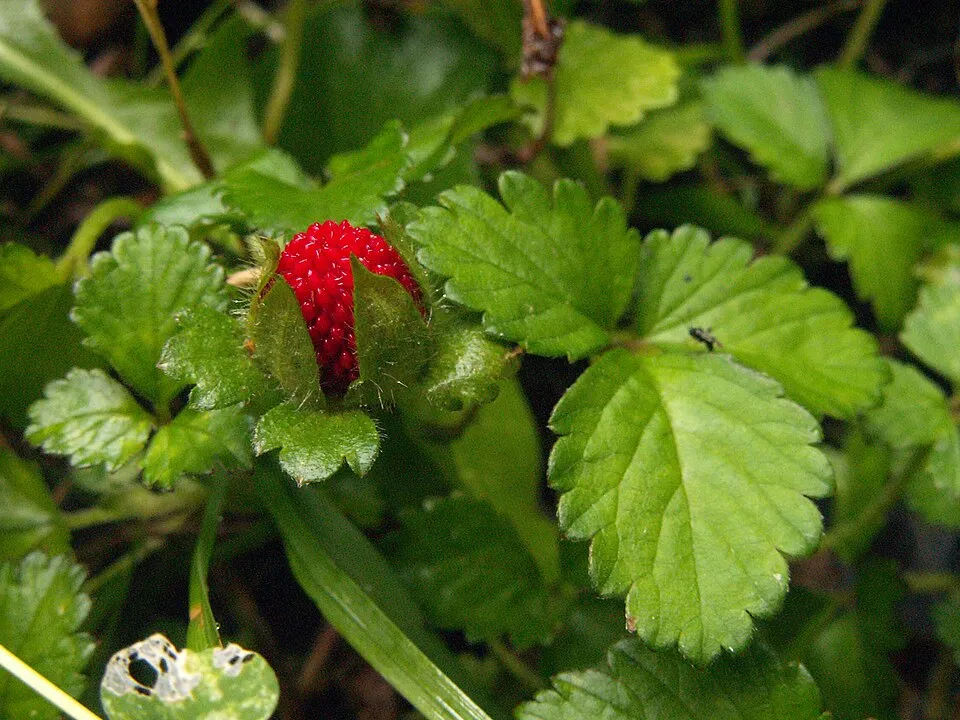
Potentilla indica, widely recognized by its former botanical name Duchesnea indica, is a resilient perennial herbaceous plant belonging to the diverse Rosaceae family. Often referred to as the Indian strawberry or mock strawberry, it forms dense, low-growing mats, typically reaching heights of 20-30 cm. Its distinctive foliage consists of compound leaves, each comprising three finely serrated, ovate to round leaflets, presenting a vibrant dark green hue that contributes to its lush appearance.
Throughout the warmer seasons, the plant produces small, solitary yellow flowers with five petals, which, unlike true strawberries, are a key distinguishing feature. These blossoms are significant for attracting various pollinators, supporting local biodiversity.
Following successful pollination, Potentilla indica develops an aggregate fruit that ripens to a bright red, resembling a small strawberry. However, these fruits are characterized by their red achenes (seeds) visibly embedded on the surface, and a texture that is often described as spongy or insipid, lacking the juiciness and intense flavor of true strawberries. Despite this, the fruits are edible and contribute to the plant's appeal to wildlife.
This species thrives in moist, partially shaded environments, commonly found along roadsides, in grasslands, and disturbed areas. It demonstrates adaptability to a range of soil types but flourishes best in well-drained, organically rich loamy conditions. Its vigorous growth habit, facilitated by rapidly spreading runners, makes it an effective ground cover, aiding in soil erosion prevention and ecosystem support, though it can be considered invasive in certain non-native regions.
Trusted Scientific References
1. Authoritative external sources for Duchesnea indica
1.1 Wikipedia — Duchesnea indica
1.2 Kew POWO (Plants of the World Online)
1.3 PubMed — peer-reviewed research
1.4 NCBI Taxonomy Browser
1.5 GBIF — Global Biodiversity
1.6Duchesnea Indica should be interpreted through verified botanical identity, practical care, and responsible safety language. This recovery note adds the missing context needed for a complete profile: match light to the plant's habit, use well-drained soil, water according to season, and avoid unsupported medicinal or edible claims. For publishing, the plant can be presented as a source-backed garden plant with clear care guidance, common problem diagnosis, and conservative safety wording.
1.1.Duchesnea Indica — Standout Qualities
- ✓Taxonomic Reclassification — Formerly Duchesnea indica, now accepted as Potentilla indica within the Rosaceae family, reflecting phylogenetic insights.
- ✓Distinctive Yellow Flowers — Unlike true strawberries, it bears small, solitary yellow flowers, making it easily identifiable.
- ✓Edible Aggregate Fruit — Produces bright red, edible fruits with achenes on the surface, though their flavor is often described as bland or insipid.
- ✓Vigorous Ground Cover — Spreads rapidly via runners, forming dense mats that are effective for soil erosion control and landscaping.
- ✓Rich Phytochemical Profile — Contains a diverse array of compounds including flavonoids, tannins, phenolic acids, triterpenes, and anthocyanins.
- ✓Immunomodulatory Potential — Scientific studies highlight its capacity to modulate and enhance immune system responses.
- ✓Antioxidant Powerhouse — Demonstrated significant antioxidant activity, protecting against oxidative stress and related damage.
- ✓Anti — inflammatory Action — Exhibits potent anti-inflammatory effects by suppressing pro-inflammatory mediators.
- ✓Traditional Medicinal Uses — Utilized in various traditional medicine systems for a wide range of ailments, from skin issues to internal conditions.
- ✓Habitat Adaptability — Thrives in diverse environments including disturbed areas, grasslands, and roadsides, preferring damp, partially shaded conditions.
1.2.Duchesnea Indica — Concise Overview
- ✓Potentilla indica is a perennial Rosaceae herb known for its edible but bland red fruits.
- ✓Historically, it was classified as Duchesnea indica, now recognized as a Potentilla species.
- ✓Possesses notable immunomodulatory, antioxidant, and anti-inflammatory properties.
- ✓Traditional uses include treating diabetes, skin conditions, and eye ailments.
- ✓Contains beneficial flavonoids, tannins, phenolic acids, and anthocyanins.
- ✓Easily cultivated as a ground cover, but can exhibit invasive tendencies.
2.Duchesnea Indica — Scientific Profile
3.Duchesnea Indica — Reference Facts
4.Duchesnea Indica — Plant Morphology
5.Duchesnea Indica — Where It Grows
6.Duchesnea Indica — Historical Applications
7.Duchesnea Indica — Active Compounds
- ✓Flavonoids — Compounds like kaempferitrin and various kaempferol derivatives contribute to the plant's antioxidant and anti-inflammatory properties by scavenging free radicals and modulating immune responses.
- ✓Tannins — These astringent polyphenolic compounds are present in the leaves and fruits, contributing to traditional uses for inflammation and as an antiseptic due to their protein-binding capabilities.
- ✓Phenolic Acids — Ellagic acid and brevifolincarboxylic acid are prominent, known for their antioxidant, anti-inflammatory, and potential anticancer activities, protecting cells from oxidative damage.
- ✓Triterpenes — Ursolic acid and oleanic acid are isolated triterpenoids recognized for their anti-inflammatory, hepatoprotective, and potential anticancer effects, influencing cellular signaling pathways.
- ✓Sterols — Beta-sitosterol and daucosterol are plant sterols that may contribute to anti-inflammatory and cholesterol-lowering effects, often found in plant cell membranes.
- ✓Anthocyanins — The red color of the fruit is attributed to anthocyanins such as cyanidin 3-O-rutinoside, peonidin 3-O-rutinoside, and petunidin 3-O-rutinoside, powerful antioxidants with beneficial vascular effects.
- ✓Organic Acids — Fumaric acid and its monomethyl ester are present, contributing to general plant metabolism and potentially exhibiting mild antioxidant properties.
- ✓Brevifolin Derivatives — Brevifolin and methyl brevifolin-carboxylate are unique compounds with noted anti-inflammatory and potentially anticancer activities, contributing to the plant's therapeutic profile.
8.Duchesnea Indica — Research Insights
- ✓Immunomodulatory Activity — Studies suggest leaf extracts of Potentilla indica can stimulate immune responses, increasing the proliferation of immune cells like thymocytes and splenocytes.
- ✓Antioxidant Properties — Ethyl acetate extracts exhibit significant in vitro and in vivo antioxidant activity, reducing oxidative stress and lipid peroxidation, particularly in conditions like diabetic kidney disease.
- ✓Anti-inflammatory Effects — Ethanol extracts have shown to mitigate inflammation by reducing pro-inflammatory cytokines and mediators while blocking NF-kB activation in cellular models.
- ✓Anticancer Potential — Aqueous extracts have demonstrated antiproliferative activity against various human and murine cancer cell lines, suggesting a role in inhibiting cancer cell growth.
- ✓Antimetastatic Action — Extracts have been observed to attenuate the metastatic potential of oral squamous cell carcinoma cells by reducing cell motility, migration, and invasion, linked to MMP-2 protein expression.
- ✓Amelioration of Septic Shock — Duchesnea indica extracts can rescue mice from LPS-induced septic shock and sepsis by suppressing proinflammatory cytokine expression and preventing cellular damage.
- ✓Antimicrobial Activity — Silver nanoparticles synthesized using root extracts have shown efficacy against various bacterial and fungal pathogens, including Salmonella typhi and Escherichia coli.
- ✓Analgesic Effects — The AgNPs derived from the root extract exhibited significant analgesic activity, reducing pain in experimental models.
- ✓Muscle Relaxant Properties — Root extract-synthesized AgNPs also demonstrated muscle relaxant effects in studies.
- ✓Antidiabetic Support — Traditionally, the plant has been used in some regions for the management of diabetes, though modern scientific validation is ongoing.
- ✓Anthelmintic Use — In Pakistan, leaves and flowers are traditionally employed as an anthelmintic agent to expel parasitic worms.
- ✓Eye Health — In Uttarakhand, India, leaf juice is traditionally applied to the eyes for the treatment of cataracts.
8.1.Duchesnea Indica — Reported Uses
9.Duchesnea Indica — Risk Profile
9.1.Duchesnea Indica — Warnings
- ✓Allergic Reactions — Individuals sensitive to plants in the Rosaceae family may experience allergic reactions, such as skin irritation or gastrointestinal upset.
- ✓Gastrointestinal Discomfort — Consumption of large quantities, particularly the fruits, may lead to mild stomach upset or diarrhea in some sensitive individuals.
- ✓Confusion with True Strawberries — While edible, the fruit is often described as tasteless or insipid, leading to disappointment if mistaken for more flavorful true strawberries.
- ✓Potential for Overgrowth — Due to its vigorous spreading habit, it can become invasive in garden settings, outcompeting other desirable plants.
- ✓Interaction with Medications — Due to potential anticoagulant properties, it might interact with blood-thinning medications, increasing bleeding risk.
- ✓Hypoglycemic Effects — Traditional use for diabetes suggests potential blood sugar lowering effects, which could be problematic for individuals on antidiabetic medications.
9.2.Duchesnea Indica — Safety Profile
- ✓Professional Consultation — Always consult a healthcare professional before using Potentilla indica for medicinal purposes, especially if you have pre-existing health conditions.
- ✓Pregnancy and Lactation — Due to insufficient safety data, pregnant and breastfeeding individuals should avoid medicinal use of Potentilla indica.
- ✓Children — Use in children should be approached with caution and under medical supervision due to a lack of specific pediatric safety studies.
- ✓Drug Interactions — Exercise caution if taking anticoagulant, antidiabetic, or immunosuppressant medications, as the plant may interact with these drugs.
- ✓Proper Identification — Ensure correct identification of Potentilla indica to avoid confusion with other plants, although its fruits are generally considered safe for consumption.
- ✓Dosage Adherence — Adhere to recommended dosages for prepared remedies to minimize potential adverse effects; avoid excessive consumption.
- ✓Quality Sourcing — Use plant material from reputable sources to ensure purity and avoid contamination with pesticides or other harmful substances.
10.Duchesnea Indica — Preparation & Dosage
- ✓Edible Fruits — Ripe fruits, though mild in flavor, can be added to desserts, puddings, smoothies, or fruit salads for a touch of color and nutritional value.
- ✓Herbal Tea — Leaves can be steeped to make an herbal tea, traditionally consumed for general wellness or specific ailments.
- ✓Potherb Preparation — Young leaves may be consumed raw or cooked as a potherb, adding a green leafy vegetable to the diet.
- ✓Infusion for Circulation — An infusion prepared from the flowers is traditionally used to activate blood circulation, often consumed orally.
- ✓Topical Poultices — A poultice made from the crushed whole plant or specifically the leaves is applied externally for skin conditions like abscesses, boils, burns, eczema, ringworm, and insect or snakebites.
- ✓Eye Drops — In some traditional practices, the juice extracted from the leaves is applied topically to the eyes for conditions such as cataracts.
- ✓General Wellness Tonic — The plant is traditionally consumed as a general tonic for conditions like diabetes and cancer in certain folk medicine systems, typically as decoctions or infusions.
11.Duchesnea Indica — Growth Requirements
- ✓Site Selection — Choose a location that receives partial shade to full sun, as Potentilla indica tolerates a range of light conditions but thrives with some afternoon shade.
- ✓Soil Preparation — Ensure well-drained soil rich in organic matter. Loamy conditions are ideal, but the plant can adapt to various soil types.
- ✓Watering Regimen — Provide moderate watering, especially during dry spells, to keep the soil consistently moist but not waterlogged.
- ✓Propagation Techniques — Easily propagated through seeds, division of existing mats, or by rooting its abundant runners which naturally spread and form new plants.
- ✓Ground Cover Use — Plant as an effective ground cover to prevent soil erosion, benefiting from its rapid, mat-forming growth habit.
- ✓Maintenance — Requires minimal maintenance; however, managing its spread is crucial in garden settings to prevent it from becoming overly invasive.
- ✓Climate Adaptability — Hardy in various climates, native to a wide range of Asian regions and naturalized globally, indicating good environmental resilience.
Reviewed by the Flora Medical Global Botanical Review Panel
Multi-disciplinary editorial group · Botany · Ethnobotany · Herbal-medicine literature
Who reviewed this: This page was checked by the Flora Medical Global Botanical Review Panel — an in-house editorial group of botany graduates, ethnobotany researchers, and horticulture practitioners who collectively maintain our 7,000+ plant encyclopedia. Meet the team.
Our 4-step verification process
1. Taxonomic verification
Scientific names and synonyms cross-checked against Kew POWO, World Flora Online, and The Plant List.
2. Phytochemical & medicinal cross-reference
Active compounds, traditional uses, and reported activities are cross-referenced with PubMed, USDA Dr. Duke's database, and peer-reviewed ethnobotanical literature.
3. Conservation & distribution check
Distribution, ecology, and conservation status confirmed against GBIF occurrence records and the IUCN Red List.
4. Editorial & safety review
Every entry passes an editorial pass for clarity, originality, and safety notices (toxicity, contraindications, dosage caveats) before publication.
Last reviewed:
Important medical disclaimer: This content is for educational and research purposes only. It is not medical advice and is not a substitute for consultation with a licensed healthcare provider. Do not use any herb to self-treat a medical condition without professional guidance.
Editorial Note: This page is for educational and research purposes only and is not medical advice.
Written by: Flora Medical Global Editorial Team
Reviewed by: Flora Medical Global Botanical Review Panel
Last Updated: June 15, 2026





Duchesnea Indica — Comments & Community Reviews
Rate this plant