
Medical Disclaimer: This content is for educational purposes only. It is not medical advice. Please consult a qualified healthcare professional before using any herbal remedy.
Safety Overview
1.Dumb Cane Giant — Plant Snapshot
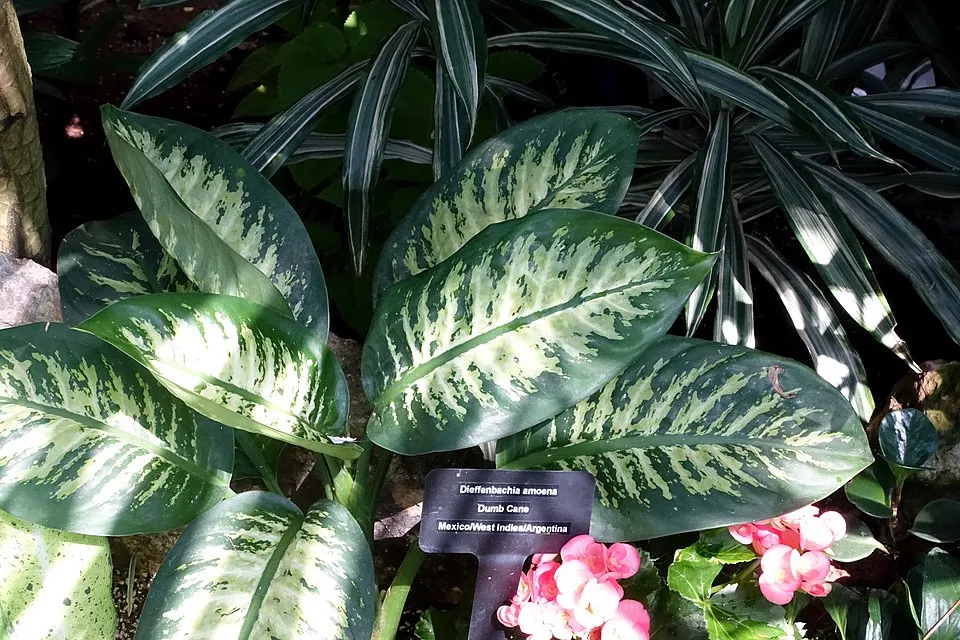
Dieffenbachia amoena, commonly known as the Dumb Cane Giant, stands as an imposing and visually captivating perennial herbaceous plant within the Araceae family. Characterized by its substantial size, mature specimens can typically reach heights of up to 6 feet, boasting robust, upright stems that are generally green to pale green. Its most striking feature is its large, ovate leaves, which can extend up to 12 inches in length and 6 inches in width.
These leaves display a dramatic and highly desirable variegation pattern, featuring prominent splashes and streaks of creamy white or pale yellow against a rich green background. While primarily cultivated for its lush foliage, Dieffenbachia amoena can occasionally produce an inflorescence, a typical Arum-type spadix encased within a greenish-white spathe, though this phenomenon is rare in indoor cultivation. Native to the humid tropical rainforests of Central and South America, this species thrives in warm, consistently moist environments.
Its taxonomic classification within the Araceae family places it alongside other popular indoor plants like Philodendron and Pothos, all sharing a common adaptability to indoor conditions and a propensity for lush, ornamental foliage. The plant's remarkable resilience to varying indoor light levels and its overall ease of care contribute significantly to its widespread popularity among houseplant enthusiasts, making it a prominent decorative feature in countless homes and offices.
Trusted Scientific References
1. Authoritative external sources for Dieffenbachia amoena
1.1 Wikipedia — Dieffenbachia amoena
1.2 Kew POWO (Plants of the World Online)
1.3 PubMed — peer-reviewed research
1.4 NCBI Taxonomy Browser
1.5 GBIF — Global Biodiversity
1.6Dumb Cane Giant should be interpreted through verified botanical identity, practical care, and responsible safety language. This recovery note adds the missing context needed for a complete profile: match light to the plant's habit, use well-drained soil, water according to season, and avoid unsupported medicinal or edible claims. For publishing, the plant can be presented as a source-backed indoor plant with clear care guidance, common problem diagnosis, and conservative safety wording.
1.1.Dumb Cane Giant — Standout Qualities
- ✓Striking variegated foliage — Striking variegated foliage with prominent green and creamy white patterns.
- ✓Large, ovate leaves, — Large, ovate leaves, often reaching up to 12 inches in length, creating a dramatic visual.
- ✓Primarily cultivated as — Primarily cultivated as a popular tropical indoor ornamental plant for its aesthetic appeal.
- ✓Contains highly toxic — Contains highly toxic calcium oxalate raphides in all its parts, particularly the sap.
- ✓Can cause severe — Can cause severe oral irritation, swelling, and temporary speechlessness if ingested.
- ✓Requires bright, indirect — Requires bright, indirect light and consistent moisture for optimal growth and vibrant coloration.
- ✓Relatively easy to — Relatively easy to care for as a houseplant, tolerant of various indoor conditions.
- ✓Belongs to the — Belongs to the Araceae family, characterized by its distinctive spadix inflorescence (though rare indoors).
- ✓Native to the — Native to the tropical regions of Central and South America, thriving in warm, humid environments.
1.2.Dumb Cane Giant — In Brief
- ✓Highly toxic ornamental plant, primarily due to calcium oxalate crystals.
- ✓Ingestion causes severe oral pain, swelling, and temporary speech loss.
- ✓Not used in traditional or modern medicine for internal applications.
- ✓Requires careful handling with gloves to prevent skin and eye irritation.
- ✓Essential to keep entirely out of reach of children and pets at all times.
2.Dumb Cane Giant — Taxonomic Classification
3.Dumb Cane Giant — Botanical Stats
4.Dumb Cane Giant — Plant Morphology
5.Dumb Cane Giant — Habitat & Distribution
6.Dumb Cane Giant — Cultural & Traditional Roles
7.Dumb Cane Giant — Bioactive Constituents
- ✓Calcium Oxalate Crystals (Raphides) — These microscopic, needle-shaped crystals are the primary irritant, causing immediate mechanical damage and intense burning pain upon contact with mucous membranes and skin.
- ✓Proteolytic Enzymes — Compounds such as dieffenbachin or dumbcain are thought to be present in the sap, working synergistically with calcium oxalate to degrade tissue and exacerbate the irritant effects by facilitating deeper penetration of the crystals.
- ✓Cyanogenic Glycosides (Minor Presence) — While not a primary toxic agent in Dieffenbachia amoena, some Araceae species contain trace amounts of cyanogenic glycosides, which can release hydrogen cyanide upon hydrolysis, though this contribution to acute toxicity is generally minor in Dieffenbachia.
- ✓Saponins — These glycosides are common in many plant species and can contribute to irritation, though their role in Dieffenbachia's acute toxicity is secondary to the dominant effects of calcium oxalate.
- ✓Flavonoids — Common plant pigments and antioxidants, flavonoids are likely present in the foliage but do not contribute to the plant's acute irritant or toxic properties.
- ✓Alkaloids — While some members of the Araceae family contain various alkaloids, their specific presence and contribution to Dieffenbachia amoena's toxicity are not widely documented as primary irritants.
- ✓Water-soluble Proteins — Certain proteins present in the plant sap may also contribute to the inflammatory response and irritation, acting in concert with the calcium oxalate and proteolytic enzymes.
8.Dumb Cane Giant — Modern Studies
- ✓Ornamental Value — Highly prized for its striking variegated foliage, Dieffenbachia amoena significantly enhances indoor aesthetics and contributes to a visually appealing environment in homes and offices.
- ✓Air Purification (Limited) — Like many houseplants, Dieffenbachia amoena can contribute to minor improvements in indoor air quality by absorbing some airborne volatile organic compounds, though its overall impact is generally limited compared to specialized air purifiers.
- ✓Historical Cautionary Significance — Historically, the plant's potent irritant sap was recognized for its ability to cause temporary speechlessness, leading to its common name and serving as a stark, albeit anecdotal, warning against ingestion.
- ✓Traditional Non-Medicinal Application — While not utilized for internal medicine due to its toxicity, some indigenous cultures might have leveraged its irritant properties for external, non-medicinal purposes, such as a deterrent or in specific ritualistic contexts, always with extreme caution.
- ✓Botanical Study Subject — Dieffenbachia amoena serves as a significant subject in botanical research, particularly concerning plant defense mechanisms and the phytochemistry of calcium oxalate and associated proteolytic enzymes.
- ✓Educational Tool for Plant Safety — The plant's well-documented toxicity makes it an important educational example for plant safety awareness, especially in households with young children and pets, highlighting the critical importance of identifying and avoiding contact with poisonous plants.
- ✓Resilience in Cultivation — Its robust nature and adaptability to various indoor conditions make it a valuable plant for horticultural studies on plant resilience, low-maintenance indoor gardening, and propagation techniques.
- ✓Cultural Significance (Cautionary) — Its distinctive common name, "Dumb Cane," reflects centuries of human interaction and understanding of its immediate and severe irritant effects upon contact or ingestion, underscoring its cultural role as a plant to be respected and handled with care.
8.1.Dumb Cane Giant — Therapeutic Indications
9.Dumb Cane Giant — Precautions & Warnings
9.1.Dumb Cane Giant — Warnings
- ✓Oral Irritation — Ingestion of any part of Dieffenbachia amoena causes immediate, intense burning pain and severe irritation of the mouth, tongue, and throat due to calcium oxalate crystals.
- ✓Swelling and Temporary Speech Loss — Severe swelling of oral and pharyngeal tissues can lead to difficulty speaking (aphonia) and swallowing, famously earning it the name "dumb cane."
- ✓Dysphagia and Dyspnea — Significant swelling may also cause severe difficulty swallowing (dysphagia) and, in critical cases, obstruct airways, leading to life-threatening breathing difficulties (dyspnea).
- ✓Dermatitis and Skin Irritation — Direct contact with the plant's sap can cause skin redness, itching, burning, and irritation, particularly in sensitive individuals or with prolonged exposure.
- ✓Ocular Damage — Contact with eyes can result in severe pain, excessive tearing (lacrimation), sensitivity to light (photophobia), and potential corneal damage, requiring immediate medical attention.
- ✓Gastrointestinal Distress — While less common than oral effects, large ingestions may lead to secondary symptoms such as nausea, vomiting, and abdominal pain due to systemic absorption of toxins or severe local irritation.
9.2.Dumb Cane Giant — Safety Overview
- ✓Keep Out of Reach — It is absolutely essential to place Dieffenbachia amoena where children, infants, and all pets cannot access it due to its severe toxicity upon ingestion.
- ✓Protective Gear for Handling — Always wear gloves, safety glasses, and long-sleeved clothing when pruning, repotting, or propagating to prevent skin and eye contact with the highly irritant sap.
- ✓Hand Hygiene — Thoroughly wash hands with soap and water immediately after any contact with the plant's sap or foliage, even if protective gloves were worn.
- ✓No Ingestion — Emphasize that no part of the Dieffenbachia amoena plant should ever be consumed, as it is highly toxic and can cause life-threatening reactions.
- ✓Emergency Protocol — In case of accidental ingestion or severe contact with skin or eyes, seek immediate medical attention or contact a poison control center without delay.
- ✓Avoid Eye Contact — Exercise extreme caution to prevent sap from splashing or entering the eyes, as it can cause intense pain and potentially serious, lasting ocular damage.
- ✓Inform Household Members — Educate all members of the household, including visitors, about the plant's toxicity and the necessary precautions to ensure safety.
10.Dumb Cane Giant — How to Use
- ✓Ornamental Display — Primarily used as an indoor decorative plant, Dieffenbachia amoena enhances aesthetic appeal in homes, offices, and public spaces due to its striking variegated foliage and impressive size.
- ✓Air Quality Enhancement — When placed indoors, it contributes to filtering certain airborne toxins, making it a component of a natural air purification system in a living environment, though effects are generally minor.
- ✓Educational Specimen — Serves as a botanical example for demonstrating plant toxicity and the critical importance of plant identification and safety in horticultural education and general household awareness.
- ✓Landscape Accent (Tropical Zones) — In USDA Hardiness Zones 10-12, it can be grown outdoors as a bold tropical accent plant in shaded garden beds or containers, adding dramatic foliage to the landscape.
- ✓Cautionary Houseplant — Its known toxicity necessitates careful placement entirely away from children and pets, serving as a constant reminder of plant-related safety protocols within the home.
- ✓Propagation for Collection — Stem cuttings or root divisions are common methods used to propagate new plants, allowing for the expansion of personal collections or sharing with other enthusiasts, always with protective gear.
11.Dumb Cane Giant — Growth Requirements
- ✓Light Requirements — Provide bright, indirect sunlight; direct sun can scorch leaves, while insufficient light leads to leggy growth and reduced variegation, compromising its aesthetic appeal.
- ✓Soil Composition — Utilize a fertile, well-draining potting mix, ideally with high peat or coco coir content, to ensure good aeration and prevent root rot, which is detrimental to plant health.
- ✓Watering Schedule — Maintain consistent moisture during the growing season (spring and summer), watering thoroughly when the top inch or two of soil feels dry, and significantly reduce frequency in winter.
- ✓Temperature and Humidity — Thrive in warm conditions (65-75°F or 18-24°C) and appreciate high humidity, though average household levels are often sufficient, especially if grouped with other plants.
- ✓Fertilization Regime — Feed every four to six weeks during the active growing period with a balanced, diluted liquid fertilizer (e.g., 20-20-20) to support vigorous foliage development.
- ✓Pruning for Health and Shape — Prune to maintain desired size and shape, removing any leggy stems or yellowing lower leaves with sterilized tools to encourage bushier growth and overall plant vigor.
- ✓Repotting Frequency — Repot annually or biennially into a slightly larger container when roots become crowded or emerge from drainage holes, typically in spring, to provide fresh nutrients and space.
Reviewed by the Flora Medical Global Botanical Review Panel
Multi-disciplinary editorial group · Botany · Ethnobotany · Herbal-medicine literature
Who reviewed this: This page was checked by the Flora Medical Global Botanical Review Panel — an in-house editorial group of botany graduates, ethnobotany researchers, and horticulture practitioners who collectively maintain our 7,000+ plant encyclopedia. Meet the team.
Our 4-step verification process
1. Taxonomic verification
Scientific names and synonyms cross-checked against Kew POWO, World Flora Online, and The Plant List.
2. Phytochemical & medicinal cross-reference
Active compounds, traditional uses, and reported activities are cross-referenced with PubMed, USDA Dr. Duke's database, and peer-reviewed ethnobotanical literature.
3. Conservation & distribution check
Distribution, ecology, and conservation status confirmed against GBIF occurrence records and the IUCN Red List.
4. Editorial & safety review
Every entry passes an editorial pass for clarity, originality, and safety notices (toxicity, contraindications, dosage caveats) before publication.
Last reviewed:
Important medical disclaimer: This content is for educational and research purposes only. It is not medical advice and is not a substitute for consultation with a licensed healthcare provider. Do not use any herb to self-treat a medical condition without professional guidance.
Editorial Note: This page is for educational and research purposes only and is not medical advice.
Written by: Flora Medical Global Editorial Team
Reviewed by: Flora Medical Global Botanical Review Panel
Last Updated: June 15, 2026





Dumb Cane Giant — Comments & Community Reviews
Rate this plant