
Medical Disclaimer: This content is for educational purposes only. It is not medical advice. Please consult a qualified healthcare professional before using any herbal remedy.
Safety Overview
1.Dyckia — At a Glance
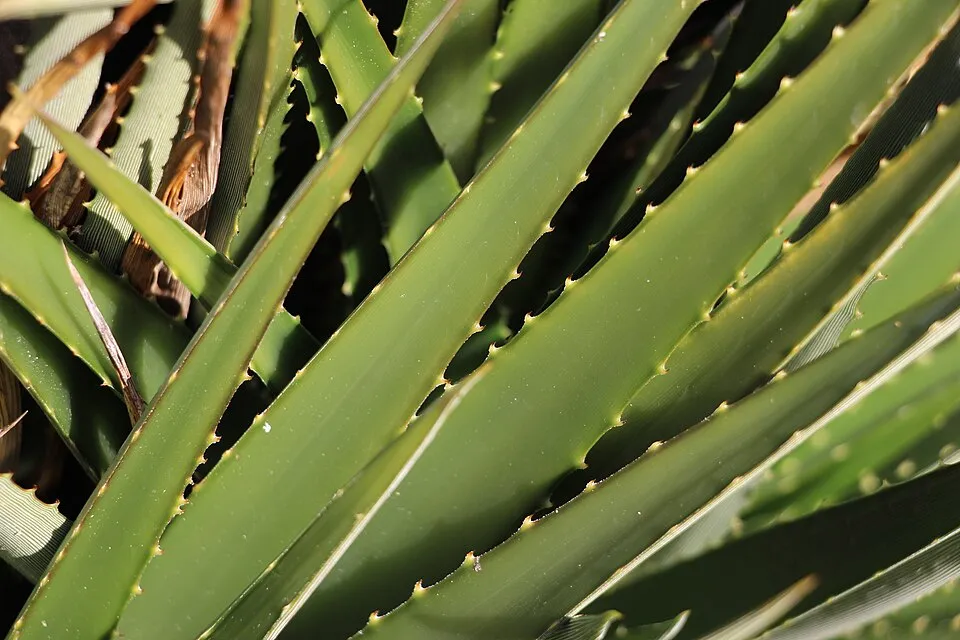
Dyckia brevifolia, often recognized by its evocative common name, the sawblade or tough succulent bromeliad, is a captivating perennial species within the diverse Bromeliaceae family. This distinctive plant typically forms dense, basal rosettes of narrow, rigid leaves, reaching lengths of up to 70 cm (27 inches) and contributing to an overall plant height of 30-50 cm (12-20 inches). Its foliage is particularly striking, exhibiting a beautiful silver sheen attributed to a dense layer of fine trichomes that efficiently reflect light and aid in water retention.
The leaf margins are sharply serrated, giving the plant a formidable, architectural presence. Native and endemic to the rocky, arid regions of Brazil, Dyckia brevifolia is a xerophytic marvel, exceptionally adapted to withstand prolonged drought conditions and thrive in well-drained soils. In favorable conditions, this resilient species produces tall, slender floral spikes, often rising up to 60 cm (24 inches) above the foliage.
These spikes are adorned with bright yellow to orange flowers, typically blooming during the warmer summer months and attracting various pollinators. Unlike many other bromeliads, Dyckia brevifolia does not perish after flowering but continues to grow and produce offsets, allowing for its natural spread and propagation. Its robust nature and unique aesthetic make it a prized specimen for indoor cultivation, xeriscaping, and rock gardens, offering dramatic visual interest with minimal maintenance.
Trusted Scientific References
1. Authoritative external sources for Dyckia brevifolia
1.1 Wikipedia — Dyckia brevifolia
1.2 Kew POWO (Plants of the World Online)
1.3 PubMed — peer-reviewed research
1.4 NCBI Taxonomy Browser
1.5 GBIF — Global Biodiversity
1.6Dyckia should be interpreted through verified botanical identity, practical care, and responsible safety language. This recovery note adds the missing context needed for a complete profile: match light to the plant's habit, use well-drained soil, water according to season, and avoid unsupported medicinal or edible claims. For publishing, the plant can be presented as a source-backed indoor plant with clear care guidance, common problem diagnosis, and conservative safety wording.
1.1.Dyckia — Notable Characteristics
- ✓Botanical Name — Dyckia brevifolia
- ✓Family — Bromeliaceae (Pineapple Family)
- ✓Common Names — Sawblade, Tough Succulent Bromeliad
- ✓Native Region — Endemic to Brazil, thriving in rocky, arid habitats
- ✓Growth Habit — Perennial, rosette-forming, terrestrial succulent
- ✓Foliage — Rigid, narrow, silver-sheened leaves with sharply serrated margins, up to 70 cm long
- ✓Flowers — Bright yellow to orange, produced on tall, upright spikes (up to 60 cm) during summer
- ✓Drought Tolerance — Excellent xerophytic adaptation, highly resilient to dry conditions
- ✓Primary Use — Ornamental plant for landscapes, rock gardens, and container cultivation
- ✓Maintenance — Low-maintenance, requiring well-drained soil, bright direct sunlight, and infrequent watering
- ✓Unique Trait — Does not die after flowering, actively produces offsets (pups) for propagation
1.2.Dyckia — At-a-Glance Summary
- ✓Dyckia brevifolia is a striking, spiny succulent bromeliad native to Brazil, highly valued for its ornamental appeal.
- ✓It features rigid, silver-sheened rosettes and produces vibrant yellow-orange flower spikes, thriving in full sun.
- ✓Known for its exceptional drought tolerance and low maintenance, making it an excellent choice for xeriscaping or container gardens.
- ✓Primarily used horticulturally; there are no significant traditional or scientifically proven medicinal uses documented.
- ✓Handling requires significant caution due to its sharply serrated leaves and spines to prevent physical injury.
- ✓Preliminary phytochemical screening indicates the presence of alkaloids, flavonoids, and saponins, but specific compounds and their activities are largely uncharacterized.
2.Dyckia — Scientific Identity
3.Dyckia — Vital Statistics
4.Dyckia — Physical Description
5.Dyckia — Origin & Spread
6.Dyckia — Folk Medicine Applications
7.Dyckia — Key Phytochemicals
- ✓Alkaloids — These nitrogen-containing compounds are generally associated with diverse pharmacological activities in other plant species, though specific alkaloids and their confirmed biological roles in Dyckia brevifolia are yet to be elucidated or widely documented.
- ✓Flavonoids — Commonly found plant phenolics, flavonoids are known for potential antioxidant and anti-inflammatory properties; their preliminary detection in Dyckia brevifolia suggests potential, but specific structures, concentrations, and bioactivities remain unconfirmed.
- ✓Saponins — These glycosides can exhibit various biological effects, including surfactant and hemolytic properties; however, the particular forms of saponins present in Dyckia brevifolia and their physiological impacts are currently undocumented in scientific literature.
- ✓Expected Terpenoids — While not exhaustively studied for this species, many members of the Bromeliaceae family contain various terpenoids, which might also be present in Dyckia brevifolia, potentially contributing to plant defense or aroma, but specific identification is pending.
- ✓Phenolic Acids — Another ubiquitous class of plant compounds with antioxidant potential, phenolic acids are likely present in Dyckia brevifolia, yet specific compounds like caffeic or ferulic acid have not been isolated, identified, or quantified for this plant.
- ✓Glycosides (General) — Beyond flavonoids and saponins, other types of glycosides, complex molecules where a sugar is bonded to a non-sugar component, may be present, potentially influencing plant defense mechanisms, but details for this species are limited.
- ✓Waxes and Cuticular Lipids — Given its pronounced xerophytic adaptations, Dyckia brevifolia undoubtedly possesses a robust cuticular layer containing various waxes and lipids, essential for minimizing water loss, though not typically considered medicinal constituents.
- ✓Mucilage/Polysaccharides — Some succulent and drought-adapted plants produce mucilaginous polysaccharides for water storage and retention; the presence, composition, and specific roles of such compounds in Dyckia brevifolia are largely unexplored.
8.Dyckia — Scientific Evidence
- ✓Limited Documented Medicinal Use — No significant traditional or modern medicinal applications are widely documented for Dyckia brevifolia in major ethnobotanical or pharmacological databases.
- ✓Absence of Traditional System Integration — Unlike many other plant species, Dyckia brevifolia is not incorporated into established traditional medical systems such as Ayurveda, Traditional Chinese Medicine (TCM), Unani, or Siddha.
- ✓Under-researched Pharmacological Profile — Scientific investigation into the specific pharmacological properties and therapeutic potential of Dyckia brevifolia remains extremely limited in current research literature.
- ✓Potential for Future Study — As a member of the diverse Bromeliaceae family, there is theoretical scope for future phytochemical research to explore novel compounds, though none are currently established for medicinal use.
- ✓Ornamental Value Primary — The primary recognized value of Dyckia brevifolia lies in its striking aesthetic appeal and horticultural merit rather than any established therapeutic capacity.
- ✓No Known Clinical Applications — Currently, there are no established clinical applications or indications for the use of Dyckia brevifolia in human or animal health, and it is not prescribed by medical herbalists.
- ✓Data Gap in Bioactivity — Information regarding the specific bioactivities or health-promoting effects of extracts or isolated compounds from Dyckia brevifolia is largely absent in scientific literature.
- ✓Caution Against Self-Medication — Due to the profound lack of research and documented safety, it is crucial to avoid any attempts at self-medication with Dyckia brevifolia, as its effects on human physiology are unknown.
8.1.Dyckia — Indications & Uses
9.Dyckia — Cautions & Contraindications
9.1.Dyckia — Possible Adverse Reactions
- ✓Skin Lacerations from Spines — Direct contact with the sharply serrated leaf margins can cause painful cuts, scratches, or minor skin abrasions due to the physical nature of the plant's formidable spines.
- ✓Puncture Wounds — The rigid, pointed leaves and marginal hooks pose a significant risk of puncture wounds if the plant is not handled with extreme caution, particularly during repotting or maintenance.
- ✓Allergic Contact Dermatitis (Rare) — While uncommon, some individuals may experience mild allergic contact dermatitis from plant sap or surface trichomes; however, specific allergens in Dyckia brevifolia are not well-documented.
- ✓Unknown Ingestion Toxicity — Due to the complete absence of scientific research, the internal toxicity of Dyckia brevifolia upon ingestion is unknown and should be strictly avoided for human or animal consumption.
- ✓Gastrointestinal Upset (Hypothetical) — Ingesting any non-food plant material can potentially cause gastrointestinal distress, such as nausea, vomiting, or abdominal discomfort, especially in sensitive individuals, children, or pets.
9.2.Dyckia — Safety Overview
- ✓External Physical Hazard — Dyckia brevifolia is primarily a physical hazard due to its sharp, serrated leaves and spines; exercise extreme caution during all handling, planting, and maintenance activities.
- ✓Not for Internal Consumption — There is no scientific basis, traditional use, or safety data supporting the internal consumption of Dyckia brevifolia; its safety profile for ingestion is entirely unestablished.
- ✓Keep Away from Children and Pets — Position plants in locations inaccessible to curious children and household pets to prevent accidental contact injuries from spines or potential ingestion.
- ✓Protective Gear Recommended — Always wear sturdy, thick gloves and consider eye protection when working closely with the plant, particularly during tasks like repotting, pruning, or moving the plant.
- ✓Symptomatic Treatment for Injuries — In the event of cuts, punctures, or skin irritation from spines, thoroughly clean the wound and seek medical attention if signs of infection, severe pain, or persistent irritation occur.
- ✓Minimal Allergic Potential — While physical irritation is common due to spines, severe allergic reactions to Dyckia brevifolia are not widely reported, but individual sensitivities to plant materials can always vary.
10.Dyckia — Usage Guide
- ✓Ornamental Display — Primarily cultivated as an architectural ornamental plant, Dyckia brevifolia is ideal for xeriscaping, rock gardens, succulent collections, or as a striking container specimen in appropriate climates.
- ✓Landscape Feature — Utilize its unique spiny rosettes and exceptional drought-tolerant nature to create visually interesting groundcovers, borders, or focal points in arid or low-maintenance garden designs.
- ✓Container Cultivation — Grow Dyckia brevifolia in decorative pots to highlight its distinctive silver foliage and sharp texture, making it suitable for patios, balconies, or bright indoor spaces where its spiny nature can be appreciated safely.
- ✓Handling Precautions — Always wear thick, protective gloves when handling Dyckia brevifolia due to its sharply serrated leaf margins and potential hooks, which can cause painful cuts or irritation.
- ✓Propagation for Collection Expansion — Use carefully separated offsets (pups) to expand your personal collection or share with other plant enthusiasts, ensuring the new plants are well-rooted before transplanting.
- ✓Pollinator Attraction — Allow the plant to flower to enjoy its vibrant yellow-orange spikes, which are known to attract beneficial pollinators such as bees and hummingbirds to the garden.
- ✓Aesthetic Groupings — Combine Dyckia brevifolia with other drought-tolerant succulents or cacti to create visually dynamic and texture-rich plant arrangements that thrive under similar environmental conditions.
11.Dyckia — How to Grow
- ✓Soil Requirements — Utilize an exceptionally well-draining substrate, ideally a specialized cactus or succulent mix, further enhanced with perlite, pumice, or coarse sand to ensure optimal aeration and prevent any waterlogging.
- ✓Light Exposure — Provide bright, direct sunlight for several hours daily to promote vibrant foliage color and robust growth; insufficient light can lead to etiolation and diminished vigor.
- ✓Watering Regimen — During the active growing season (spring and summer), water thoroughly when the topsoil is completely dry, allowing for full drainage; significantly reduce watering in cooler dormant months to mimic its natural arid conditions.
- ✓Temperature and Humidity — Thrives in warm temperatures but demonstrates good tolerance for cool winter temperatures; generally prefers low to moderate humidity, consistent with its native dry, rocky habitats.
- ✓Fertilization — Feed sparingly during the active growing season with a diluted, balanced liquid fertilizer specifically formulated for succulents, typically once every 2-4 weeks, to support healthy development without over-fertilizing.
- ✓Propagation Techniques — Propagate Dyckia brevifolia effectively through offsets (pups) that develop around the base of the mother plant, allowing them to establish well before careful separation, or by sowing seeds from mature flower spikes.
- ✓Container Choice — Select a pot with ample drainage holes and sufficient size to accommodate its extensive root system, with porous terracotta pots being an excellent choice due to their breathability.
Reviewed by the Flora Medical Global Botanical Review Panel
Multi-disciplinary editorial group · Botany · Ethnobotany · Herbal-medicine literature
Who reviewed this: This page was checked by the Flora Medical Global Botanical Review Panel — an in-house editorial group of botany graduates, ethnobotany researchers, and horticulture practitioners who collectively maintain our 7,000+ plant encyclopedia. Meet the team.
Our 4-step verification process
1. Taxonomic verification
Scientific names and synonyms cross-checked against Kew POWO, World Flora Online, and The Plant List.
2. Phytochemical & medicinal cross-reference
Active compounds, traditional uses, and reported activities are cross-referenced with PubMed, USDA Dr. Duke's database, and peer-reviewed ethnobotanical literature.
3. Conservation & distribution check
Distribution, ecology, and conservation status confirmed against GBIF occurrence records and the IUCN Red List.
4. Editorial & safety review
Every entry passes an editorial pass for clarity, originality, and safety notices (toxicity, contraindications, dosage caveats) before publication.
Last reviewed:
Important medical disclaimer: This content is for educational and research purposes only. It is not medical advice and is not a substitute for consultation with a licensed healthcare provider. Do not use any herb to self-treat a medical condition without professional guidance.
Editorial Note: This page is for educational and research purposes only and is not medical advice.
Written by: Flora Medical Global Editorial Team
Reviewed by: Flora Medical Global Botanical Review Panel
Last Updated: June 15, 2026





Dyckia — Comments & Community Reviews
Rate this plant