
Medical Disclaimer: This content is for educational purposes only. It is not medical advice. Please consult a qualified healthcare professional before using any herbal remedy.
Safety Overview
1.Echeveria Garden — Introduction & Highlights
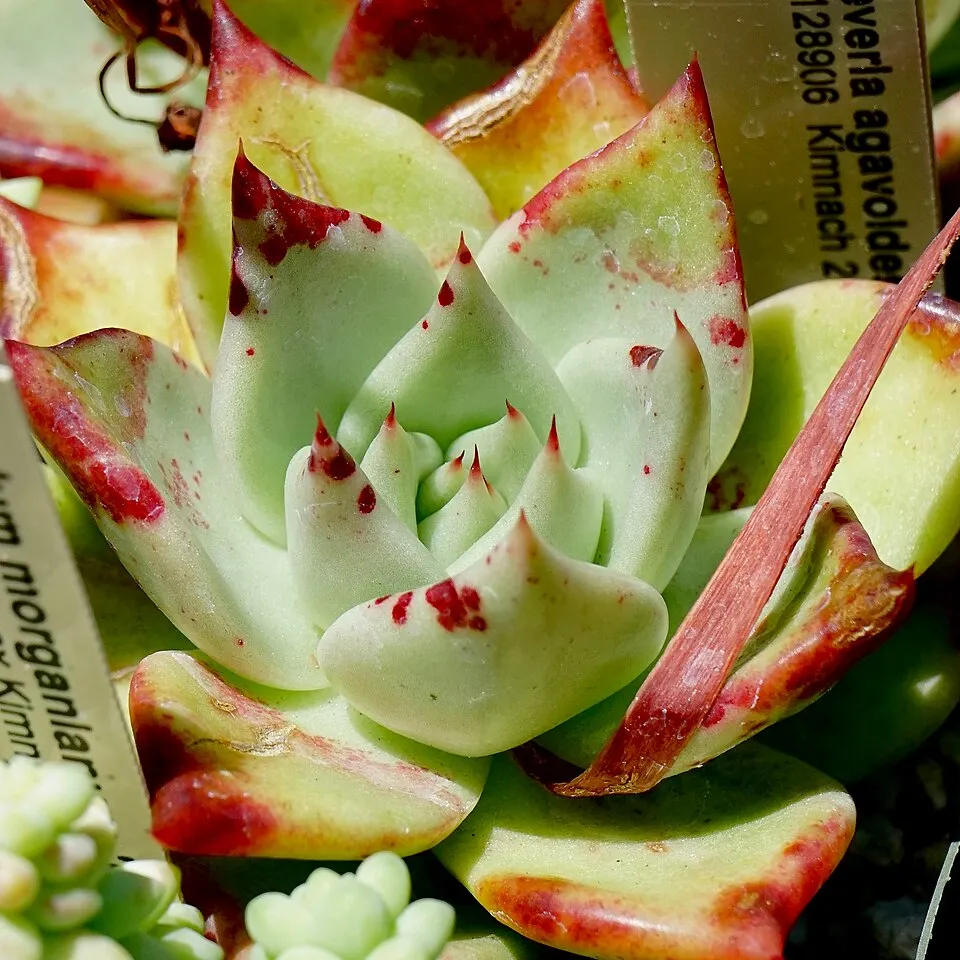
Echeveria agavoides, commonly known as "Lipstick Echeveria" or "Wax Agave," is a striking succulent belonging to the Crassulaceae family. Native to the semi-arid, rocky regions and mountainous terrains of central Mexico, particularly states like San Luis Potosí, Hidalgo, Guanajuato, and Querétaro, it thrives in conditions of intense sun exposure and intermittent rainfall. The species epithet "agavoides" aptly describes its resemblance to Agave plants, characterized by its robust, triangular, and often sharply-tipped leaves. These leaves are arranged in a dense, symmetrical rosette, typically reaching 10-15 cm in height and 10-20 cm in diameter, though larger cultivars exist.
The foliage exhibits a range from light to bluish-green, often coated with a waxy, glaucous layer, and is notably thick and fleshy. A distinguishing feature is the vibrant red or coppery-red margins and tips of its obovate-lanceolate leaves, which intensify dramatically under environmental stress such as cold temperatures or drought, giving rise to its "Lipstick" moniker. Flowering occurs predominantly from late winter into early spring, with tall, arching inflorescences emerging, sometimes reaching up to 50 cm. These bear delicate, bell-shaped flowers in an appealing spectrum of yellow, orange, and red hues, often tipped with a darker yellow.
Botanically, E. agavoides is recognized for its compact growth habit and remarkable resilience, making it a favored ornamental succulent globally. Its natural distribution extends across various Mexican states, including Aguascalientes, Durango, Jalisco, and Zacatecas, highlighting its adaptability to diverse arid landscapes.
Trusted Scientific References
1. Authoritative external sources for Echeveria agavoides
1.1 Wikipedia — Echeveria agavoides
1.2 Kew POWO (Plants of the World Online)
1.3 PubMed — peer-reviewed research
1.4 NCBI Taxonomy Browser
1.5 GBIF — Global Biodiversity
1.6Echeveria Garden should be interpreted through verified botanical identity, practical care, and responsible safety language. This recovery note adds the missing context needed for a complete profile: match light to the plant's habit, use well-drained soil, water according to season, and avoid unsupported medicinal or edible claims. For publishing, the plant can be presented as a source-backed garden plant with clear care guidance, common problem diagnosis, and conservative safety wording.
1.1.Echeveria Garden — Defining Traits
- ✓Botanical Name — Echeveria agavoides.
- ✓Common Names — Lipstick Echeveria, Wax Agave, Echeveria Garden.
- ✓Family — Crassulaceae.
- ✓Origin — Central Mexico.
- ✓Growth Habit — Stemless, symmetrical rosette succulent.
- ✓Foliage — Fleshy, obovate-lanceolate leaves, light green to bluish-green with red tips/margins.
- ✓Flowers — Bell-shaped, yellow, orange, or red blooms on tall cymes in late winter/early spring.
- ✓Drought Tolerance — High, adapted to arid conditions.
- ✓Hardiness — Winter hardy to 15-20°F (-9 to -6°C).
- ✓Ornamental Value — Highly valued for architectural form and vibrant stress coloration.
1.2.Echeveria Garden — Snapshot Summary
- ✓Ornamental Succulent — Prized for its striking rosette form and vibrant, lipstick-red leaf margins.
- ✓Mexican Native — Thrives in arid, rocky habitats of central Mexico.
- ✓Low Maintenance — Drought-tolerant and easy to care for, ideal for xeriscaping and containers.
- ✓No Established Medicinal Use — Primarily valued for aesthetic and horticultural purposes.
- ✓Pet-Friendly — Generally considered non-toxic to humans and common household pets.
- ✓Unique Foliage — Thick, fleshy leaves with distinct coloration that intensifies under stress.
2.Echeveria Garden — Systematic Position
3.Echeveria Garden — Quick Facts
4.Echeveria Garden — Plant Morphology
5.Echeveria Garden — Where It Grows
6.Echeveria Garden — Historical Applications
7.Echeveria Garden — Active Compounds
- ✓Detailed phytochemical research specifically on Echeveria agavoides is limited; however, based on the general chemistry of the Crassulaceae family and succulents, the following categories of compounds are likely or potentially present:
- ✓Flavonoids — These polyphenolic compounds are common in plants and typically contribute to antioxidant, anti-inflammatory, and sometimes antimicrobial activities. Examples might include quercetin or kaempferol derivatives.
- ✓Triterpenoids — A diverse group of compounds, often found in plant waxes and resins, known for potential anti-inflammatory, hepatoprotective, and adaptogenic properties.
- ✓Phenolic Acids — Simple aromatic compounds like caffeic acid or ferulic acid, which are widely distributed in plants and possess significant antioxidant capabilities.
- ✓Polysaccharides — Complex carbohydrates, particularly mucilage, which are abundant in succulent tissues and provide water retention, emollient, and potentially immunomodulatory effects.
- ✓Alkaloids — While less common in Crassulaceae compared to other plant families, certain low concentrations of nitrogen-containing compounds with various physiological activities might be present.
- ✓Carotenoids — Pigments like beta-carotene are responsible for yellow, orange, and red coloration in leaves and flowers, acting as antioxidants and precursors for vitamins.
- ✓Anthocyanins — Water-soluble pigments responsible for the red and pink hues, especially visible in the leaf margins under stress, possessing strong antioxidant properties.
- ✓Organic Acids — Malic acid and citric acid are commonly found in plant cells, contributing to metabolism and potentially influencing taste or preservative qualities.
- ✓Waxes and Cuticular Lipids — These form the glaucous coating on the leaves, crucial for drought resistance and UV protection, composed of long-chain fatty acids and alcohols.
- ✓Phytosterols — Plant sterols such as beta-sitosterol, which are structurally similar to cholesterol and may have cholesterol-lowering and anti-inflammatory effects.
8.Echeveria Garden — Research Insights
- ✓Given the limited historical and scientific documentation for Echeveria agavoides in traditional medicinal systems, its direct therapeutic benefits are not widely established. However, based on general properties observed in succulents and related species, some potential areas of interest for future research or general plant-derived benefits can be considered:
- ✓Skin Hydration Support — Many succulents contain mucilaginous compounds that can help retain moisture, potentially offering emollient properties for topical skin application, though specific research on E. agavoides is needed.
- ✓Antioxidant Potential — Like many plants, Echeveria agavoides may contain various phenolic compounds and flavonoids, which are known to possess antioxidant activities that protect cells from oxidative stress.
- ✓Anti-inflammatory Properties — Certain plant secondary metabolites often exhibit anti-inflammatory effects, and these could theoretically be present in E. agavoides, warranting further investigation.
- ✓Wound Healing — The mucilage from some succulents has been traditionally used to soothe minor skin irritations and support wound healing, a property that could be explored in E. agavoides.
- ✓Antimicrobial Activity — Preliminary studies on other succulent species sometimes reveal mild antimicrobial properties, suggesting a potential area for research into E. agavoides extracts against common pathogens.
- ✓Detoxification Support — While not directly proven, the presence of certain plant compounds could theoretically support the body's natural detoxification pathways, a general benefit often attributed to plant consumption.
- ✓Ornamental and Psychological Well-being — While not a direct medicinal benefit, the cultivation and aesthetic appeal of Echeveria agavoides contribute significantly to mental health, stress reduction, and overall psychological well-being through horticultural therapy.
- ✓Air Purification — As a living plant, Echeveria agavoides can contribute to indoor air quality by absorbing certain volatile organic compounds (VOCs) and releasing oxygen, a general benefit of houseplants.
- ✓Low Maintenance Stress Relief — The ease of care for E. agavoides makes it an ideal plant for novice gardeners, reducing the stress associated with plant maintenance and fostering a sense of accomplishment.
- ✓Educational Value — Studying the unique adaptations of succulents like E. agavoides to arid environments can provide educational benefits, fostering an appreciation for botany and ecological resilience.
- ✓Drought Tolerance for Sustainability — Its low water needs make it an environmentally sustainable choice for landscaping, promoting water conservation and ecological awareness.
8.1.Echeveria Garden — Conditions Traditionally Used For
9.Echeveria Garden — Precautions & Warnings
9.1.Echeveria Garden — Side Effects & Warnings
- ✓As Echeveria agavoides is primarily an ornamental plant with no established internal medicinal uses, documented side effects from consumption are virtually non-existent. However, general considerations for handling and interaction include:
- ✓Skin Irritation — Rarely, some individuals might experience mild skin irritation or allergic reactions upon direct contact with plant sap, especially if sensitive to plant compounds.
- ✓Ingestion Risks — While generally considered non-toxic, consuming large quantities of any ornamental plant not intended for food can cause mild gastrointestinal upset in sensitive individuals.
- ✓Pet Safety — Although listed as pet-friendly, excessive ingestion by pets might lead to minor digestive disturbances.
- ✓Environmental Impact — Improper disposal of plant material in non-native environments could, in theory, lead to ecological disruption, though this species is not known to be invasive.
- ✓Misidentification Risk — Confusing Echeveria agavoides with other, potentially toxic, succulents or plants could lead to adverse effects if ingested.
9.2.Echeveria Garden — Safety Overview
- ✓Echeveria agavoides generally possesses a favorable safety profile, particularly as an ornamental plant. Key safety considerations include:
- ✓Non-Toxic Classification — It is widely regarded as non-toxic to humans and common household pets, making it a safe addition to homes and gardens.
- ✓Topical Use Caution — For any speculative topical applications, a patch test on a small skin area is advisable to rule out individual sensitivities or allergic reactions.
- ✓Avoid Ingestion — Despite its non-toxic status, E. agavoides is not intended for human or animal consumption and should not be deliberately ingested.
- ✓Handling Practices — Wear gloves if you have sensitive skin or known plant allergies during propagation or repotting to prevent potential mild irritation.
- ✓Children and Pets — While safe, supervise young children and pets to prevent accidental ingestion, which, while unlikely to be harmful, is best avoided.
- ✓Environmental Safety — Ensure responsible cultivation and disposal practices to prevent any unintended ecological spread, though E. agavoides is not typically invasive.
10.Echeveria Garden — Application Forms
- ✓Echeveria agavoides is primarily cultivated for its ornamental value and aesthetic appeal, and direct medicinal usage methods are not established. However, its attributes can be utilized in various non-medicinal ways:
- ✓Ornamental Display — Plant individually in decorative pots or as part of succulent arrangements to highlight its striking rosette form and vibrant coloration.
- ✓Landscape Accent — Integrate into xeriscape gardens, rockeries, or dry garden beds as a focal point or mass planting for its architectural beauty and drought tolerance.
- ✓Horticultural Therapy — Engage in the cultivation and care of E. agavoides as a form of horticultural therapy, promoting relaxation and mental well-being.
- ✓Educational Specimen — Use as a living example in botanical education to demonstrate succulent adaptations, plant morphology, and arid plant resilience.
- ✓Home Decor — Incorporate into indoor plant displays, particularly in bright, sunny windows or well-lit rooms, to add natural beauty and a touch of greenery.
- ✓Gifting — Its aesthetic appeal and low maintenance make it a popular and thoughtful gift for plant enthusiasts or those new to gardening.
- ✓Craft and Art Projects — Dried or preserved leaves can be used in botanical art, terrariums, or decorative crafts, showcasing their unique form.
11.Echeveria Garden — Propagation & Care
- ✓Cultivating Echeveria agavoides is relatively straightforward due to its resilient nature. Here are key guidelines for successful growth:
- ✓Light Requirement — Plant in an area receiving full sun to partial shade; direct sunlight is crucial for intensifying the vibrant red leaf margins and promoting flowering.
- ✓Soil Preference — Utilize well-draining soil, ideally a succulent or cactus mix, to prevent root rot, as these plants are highly sensitive to excessive moisture.
- ✓Watering Schedule — Water thoroughly after planting, then drastically reduce frequency to rarely, allowing the soil to dry out completely between waterings, especially during winter dormancy.
- ✓Temperature Tolerance — Hardy down to 15-20°F (-9 to -6°C), but prefers warmer conditions. In temperate regions, protect from frost or bring indoors during winter.
- ✓Winter Rest — Provide a cool, dry winter rest period above 5°C (41°F) without water to encourage robust growth and subsequent flowering in spring.
- ✓Container or Ground Planting — Suitable for both containers, allowing for easy relocation during cold seasons, and in-ground planting in arid, well-drained garden beds.
- ✓Propagation — Easily propagated from leaf cuttings or stem cuttings; allow cut surfaces to callus for several days before planting to prevent rot.
- ✓Low Maintenance — Requires minimal pruning and generally thrives with infrequent attention, making it an excellent choice for low-care landscapes.
Reviewed by the Flora Medical Global Botanical Review Panel
Multi-disciplinary editorial group · Botany · Ethnobotany · Herbal-medicine literature
Who reviewed this: This page was checked by the Flora Medical Global Botanical Review Panel — an in-house editorial group of botany graduates, ethnobotany researchers, and horticulture practitioners who collectively maintain our 7,000+ plant encyclopedia. Meet the team.
Our 4-step verification process
1. Taxonomic verification
Scientific names and synonyms cross-checked against Kew POWO, World Flora Online, and The Plant List.
2. Phytochemical & medicinal cross-reference
Active compounds, traditional uses, and reported activities are cross-referenced with PubMed, USDA Dr. Duke's database, and peer-reviewed ethnobotanical literature.
3. Conservation & distribution check
Distribution, ecology, and conservation status confirmed against GBIF occurrence records and the IUCN Red List.
4. Editorial & safety review
Every entry passes an editorial pass for clarity, originality, and safety notices (toxicity, contraindications, dosage caveats) before publication.
Last reviewed:
Important medical disclaimer: This content is for educational and research purposes only. It is not medical advice and is not a substitute for consultation with a licensed healthcare provider. Do not use any herb to self-treat a medical condition without professional guidance.
Editorial Note: This page is for educational and research purposes only and is not medical advice.
Written by: Flora Medical Global Editorial Team
Reviewed by: Flora Medical Global Botanical Review Panel
Last Updated: June 15, 2026





Echeveria Garden — Comments & Community Reviews
Rate this plant