
Medical Disclaimer: This content is for educational purposes only. It is not medical advice. Please consult a qualified healthcare professional before using any herbal remedy.
Safety Overview
1.Echeveria Black Prince — Introduction & Highlights
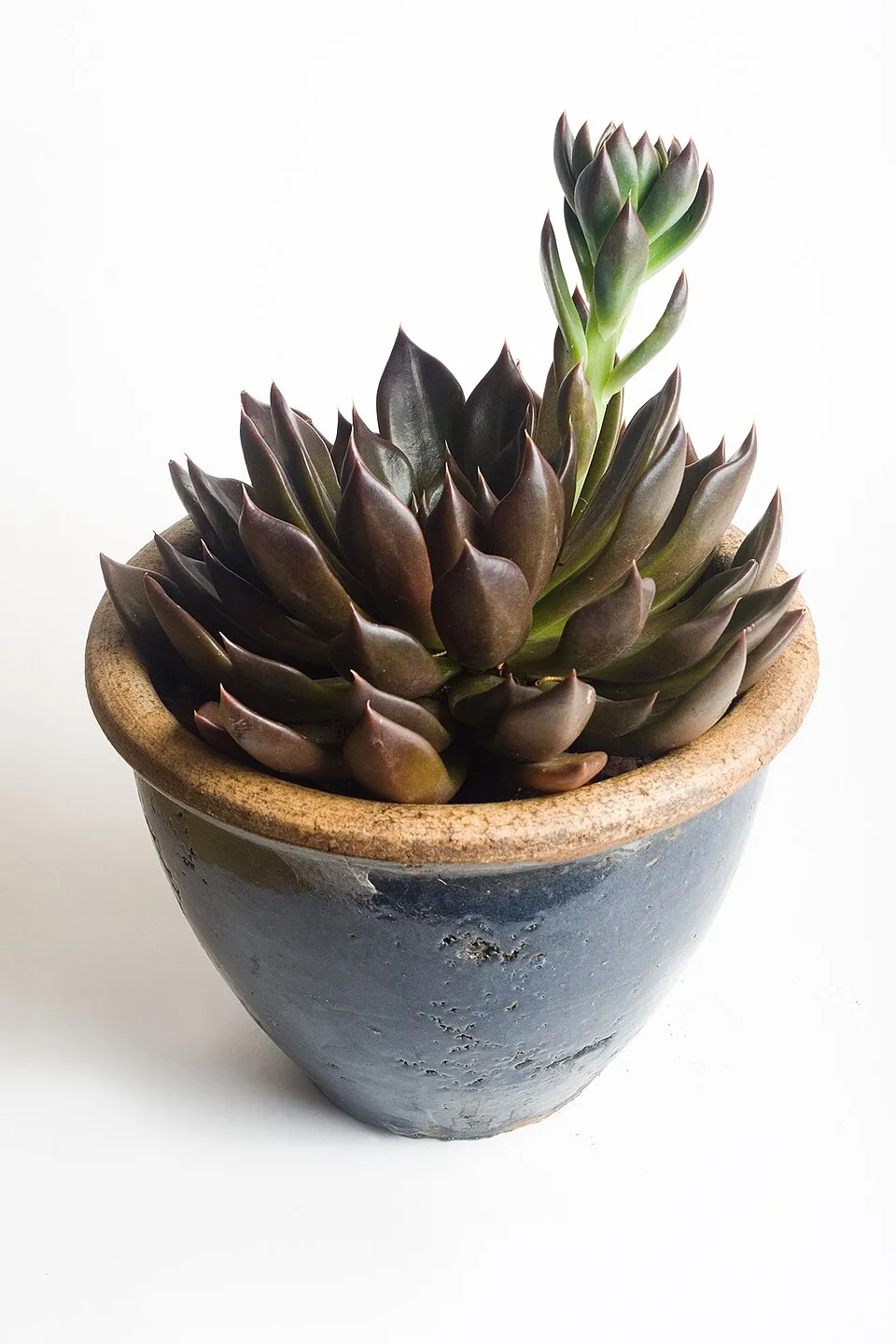
Echeveria 'Black Prince' is a striking hybrid succulent, a captivating member of the Crassulaceae family, renowned for its dramatic, deep burgundy to nearly black foliage. This distinctive plant forms dense, star-shaped rosettes that typically reach a height of up to 5 inches (12.5 cm) and spread to about 6 inches (15 cm) in diameter. Its fleshy, pointed leaves are the plant's most notable feature, developing an even richer, darker hue when exposed to ample sunlight.
New growth emerging from the center of the rosette often displays a contrasting bright green, adding to its visual appeal. The 'Black Prince' is a creation by Frank Reinelt of Capitola, California, resulting from a cross between Echeveria shaviana and Echeveria affinis, and was introduced in the CSSA Journal in 1970. While it does not possess a native habitat in the wild, it is widely cultivated globally as an ornamental houseplant and garden specimen.
During late fall and winter, it produces tall, arching stalks, sometimes reaching up to 12 inches (30 cm), adorned with vibrant coral-red, bell-shaped flowers. These inflorescences are characterized by numerous large, leaf-like bracts, a key feature distinguishing it from its parent, Echeveria affinis. Like other Echeveria species, it is well-adapted to arid conditions, storing water efficiently in its succulent leaves, making it an excellent, low-maintenance choice for various indoor and outdoor settings.
Trusted Scientific References
1. Authoritative external sources for Echeveria black prince
1.1 Wikipedia — Echeveria black prince
1.2 Kew POWO (Plants of the World Online)
1.3 PubMed — peer-reviewed research
1.4 NCBI Taxonomy Browser
1.5 GBIF — Global Biodiversity
1.6Echeveria Black Prince should be interpreted through verified botanical identity, practical care, and responsible safety language. This recovery note adds the missing context needed for a complete profile: match light to the plant's habit, use well-drained soil, water according to season, and avoid unsupported medicinal or edible claims. For publishing, the plant can be presented as a source-backed indoor plant with clear care guidance, common problem diagnosis, and conservative safety wording.
1.1.Echeveria Black Prince — Key Features
- ✓Deep Burgundy to Black Foliage — Unique coloration intensifies with ample light.
- ✓Rosette Growth Habit — Forms compact, star-shaped arrangements of fleshy leaves.
- ✓Hybrid Origin — A cross between Echeveria shaviana and Echeveria affinis.
- ✓Vibrant Coral — Red Flowers — Bell-shaped blossoms appear on tall stalks in cooler months.
- ✓Low Water Requirements — Highly drought-tolerant due to succulent nature.
- ✓Easy to Propagate — Readily multiplies from leaf cuttings and offsets.
- ✓Ornamental Appeal — Highly valued for its sculptural form and dramatic color in decor.
- ✓Adaptable Houseplant — Thrives in bright indoor environments with minimal care.
- ✓Produces Offsets (Pups) — Forms new plantlets around the base, creating dense clumps.
- ✓Waxy Leaf Coating — Provides a subtle sheen and aids in water retention.
1.2.Echeveria Black Prince — At-a-Glance Summary
- ✓Striking ornamental succulent with deep burgundy to black foliage.
- ✓A hybrid, Echeveria 'Black Prince' is known for its star-shaped rosettes.
- ✓Offers potential traditional skin-soothing benefits due to mucilage content.
- ✓Low-maintenance plant, ideal for indoor gardens and succulent enthusiasts.
- ✓Produces vibrant coral-red flowers on tall stalks in fall/winter.
- ✓Generally considered non-toxic for pets and children, primarily grown for aesthetic appeal.
2.Echeveria Black Prince — Scientific Profile
3.Echeveria Black Prince — Botanical Stats
4.Echeveria Black Prince — Structural Profile
5.Echeveria Black Prince — Geographic Distribution
6.Echeveria Black Prince — Ethnobotanical Uses
7.Echeveria Black Prince — Secondary Metabolites
- ✓Flavonoids — Including anthocyanins like cyanidin derivatives, responsible for the deep pigmentation and offering significant antioxidant and potential anti-inflammatory actions.
- ✓Polysaccharides (Mucilage) — Complex carbohydrates forming the gel-like substance in the leaves, providing emollient, humectant, and soothing properties for skin.
- ✓Triterpenoids — Compounds such as lupeol, which are often associated with anti-inflammatory and hepatoprotective activities in other plants.
- ✓Phenolic Acids — Examples include caffeic acid and ferulic acid, contributing to the plant's overall antioxidant defense system.
- ✓Tannins — Astringent compounds that can help tighten tissues and provide mild antiseptic effects.
- ✓Saponins — Natural detergents found in some plants, potentially offering anti-inflammatory and immune-modulating effects, though typically in low concentrations in Echeveria.
- ✓Organic Acids — Such as malic acid, involved in the plant's Crassulacean Acid Metabolism (CAM) and contributing to cell metabolism.
- ✓Phytosterols — Plant sterols that are structural components of cell membranes and may have anti-inflammatory and cholesterol-lowering properties in other contexts.
- ✓Minerals & Vitamins — Trace amounts of essential minerals (e.g., calcium, magnesium) and vitamins (e.g., Vitamin C) vital for general plant health and potentially beneficial in topical applications.
- ✓Carotenoids — Pigments like beta-carotene, often present in green tissues, offering antioxidant benefits.
- ✓Alkaloids — Generally in very low or negligible amounts in Crassulaceae, these nitrogen-containing compounds can have diverse pharmacological effects in other plant families.
- ✓Waxes — A protective waxy coating on the leaves (epicuticular wax) helps reduce water loss and contributes to the plant's shiny appearance.
8.Echeveria Black Prince — Research Insights
- ✓Skin Soothing — The mucilaginous gel from Echeveria leaves may provide topical relief for minor skin irritations, similar to the action of other succulents like Aloe vera, by forming a protective layer.
- ✓Moisturizing Properties — The polysaccharides within the leaf gel exhibit humectant qualities, drawing and retaining moisture to hydrate dry or chapped skin.
- ✓Anti-inflammatory Potential — While specific to 'Black Prince' is limited, related Crassulaceae members contain flavonoids and triterpenoids that suggest a potential for reducing localized inflammation.
- ✓Antioxidant Activity — The dark pigmentation, rich in anthocyanins, indicates a presence of potent antioxidants that may help protect skin cells from oxidative stress.
- ✓Wound Healing Support — Traditionally, some Echeveria species have been anecdotally used to support the healing of minor cuts and abrasions, possibly due to their demulcent properties.
- ✓Astringent Effects — The presence of tannins, if found in sufficient quantities, could offer mild astringent benefits, helping to tighten and tone skin tissues.
- ✓Sunburn Relief (Anecdotal) — The cooling and soothing nature of the leaf gel has been anecdotally applied to alleviate discomfort from mild sunburn.
- ✓Minor Insect Bite Relief — Topical application of the gel may help soothe the itch and irritation associated with common insect bites.
- ✓Ornamental Therapy — The aesthetic appeal and act of caring for Echeveria 'Black Prince' can contribute to mental well-being, reducing stress and enhancing mood.
- ✓Antimicrobial Properties (Inferred) — Plant secondary metabolites in the Crassulaceae family often possess mild antimicrobial activities, potentially offering a protective effect against skin pathogens.
- ✓Detoxification Support (Topical) — By soothing and protecting the skin, it indirectly supports the skin's natural barrier function against environmental toxins.
- ✓Digestive Aid (Traditional, related species) — Some Crassulaceae have traditional uses for mild digestive issues, though not directly for Echeveria 'Black Prince', and internal use is not recommended.
8.1.Echeveria Black Prince — Therapeutic Indications
9.Echeveria Black Prince — Precautions & Warnings
9.1.Echeveria Black Prince — Reported Side Effects
- ✓Allergic Skin Reactions — Some individuals may experience contact dermatitis or other allergic reactions upon topical application of the leaf sap.
- ✓Gastrointestinal Upset — Ingestion of Echeveria 'Black Prince' is not recommended and could lead to mild gastrointestinal discomfort, despite its non-toxic classification for pets and children.
- ✓Phytodermatitis — Direct contact with the plant sap, especially when combined with sun exposure, could potentially cause skin irritation in highly sensitive individuals.
- ✓Root Rot — Overwatering is the most common issue, leading to root rot and eventual plant death, characterized by mushy stems and leaves.
- ✓Leaf Discoloration/Etiolation — Insufficient light will cause the plant to lose its dark color and stretch, becoming pale and leggy (etiolation).
- ✓Sunburn — While it loves sun, sudden exposure to intense, direct afternoon sun can cause leaves to scorch and develop brown or black spots.
- ✓Pest Infestations — Susceptible to common succulent pests like mealybugs, aphids, and spider mites, which can damage leaves and stunt growth.
9.2.Echeveria Black Prince — Safety Overview
- ✓Non-Toxic to Pets & Children — Echeveria 'Black Prince' is generally considered non-toxic if accidentally ingested by children or pets, but consumption is not advised.
- ✓External Use Only — All purported medicinal applications are strictly for external, topical use; internal consumption lacks scientific backing and is not recommended.
- ✓Patch Test Recommended — Before applying the leaf gel or any preparation extensively to the skin, perform a patch test on a small area to check for allergic reactions.
- ✓Avoid Eye Contact — Direct contact with the sap or gel should be avoided near the eyes, as it may cause irritation.
- ✓Proper Identification — Ensure correct plant identification before use, as some plants can resemble Echeveria but have different properties.
- ✓Discontinue if Irritation Occurs — If any redness, itching, or discomfort develops after topical application, discontinue use immediately.
- ✓Consult Healthcare Professional — Individuals with pre-existing skin conditions, allergies, or those considering medicinal use should consult a healthcare provider or qualified herbalist.
10.Echeveria Black Prince — How to Use
- ✓Topical Gel for Skin Irritations — Carefully break off a mature leaf, extract the clear, gel-like substance, and apply directly to minor skin irritations, small cuts, or dry patches. Perform a patch test first.
- ✓Leaf Poultice for Soothing — Crush several fresh leaves to release their juices and mucilage, then apply this pulpy mixture as a poultice to inflamed or irritated skin areas for a calming effect.
- ✓Infused Oil for Hydration — Gently warm chopped Echeveria leaves in a carrier oil (like jojoba or almond oil) for several hours, then strain. Use the infused oil as a moisturizing skin treatment.
- ✓DIY Skincare Ingredient — Incorporate small amounts of the strained leaf gel into homemade lotions, creams, or facial masks for its potential hydrating and soothing properties.
- ✓Aromatic Decoration — Utilize the plant's striking appearance as a living decoration in homes and offices, contributing to a sense of calm and aesthetic appeal.
- ✓External Wash/Compress — Prepare a mild decoction by simmering a few leaves in water, then cool and use the liquid as a soothing compress or rinse for irritated skin.
- ✓Propagation for Gifting — Share offsets or leaf cuttings with friends and family, promoting plant care and the plant's aesthetic benefits.
- ✓Educational Display — Use Echeveria 'Black Prince' as a specimen in botanical displays to educate about succulent adaptations and hybrid plant development.
11.Echeveria Black Prince — Growth Requirements
- ✓Light Requirement — Provide full sun to partial shade; bright, indirect light indoors is ideal to maintain its dark coloration. Gradual acclimatization is crucial when moving outdoors.
- ✓Soil Preference — Use a well-draining succulent or cactus potting mix, or create your own with equal parts potting soil, perlite, and coarse sand.
- ✓Watering Schedule — Employ the 'soak and dry' method; water thoroughly when the soil is completely dry, then allow it to dry out fully before the next watering. Reduce watering significantly in winter.
- ✓Temperature Needs — Thrives in USDA Hardiness Zones 10a-11b, preferring temperatures between 65-80°F (18-27°C). Protect from frost, as it is not cold-hardy.
- ✓Fertilization — Feed sparingly with a diluted, balanced liquid succulent fertilizer (half-strength) once or twice during the active growing season (spring and summer).
- ✓Repotting Guidelines — Repot in spring or early summer when the plant outgrows its container, ensuring the soil is dry. Always use a pot with drainage holes.
- ✓Propagation — Easily propagated from leaf cuttings or by separating offsets (pups) that form around the base of the mother plant. Allow cuttings to callus before planting.
- ✓Pest Management — Monitor for common succulent pests like mealybugs and aphids; treat with insecticidal soap or neem oil if infestations occur.
Reviewed by the Flora Medical Global Botanical Review Panel
Multi-disciplinary editorial group · Botany · Ethnobotany · Herbal-medicine literature
Who reviewed this: This page was checked by the Flora Medical Global Botanical Review Panel — an in-house editorial group of botany graduates, ethnobotany researchers, and horticulture practitioners who collectively maintain our 7,000+ plant encyclopedia. Meet the team.
Our 4-step verification process
1. Taxonomic verification
Scientific names and synonyms cross-checked against Kew POWO, World Flora Online, and The Plant List.
2. Phytochemical & medicinal cross-reference
Active compounds, traditional uses, and reported activities are cross-referenced with PubMed, USDA Dr. Duke's database, and peer-reviewed ethnobotanical literature.
3. Conservation & distribution check
Distribution, ecology, and conservation status confirmed against GBIF occurrence records and the IUCN Red List.
4. Editorial & safety review
Every entry passes an editorial pass for clarity, originality, and safety notices (toxicity, contraindications, dosage caveats) before publication.
Last reviewed:
Important medical disclaimer: This content is for educational and research purposes only. It is not medical advice and is not a substitute for consultation with a licensed healthcare provider. Do not use any herb to self-treat a medical condition without professional guidance.
Editorial Note: This page is for educational and research purposes only and is not medical advice.
Written by: Flora Medical Global Editorial Team
Reviewed by: Flora Medical Global Botanical Review Panel
Last Updated: June 15, 2026





Echeveria Black Prince — Comments & Community Reviews
Rate this plant