
Medical Disclaimer: This content is for educational purposes only. It is not medical advice. Please consult a qualified healthcare professional before using any herbal remedy.
Safety Overview
1.Echinacea White — At a Glance
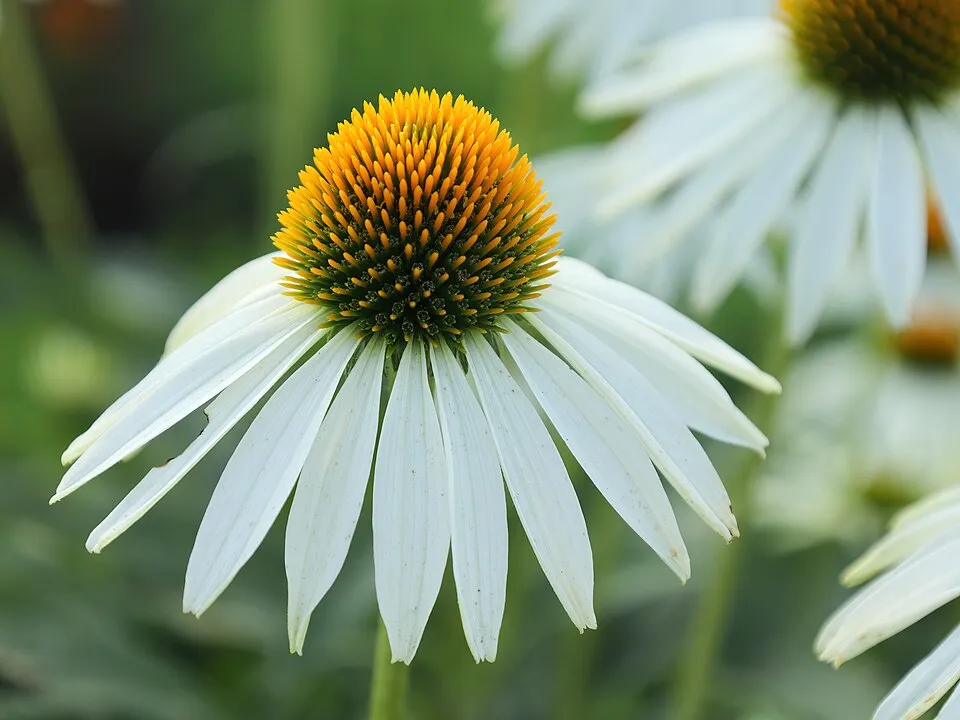
Echinacea purpurea Alba, commonly known as White Echinacea, is a distinguished perennial herbaceous plant belonging to the Asteraceae family. This cultivar typically achieves a height of 75 to 100 cm (30 to 39 inches) and is celebrated for its striking, pure white ray florets, which encircle a prominent, often reddish-brown central disk. This white coloration is a distinct genetic variation from the more common purple variants within the Echinacea genus.
The plant presents lanceolate to ovate leaves that are dark green, coarse in texture, and arranged alternately along its robust, erect stems. These leaves usually measure between 10-20 cm in length and contribute to the plant's overall bushy and vigorous appearance. The flowering period spans from mid-summer through early autumn, during which it serves as a significant attractant for a diverse array of pollinators, including various species of bees and butterflies.
Ecologically, Echinacea purpurea Alba thrives in well-drained soils and demonstrates remarkable tolerance to drought once its extensive root system is established. This makes it an ideal candidate for xeriscaping and low-maintenance garden designs. It flourishes best in conditions of full sun but can adapt to partial shade, offering versatility for different landscape applications.
Its native range encompasses prairies, open woodlands, and along roadbanks across the central and eastern regions of the United States, reflecting its adaptability to diverse temperate environments. Beyond its aesthetic appeal, its deep root system enhances soil health by preventing erosion and improving soil structure, while its ability to self-seed ensures natural propagation and establishment over time. The plant's robust nature and striking white blooms make it a valuable addition to both ornamental and medicinal gardens, contributing to local biodiversity.
Trusted Scientific References
1. Authoritative external sources for Echinacea purpurea Alba
1.1 Wikipedia — Echinacea purpurea Alba
1.2 Kew POWO (Plants of the World Online)
1.3 PubMed — peer-reviewed research
1.4 NCBI Taxonomy Browser
1.5 GBIF — Global Biodiversity
1.1.Echinacea White — Distinguishing Points
- ✓Scientific Name — Echinacea purpurea Alba.
- ✓Common Name — White Echinacea.
- ✓Plant Family — Asteraceae.
- ✓Flower Color — Pure white ray florets with a prominent central disk.
- ✓Medicinal Use — Primarily for immune system support, especially against colds and flu.
- ✓Habitat — Native to prairies, open woodlands of central and eastern USA.
- ✓Growth Habit — Perennial herbaceous plant, reaching 75-100 cm tall.
- ✓Ecological Role — Attracts various pollinators like bees and butterflies.
- ✓Cultivation — Prefers full sun and well-drained soil, drought-tolerant.
- ✓Key Constituents — Alkamides, caffeic acid derivatives, polysaccharides.
1.2.Echinacea White — Quick Summary
- ✓Potent Immune System Support — Enhances the body's natural defenses against infections.
- ✓Anti-inflammatory and Antioxidant — Reduces inflammation and combats oxidative stress.
- ✓Striking White Flowers — A unique cultivar within the Echinacea genus, visually distinct.
- ✓Traditional Cold and Flu Remedy — Widely used to lessen the severity and duration of respiratory illnesses.
- ✓Drought-Tolerant Perennial — An excellent, low-maintenance choice for gardens.
- ✓Caution for Autoimmune Conditions — Should be avoided by individuals with autoimmune disorders.
2.Echinacea White — Botanical Identity
3.Echinacea White — Vital Statistics
4.Echinacea White — Botanical Features
5.Echinacea White — Native Range & Habitat
6.Echinacea White — Traditional Uses
7.Echinacea White — Phytochemistry
- ✓Alkamides (Alkylamides) — Key compounds like dodeca-2E,4E,8Z,10Z/E-tetraenoic acid isobutylamide are responsible for the characteristic tingling sensation and possess significant immunomodulatory, anti-inflammatory, and antimicrobial activities.
- ✓Caffeic Acid Derivatives — Including chicoric acid, echinacoside, and chlorogenic acid, these compounds are potent antioxidants and contribute significantly to the plant's anti-inflammatory and immune-stimulating properties.
- ✓Polysaccharides — Particularly arabinogalactans, these complex carbohydrates are known for their direct immune-stimulating effects, activating macrophages and enhancing cytokine production.
- ✓Flavonoids — Compounds such as quercetin and kaempferol are present, offering additional antioxidant, anti-inflammatory, and antiviral benefits.
- ✓Essential Oils — Containing components like caryophyllene and humulene, found primarily in the aerial parts, these contribute to the plant's aromatic profile and possess mild antimicrobial activity.
- ✓Glycoproteins — These protein-carbohydrate complexes are also implicated in the immunomodulatory actions of Echinacea, influencing immune cell communication.
- ✓Polyacetylenes — A class of compounds with potential antimicrobial and cytotoxic properties, contributing to the plant's defense mechanisms.
- ✓Resins — Present in the plant, resins contain a mixture of active compounds, including alkamides and other lipophilic constituents.
- ✓Saponins — These foam-forming glycosides are found in smaller concentrations and may contribute to various biological activities, including immune modulation and detoxification.
8.Echinacea White — Evidence-Based Benefits
- ✓Immune System Support — Echinacea purpurea Alba is widely recognized for its ability to stimulate the immune system, helping to prevent and reduce the severity and duration of common colds, influenza, and other upper respiratory infections by enhancing the activity of immune cells.
- ✓Anti-inflammatory Properties — The plant contains compounds that modulate inflammatory pathways, making it beneficial for alleviating symptoms associated with various inflammatory conditions and reducing general systemic inflammation.
- ✓Antioxidant Activity — Rich in phenolic compounds, Echinacea helps to neutralize harmful free radicals in the body, thereby reducing oxidative stress and protecting cellular integrity from damage.
- ✓Antiviral Effects — Research suggests that Echinacea can inhibit the replication of certain viruses, including those responsible for the common cold and flu, potentially shortening illness duration.
- ✓Wound Healing — Traditionally applied topically, Echinacea is believed to promote tissue regeneration and possesses mild antiseptic qualities, aiding in the healing of minor cuts, wounds, and skin irritations.
- ✓Pain Relief — Due to its anti-inflammatory actions, Echinacea may offer mild analgesic effects, helping to soothe sore throats, muscle aches, and other minor pains often associated with infections.
- ✓Lymphatic Support — It is thought to stimulate lymphatic drainage, which can assist the body in clearing toxins and waste products, further supporting overall immune function and detoxification.
- ✓Antimicrobial Potential — Beyond its antiviral actions, some constituents of Echinacea exhibit mild antibacterial and antifungal properties, contributing to its broad spectrum of traditional uses.
- ✓Allergy Symptom Modulation — By potentially modulating the immune response, Echinacea might help to mitigate certain allergic reactions, though more specific research is needed in this area.
- ✓Digestive Health — Supporting the gut's immune system, Echinacea may indirectly contribute to a healthier digestive tract by bolstering local defenses against pathogens.
8.1.Echinacea White — Indications & Uses
9.Echinacea White — Safety & Side Effects
9.1.Echinacea White — Caution Notes
- ✓Allergic Reactions — Individuals sensitive to the Asteraceae family (daisies, ragweed, marigolds) may experience allergic reactions such as rashes, itching, or asthma.
- ✓Digestive Upset — Mild gastrointestinal disturbances including nausea, stomach pain, or diarrhea can occur, especially with higher doses.
- ✓Oral Tingling — A characteristic tingling or numbing sensation on the tongue or lips is common due to alkamides and is generally harmless.
- ✓Headaches — Infrequent reports of mild headaches have been associated with Echinacea consumption.
- ✓Liver Concerns — Very rare instances of liver inflammation have been reported, primarily in individuals with pre-existing liver conditions or when used with hepatotoxic drugs.
- ✓Autoimmune Flare-ups — While not definitively proven, theoretical concerns exist that stimulating the immune system could exacerbate autoimmune conditions.
9.2.Echinacea White — Safety Profile
- ✓Autoimmune Diseases — Contraindicated in individuals with autoimmune disorders (e.g., lupus, rheumatoid arthritis, multiple sclerosis) due to its immune-stimulating effects.
- ✓Immunosuppressant Medications — Avoid use with immunosuppressive drugs, as Echinacea may counteract their effects.
- ✓Pregnancy and Lactation — Insufficient safety data; generally advised against unless under medical supervision.
- ✓Allergic Sensitivities — Use with caution in individuals with known allergies to plants in the Asteraceae family.
- ✓Children — Generally considered safe for short-term use in children, but dosage should be age and weight-appropriate and supervised by a healthcare professional.
- ✓Duration of Use — Typically recommended for short-term use (2-8 weeks); long-term use requires medical consultation as effects beyond this period are less studied.
- ✓Liver Conditions — Individuals with pre-existing liver conditions should consult a healthcare provider before use.
10.Echinacea White — Usage Guide
- ✓Teas/Infusions — Dried leaves and flowers can be steeped in hot water to create an immune-supportive tea, often used for cold and flu symptoms.
- ✓Tinctures — Alcohol-based extracts of fresh or dried roots and aerial parts are a concentrated form, allowing for convenient dosing, typically taken orally.
- ✓Capsules/Tablets — Standardized extracts or powdered plant material are available in capsule or tablet form for precise dosage and ease of consumption.
- ✓Topical Creams/Ointments — Extracts incorporated into creams or salves can be applied directly to skin for minor wounds, insect bites, or inflammatory skin conditions.
- ✓Decoctions — Roots, being tougher, are best prepared by simmering in water for a longer period to extract their active compounds, suitable for internal use.
- ✓Gargles/Mouthwashes — Diluted tinctures or strong infusions can be used as a gargle for sore throats or as a mouthwash for oral health support.
- ✓Syrups — Herbal syrups, often combined with honey, offer a palatable way to administer Echinacea, especially beneficial for children.
11.Echinacea White — Garden Cultivation
- ✓Soil Preference — Prefers well-drained, fertile to average soil; tolerates clay but dislikes heavy, waterlogged conditions.
- ✓Sunlight Requirements — Thrives in full sun (at least 6 hours direct sunlight daily) but can tolerate partial shade, though flowering may be reduced.
- ✓Watering Regimen — Drought-tolerant once established, requiring minimal watering; water deeply during prolonged dry spells, especially in the first year.
- ✓Propagation — Can be propagated from seeds (which benefit from cold stratification), root divisions in spring or fall, or stem cuttings.
- ✓Planting Distance — Space plants 30-60 cm (12-24 inches) apart to allow for mature growth and good air circulation.
- ✓Pests and Diseases — Generally robust, but watch for aphids, Japanese beetles, or powdery mildew in humid conditions; good air circulation helps prevent fungal issues.
- ✓Harvesting — Roots are typically harvested in the fall after the third growing season for maximum potency; aerial parts (leaves, flowers) can be harvested when in bloom.
- ✓Hardiness Zones — Hardy in USDA Zones 3-9, tolerating a wide range of temperate climates.
Reviewed by the Flora Medical Global Botanical Review Panel
Multi-disciplinary editorial group · Botany · Ethnobotany · Herbal-medicine literature
Who reviewed this: This page was checked by the Flora Medical Global Botanical Review Panel — an in-house editorial group of botany graduates, ethnobotany researchers, and horticulture practitioners who collectively maintain our 7,000+ plant encyclopedia. Meet the team.
Our 4-step verification process
1. Taxonomic verification
Scientific names and synonyms cross-checked against Kew POWO, World Flora Online, and The Plant List.
2. Phytochemical & medicinal cross-reference
Active compounds, traditional uses, and reported activities are cross-referenced with PubMed, USDA Dr. Duke's database, and peer-reviewed ethnobotanical literature.
3. Conservation & distribution check
Distribution, ecology, and conservation status confirmed against GBIF occurrence records and the IUCN Red List.
4. Editorial & safety review
Every entry passes an editorial pass for clarity, originality, and safety notices (toxicity, contraindications, dosage caveats) before publication.
Last reviewed:
Important medical disclaimer: This content is for educational and research purposes only. It is not medical advice and is not a substitute for consultation with a licensed healthcare provider. Do not use any herb to self-treat a medical condition without professional guidance.
Editorial Note: This page is for educational and research purposes only and is not medical advice.
Written by: Flora Medical Global Editorial Team
Reviewed by: Flora Medical Global Botanical Review Panel
Last Updated: June 15, 2026





Echinacea White — Comments & Community Reviews
Rate this plant