
Medical Disclaimer: This content is for educational purposes only. It is not medical advice. Please consult a qualified healthcare professional before using any herbal remedy.
Safety Overview
1.Echinocereus — Overview
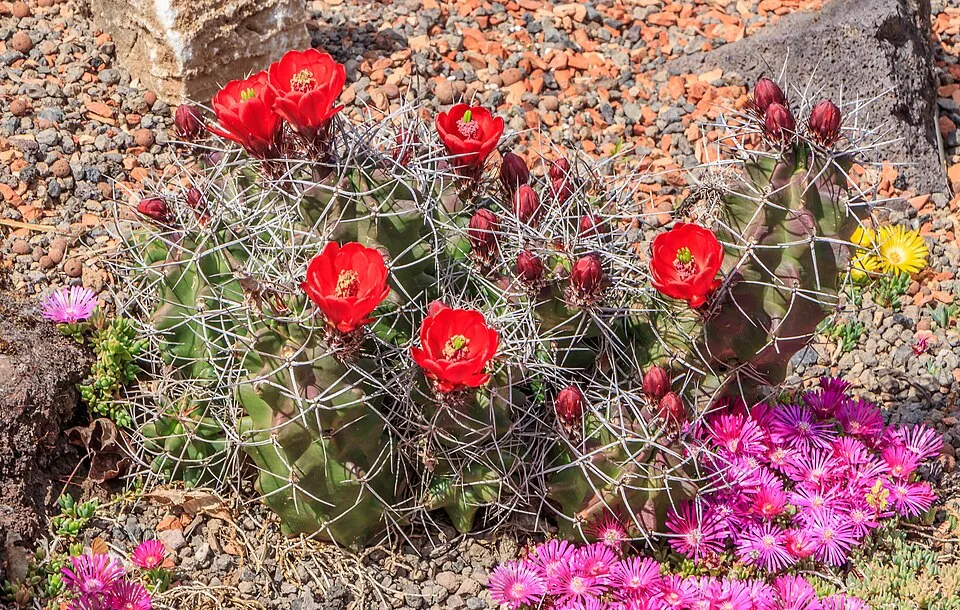
Echinocereus triglochidiatus, commonly known as the Kingcup Cactus, Claretcup Cactus, or Mound Hedgehog Cactus, is a captivating and resilient member of the Cactaceae family. This species typically grows as cylindrical, ribbed stems, often forming dense clusters or mounds that can reach heights of 12 to 36 inches (30 to 90 cm) and diameters up to 4 feet. Its stems, usually 2 inches (5 cm) in diameter, are heavily adorned with prominent, sharp spines, giving it a distinctive spiky appearance.
In spring, the Kingcup Cactus produces spectacular, vibrant blooms, with cup-shaped flowers ranging from bright pink to brilliant red, measuring approximately 3 to 5 inches (7.5 to 12.5 cm) in diameter. These striking flowers are a significant draw for pollinators, including bees and hummingbirds.
Native to the arid and semi-arid regions of the Southwestern United States (Arizona, Colorado, New Mexico) and northern Mexico (Chihuahua, Sonora), Echinocereus triglochidiatus thrives in well-drained, rocky or gravelly soils, often found in crevices, mesas, ridges, hills, and canyons. It is also found in shrublands, pine-oak, and conifer woodlands, extending into desert grasslands at elevations ranging from 500 to 8,000 feet (150-2,400 m). Taxonomically, Echinocereus triglochidiatus Engelm.
refers specifically to a diploid (2n) group, distinguishing it from polyploid taxa previously lumped under this name, such as Echinocereus mojavensis. Its succulent, fleshy structure is a key adaptation for conserving water, allowing it to flourish in drought-prone environments.
Trusted Scientific References
1. Authoritative external sources for Echinocereus triglochidiatus
1.1 Wikipedia — Echinocereus triglochidiatus
1.2 Kew POWO (Plants of the World Online)
1.3 PubMed — peer-reviewed research
1.4 NCBI Taxonomy Browser
1.5 GBIF — Global Biodiversity
1.6Echinocereus should be interpreted through verified botanical identity, practical care, and responsible safety language. This recovery note adds the missing context needed for a complete profile: match light to the plant's habit, use well-drained soil, water according to season, and avoid unsupported medicinal or edible claims. For publishing, the plant can be presented as a source-backed garden plant with clear care guidance, common problem diagnosis, and conservative safety wording.
1.1.Echinocereus — Key Features
- ✓Distinctive cylindrical, ribbed — Distinctive cylindrical, ribbed stems with prominent, dense spines.
- ✓Produces vibrant, showy red to pink cup — shaped flowers in early spring.
- ✓Highly drought — tolerant, adapted to arid and semi-arid desert environments.
- ✓Native to the — Native to the Southwestern United States (AZ, CO, NM) and northern Mexico.
- ✓Traditionally valued by — Traditionally valued by Native American tribes for topical skin applications and internal digestive support.
- ✓Excellent choice for xeriscaping, rock gardens, and low — water landscape designs.
- ✓Attracts hummingbirds and — Attracts hummingbirds and bees, serving as an important pollinator plant.
- ✓Grows in characteristic — Grows in characteristic clusters or mounds, enhancing its visual impact.
- ✓Member of the — Member of the Cactaceae family, known for efficient water conservation mechanisms.
- ✓Relatively low maintenance — Relatively low maintenance once established in suitable, well-drained conditions.
1.2.Echinocereus — Concise Overview
- ✓Native to the Southwestern US and Northern Mexico, known for its striking red flowers and spiny stems.
- ✓Traditionally used by Native Americans for topical skin soothing, cooling, and mild digestive aid.
- ✓Rich in mucilage, flavonoids, and betalains, contributing to its potential emollient and antioxidant properties.
- ✓Primarily cultivated as an ornamental plant due to its unique morphology and high drought tolerance.
- ✓Requires full sun and extremely well-drained soil; thrives in arid, rocky environments.
- ✓Handle with extreme caution due to dense spines; internal medicinal use requires expert consultation due to limited scientific research.
2.Echinocereus — Scientific Profile
3.Echinocereus — Botanical Stats
4.Echinocereus — Morphological Account
5.Echinocereus — Geographic Distribution
6.Echinocereus — Cultural & Traditional Roles
7.Echinocereus — Active Compounds
- ✓Mucilage — Composed primarily of polysaccharides like arabinogalactans, responsible for its demulcent, hydrating, and soothing properties.
- ✓Flavonoids — Includes compounds such as quercetin and its glycosides, contributing significant antioxidant and anti-inflammatory activities.
- ✓Phenolic Acids — Contains various phenolic acids like caffeic acid and ferulic acid, which are known for their potent antioxidant capabilities.
- ✓Betalains — Particularly betacyanins, which are red pigments found in the flowers and stems, acting as powerful antioxidants and anti-inflammatory agents.
- ✓Polysaccharides — Beyond mucilage, other complex carbohydrates provide dietary fiber and potential prebiotic benefits, supporting gut health.
- ✓Triterpenes — Compounds such as ursolic acid and oleanolic acid may be present, known for their anti-inflammatory, antimicrobial, and hepatoprotective effects.
- ✓Alkaloids — While not a primary constituent, some Echinocereus species may contain trace amounts of cactus alkaloids, warranting careful study and responsible use.
- ✓Vitamins — Contains trace amounts of vitamins, including ascorbic acid (Vitamin C) and B-vitamins, supporting general metabolic functions.
- ✓Minerals — Rich in essential minerals like calcium, magnesium, and potassium, crucial for various physiological processes and electrolyte balance.
8.Echinocereus — Modern Studies
- ✓Skin Soothing — The mucilaginous content of Echinocereus triglochidiatus stems may provide emollient effects, traditionally utilized in poultices to calm minor skin irritations and support the healing of superficial wounds.
- ✓Anti-inflammatory Support — Traditional applications suggest a cooling effect, implying the presence of compounds that may modulate inflammatory responses, offering relief from localized swelling or discomfort.
- ✓Digestive Regulation — Historically, the plant has been employed as a mild laxative, potentially aiding in promoting bowel regularity and alleviating occasional constipation due to its fiber and mucilage content.
- ✓Hydration Promotion — The succulent nature of the Kingcup Cactus implies a high water and electrolyte content, which, when traditionally prepared as juice, could contribute to internal hydration and mineral balance.
- ✓Antioxidant Activity — Like many cacti, Echinocereus triglochidiatus likely contains phenolic compounds and betalains that offer protective benefits against oxidative stress and free radical damage.
- ✓Minor Wound Care — Topical application of expressed stem juices or poultices has been traditionally used to protect minor cuts and scrapes, potentially by forming a protective layer and aiding tissue regeneration.
- ✓General Tonic — In some traditional contexts, the plant's preparations were considered a general tonic, supporting overall well-being and vitality in arid conditions.
- ✓Electrolyte Balance — The plant’s juices are thought to contain essential minerals, which could contribute to maintaining fluid and electrolyte balance, particularly in hot climates.
8.1.Echinocereus — Health Applications
9.Echinocereus — Risk Profile
9.1.Echinocereus — Side Effects & Warnings
- ✓Spine Injuries — Direct contact with the plant's dense, sharp spines can cause painful punctures, skin irritation, and potential infections.
- ✓Gastrointestinal Discomfort — Ingesting large quantities or improperly prepared plant material may lead to stomach upset, nausea, or excessive laxative effects.
- ✓Allergic Reactions — Sensitive individuals might experience contact dermatitis or other allergic responses to the plant's sap or compounds.
- ✓Potential for Toxicity — While generally considered low toxicity, internal use should be approached with caution due to the presence of uncharacterized compounds or trace alkaloids.
- ✓Drug Interactions — Theoretical possibility of interaction with medications, particularly those affecting digestion, blood sugar, or inflammation, due to its traditional uses.
- ✓Over-Laxation — Excessive internal consumption could result in dehydration and electrolyte imbalances if used as a laxative.
9.2.Echinocereus — Safety Overview
- ✓Pregnancy and Lactation — Avoid use during pregnancy and breastfeeding due to insufficient scientific safety data regarding its effects on maternal or infant health.
- ✓Children — Not recommended for internal use in children without explicit guidance from a qualified healthcare practitioner.
- ✓Pre-existing Conditions — Individuals with digestive disorders, kidney issues, or those on existing medications should consult a healthcare provider before any internal use.
- ✓External Application — Always perform a patch test on a small, inconspicuous skin area before widespread topical application to check for any sensitivity or allergic reactions.
- ✓Proper Identification — Crucial to ensure correct identification of Echinocereus triglochidiatus to avoid confusion with other potentially toxic or less effective cactus species.
- ✓Professional Guidance — Due to limited scientific validation for medicinal claims, all internal therapeutic use should be under the strict supervision of a qualified herbalist or physician.
- ✓Handling Precautions — Always wear thick, protective gloves when handling the plant to prevent painful spine injuries and potential skin irritation.
10.Echinocereus — Preparation & Dosage
- ✓Topical Poultices — Traditionally, fresh or macerated stem tissue is applied directly to the skin as a poultice to soothe minor irritations, insect bites, or superficial wounds.
- ✓Juices and Infusions — Expressed juices from the succulent stems have been consumed internally, often diluted, for their perceived cooling properties and as a mild digestive aid.
- ✓Decoctions — Dried or fresh stem pieces can be simmered in water to create a decoction, used either internally or externally, though less common than fresh juice.
- ✓Tinctures/Extracts — Modern herbalists might prepare alcohol-based tinctures or glycerin extracts for concentrated internal use, always under professional guidance due to limited research.
- ✓Culinary Use (Limited) — While some cactus fruits are edible, the primary traditional medicinal uses for Echinocereus triglochidiatus focus on its stems, with limited evidence of widespread culinary fruit use.
- ✓Ornamental Cultivation — Primarily valued as a striking ornamental plant, perfect for xeriscapes, rock gardens, and low-water landscape designs due to its unique form and vibrant flowers.
- ✓Professional Consultation — Always seek advice from a qualified medical herbalist or healthcare professional before using Echinocereus triglochidiatus for any medicinal purpose, especially internally.
11.Echinocereus — Growing Guide
- ✓Soil Requirements — Thrives in extremely well-drained, gritty, or rocky soil with minimal organic content to prevent root rot, mimicking its natural desert habitat.
- ✓Light Exposure — Requires full sun exposure, ideally 6-8 hours per day, for robust growth and prolific flowering.
- ✓Watering Schedule — Water sparingly and deeply during the growing season; allow the soil to dry out completely between waterings. Reduce watering significantly in winter.
- ✓Temperature & Hardiness — Highly tolerant of high desert temperatures. Many varieties are cold-hardy to moderate frosts, but protection from extreme freezing is beneficial.
- ✓Propagation — Can be propagated effectively from fresh seeds or by carefully detaching and rooting stem offshoots or fallen fragments, which readily form new plants.
- ✓Fertilization — Fertilize very lightly with a low-nitrogen, high-potassium cactus-specific fertilizer once or twice during the active spring and summer growth periods.
- ✓Pest and Disease Management — Generally resistant to pests and diseases, but susceptible to root rot if overwatered and occasional infestations by mealybugs or scale insects.
Reviewed by the Flora Medical Global Botanical Review Panel
Multi-disciplinary editorial group · Botany · Ethnobotany · Herbal-medicine literature
Who reviewed this: This page was checked by the Flora Medical Global Botanical Review Panel — an in-house editorial group of botany graduates, ethnobotany researchers, and horticulture practitioners who collectively maintain our 7,000+ plant encyclopedia. Meet the team.
Our 4-step verification process
1. Taxonomic verification
Scientific names and synonyms cross-checked against Kew POWO, World Flora Online, and The Plant List.
2. Phytochemical & medicinal cross-reference
Active compounds, traditional uses, and reported activities are cross-referenced with PubMed, USDA Dr. Duke's database, and peer-reviewed ethnobotanical literature.
3. Conservation & distribution check
Distribution, ecology, and conservation status confirmed against GBIF occurrence records and the IUCN Red List.
4. Editorial & safety review
Every entry passes an editorial pass for clarity, originality, and safety notices (toxicity, contraindications, dosage caveats) before publication.
Last reviewed:
Important medical disclaimer: This content is for educational and research purposes only. It is not medical advice and is not a substitute for consultation with a licensed healthcare provider. Do not use any herb to self-treat a medical condition without professional guidance.
Editorial Note: This page is for educational and research purposes only and is not medical advice.
Written by: Flora Medical Global Editorial Team
Reviewed by: Flora Medical Global Botanical Review Panel
Last Updated: June 15, 2026





Echinocereus — Comments & Community Reviews
Rate this plant