
Medical Disclaimer: This content is for educational purposes only. It is not medical advice. Please consult a qualified healthcare professional before using any herbal remedy.
Safety Overview
1.Echinops Ritro — Overview
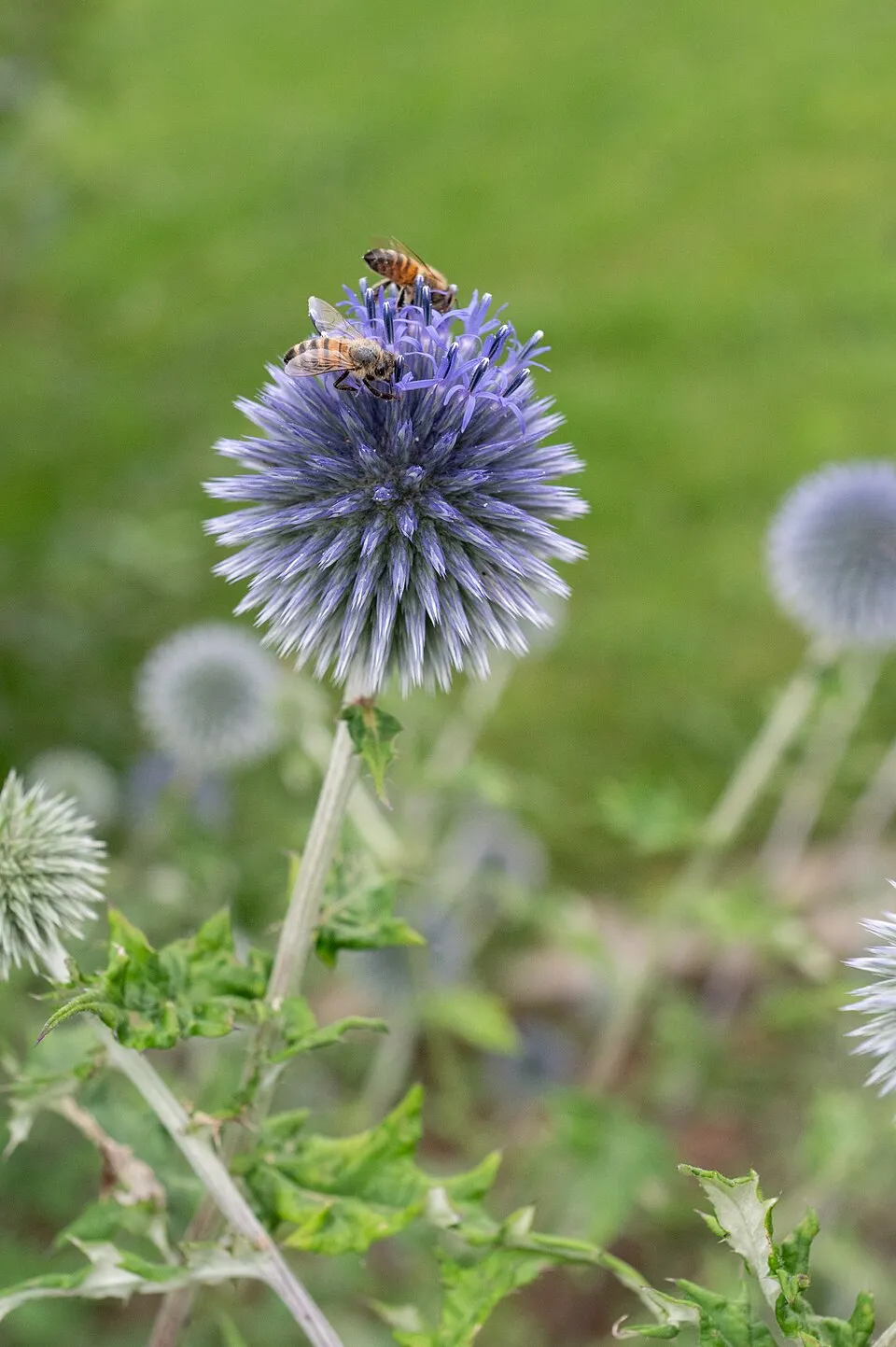
Echinops Ritro, commonly known as Globe Thistle or Southern Globe Thistle, is a striking perennial herbaceous plant belonging to the Asteraceae family. This species is characterized by its robust, upright growth habit, typically reaching heights of 60 to 120 cm.
Its stems are often branched, emerging from a central crown, and are adorned with deeply lobed, spiny leaves that are dark green above and silvery-white, felted underneath. The leaves are generally lanceolate, measuring between 10 to 20 cm in length, providing a rugged texture to the plant.
Flowering occurs from mid-summer through early autumn, producing distinctive, metallic blue or violet, spherical flower heads, which are actually dense clusters of many small, individual disc florets. These globe-like inflorescences are highly attractive to a wide array of pollinators, including bees, butterflies, and other beneficial insects, making Echinops Ritro a valuable addition to ecological gardens.
Native to southeastern Europe and western Asia, Echinops Ritro thrives in temperate regions. Its preferred habitat includes well-drained, sandy or gravelly soils, and it exhibits a remarkable tolerance for poor soil conditions, including those with varying pH levels, though it generally prefers neutral to slightly alkaline environments.
It is frequently found in open, sunny locations such as dry meadows, rocky slopes, and along roadsides, often forming impressive clumps or colonies. Once established, this species demonstrates excellent drought resistance and is generally low-maintenance, making it a popular choice for xeriscaping and sustainable landscapes.
Trusted Scientific References
1. Authoritative external sources for Echinops Ritro
1.1 Wikipedia — Echinops Ritro
1.2 Kew POWO (Plants of the World Online)
1.3 PubMed — peer-reviewed research
1.4 NCBI Taxonomy Browser
1.5 GBIF — Global Biodiversity
1.6Echinops Ritro should be interpreted through verified botanical identity, practical care, and responsible safety language. This recovery note adds the missing context needed for a complete profile: match light to the plant's habit, use well-drained soil, water according to season, and avoid unsupported medicinal or edible claims. For publishing, the plant can be presented as a source-backed garden plant with clear care guidance, common problem diagnosis, and conservative safety wording.
1.1.Echinops Ritro — Standout Qualities
- ✓Distinctive spherical blue — Distinctive spherical blue or violet flower heads that resemble globes.
- ✓Hardy perennial herbaceous — Hardy perennial herbaceous plant, thriving in temperate climates.
- ✓Member of the — Member of the Asteraceae family, known for its composite flowers.
- ✓Highly attractive to — Highly attractive to pollinators, including bees and butterflies.
- ✓Excellent drought tolerance — Excellent drought tolerance once established, suitable for xeriscaping.
- ✓Low — maintenance plant, resistant to most pests and diseases.
- ✓Spiny, deeply lobed leaves with a silvery — white underside.
- ✓Valued in traditional medicine for its anti — inflammatory and antioxidant properties.
- ✓Grows upright, typically reaching 60 — 120 cm in height.
- ✓Adaptable to a range of well — drained soil types.
1.2.Echinops Ritro — Snapshot Summary
- ✓Echinops Ritro, or Globe Thistle, is a perennial in the Asteraceae family, known for its distinctive spherical blue flowers.
- ✓Traditionally valued in herbal medicine for its anti-inflammatory, antioxidant, and diuretic properties.
- ✓Key chemical constituents include flavonoids, sesquiterpene lactones, alkaloids, and tannins.
- ✓Used to support respiratory and digestive health, and for topical wound healing.
- ✓Cultivated for its low-maintenance nature, drought tolerance, and appeal to pollinators.
- ✓Caution advised for pregnant/nursing individuals and those with Asteraceae allergies.
2.Echinops Ritro — Systematic Position
3.Echinops Ritro — Quick Facts
4.Echinops Ritro — Structural Profile
5.Echinops Ritro — Where It Grows
6.Echinops Ritro — Ethnobotanical Uses
7.Echinops Ritro — Bioactive Constituents
- ✓Flavonoids — Key compounds include quercetin, rutin, and kaempferol derivatives, known for their potent antioxidant, anti-inflammatory, and cardioprotective effects.
- ✓Sesquiterpene Lactones — Such as echinopsine, echinopside, and other related compounds, which are often associated with cytotoxic, anti-inflammatory, and antimicrobial activities.
- ✓Alkaloids — Notably echinopsine and its derivatives, which have been studied for their potential neuropharmacological activities.
- ✓Tannins — Predominantly gallotannins and condensed tannins, contributing to the plant's astringent properties and antioxidant capacity.
- ✓Saponins — Triterpenoid saponins are present, which may contribute to expectorant, anti-inflammatory, and immune-modulating effects.
- ✓Phenolic Acids — Including caffeic acid, chlorogenic acid, and their derivatives, providing significant antioxidant and anti-inflammatory benefits.
- ✓Polysaccharides — Complex carbohydrates that can possess immunomodulatory and prebiotic properties, supporting overall health.
- ✓Essential Oils — Trace amounts of volatile compounds composed of monoterpenes and sesquiterpenes, contributing to the plant's characteristic aroma and potentially exhibiting antimicrobial activity.
- ✓Sterols — Phytosterols like beta-sitosterol, known for their cholesterol-lowering and anti-inflammatory effects.
- ✓Lignans — A class of plant compounds with antioxidant and phytoestrogenic properties, contributing to overall health benefits.
8.Echinops Ritro — What Research Suggests
- ✓Anti-inflammatory Properties — Echinops Ritro contains compounds like flavonoids and sesquiterpene lactones that may help reduce inflammation throughout the body, potentially alleviating symptoms of inflammatory conditions.
- ✓Antioxidant Activity — Rich in phenolic acids and other antioxidant compounds, Globe Thistle helps combat oxidative stress by neutralizing free radicals, thereby protecting cellular integrity.
- ✓Diuretic Effects — Traditionally used to promote urine production, this plant may assist in flushing toxins from the body and supporting kidney function, as noted in some traditional medicine systems.
- ✓Respiratory Support — Infusions from Echinops Ritro leaves and flowers have been historically employed to soothe respiratory ailments, such as coughs and congestion, by promoting expectoration and reducing irritation.
- ✓Digestive Aid — Extracts are believed to support digestive health, potentially easing discomfort and promoting regular bowel function, as observed in traditional remedies.
- ✓Wound Healing — Topical application of Globe Thistle preparations has been suggested to accelerate the healing of minor wounds and skin irritations due to its potential anti-inflammatory and antiseptic qualities.
- ✓Skin Health Enhancement — The antioxidant and anti-inflammatory properties may contribute to improved skin health, helping to protect against environmental damage and reduce redness or irritation.
- ✓Immune System Modulation — Some constituents of Echinops Ritro are thought to have immunomodulatory effects, potentially supporting the body's natural defense mechanisms.
- ✓Analgesic Potential — In traditional contexts, the plant has been used to help alleviate minor aches and pains, suggesting a mild analgesic effect that warrants further investigation.
- ✓Neuroprotective Qualities — Research into certain alkaloids present in the Echinops genus suggests potential neuroprotective properties, though specific studies on Echinops Ritro are ongoing.
8.1.Echinops Ritro — Therapeutic Indications
9.Echinops Ritro — Adverse Effects
9.1.Echinops Ritro — Possible Adverse Reactions
- ✓Allergic Reactions — Individuals sensitive to plants in the Asteraceae family (e.g., ragweed, marigolds) may experience allergic reactions, including skin rashes or respiratory issues.
- ✓Digestive Upset — High doses or sensitive individuals may experience mild gastrointestinal discomfort, such as nausea or stomach upset.
- ✓Skin Irritation — Direct contact with the spiny leaves and flower heads can cause mechanical irritation or minor skin punctures.
- ✓Potential for Toxicity — While generally considered safe in traditional doses, the presence of alkaloids like echinopsine warrants caution with excessive consumption.
- ✓Drug Interactions — Echinops Ritro may theoretically interact with certain medications, particularly those affecting blood clotting or central nervous system activity, due to its active compounds.
- ✓Pregnancy and Lactation Concerns — Due to insufficient safety data, use is generally advised against during pregnancy and breastfeeding.
- ✓Blood Pressure Effects — Some traditional uses suggest effects on circulation, requiring caution for individuals on blood pressure medication.
9.2.Echinops Ritro — Clinical Safety Notes
- ✓Pregnancy and Lactation — Avoid use during pregnancy and breastfeeding due to a lack of sufficient safety data and the presence of potentially active compounds.
- ✓Allergic Sensitivities — Exercise caution if you have known allergies to plants in the Asteraceae (daisy) family, as cross-reactivity is possible.
- ✓Children — Not recommended for use in infants or young children due to limited research on safety and appropriate dosing.
- ✓Pre-existing Medical Conditions — Individuals with chronic health conditions, especially liver, kidney, or cardiovascular issues, should consult a healthcare professional before use.
- ✓Drug Interactions — Consult a physician or pharmacist if taking any medications, particularly anticoagulants, sedatives, or blood pressure drugs, to avoid potential interactions.
- ✓Dosage Adherence — Adhere strictly to recommended dosages from qualified practitioners to prevent adverse effects.
- ✓External Use — While generally safe for topical application, perform a patch test first to check for skin sensitivity.
10.Echinops Ritro — How to Use
- ✓Herbal Infusion — Dried leaves and flowers can be steeped in hot water to create a tea, traditionally used for respiratory and digestive support.
- ✓Tincture Preparation — An alcoholic extract of the aerial parts or roots can be made, providing a concentrated form for internal medicinal use, typically taken in drops.
- ✓Decoction from Roots — The roots may be boiled to create a stronger decoction, often used for more robust therapeutic applications.
- ✓Topical Compresses — Infusions or decoctions can be used as a liquid for compresses applied externally to minor wounds or skin irritations.
- ✓Salves and Ointments — Extracts can be incorporated into salves or ointments for topical application to support skin health and wound healing.
- ✓Culinary Use (Limited) — While primarily medicinal, young leaves might be sparingly used in some regional culinary traditions, though generally not recommended without expert guidance.
- ✓Standardized Extracts — For consistent therapeutic effects, some modern preparations may involve standardized extracts focusing on specific active compounds.
- ✓Dosage — Always consult a qualified medical herbalist for appropriate dosages and preparation methods, as these can vary based on individual needs and the specific plant part used.
11.Echinops Ritro — Growth Requirements
- ✓Soil Preference — Echinops Ritro thrives in well-drained soil, including sandy or gravelly types; it tolerates a range of soil pH but prefers neutral to slightly alkaline conditions.
- ✓Light Requirements — Requires full sun exposure for optimal growth and flowering, though it can tolerate partial shade, which may result in fewer blooms.
- ✓Watering — Once established, Globe Thistle is highly drought-tolerant; young plants require regular watering until their root systems are developed.
- ✓Propagation — Easily propagated from seed sown in spring or autumn, or by division of mature clumps in early spring.
- ✓Spacing — Plant individual specimens 45-60 cm apart to allow for mature spread and good air circulation.
- ✓Maintenance — This is a low-maintenance plant; deadheading spent flowers can encourage further blooming and prevent excessive self-seeding.
- ✓Pest and Disease Resistance — Echinops Ritro is generally resistant to most common garden pests and diseases, making it an easy-care choice.
Reviewed by the Flora Medical Global Botanical Review Panel
Multi-disciplinary editorial group · Botany · Ethnobotany · Herbal-medicine literature
Who reviewed this: This page was checked by the Flora Medical Global Botanical Review Panel — an in-house editorial group of botany graduates, ethnobotany researchers, and horticulture practitioners who collectively maintain our 7,000+ plant encyclopedia. Meet the team.
Our 4-step verification process
1. Taxonomic verification
Scientific names and synonyms cross-checked against Kew POWO, World Flora Online, and The Plant List.
2. Phytochemical & medicinal cross-reference
Active compounds, traditional uses, and reported activities are cross-referenced with PubMed, USDA Dr. Duke's database, and peer-reviewed ethnobotanical literature.
3. Conservation & distribution check
Distribution, ecology, and conservation status confirmed against GBIF occurrence records and the IUCN Red List.
4. Editorial & safety review
Every entry passes an editorial pass for clarity, originality, and safety notices (toxicity, contraindications, dosage caveats) before publication.
Last reviewed:
Important medical disclaimer: This content is for educational and research purposes only. It is not medical advice and is not a substitute for consultation with a licensed healthcare provider. Do not use any herb to self-treat a medical condition without professional guidance.
Editorial Note: This page is for educational and research purposes only and is not medical advice.
Written by: Flora Medical Global Editorial Team
Reviewed by: Flora Medical Global Botanical Review Panel
Last Updated: June 15, 2026





Echinops Ritro — Comments & Community Reviews
Rate this plant