

Medical Disclaimer: This content is for educational purposes only. It is not medical advice. Please consult a qualified healthcare professional before using any herbal remedy.
Safety Overview
1.Echium Vulgare — Essential Profile
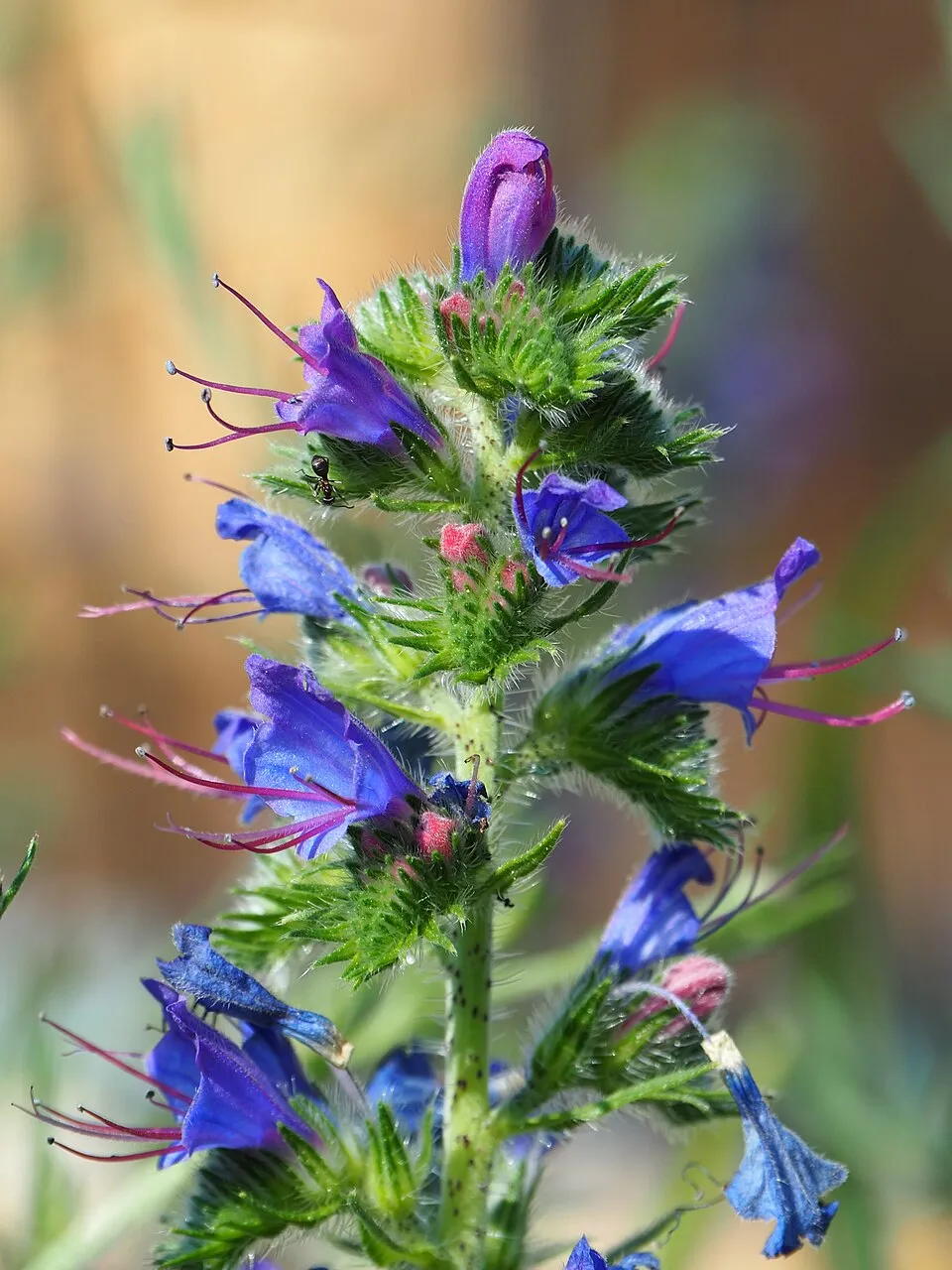
Echium vulgare, commonly known as Viper's Bugloss, Blueweed, or Adderwort, is a striking herbaceous plant belonging to the Boraginaceae family. It typically functions as a biennial, forming a basal rosette of leaves in its first year and producing erect, bristly stems in its second, which can reach heights of 30 to 90 cm (1 to 3 feet). The plant's leaves are lanceolate to ovate, measuring 5 to 10 cm in length, often covered in stiff, irritating hairs.
From late spring through early autumn (May to September), Echium vulgare displays its most captivating feature: dense, coiled cymes of vibrant blue, funnel-shaped flowers, which initially emerge pink in bud. These blossoms are a significant draw for a variety of pollinators, including bees and butterflies.
Native to Europe and Asia, Viper's Bugloss has naturalized extensively across temperate regions globally, including parts of North America, South America, and New Zealand. It thrives in disturbed habitats, such as dry pastures, roadsides, waste areas, and coastal environments like cliffs, sand dunes, and shingle banks. The plant is highly tolerant of poor, well-drained soils and prefers full sun, exhibiting notable drought and deer resistance.
While often appreciated as a beautiful wildflower and a crucial pollinator plant, its vigorous self-seeding habit can lead it to be considered weedy or invasive in certain agricultural or ecological contexts, notably in states like Washington. The genus name 'Echium' is derived from the Greek word 'echis,' meaning viper, a reference to the nutlets' resemblance to a viper's head and its traditional use in treating snakebites.
Trusted Scientific References
1. Authoritative external sources for Echium Vulgare
1.1 Wikipedia — Echium Vulgare
1.2 Kew POWO (Plants of the World Online)
1.3 PubMed — peer-reviewed research
1.4 NCBI Taxonomy Browser
1.5 GBIF — Global Biodiversity
1.6Echium Vulgare should be interpreted through verified botanical identity, practical care, and responsible safety language. This recovery note adds the missing context needed for a complete profile: match light to the plant's habit, use well-drained soil, water according to season, and avoid unsupported medicinal or edible claims. For publishing, the plant can be presented as a source-backed garden plant with clear care guidance, common problem diagnosis, and conservative safety wording.
1.1.Echium Vulgare — Notable Characteristics
- ✓Striking Blue Flowers — Distinctive vibrant blue, funnel-shaped flowers that emerge from pink buds, creating a visually appealing display.
- ✓Biennial Growth Habit — Typically completes its life cycle over two years, forming a rosette in the first and flowering in the second.
- ✓Pollinator Magnet — Highly attractive to bees, butterflies, and other beneficial insects, making it excellent for biodiversity.
- ✓Drought and Deer Resistant — Tolerant of dry conditions and generally unpalatable to deer, suitable for low-maintenance landscapes.
- ✓Pyrrolizidine Alkaloid Content — Contains toxic PAs in its foliage and flowers, posing a significant health risk if ingested.
- ✓Viper's Bugloss Seed Oil — A commercially valuable source of Gamma-Linolenic Acid (GLA) and Stearidonic Acid (SDA) for health supplements.
- ✓Naturalized and Weedy — Widely naturalized globally and can become invasive in certain environments due to prolific self-seeding.
- ✓Bristly Hairs — Covered in stiff, irritating hairs that can cause contact dermatitis upon skin contact.
- ✓Adaptable to Poor Soils — Thrives in nutrient-poor, well-drained soils, often found in disturbed areas and roadsides.
- ✓Traditional Medicinal History — Historically used in folk medicine, though modern internal use is contraindicated due to toxicity.
1.2.Echium Vulgare — At-a-Glance Summary
- ✓Viper's Bugloss (Echium vulgare) is a beautiful biennial wildflower native to Europe and Asia, known for its vibrant blue flowers.
- ✓It is a significant pollinator plant, attracting bees and butterflies to gardens and wild spaces.
- ✓Historically used in traditional medicine for various ailments, including digestive issues and inflammation.
- ✓The plant contains hepatotoxic pyrrolizidine alkaloids (PAs), making internal consumption extremely dangerous.
- ✓Its seed oil, however, is a source of beneficial omega fatty acids (GLA, SDA) and is processed to remove PAs for safe supplemental use.
- ✓Contact with the plant's bristly hairs can cause skin irritation, emphasizing the need for caution.
2.Echium Vulgare — Nomenclature & Classification
3.Echium Vulgare — Vital Statistics
4.Echium Vulgare — Botanical Features
5.Echium Vulgare — Native Range & Habitat
6.Echium Vulgare — Traditional Uses
7.Echium Vulgare — Chemical Profile
- ✓Pyrrolizidine Alkaloids (PAs) — Echium vulgare contains significant levels of hepatotoxic PAs, including echimidine, echiumine, and symphytine, which are the primary compounds responsible for its toxicity, particularly to the liver.
- ✓Omega Fatty Acids — The seed oil is notably rich in Gamma-Linolenic Acid (GLA, an omega-6 fatty acid) and Stearidonic Acid (SDA, an omega-3 fatty acid), making it a valuable source for nutritional supplements.
- ✓Flavonoids — Compounds like quercetin and kaempferol are present, contributing to the plant's antioxidant and anti-inflammatory activities.
- ✓Phenolic Acids — Rosmarinic acid, caffeic acid, and chlorogenic acid are found, which are known for their strong antioxidant and anti-inflammatory properties.
- ✓Tannins — These astringent compounds contribute to the plant's traditional use in wound healing and digestive support, offering mild antimicrobial effects.
- ✓Mucilage — Polysaccharides providing demulcent and soothing properties, particularly beneficial for mucous membranes.
- ✓Triterpenes — Various triterpenoid compounds may be present, contributing to anti-inflammatory or other biological activities.
- ✓Saponins — While less prominent, some saponins might be found, which can have expectorant or diuretic effects in traditional preparations.
- ✓Essential Oils — Present in trace amounts, contributing to the plant's aroma and potentially some antimicrobial properties.
8.Echium Vulgare — Evidence-Based Benefits
- ✓Anti-inflammatory Properties — Viper's Bugloss seed oil is a rich source of omega fatty acids like Gamma-Linolenic Acid (GLA) and Stearidonic Acid (SDA), which are precursors to anti-inflammatory prostaglandins, potentially aiding in conditions such as arthritis and eczema.
- ✓Antioxidant Activity — The plant contains flavonoids and phenolic acids, compounds known for their ability to neutralize free radicals and reduce oxidative stress within the body.
- ✓Skin Health Support — Topically, the seed oil is valued for its emollient and anti-inflammatory effects, making it potentially beneficial for soothing dry, irritated, or inflamed skin conditions.
- ✓Immune System Modulation — Traditional uses suggest a role in boosting immunity, possibly due to its antioxidant and general tonic properties, though direct evidence is limited.
- ✓Digestive Aid — Historically, infusions of Echium vulgare were consumed to support digestive health and alleviate minor gastrointestinal discomfort, likely attributed to its mucilage content.
- ✓Antimicrobial Effects — Certain extracts of the plant have demonstrated mild antimicrobial properties in vitro, suggesting potential for combating various pathogens.
- ✓Respiratory Soother — In folk medicine, the plant was sometimes used to prepare remedies for coughs and bronchial irritation, offering a demulcent effect.
- ✓Wound Healing (External) — Due to its traditional use and potential presence of allantoin-like compounds (common in Boraginaceae), it was applied externally to aid in the healing of minor cuts and abrasions.
- ✓Traditional Snakebite Remedy — The plant's historical name, Viper's Bugloss, stems from a traditional belief that its roots or leaves could be used as an antidote for snakebites, although this use lacks scientific validation.
8.1.Echium Vulgare — Conditions Traditionally Used For
9.Echium Vulgare — Cautions & Contraindications
9.1.Echium Vulgare — Side Effects & Warnings
- ✓Liver Toxicity (Hepatotoxicity) — The most significant risk, caused by pyrrolizidine alkaloids (PAs), leading to severe liver damage, veno-occlusive disease, and potentially liver failure with chronic or high-dose internal consumption.
- ✓Contact Dermatitis — The stiff, bristly hairs covering the plant's stems and leaves can cause skin irritation, itching, and allergic reactions upon direct contact in sensitive individuals.
- ✓Gastrointestinal Upset — Internal consumption may lead to nausea, vomiting, abdominal pain, and diarrhea, particularly in sensitive individuals or with higher doses.
- ✓Allergic Reactions — Beyond contact dermatitis, systemic allergic reactions, though rare, can occur in individuals sensitive to plants in the Boraginaceae family.
- ✓Poisonous to Livestock — Echium vulgare is known to be toxic to grazing animals, including horses, cattle, and sheep, causing liver damage if ingested in sufficient quantities.
- ✓Drug Interactions — PAs may interact with medications metabolized by the liver, potentially increasing their toxicity or reducing their efficacy.
9.2.Echium Vulgare — Risk Assessment
- ✓Strict Contraindication for Internal Use — Due to the presence of hepatotoxic pyrrolizidine alkaloids (PAs), internal use of the whole plant or its preparations (teas, tinctures) is strongly contraindicated for humans and animals.
- ✓Avoid During Pregnancy and Lactation — The PAs can cross the placental barrier and be excreted in breast milk, posing severe risks to the fetus or infant.
- ✓Not for Individuals with Liver Conditions — People with pre-existing liver disease, or those taking hepatotoxic medications, must strictly avoid Echium vulgare to prevent exacerbating liver damage.
- ✓Patch Test for Topical Use — Before applying any topical preparation, perform a patch test on a small skin area to check for contact dermatitis or allergic reactions.
- ✓Short-Term External Use Only — While topical use is generally safer, prolonged or widespread application should be approached with caution, and only under professional guidance.
- ✓Consult a Healthcare Professional — Always seek advice from a qualified medical or herbal practitioner before considering any use, especially given the plant's toxicity.
- ✓Children and Vulnerable Populations — Keep plant material out of reach of children and avoid use in elderly or immunocompromised individuals due to increased sensitivity to toxins.
10.Echium Vulgare — Preparation Methods
- ✓Herbal Teas (Extreme Caution) — Traditionally, dried leaves and flowers were used to prepare infusions for digestive health or immune support, but this practice is strongly discouraged due to pyrrolizidine alkaloid content.
- ✓Topical Compresses/Poultices — Crushed fresh leaves or infused preparations can be applied externally to skin irritations, minor wounds, or inflammatory conditions, after a patch test for sensitivity.
- ✓Infused Oils — Flowers and leaves can be infused into carrier oils for topical application as an emollient or for soothing skin, ensuring no internal consumption.
- ✓Viper's Bugloss Seed Oil Supplements — The oil extracted from the seeds, rich in GLA and SDA, is processed to remove PAs and sold as a dietary supplement for anti-inflammatory and skin health benefits.
- ✓Ornamental Gardening — Cultivated for its striking blue flowers, Echium vulgare is a popular choice for wildflower meadows, rock gardens, borders, and pollinator-friendly landscapes.
- ✓Bee Forage — Planted specifically to attract and support bee populations, providing a rich source of nectar and pollen throughout its long flowering season.
- ✓Tinctures (Not Recommended for Internal Use) — While some herbalists might prepare tinctures, internal use is highly advised against due to the risks of PA toxicity.
- ✓Decoctions (Not Recommended for Internal Use) — Boiling root material for decoctions, as in some traditional practices for snakebites, is also strongly cautioned against due to PA presence.
11.Echium Vulgare — How to Grow
- ✓Soil Preference — Echium vulgare thrives in well-drained, poor to moderately fertile soils, including loamy, sandy, or rocky types; it does not perform well in rich, heavily fertilized soils.
- ✓Sunlight Requirements — Prefers full sun exposure for optimal growth and flowering, though it can tolerate partial shade, which may result in fewer blooms.
- ✓Watering Regime — Drought-tolerant once established, but requires regular watering during prolonged dry spells, ensuring not to overwater to prevent root rot.
- ✓Propagation — Easily propagated by seeds, which can be direct-sown in spring or autumn; it readily self-seeds, so deadheading is recommended to control spread.
- ✓Planting Spacing — When cultivating, space individual plants approximately 30 cm (12 inches) apart to allow for adequate air circulation and growth.
- ✓Fertilization — Avoid over-fertilizing, as this can lead to lush foliage at the expense of flower production; a light, balanced fertilizer can be applied sparingly if the soil is extremely poor.
- ✓Maintenance — Cut back spent flower stalks in late winter or early spring to encourage a showy display and prevent aggressive reseeding, especially in garden settings.
- ✓Pest and Disease Resistance — Generally robust with few significant pest or disease issues, though slugs can occasionally be a problem.
Reviewed by the Flora Medical Global Botanical Review Panel
Multi-disciplinary editorial group · Botany · Ethnobotany · Herbal-medicine literature
Who reviewed this: This page was checked by the Flora Medical Global Botanical Review Panel — an in-house editorial group of botany graduates, ethnobotany researchers, and horticulture practitioners who collectively maintain our 7,000+ plant encyclopedia. Meet the team.
Our 4-step verification process
1. Taxonomic verification
Scientific names and synonyms cross-checked against Kew POWO, World Flora Online, and The Plant List.
2. Phytochemical & medicinal cross-reference
Active compounds, traditional uses, and reported activities are cross-referenced with PubMed, USDA Dr. Duke's database, and peer-reviewed ethnobotanical literature.
3. Conservation & distribution check
Distribution, ecology, and conservation status confirmed against GBIF occurrence records and the IUCN Red List.
4. Editorial & safety review
Every entry passes an editorial pass for clarity, originality, and safety notices (toxicity, contraindications, dosage caveats) before publication.
Last reviewed:
Important medical disclaimer: This content is for educational and research purposes only. It is not medical advice and is not a substitute for consultation with a licensed healthcare provider. Do not use any herb to self-treat a medical condition without professional guidance.
Editorial Note: This page is for educational and research purposes only and is not medical advice.
Written by: Flora Medical Global Editorial Team
Reviewed by: Flora Medical Global Botanical Review Panel
Last Updated: June 15, 2026





Echium Vulgare — Comments & Community Reviews
Rate this plant