
Medical Disclaimer: This content is for educational purposes only. It is not medical advice. Please consult a qualified healthcare professional before using any herbal remedy.
Safety Overview
1.Edgeworthia Chrysantha — Plant Snapshot
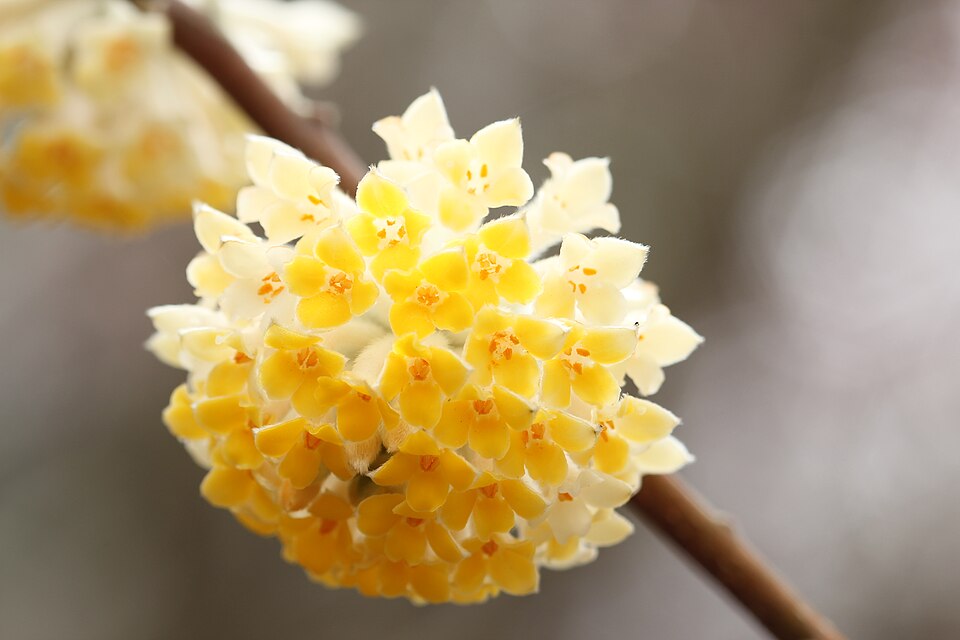
Edgeworthia chrysantha, commonly known as paperbush, yellow-drumstick, or Oriental paperbush, is an exquisite deciduous shrub belonging to the Thymelaeaceae family, a group well-recognized for its remarkably tough and fibrous bark. Native to the mountainous and woodland regions of East Asia, encompassing China, Japan, Nepal, and Bhutan, this species flourishes in the understory of broadleaf forests and on shaded slopes, adapting gracefully to dappled sunlight and moist, humus-rich soils. The plant typically develops into a rounded, compact shrub, generally attaining an average height and spread of 1 to 2 meters. Its growth habit is distinguished by thick, somewhat brittle stems that branch sparingly, often in a unique three-pronged pattern, contributing to its distinctive silhouette, particularly striking in the winter months.
The root system of Edgeworthia chrysantha is characteristically shallow and fibrous, perfectly adapted to anchoring the shrub in the nutrient-rich, well-draining soils of its natural forest understory, while efficiently absorbing surface moisture and nutrients. The bark is smooth and reddish-brown on younger stems, gradually maturing to a grayish-brown, and retaining a distinctive fibrous quality that is fundamental to its traditional uses, most notably in high-quality paper production. The foliage of Edgeworthia chrysantha is a key ornamental feature, with spirally arranged, simple, lanceolate to oblanceolate leaves measuring 10 to 15 cm in length. They exhibit a vibrant, deep green on their upper surface and a paler, often glaucous underside, with a prominent midrib and intricate reticulate venation.
The texture is distinctly leathery, providing a robust backdrop throughout the growing season, before transforming into attractive yellow hues in autumn prior to leaf fall. The most striking characteristic is its unique floral display, with pendulous clusters of highly fragrant, tubular flowers emerging from late winter to early spring, often before the new leaves appear, adorning the tips of its leafless branches.
Trusted Scientific References
1. Authoritative external sources for Edgeworthia chrysantha
1.1 Wikipedia — Edgeworthia chrysantha
1.2 Kew POWO (Plants of the World Online)
1.3 PubMed — peer-reviewed research
1.4 NCBI Taxonomy Browser
1.5 GBIF — Global Biodiversity
1.1.Edgeworthia Chrysantha — Key Features
- ✓Winter Blooming — Produces abundant, highly fragrant, pendulous clusters of yellow, tubular flowers from late winter to early spring on bare stems.
- ✓Fibrous Bark — Possesses exceptionally strong and pliable bark, traditionally harvested for high-quality paper production (mitsumata paper).
- ✓Ornamental Value — Highly prized for its unique floral display, attractive lanceolate foliage, and distinctive growth habit, providing year-round garden interest.
- ✓Deciduous Shrub — A compact, rounded shrub typically growing 1-2 meters tall and wide, shedding its leaves in autumn after a vibrant yellow color display.
- ✓Intense Fragrance — Emits a sweet, gardenia-like scent that is particularly potent and noticeable during its winter flowering period.
- ✓East Asian Native — Indigenous to mountainous and woodland regions across China, Japan, Nepal, and Bhutan, thriving in understory conditions.
- ✓Low Maintenance — Generally robust, pest and disease resistant, requiring minimal care once established in suitable conditions.
- ✓Distinctive Branching — Characterized by a unique three-pronged branching pattern, which adds architectural interest, especially evident in winter.
- ✓Shade Tolerant — Adaptable to partial shade to dappled sunlight, preferring sheltered locations away from harsh, direct afternoon sun.
- ✓Fall Foliage Color — Leaves turn an attractive shade of yellow in autumn, adding seasonal visual appeal before they drop.
1.2.Edgeworthia Chrysantha — Snapshot Summary
- ✓Edgeworthia chrysantha is a captivating deciduous shrub renowned for its highly fragrant winter-to-early-spring blooms.
- ✓Its exceptionally fibrous bark is traditionally utilized for producing high-quality paper, including Japanese banknotes.
- ✓Primarily cultivated for its significant ornamental value, offering unique winter interest with its distinctive flowers and branching.
- ✓Native to East Asia, it thrives in partial shade and moist, well-draining, humus-rich soils with minimal maintenance.
- ✓While not a primary medicinal plant, its phytochemical profile suggests potential for anti-inflammatory and antioxidant activities.
- ✓Ingestion of plant parts is not recommended due to potential mild toxicity and lack of comprehensive safety data.
2.Edgeworthia Chrysantha — Scientific Profile
3.Edgeworthia Chrysantha — Reference Facts
4.Edgeworthia Chrysantha — Plant Morphology
5.Edgeworthia Chrysantha — Geographic Distribution
6.Edgeworthia Chrysantha — Cultural & Traditional Roles
7.Edgeworthia Chrysantha — Bioactive Constituents
- ✓Coumarins — Key compounds include daphnetin and daphnin, often found in the bark and leaves, known for potential anti-inflammatory, anticoagulant, and mild analgesic activities.
- ✓Flavonoids — Such as quercetin and kaempferol derivatives, concentrated in leaves and flowers, contributing significant antioxidant, anti-inflammatory, and cellular protective effects.
- ✓Lignans — Compounds like pinoresinol and its derivatives are present in the woody parts, offering potential antioxidant and anticarcinogenic properties.
- ✓Polysaccharides — Predominantly cellulose and hemicellulose, forming the robust, fibrous structure of the bark, essential for its traditional use in high-quality paper manufacturing.
- ✓Terpenoids — Various mono- and sesquiterpenes contribute to the plant's distinctive fragrance, particularly in the flowers, and may possess antimicrobial or insect-repellent qualities.
- ✓Tannins — Astringent polyphenolic compounds found in the bark, which can exhibit antioxidant, antimicrobial, and wound-healing properties when applied topically.
- ✓Phytosterols — Including beta-sitosterol, present in trace amounts, known for their potential to support cardiovascular health and modulate immune responses.
- ✓Volatile Oils — Minor constituents responsible for the sweet, gardenia-like scent of the flowers, primarily composed of aromatic esters and aldehydes.
8.Edgeworthia Chrysantha — What Research Suggests
- ✓Potential Anti-inflammatory Action — The bark of Edgeworthia chrysantha contains coumarins, such as daphnetin, which in other plant species are recognized for their ability to modulate inflammatory pathways.
- ✓Antioxidant Properties — Flavonoids and other phenolic compounds present in the plant contribute to its antioxidant capacity, helping to neutralize free radicals and protect cells from oxidative stress.
- ✓Mild Analgesic Effects (Hypothetical) — Certain coumarins found in the Thymelaeaceae family may exhibit mild pain-relieving properties, although specific studies for Edgeworthia chrysantha are limited.
- ✓Aromatic Stress Relief — The intensely fragrant flowers of the paperbush are often used in sensory gardens and for indoor arrangements, suggesting a potential for aromatherapy-like calming effects.
- ✓Circulatory Support (from Coumarins) — While not a primary medicinal use, some coumarins are known to influence blood flow and microcirculation, a property that could be theoretically explored.
- ✓Antimicrobial Potential (Topical) — Tannins and certain other compounds in the bark may offer mild antimicrobial activity, making them potentially useful in topical applications, with caution.
- ✓General Vitality Support — As with many plants rich in diverse phytochemicals, it may contribute to general well-being through its complex chemical profile, though not as a targeted medicinal agent.
- ✓Traditional Fiber Source — While not a medicinal benefit, its primary traditional use for paper production underscores its unique botanical properties, including the strength and flexibility of its fibers.
8.1.Edgeworthia Chrysantha — Health Applications
9.Edgeworthia Chrysantha — Risk Profile
9.1.Edgeworthia Chrysantha — Warnings
- ✓Gastrointestinal Upset — Ingestion of any plant parts, particularly the bark or leaves, may induce mild to moderate gastrointestinal symptoms such as nausea, vomiting, stomach cramps, or diarrhea.
- ✓Skin Irritation — Direct contact with the sap or bark can potentially cause contact dermatitis or skin irritation in sensitive individuals, characteristic of some members of the Thymelaeaceae family.
- ✓Allergic Reactions — Although rare, individuals may experience allergic responses to the plant's pollen or specific compounds, manifesting as respiratory issues, skin rashes, or itching.
- ✓Oral Irritation — Chewing or ingesting parts of the plant may lead to localized irritation, burning sensations, or numbness in the mouth and throat.
- ✓Potential Systemic Toxicity — While not extensively studied for Edgeworthia chrysantha specifically, other species within its family contain compounds that can be toxic if consumed in significant quantities, potentially affecting organs like the kidneys or liver.
9.2.Edgeworthia Chrysantha — Risk Assessment
- ✓Avoid Internal Consumption — Due to potential toxicity and the absence of comprehensive safety data, Edgeworthia chrysantha should not be consumed internally for medicinal purposes without explicit professional guidance.
- ✓Topical Caution — Individuals with sensitive skin should exercise caution when handling the plant, particularly its bark and sap, to prevent potential contact dermatitis or irritation.
- ✓Keep Away from Children and Pets — Ensure the plant is inaccessible to young children and household pets, who might inadvertently ingest plant parts, leading to adverse effects.
- ✓Pregnant and Lactating Women — Insufficient scientific data exists regarding its safety during pregnancy or lactation, therefore, use by this demographic should be strictly avoided.
- ✓Drug Interactions — While no specific drug interactions are widely documented, the presence of coumarins suggests a theoretical potential for interaction with anticoagulant medications; consult a healthcare provider.
- ✓Professional Consultation Essential — Any consideration of traditional or exploratory internal use must be undertaken only under the strict supervision of a qualified medical herbalist or healthcare professional.
10.Edgeworthia Chrysantha — How to Use
- ✓Traditional Paper Production — The exceptionally strong and pliable fibrous bark of Edgeworthia chrysantha is historically harvested and processed to create superior quality paper, notably for Japanese banknotes (mitsumata paper).
- ✓Ornamental Cultivation — Widely valued and cultivated as a stunning winter-blooming specimen shrub in gardens, cherished for its intensely fragrant yellow flowers, unique three-pronged branching, and attractive fall foliage color.
- ✓Aromatic Enhancement — The plant's powerfully fragrant flowers are frequently cut and brought indoors to provide a delightful, sweet aroma, especially during the otherwise dormant winter months.
- ✓Sensory Garden Inclusion — Due to its early and highly fragrant bloom, it is an excellent choice for sensory gardens, inviting close appreciation of its unique scent when few other plants are flowering.
- ✓Potential Topical Applications (Exploratory) — Extracts from the bark, rich in coumarins and flavonoids, could theoretically be investigated for topical use in soothing minor skin irritations or as a local anti-inflammatory, under strict supervision.
- ✓Bioactive Compound Extraction — The plant's various parts can be processed for the extraction of specific phytochemicals like coumarins and flavonoids for research purposes, exploring their potential biological activities.
11.Edgeworthia Chrysantha — Growing Guide
- ✓Optimal Lighting — Thrives best in partial shade to dappled sunlight, replicating its native forest understory habitat; intense afternoon sun can lead to leaf scorch.
- ✓Soil Requirements — Prefers well-enriched, consistently moist, humus-rich, and well-draining soils with an acidic to neutral pH (5.5-7.0) to support its shallow, fibrous root system.
- ✓Watering Practices — Requires regular and consistent moisture, especially during dry periods, but ensure excellent drainage to prevent root rot, which it is susceptible to.
- ✓Pruning Guidelines — Minimal pruning is needed; primarily remove any dead, damaged, or crossing branches in late winter or early spring immediately after flowering, as blooms develop on old wood.
- ✓Spacing and Placement — Plant approximately 1.5 to 2 meters (5-7 feet) apart to allow for its mature spread; ideal as a standalone specimen, in mixed borders, or for winter interest gardens.
- ✓Pest and Disease Management — Generally considered robust and resistant to most common pests and diseases, requiring little intervention for healthy growth.
- ✓Propagation Techniques — Can be propagated effectively from semi-hardwood cuttings taken in late summer, or by seed, although seed germination can be slow and somewhat erratic.
Reviewed by the Flora Medical Global Botanical Review Panel
Multi-disciplinary editorial group · Botany · Ethnobotany · Herbal-medicine literature
Who reviewed this: This page was checked by the Flora Medical Global Botanical Review Panel — an in-house editorial group of botany graduates, ethnobotany researchers, and horticulture practitioners who collectively maintain our 7,000+ plant encyclopedia. Meet the team.
Our 4-step verification process
1. Taxonomic verification
Scientific names and synonyms cross-checked against Kew POWO, World Flora Online, and The Plant List.
2. Phytochemical & medicinal cross-reference
Active compounds, traditional uses, and reported activities are cross-referenced with PubMed, USDA Dr. Duke's database, and peer-reviewed ethnobotanical literature.
3. Conservation & distribution check
Distribution, ecology, and conservation status confirmed against GBIF occurrence records and the IUCN Red List.
4. Editorial & safety review
Every entry passes an editorial pass for clarity, originality, and safety notices (toxicity, contraindications, dosage caveats) before publication.
Last reviewed:
Important medical disclaimer: This content is for educational and research purposes only. It is not medical advice and is not a substitute for consultation with a licensed healthcare provider. Do not use any herb to self-treat a medical condition without professional guidance.
Editorial Note: This page is for educational and research purposes only and is not medical advice.
Written by: Flora Medical Global Editorial Team
Reviewed by: Flora Medical Global Botanical Review Panel
Last Updated: June 15, 2026





Edgeworthia Chrysantha — Comments & Community Reviews
Rate this plant