

Medical Disclaimer: This content is for educational purposes only. It is not medical advice. Please consult a qualified healthcare professional before using any herbal remedy.
Safety Overview
1.Emmenopterys Henryi — At a Glance
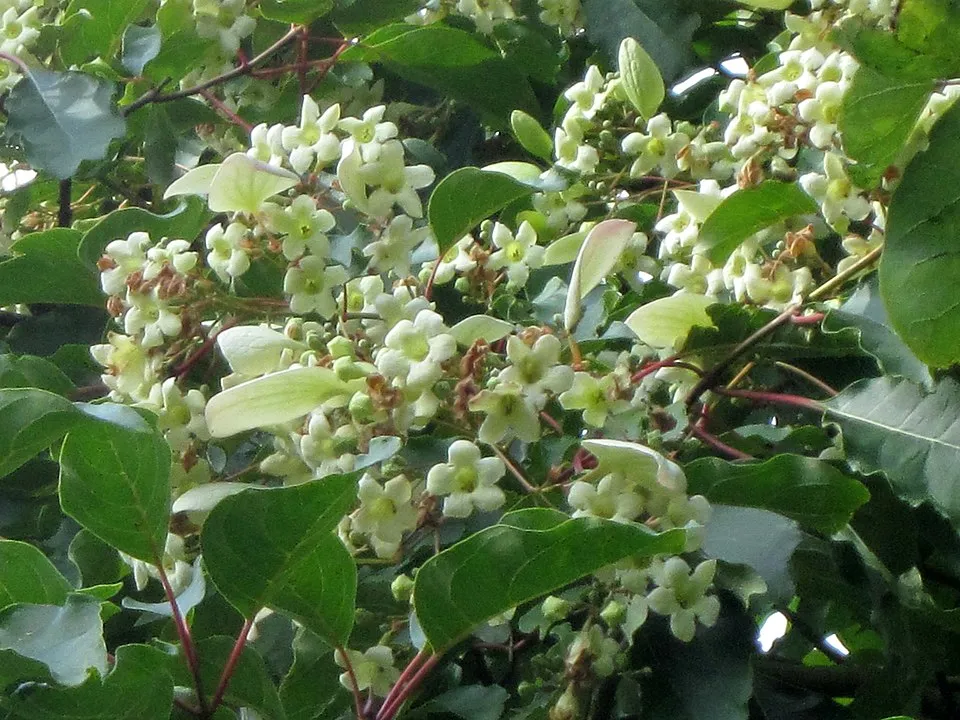
Emmenopterys henryi, popularly known as Henry's Emmenopterys or the Wonderful Tree, is a distinguished deciduous tree within the vast and economically significant family Rubiaceae. This species is native to the montane forests of central and southern China, thriving in provinces like Guizhou, Hubei, Hunan, Sichuan, and Yunnan.
It typically inhabits elevations ranging from 1,200 to 2,000 meters above sea level, preferring cool, moist environments found along forest peripheries, in sun-dappled clearings, or on mountain slopes.
As a medium to large tree, Emmenopterys henryi can achieve heights of 20 to 25 meters, developing a broad, dense, and often rounded canopy that offers considerable shade. Its growth habit is characterized by an upright, relatively straight trunk, which, in mature specimens, exhibits an appealing grayish-brown bark that exfoliates in irregular patches, revealing a smoother, lighter underbark.
The root system is robust, deep, and spreading, providing excellent anchorage in its mountainous native soils and contributing to its notable drought tolerance once fully established.
The foliage of Henry's Emmenopterys is a prominent feature, with simple, oppositely arranged leaves that are ovate to broadly elliptic. These leaves typically measure 8 to 15 cm in length and 4 to 8 cm in width, showcasing a glossy, dark green upper surface and a slightly paler, often pubescent underside. Distinctive venation patterns, comprising 8-12 pairs of arching lateral veins, are clearly visible.
In autumn, the leaves transform into vibrant shades of yellow, orange, and red, enhancing its seasonal ornamental value. However, the most celebrated aspect of Emmenopterys henryi is its spectacular, yet often elusive, flowering display, which historically takes many decades to appear in cultivation, making its bloom a rare and highly anticipated event.
Trusted Scientific References
1. Authoritative external sources for Emmenopterys henryi
1.1 Wikipedia — Emmenopterys henryi
1.2 Kew POWO (Plants of the World Online)
1.3 PubMed — peer-reviewed research
1.4 NCBI Taxonomy Browser
1.5 GBIF — Global Biodiversity
1.1.Emmenopterys Henryi — Distinguishing Points
- ✓Spectacular, late — blooming white flowers with prominent bracts.
- ✓Native to the — Native to the montane forests of central and southern China.
- ✓Deciduous tree reaching — Deciduous tree reaching up to 25 meters with a broad canopy.
- ✓Attractive exfoliating grayish — brown bark.
- ✓Glossy, dark green — Glossy, dark green opposite leaves with prominent venation.
- ✓Foliage turns vibrant — Foliage turns vibrant yellow, orange, and red in autumn.
- ✓Historically difficult to — Historically difficult to flower in cultivation, taking decades.
- ✓A monotypic genus — A monotypic genus within the diverse Rubiaceae family.
- ✓Considered an endangered — Considered an endangered species in its natural habitat.
- ✓Highly prized ornamental — Highly prized ornamental tree for large landscapes and botanical gardens.
1.2.Emmenopterys Henryi — At-a-Glance Summary
- ✓Henry's Emmenopterys is a rare and striking deciduous tree native to China.
- ✓Renowned for its magnificent, often delayed, white floral display.
- ✓Belongs to the economically and medicinally important Rubiaceae family.
- ✓Primarily valued as an ornamental specimen in horticulture.
- ✓Specific medicinal uses are not widely documented or scientifically validated.
- ✓An endangered species, highlighting its ecological significance.
2.Emmenopterys Henryi — Nomenclature & Classification
3.Emmenopterys Henryi — Key Data
4.Emmenopterys Henryi — Botanical Description
5.Emmenopterys Henryi — Origin & Spread
6.Emmenopterys Henryi — Heritage Uses
7.Emmenopterys Henryi — Key Phytochemicals
- ✓Specific phytochemical analyses for Emmenopterys henryi are not extensively documented in current literature; however, based on its family, Rubiaceae, several classes of compounds are typically found in related species and could hypothetically be present.
- ✓Alkaloids — The Rubiaceae family is renowned for producing a diverse array of alkaloids, such as indole alkaloids (e.g., those found in Mitragyna) and quinoline alkaloids (e.g., quinine from Cinchona), which are often associated with various biological activities.
- ✓Flavonoids — These ubiquitous plant pigments and secondary metabolites are common in Rubiaceae, known for their antioxidant, anti-inflammatory, and potentially anticarcinogenic properties.
- ✓Iridoid Glycosides — A significant class of compounds found in many Rubiaceae species, iridoids are known for their anti-inflammatory, antimicrobial, and hepatoprotective actions, making their presence in Emmenopterys henryi a possibility.
- ✓Tannins — Both condensed and hydrolyzable tannins are often present in woody plants, including members of the Rubiaceae, contributing astringent and antioxidant qualities.
- ✓Saponins — These glycosides, characterized by their foam-forming properties, are found in various plant families, including some Rubiaceae, and may possess hemolytic or adaptogenic effects.
- ✓Phenolic Acids — Simple phenolic compounds like gallic acid and caffeic acid derivatives are widespread in plants and contribute to antioxidant and anti-inflammatory activities, likely present in Emmenopterys henryi.
- ✓Triterpenes — These compounds are common in plant resins and waxes, and some triterpenoids from Rubiaceae species have shown anti-inflammatory or cytotoxic activities, suggesting their potential existence in Henry's Emmenopterys.
- ✓Anthraquinones — While less common than in some other families, certain Rubiaceae species contain anthraquinones, which can have laxative or antimicrobial properties, a speculative constituent for Emmenopterys henryi.
8.Emmenopterys Henryi — Evidence-Based Benefits
- ✓Emmenopterys henryi is primarily valued for its exceptional ornamental qualities, and specific traditional or modern medicinal uses for this species are not widely documented or established in pharmacopoeias.
- ✓Potential Antioxidant Activity — While not specifically studied for Emmenopterys henryi, many species within the Rubiaceae family are rich in phenolic compounds and flavonoids, suggesting a potential for antioxidant properties that could be explored in future research into Henry's Emmenopterys.
- ✓Hypothetical Anti-inflammatory Effects — Given the prevalence of iridoids and other anti-inflammatory compounds in its botanical family, Emmenopterys henryi might possess similar properties, warranting phytochemical investigation.
- ✓Possible Antimicrobial Properties — Some Rubiaceae members exhibit antimicrobial activity due to alkaloids or tannins; this could be a speculative area for Emmenopterys henryi research, though currently unsubstantiated.
- ✓Astringent Potential — Tannins, commonly found in many trees and the Rubiaceae family, lend astringent qualities which could hypothetically be present in Emmenopterys henryi, potentially useful for topical applications.
- ✓Ecological & Air Quality Benefits — As a large tree, Henry's Emmenopterys contributes significantly to local ecosystems, providing shade, improving air quality by absorbing pollutants, and supporting biodiversity, which indirectly benefits human health.
- ✓Stress Reduction (Horticultural Therapy) — The aesthetic beauty and rarity of Emmenopterys henryi can contribute to horticultural therapy and well-being, offering psychological benefits through its presence in therapeutic gardens.
- ✓Future Phytochemical Research — The unique biology and slow-flowering nature of this tree suggest it could produce novel secondary metabolites with as-yet-undiscovered therapeutic potentials, making it a valuable subject for future ethnobotanical and pharmacological studies.
- ✓Cardiovascular Health Support (Speculative) — Certain alkaloids and flavonoids in the Rubiaceae family have shown cardiovascular benefits; thus, a very speculative line of inquiry for Emmenopterys henryi could be into similar compounds.
8.1.Emmenopterys Henryi — Reported Uses
9.Emmenopterys Henryi — Safety & Side Effects
9.1.Emmenopterys Henryi — Caution Notes
- ✓Given the lack of documented medicinal use and comprehensive research on Emmenopterys henryi, specific side effects are largely unknown.
- ✓Allergic Reactions — As with any plant, individuals may experience allergic reactions, such as skin irritation from contact or respiratory issues from pollen, though not specifically reported.
- ✓Gastrointestinal Upset — Ingesting any unknown plant material could potentially cause digestive discomfort, nausea, or vomiting, especially if consumed in large quantities.
- ✓Pharmacological Interactions — If active compounds are present, they could theoretically interact with prescription medications, though this is purely speculative without research.
- ✓Toxicity — The potential for unknown toxic compounds exists in any unstudied plant, necessitating extreme caution and avoidance of internal consumption.
- ✓Skin Irritation — Direct contact with sap or foliage might cause mild skin irritation in sensitive individuals.
- ✓Pregnancy & Lactation Risks — Due to insufficient data, Emmenopterys henryi should be avoided by pregnant or breastfeeding individuals.
9.2.Emmenopterys Henryi — Risk Assessment
- ✓The safety profile of Emmenopterys henryi for human consumption or medicinal application is largely undetermined due to a lack of scientific study.
- ✓Consult a Professional — Always consult a qualified healthcare provider or medical herbalist before using any plant for medicinal purposes, especially one with an unknown safety profile.
- ✓Avoid Ingestion — Given the absence of toxicity data, internal consumption of any part of Emmenopterys henryi is strongly advised against.
- ✓Patch Testing — For any hypothetical topical application, perform a small patch test on the skin to check for allergic reactions or irritation.
- ✓Pregnancy & Breastfeeding — Not recommended for use during pregnancy or lactation due to insufficient safety information.
- ✓Children & Vulnerable Populations — Avoid use in children, elderly, or individuals with compromised immune systems due to unknown risks.
- ✓Conservation Status — The species is endangered in the wild, so any collection of plant material should be done ethically and sustainably, preferably from cultivated sources, if medicinal uses are ever established.
10.Emmenopterys Henryi — Usage Guide
- ✓As Emmenopterys henryi is not widely recognized for specific medicinal applications, usage methods are purely hypothetical and based on general herbal preparations, should future research reveal therapeutic properties.
- ✓Decoction — If bark or roots were found to be medicinally active, a decoction could be prepared by simmering the plant material in water for a prolonged period to extract compounds.
- ✓Infusion — For potential leaf or flower-based remedies, an infusion (like a tea) could be made by steeping dried plant material in hot water.
- ✓Tincture — An alcoholic extract could be created by macerating plant parts in ethanol, allowing for a concentrated and shelf-stable preparation.
- ✓Poultice — For hypothetical topical applications, crushed fresh leaves or bark could be applied directly to the skin as a poultice.
- ✓Topical Oil Infusion — Plant material could be infused into a carrier oil (e.g., olive oil) for potential external use in massage or skin care if emollient or anti-inflammatory properties were identified.
- ✓Standardized Extract — If specific active compounds are identified, a standardized extract could be developed for precise dosing in future pharmaceutical applications.
- ✓Horticultural Display — The primary current 'usage' is as an ornamental specimen tree in botanical gardens and large landscapes, appreciated for its beauty.
11.Emmenopterys Henryi — How to Grow
- ✓Site Selection — Henry's Emmenopterys thrives in cool, moist conditions with dappled sunlight, preferring well-drained, fertile, slightly acidic to neutral soils.
- ✓Propagation — Primarily propagated from fresh seeds, which can be challenging to germinate, often requiring stratification; vegetative propagation through cuttings is also possible but difficult.
- ✓Watering — Requires consistent moisture, especially during establishment; mature trees show some drought tolerance but benefit from supplemental watering during dry periods.
- ✓Fertilization — Benefits from a balanced, slow-release fertilizer in spring, particularly for young trees, to support vigorous growth.
- ✓Pruning — Generally requires minimal pruning; focus on removing dead or crossing branches to maintain a strong structure and healthy canopy.
- ✓Flowering — Known for its extremely late and infrequent flowering in cultivation, often taking 30-75 years or more, though younger blooms have been observed under specific conditions.
- ✓Climate Suitability — Best suited for USDA hardiness zones 7-9, protected from harsh winds and extreme temperatures.
- ✓Pests & Diseases — Generally robust, but monitor for common tree pests and fungal diseases, especially in stressed specimens.
Reviewed by the Flora Medical Global Botanical Review Panel
Multi-disciplinary editorial group · Botany · Ethnobotany · Herbal-medicine literature
Who reviewed this: This page was checked by the Flora Medical Global Botanical Review Panel — an in-house editorial group of botany graduates, ethnobotany researchers, and horticulture practitioners who collectively maintain our 7,000+ plant encyclopedia. Meet the team.
Our 4-step verification process
1. Taxonomic verification
Scientific names and synonyms cross-checked against Kew POWO, World Flora Online, and The Plant List.
2. Phytochemical & medicinal cross-reference
Active compounds, traditional uses, and reported activities are cross-referenced with PubMed, USDA Dr. Duke's database, and peer-reviewed ethnobotanical literature.
3. Conservation & distribution check
Distribution, ecology, and conservation status confirmed against GBIF occurrence records and the IUCN Red List.
4. Editorial & safety review
Every entry passes an editorial pass for clarity, originality, and safety notices (toxicity, contraindications, dosage caveats) before publication.
Last reviewed:
Important medical disclaimer: This content is for educational and research purposes only. It is not medical advice and is not a substitute for consultation with a licensed healthcare provider. Do not use any herb to self-treat a medical condition without professional guidance.
Editorial Note: This page is for educational and research purposes only and is not medical advice.
Written by: Flora Medical Global Editorial Team
Reviewed by: Flora Medical Global Botanical Review Panel
Last Updated: June 15, 2026





Emmenopterys Henryi — Comments & Community Reviews
Rate this plant