
Medical Disclaimer: This content is for educational purposes only. It is not medical advice. Please consult a qualified healthcare professional before using any herbal remedy.
Safety Overview
1.Ensete Ventricosum — Overview
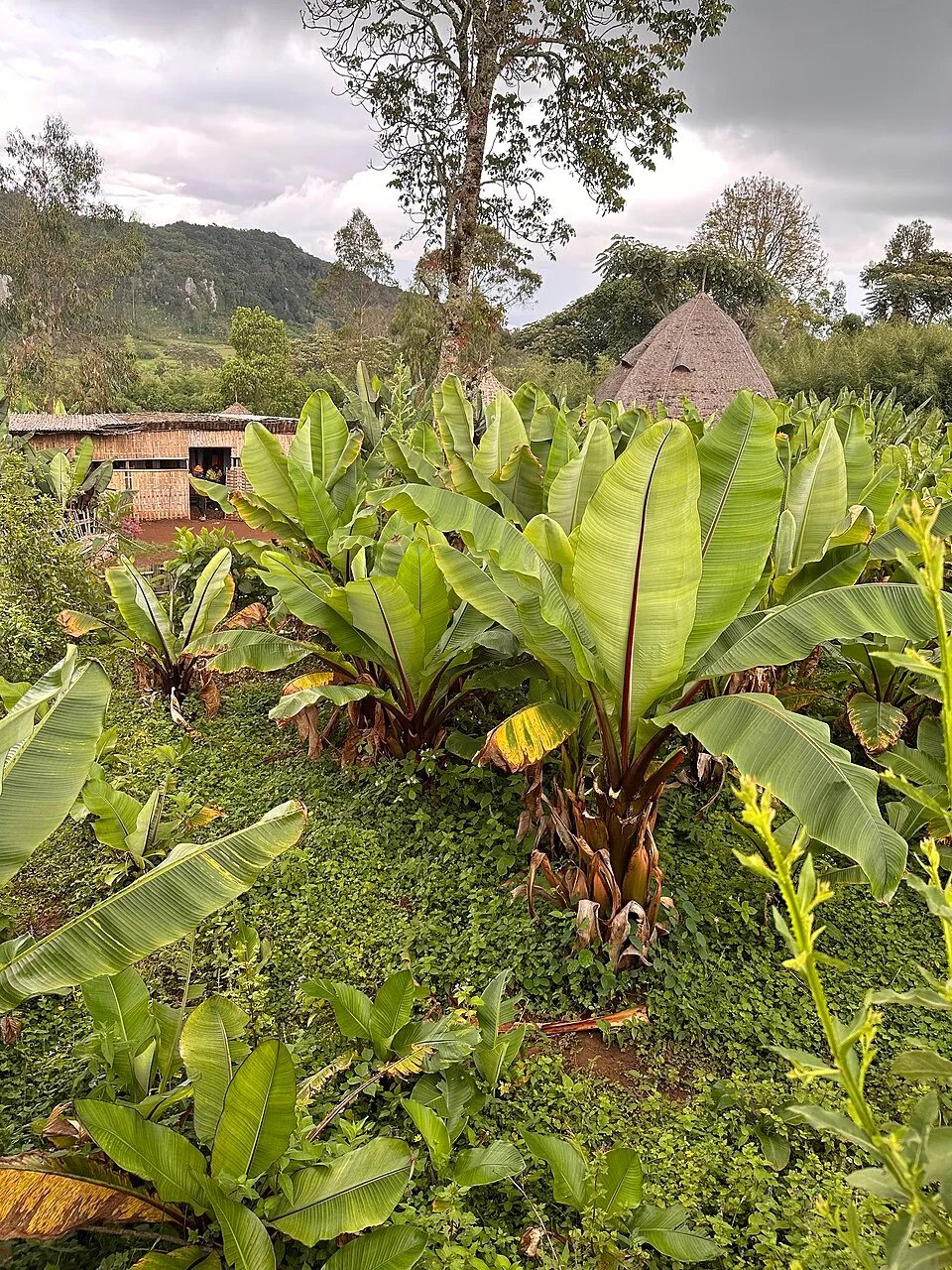
Ensete ventricosum, widely known as the Ethiopian banana or false banana, is a magnificent herbaceous monocotyledonous plant belonging to the Musaceae family, native to the humid highland regions of Ethiopia. This species exhibits impressive growth, reaching heights of 3 to 10 meters (10 to 33 feet), supported by a broad, stout pseudostem that can attain a diameter of up to 30 centimeters (12 inches). Its distinctive foliage consists of large, strap-like leaves, often growing up to 3 meters (10 feet) in length, characterized by a glossy, deep green coloration and a prominent midrib that imparts a textured appearance.
The plant's inflorescences are visually striking, emerging with bright yellow flowers encased in a showy red bract, creating a vivid contrast against the lush green leaves. The pseudostem, formed from overlapping leaf sheaths, has a smooth, almost waxy texture, enhancing its tropical allure.
Ensete ventricosum thrives at elevations between 1,500 to 3,000 meters (4,900 to 9,800 feet) above sea level, primarily domesticated in Ethiopia, which is recognized as its center of origin and diversity. While distributed across parts of Africa and Southern Asia, its cultivation as a staple food crop is unique to Ethiopia, particularly among communities in the southwestern highlands. Propagation typically occurs via suckers or seeds.
Despite its common name, Ensete ventricosum does not produce edible fruit like true bananas (Musa species), hence its moniker 'false banana.' Instead, its primary value lies in its starch-rich corm and pseudostem, which are processed into staple foods like kocho and bulla. Although often grown for ornamental purposes in warmer climate zones (USDA hardiness zones 9-11) due to its dramatic appearance and massive leaves, it is highly sensitive to frost. Beyond its food and ornamental value, Enset also plays significant ecological roles, providing shelter and sustenance for wildlife, and is a cornerstone of traditional Ethiopian medicine.
Trusted Scientific References
1. Authoritative external sources for Ensete ventricosum
1.1 Wikipedia — Ensete ventricosum
1.2 Kew POWO (Plants of the World Online)
1.3 PubMed — peer-reviewed research
1.4 NCBI Taxonomy Browser
1.5 GBIF — Global Biodiversity
1.1.Ensete Ventricosum — Key Features
- ✓Giant Herbaceous Plant — Characterized by its massive size, including a stout pseudostem and very large leaves.
- ✓Ethiopian Staple Food — A critical food crop providing sustenance for a significant portion of Ethiopia's population.
- ✓Multipurpose Crop — Valued for its food, medicinal, fiber, and animal feed applications.
- ✓Medicinal Potential — Traditionally employed for various ailments, supported by emerging scientific evidence of its bioactive compounds.
- ✓Rich Nutrient Source — High in carbohydrates, proteins, essential minerals (Ca, Zn, Fe), and vitamins (A, C).
- ✓Antioxidant Activity — Contains phenolic compounds and vitamins that combat oxidative stress within the body.
- ✓Antimicrobial Properties — Exhibits both antibacterial and antifungal effects, contributing to its traditional use in treating infections.
- ✓Ornamental Value — Widely appreciated for its dramatic, tropical aesthetic in landscape design.
- ✓Frost Intolerant — Thrives only in warm, humid climates and is severely damaged or killed by freezing temperatures.
- ✓Unique Propagation — Primarily propagated vegetatively through suckers, contributing to its local cultivation patterns.
1.2.Ensete Ventricosum — Snapshot Summary
- ✓Ensete ventricosum, also known as the Ethiopian false banana, is a giant herbaceous plant critical to Ethiopian food security.
- ✓Its starch-rich corm and pseudostem are processed into staple foods like kocho and bulla, feeding millions.
- ✓Traditionally, it is widely used in Ethiopian medicine to treat musculoskeletal conditions such as bone fractures, back pain, and joint issues.
- ✓Scientific analysis reveals it is rich in carbohydrates, proteins, vitamins A and C, and essential minerals like calcium, zinc, and iron.
- ✓Research indicates potent antioxidant, antibacterial, antifungal, and potential antitumor properties attributed to its diverse phytochemicals.
- ✓Cultivation requires warm, humid conditions and is highly susceptible to frost, necessitating specific environmental management.
2.Ensete Ventricosum — Taxonomic Classification
3.Ensete Ventricosum — Botanical Stats
4.Ensete Ventricosum — Structural Profile
5.Ensete Ventricosum — Habitat & Distribution
6.Ensete Ventricosum — Ethnobotanical Uses
7.Ensete Ventricosum — Secondary Metabolites
- ✓Carbohydrates — Primarily composed of complex starches, which are highly abundant in the corm and pseudostem, serving as the main caloric and energy source.
- ✓Proteins — Contains various amino acids, including arginine, which are fundamental for tissue repair, enzyme function, and immune system support.
- ✓Minerals — Rich in essential macro and micronutrients such as calcium (Ca), zinc (Zn), and iron (Fe), vital for bone density, immune response, and oxygen transport.
- ✓Vitamins — Provides significant amounts of Vitamin A, crucial for vision and immune health, and Vitamin C (ascorbic acid), a powerful antioxidant.
- ✓Phenolic Compounds — A diverse group of secondary metabolites including flavonoids and phenolic acids, contributing to its antioxidant and anti-inflammatory activities.
- ✓Saponins — Plant glycosides known for their potential to exhibit anti-inflammatory, antimicrobial, and cholesterol-lowering properties.
- ✓Alkaloids — Nitrogen-containing organic compounds that may possess various pharmacological activities, although specific types and their functions in Enset require further elucidation.
- ✓Terpenoids — A broad class of natural products with documented medicinal properties, including anti-inflammatory, antimicrobial, and potentially anticarcinogenic effects.
- ✓Glycosides — Compounds consisting of a sugar molecule bonded to a non-sugar component, often contributing to diverse biological activities within the plant.
- ✓Dietary Fiber — Abundant in both soluble and insoluble forms, promoting digestive health and regulating blood sugar levels.
8.Ensete Ventricosum — Modern Studies
- ✓Bone Fracture Support — Traditionally utilized in Ethiopian medicine for its perceived ability to aid in the healing and strengthening of bone fractures, potentially through its rich mineral content.
- ✓Back Pain Relief — Applied topically or consumed internally in traditional practices to alleviate discomfort and pain associated with chronic back issues.
- ✓Joint Displacement Aid — Employed in traditional healing rituals to support the recovery and stabilization of joints following displacement or dislocation.
- ✓Post-Natal Care (Placenta Discharge) — Valued in traditional medicine for assisting the body's natural process of placenta discharge after childbirth, promoting maternal recovery.
- ✓Antioxidant Properties — Rich in various phytochemicals, Enset exhibits significant antioxidant activity, helping to neutralize free radicals and protect cells from oxidative damage.
- ✓Antitumor Activity — Preliminary scientific investigations suggest the presence of compounds within Enset that may possess inhibitory effects against the growth of certain tumor cells.
- ✓Antibacterial Effects — Bioactive constituents found in Enset have demonstrated efficacy against a range of bacterial pathogens, supporting its traditional use in combating infections.
- ✓Antifungal Efficacy — Research indicates that Enset contains compounds with properties capable of suppressing the proliferation of pathogenic fungi.
- ✓Nematicidal Action — Exhibits potential in deterring or eliminating parasitic nematodes, which could be beneficial for both human and livestock health, as well as agricultural applications.
- ✓Nutritional Fortification — Provides essential dietary minerals such as calcium, zinc, and iron, crucial for maintaining strong bones, robust immune function, and preventing anemia.
- ✓Protein Source — Contains a notable amount of proteins, including the amino acid arginine, vital for muscle repair, growth, and various metabolic functions.
- ✓Vitamin Enrichment — Offers important vitamins like Vitamin A and Vitamin C, which are essential for vision, immune system integrity, and overall cellular health.
8.1.Ensete Ventricosum — Therapeutic Indications
9.Ensete Ventricosum — Adverse Effects
9.1.Ensete Ventricosum — Warnings
- ✓Allergic Reactions — Individuals sensitive to plants in the Musaceae family (e.g., bananas) may experience allergic responses such as skin irritation, itching, or digestive upset.
- ✓Digestive Discomfort — Overconsumption of raw or improperly processed Enset, particularly the starch-rich components, could lead to bloating, gas, or mild abdominal discomfort.
- ✓Interaction with Medications — Although not extensively studied, potential interactions with prescription medications cannot be entirely ruled out; caution is advised for individuals on chronic medication.
- ✓Microbial Contamination — Improper processing or unsanitary handling of fermented Enset products like kocho can lead to microbial contamination, posing a risk of foodborne illness.
- ✓Nutrient Imbalance — While nutritious, excessive reliance on Enset as a sole dietary staple without diverse food intake could potentially lead to deficiencies in other essential micronutrients.
- ✓Purgative Effect — The fresh sap from the pseudostem, if ingested in large quantities, may exhibit a mild purgative or irritant effect on the gastrointestinal tract.
9.2.Ensete Ventricosum — Safety Overview
- ✓Proper Processing — Essential for safe consumption, especially for fermented products like kocho and bulla, to ensure the elimination of potential antinutrients and enhance digestibility.
- ✓Allergen Awareness — Individuals with known sensitivities or allergies to banana plants or other Musaceae family members should exercise caution when consuming or handling Enset.
- ✓Pregnancy and Lactation — Due to limited specific scientific research on its medicinal use during these periods, pregnant and breastfeeding women should consult a healthcare professional.
- ✓Children and Infants — Medicinal administration of Enset to young children and infants should only be done under the guidance and supervision of a qualified medical practitioner.
- ✓Moderation in Consumption — While a staple food, it should be consumed as part of a balanced diet; medicinal applications require careful dosing and professional advice.
- ✓Consult a Healthcare Professional — Always advisable to seek advice from a qualified medical herbalist or healthcare provider for specific health concerns or before integrating Enset into a medicinal regimen.
- ✓Quality Sourcing — Ensure that Enset and its products are sourced from reputable and clean environments to avoid contamination by pesticides or heavy metals.
10.Ensete Ventricosum — How to Use
- ✓Boiled Corm (Amicho) — The corm, after being peeled and cleaned, is boiled until tender and consumed as a nutritious, starchy vegetable, similar to a potato.
- ✓Fermented Kocho — Prepared by scraping the pulp from the corm and pseudostem, which is then fermented underground for several months to yield a staple bread-like product.
- ✓Dehydrated Bulla — A highly digestible, concentrated starch extracted from the pseudostem and corm pulp, often used to prepare porridges or gruels.
- ✓Topical Poultices — The fresh pulp of the corm or pseudostem is traditionally pounded and applied externally as a poultice for treating bone fractures, back pain, and joint dislocations.
- ✓Pseudostem Sap Application — The sap extracted from the pseudostem is sometimes used topically for its traditional healing properties, particularly for skin ailments or wound care.
- ✓Leaf Wraps and Cooking — The large, broad leaves are utilized in traditional cooking for wrapping food, imparting flavor, and retaining moisture during preparation.
- ✓Internal Medicinal Preparations — Processed forms like bulla or kocho are ingested as part of traditional remedies to address various internal ailments and provide general wellness support.
- ✓Livestock Feed — Certain parts of the plant, particularly the leaves and residual pulp after starch extraction, are traditionally fed to livestock for their nutritional value.
11.Ensete Ventricosum — Growing Guide
- ✓Climate Requirement — Thrives in warm, humid highland climates, specifically within USDA hardiness zones 9-11, as it is highly intolerant to frost.
- ✓Soil Preference — Prefers well-draining, fertile loamy soils rich in organic matter, with an ideal pH range from slightly acidic to neutral (6.0-7.0).
- ✓Light Exposure — Requires full sun exposure for optimal growth and development, though it can tolerate partial shade in intensely hot climates.
- ✓Propagation — Primarily propagated vegetatively through suckers (offsets) removed from the base of mature plants, or less commonly, from seeds.
- ✓Watering Needs — Demands consistent and abundant watering, especially during dry seasons, to support its rapid growth and large leaf surface area.
- ✓Nutritional Needs — Benefits significantly from regular application of organic compost or a balanced, slow-release fertilizer to sustain its vigorous growth.
- ✓Pest and Disease Management — Generally robust, but vigilance is required for common garden pests and potential fungal diseases in overly humid or poorly aerated conditions.
- ✓Harvesting — For food purposes, the starch-rich corm and pseudostem are typically harvested after several years of growth, usually before the plant flowers and dies.
Reviewed by the Flora Medical Global Botanical Review Panel
Multi-disciplinary editorial group · Botany · Ethnobotany · Herbal-medicine literature
Who reviewed this: This page was checked by the Flora Medical Global Botanical Review Panel — an in-house editorial group of botany graduates, ethnobotany researchers, and horticulture practitioners who collectively maintain our 7,000+ plant encyclopedia. Meet the team.
Our 4-step verification process
1. Taxonomic verification
Scientific names and synonyms cross-checked against Kew POWO, World Flora Online, and The Plant List.
2. Phytochemical & medicinal cross-reference
Active compounds, traditional uses, and reported activities are cross-referenced with PubMed, USDA Dr. Duke's database, and peer-reviewed ethnobotanical literature.
3. Conservation & distribution check
Distribution, ecology, and conservation status confirmed against GBIF occurrence records and the IUCN Red List.
4. Editorial & safety review
Every entry passes an editorial pass for clarity, originality, and safety notices (toxicity, contraindications, dosage caveats) before publication.
Last reviewed:
Important medical disclaimer: This content is for educational and research purposes only. It is not medical advice and is not a substitute for consultation with a licensed healthcare provider. Do not use any herb to self-treat a medical condition without professional guidance.
Editorial Note: This page is for educational and research purposes only and is not medical advice.
Written by: Flora Medical Global Editorial Team
Reviewed by: Flora Medical Global Botanical Review Panel
Last Updated: June 15, 2026





Ensete Ventricosum — Comments & Community Reviews
Rate this plant