
Medical Disclaimer: This content is for educational purposes only. It is not medical advice. Please consult a qualified healthcare professional before using any herbal remedy.
Safety Overview
1.Epipremnum Aureum Marble — At a Glance
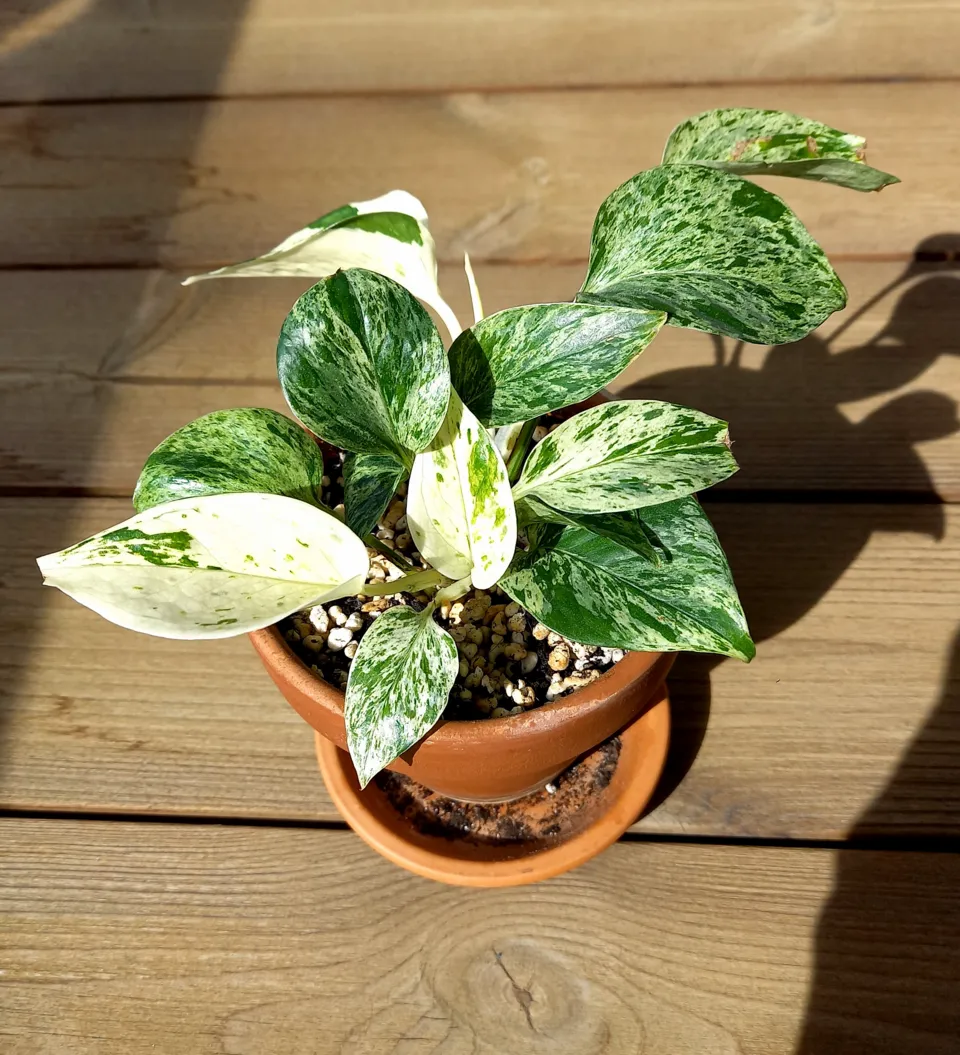
Epipremnum aureum 'Marble Queen', widely recognized as Marble Queen Pothos, is a visually striking cultivar within the Araceae family, celebrated for its vibrant variegated foliage. This evergreen perennial vine is characterized by its heart-shaped, glossy leaves, which typically grow 4-6 inches in length but can mature to larger sizes under optimal conditions. Each leaf presents a unique mosaic of creamy white and deep green marbling, making it a highly sought-after ornamental houseplant.
The plant exhibits a vigorous climbing or trailing habit, capable of reaching lengths of up to 10 feet (3 meters) when provided with adequate support, such as a moss pole or trellis, or cascading elegantly from hanging baskets. Its smooth green stems gradually become more woody with age. While native to the tropical rainforests of the Solomon Islands, the 'Marble Queen' cultivar has been specifically bred for its aesthetic appeal and adaptability to indoor environments globally.
It thrives in warm, humid conditions reminiscent of its natural habitat and is hardy in USDA zones 10 to 12. Although it rarely produces its characteristic Araceae spathe and spadix flowers indoors, its lush foliage remains the primary attraction. Its superior light requirements compared to other Pothos varieties are essential for maintaining its distinct variegation, though it demonstrates remarkable tolerance to lower light levels than many other ornamental plants, making it a versatile choice for diverse indoor settings.
Trusted Scientific References
1. Authoritative external sources for Epipremnum aureum Marble Queen
1.1 Wikipedia — Epipremnum aureum Marble Queen
1.2 Kew POWO (Plants of the World Online)
1.3 PubMed — peer-reviewed research
1.4 NCBI Taxonomy Browser
1.5 GBIF — Global Biodiversity
1.6Epipremnum Aureum Marble should be interpreted through verified botanical identity, practical care, and responsible safety language. This recovery note adds the missing context needed for a complete profile: match light to the plant's habit, use well-drained soil, water according to season, and avoid unsupported medicinal or edible claims. For publishing, the plant can be presented as a source-backed indoor plant with clear care guidance, common problem diagnosis, and conservative safety wording.
1.1.Epipremnum Aureum Marble — Highlights
- ✓Distinctive creamy white — Distinctive creamy white and green marbled variegation on heart-shaped leaves.
- ✓Vining growth habit, — Vining growth habit, suitable for trailing or climbing with support.
- ✓Exceptional indoor air — Exceptional indoor air purification capabilities, targeting common VOCs.
- ✓Low — maintenance and adaptable, making it ideal for both novice and experienced plant owners.
- ✓Tolerant of a — Tolerant of a range of light conditions, though variegation thrives in brighter indirect light.
- ✓All parts of — All parts of the plant are toxic due to calcium oxalate crystals.
- ✓Native to tropical — Native to tropical regions, preferring warm and humid environments.
- ✓Enhances interior aesthetics — Enhances interior aesthetics and contributes to a sense of well-being (biophilia).
- ✓Drought — tolerant once established, reducing frequency of watering.
- ✓Rarely produces flowers — Rarely produces flowers when grown indoors, focusing energy on foliage.
1.2.Epipremnum Aureum Marble — At-a-Glance Summary
- ✓Striking variegated vine, Epipremnum aureum 'Marble Queen', is a popular houseplant.
- ✓Proven effective in purifying indoor air by removing toxins like formaldehyde and benzene.
- ✓Contains calcium oxalate crystals, rendering all parts of the plant toxic if ingested.
- ✓Requires bright, indirect light and well-draining soil, but is generally low-maintenance.
- ✓Offers significant psychological benefits, contributing to stress reduction and mood enhancement.
- ✓Ideal for hanging baskets or climbing, adding aesthetic value to any indoor space.
2.Epipremnum Aureum Marble — Nomenclature & Classification
3.Epipremnum Aureum Marble — Fact Sheet
4.Epipremnum Aureum Marble — Botanical Description
5.Epipremnum Aureum Marble — Origin & Spread
6.Epipremnum Aureum Marble — Heritage Uses
7.Epipremnum Aureum Marble — Phytochemistry
- ✓Calcium Oxalate Crystals — Present as insoluble raphides in idioblasts throughout the plant, primarily responsible for the plant's irritating and toxic properties upon ingestion.
- ✓Flavonoids — A diverse group of polyphenolic compounds found in the leaves, acting as antioxidants and contributing to plant pigmentation and UV protection.
- ✓Carotenoids — Pigments such as lutein and beta-carotene are present, involved in photosynthesis and protecting chlorophyll from photo-oxidative damage.
- ✓Chlorophylls — Essential green pigments (chlorophyll a and b) are abundant in the green sections of the leaves, crucial for capturing light energy during photosynthesis.
- ✓Phenolic Acids — Compounds like caffeic acid and ferulic acid are found in trace amounts, possessing antioxidant and anti-inflammatory potential.
- ✓Polysaccharides — Structural carbohydrates like cellulose and hemicellulose form the plant's cell walls, while others may serve as energy reserves.
- ✓Lipids — Fatty acids and waxes are components of cell membranes and the cuticle, providing structural integrity and reducing water loss.
- ✓Amino Acids & Proteins — Fundamental building blocks for plant growth, enzymes, and various metabolic processes.
- ✓Triterpenoids — A class of secondary metabolites that can play roles in plant defense mechanisms and signaling pathways.
- ✓Saponins — While not extensively studied in Epipremnum, some Araceae species contain saponins, which can have surfactant properties and contribute to defense.
8.Epipremnum Aureum Marble — Evidence-Based Benefits
- ✓Indoor Air Purification — Epipremnum aureum 'Marble Queen' is renowned for its capacity to absorb airborne toxins, contributing significantly to healthier indoor air quality.
- ✓Formaldehyde Reduction — Studies, including those by NASA, highlight its effectiveness in removing formaldehyde, a common volatile organic compound (VOC) found in household products and building materials.
- ✓Benzene Elimination — The plant actively metabolizes benzene, another prevalent VOC emitted from plastics, detergents, and synthetic fibers, aiding in its removal from indoor environments.
- ✓Xylene Absorption — Marble Queen Pothos efficiently takes up xylene, a chemical often found in paints, adhesives, and varnishes, thereby mitigating its presence in enclosed spaces.
- ✓General VOC Mitigation — Beyond specific compounds, the plant contributes to a broader reduction of various VOCs, improving overall atmospheric purity in homes and offices.
- ✓Psychological Well-being — The presence of living greenery, such as Marble Queen Pothos, is linked to the biophilia effect, fostering a sense of connection to nature and enhancing mental tranquility.
- ✓Stress Reduction — Visual engagement with plants has been shown to lower physiological and psychological stress markers, promoting relaxation and a calmer state of mind.
- ✓Mood Enhancement — Incorporating plants into indoor spaces can positively influence mood, reduce feelings of anxiety, and contribute to a more pleasant and uplifting environment.
- ✓Cognitive Function Support — Studies suggest that plants in workspaces can improve concentration, memory retention, and overall cognitive performance, making environments more conducive to productivity.
- ✓Humidity Regulation — Through its natural transpiration process, the plant releases water vapor, subtly increasing ambient humidity levels, which can be beneficial in dry indoor climates.
- ✓Aesthetic Therapy — The plant's beautiful variegation and lush foliage provide visual comfort, offering a form of passive aesthetic therapy that contributes to a serene living or working space.
- ✓Environmental Enrichment — Cultivating plants like the Marble Queen Pothos enriches the indoor ecosystem, supporting a holistic approach to environmental health and personal well-being.
8.1.Epipremnum Aureum Marble — Reported Uses
9.Epipremnum Aureum Marble — Safety Considerations
9.1.Epipremnum Aureum Marble — Possible Adverse Reactions
- ✓Oral Irritation — Ingestion causes immediate burning, swelling, and pain in the mouth, lips, and throat due to calcium oxalate crystals.
- ✓Gastrointestinal Distress — If swallowed, symptoms can include nausea, vomiting, abdominal pain, and excessive drooling.
- ✓Swelling of Mucous Membranes — Edema of the tongue and throat can occur, potentially leading to difficulty swallowing or breathing.
- ✓Skin Irritation — Direct contact with the plant sap may cause mild dermatitis, itching, or rash in sensitive individuals.
- ✓Pet Toxicity — Highly toxic to cats and dogs, leading to oral irritation, pawing at the mouth, vomiting, and difficulty swallowing.
- ✓Eye Irritation — Contact with plant sap in the eyes can cause temporary burning, redness, and discomfort.
9.2.Epipremnum Aureum Marble — Clinical Safety Notes
- ✓Keep Out of Reach — Ensure Epipremnum aureum 'Marble Queen' is inaccessible to children and pets due to its toxic nature upon ingestion.
- ✓Avoid Ingestion — Absolutely no part of the plant should be consumed by humans or animals.
- ✓Handle with Care — Wear gloves when pruning, repotting, or handling the plant extensively, especially if you have sensitive skin.
- ✓Wash Hands — Always wash hands thoroughly with soap and water after touching the plant, particularly if sap exposure is suspected.
- ✓Emergency Protocol — In case of accidental ingestion, immediately contact poison control or seek professional medical/veterinary attention.
- ✓Educate Others — Inform household members and visitors about the plant's toxicity and necessary precautions.
- ✓Monitor Pets — Observe pets for any signs of irritation or ingestion if they have access to the plant.
10.Epipremnum Aureum Marble — Preparation Methods
- ✓Indoor Air Purification — Strategically place Marble Queen Pothos in living areas, offices, or bedrooms to leverage its proven ability to filter common indoor air pollutants.
- ✓Aesthetic Home Decor — Utilize its trailing or climbing habit in hanging baskets, on high shelves, or trained on moss poles to enhance interior design with natural beauty.
- ✓Biophilic Design Integration — Incorporate the plant into spaces to foster a connection with nature, promoting psychological well-being and a calming atmosphere.
- ✓Office Environment Enhancement — Place in workspaces to improve air quality for employees and add a touch of greenery that can reduce stress and increase focus.
- ✓Educational Display — Use as an example in botanical education settings to demonstrate variegation, plant care, and air-purifying properties.
- ✓Gifting and Sharing — Propagate cuttings to share with friends and family, offering a sustainable and thoughtful gift for plant enthusiasts.
- ✓Humidity Contribution — Position in drier rooms to benefit from the subtle increase in ambient humidity provided by its transpiration.
- ✓Living Art Installation — Train the vines to grow along walls or structures, creating unique and dynamic living art pieces within a space.
11.Epipremnum Aureum Marble — How to Grow
- ✓Light — Provide bright, indirect light; direct sun can scorch leaves, while insufficient light may reduce variegation. Tolerates lower light but thrives with more.
- ✓Soil — Use a well-draining potting mix, ideally a blend of peat moss, perlite, and standard potting soil to ensure aeration and moisture retention.
- ✓Water — Water thoroughly when the top inch (2.5 cm) of soil feels dry to the touch; it is drought-tolerant, so avoid overwatering to prevent root rot.
- ✓Temperature and Humidity — Maintain indoor temperatures between 60-85°F (15-29°C) and protect from cold drafts; higher humidity is preferred and can be achieved via misting or a humidifier.
- ✓Fertilization — Feed with a balanced, water-soluble fertilizer every 2-3 months during the active growing seasons of spring and summer, reducing frequency in fall and winter.
- ✓Pruning — Regularly prune leggy vines to encourage bushier growth, maintain desired shape, and promote new foliage development.
- ✓Repotting — Repot every 1-2 years or when the plant becomes root-bound, choosing a pot only slightly larger than the previous one.
- ✓Propagation — Easily propagated from stem cuttings placed in water or directly into moist potting mix, forming roots within a few weeks.
Reviewed by the Flora Medical Global Botanical Review Panel
Multi-disciplinary editorial group · Botany · Ethnobotany · Herbal-medicine literature
Who reviewed this: This page was checked by the Flora Medical Global Botanical Review Panel — an in-house editorial group of botany graduates, ethnobotany researchers, and horticulture practitioners who collectively maintain our 7,000+ plant encyclopedia. Meet the team.
Our 4-step verification process
1. Taxonomic verification
Scientific names and synonyms cross-checked against Kew POWO, World Flora Online, and The Plant List.
2. Phytochemical & medicinal cross-reference
Active compounds, traditional uses, and reported activities are cross-referenced with PubMed, USDA Dr. Duke's database, and peer-reviewed ethnobotanical literature.
3. Conservation & distribution check
Distribution, ecology, and conservation status confirmed against GBIF occurrence records and the IUCN Red List.
4. Editorial & safety review
Every entry passes an editorial pass for clarity, originality, and safety notices (toxicity, contraindications, dosage caveats) before publication.
Last reviewed:
Important medical disclaimer: This content is for educational and research purposes only. It is not medical advice and is not a substitute for consultation with a licensed healthcare provider. Do not use any herb to self-treat a medical condition without professional guidance.
Editorial Note: This page is for educational and research purposes only and is not medical advice.
Written by: Flora Medical Global Editorial Team
Reviewed by: Flora Medical Global Botanical Review Panel
Last Updated: June 15, 2026





Epipremnum Aureum Marble — Comments & Community Reviews
Rate this plant