
Medical Disclaimer: This content is for educational purposes only. It is not medical advice. Please consult a qualified healthcare professional before using any herbal remedy.
Safety Overview
1.Epipremnum Marble Queen — Essential Profile
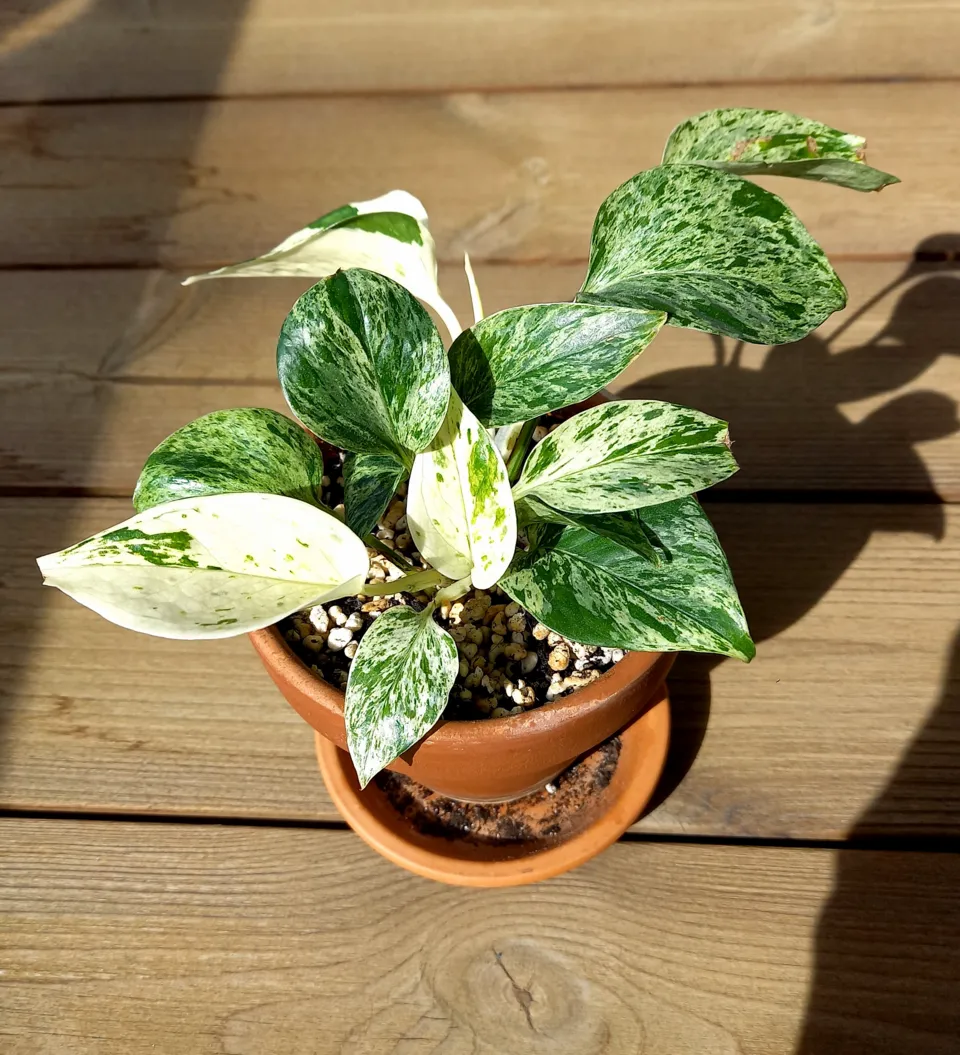
Epipremnum Marble Queen, a highly prized cultivar of the species Epipremnum aureum, is celebrated for its striking variegated foliage that brings a touch of tropical elegance to any indoor environment. This evergreen vining plant features distinct heart-shaped leaves, typically ranging from 10 to 20 centimeters (4-8 inches) in length, which display a rich deep green hue intricately marbled with creamy white or pale yellow patterns. The extent and intensity of this variegation are highly responsive to light exposure, creating unique artistic designs on each leaf. Belonging to the Araceae family, commonly known as the Arum family, Epipremnum Marble Queen exhibits a robust vining growth habit.
In its native tropical rainforest understory, particularly in regions like the Solomon Islands and Society Islands of French Polynesia, it uses aerial roots to ascend structures, potentially reaching lengths of 1 to 2 meters (3-6 feet) or more. When cultivated indoors, it can be trained to climb with support or allowed to cascade gracefully from hanging baskets, achieving impressive lengths of up to 3 meters (10 feet). The stems are generally smooth, developing a slightly woody texture as they mature. While the parent species Epipremnum aureum can produce inconspicuous yellowish flowers in its natural habitat, the 'Marble Queen' cultivar rarely, if ever, flowers when grown indoors, with its ornamental value lying entirely in its exquisite foliage.
It thrives in environments characterized by bright, indirect light and appreciates the high humidity levels typical of its natural rainforest origins, ideally maintained between 15-29°C (60-85°F). Its hardiness is typically suited for USDA zones 10 to 12.
Trusted Scientific References
1. Authoritative external sources for Epipremnum aureum Marble
1.1 Wikipedia — Epipremnum aureum Marble
1.2 Kew POWO (Plants of the World Online)
1.3 PubMed — peer-reviewed research
1.4 NCBI Taxonomy Browser
1.5 GBIF — Global Biodiversity
1.6Epipremnum Marble Queen should be interpreted through verified botanical identity, practical care, and responsible safety language. This recovery note adds the missing context needed for a complete profile: match light to the plant's habit, use well-drained soil, water according to season, and avoid unsupported medicinal or edible claims. For publishing, the plant can be presented as a source-backed indoor plant with clear care guidance, common problem diagnosis, and conservative safety wording.
1.1.Epipremnum Marble Queen — Distinguishing Points
- ✓Distinctive creamy — white and green marbled variegation on heart-shaped leaves.
- ✓Evergreen vining growth — Evergreen vining growth habit, adaptable as a climber or trailing plant.
- ✓Recognized for its significant indoor air — purifying properties.
- ✓Low maintenance requirements, — Low maintenance requirements, making it ideal for novice and experienced plant enthusiasts.
- ✓Native to tropical — Native to tropical regions of Southeast Asia, thriving in warm, humid conditions.
- ✓Rarely produces flowers — Rarely produces flowers when cultivated indoors, with primary ornamental value in foliage.
- ✓Exhibits good drought — Exhibits good drought tolerance, preferring soil to dry slightly between waterings.
- ✓All parts of — All parts of the plant contain calcium oxalate crystals, rendering it toxic if ingested.
- ✓Contributes to psychological well — being through biophilic design principles.
- ✓Can reach impressive — Can reach impressive lengths of up to 3 meters (10 feet) indoors with proper care.
1.2.Epipremnum Marble Queen — In Brief
- ✓Epipremnum Marble Queen is a stunning, easy-care indoor plant with distinctive variegated foliage.
- ✓Renowned for its air-purifying capabilities, removing common indoor toxins as per NASA studies.
- ✓All parts of the plant are toxic if ingested, primarily due to calcium oxalate crystals.
- ✓Thrives in bright, indirect light, high humidity, and consistent warm temperatures.
- ✓Exhibits a versatile vining habit, suitable for climbing or trailing displays.
- ✓Offers aesthetic and psychological benefits, enhancing indoor environments.
2.Epipremnum Marble Queen — Scientific Identity
3.Epipremnum Marble Queen — Fact Sheet
4.Epipremnum Marble Queen — Botanical Description
5.Epipremnum Marble Queen — Origin & Spread
6.Epipremnum Marble Queen — Folk Medicine Applications
7.Epipremnum Marble Queen — Chemical Profile
- ✓Calcium Oxalate Crystals — These are the primary toxic compounds found in all parts of Epipremnum Marble Queen, present as needle-like raphides that cause mechanical irritation upon ingestion.
- ✓Chlorophylls — Essential green pigments (chlorophyll a and b) are abundant in the green sections of the leaves, crucial for photosynthesis.
- ✓Carotenoids — Accessory pigments like carotenoids are present, contributing to the overall leaf coloration and providing photoprotection.
- ✓Flavonoids — General plant phenolic compounds are likely present, potentially offering antioxidant properties, though not the primary active constituents for this plant's known effects.
- ✓Proteins and Amino Acids — Fundamental building blocks for cellular structure and metabolic processes are present throughout the plant tissues.
- ✓Polysaccharides — Structural carbohydrates such as cellulose and hemicellulose are abundant in cell walls, providing structural integrity.
- ✓Starch — A complex carbohydrate stored as an energy reserve within the plant's cells.
- ✓Organic Acids — Various organic acids are involved in the plant's metabolic pathways, contributing to cellular function.
- ✓Lipids — Fats and oils are present in cell membranes and as energy storage molecules within the plant.
- ✓Water — The most abundant constituent, essential for all physiological processes and maintaining turgor pressure.
8.Epipremnum Marble Queen — Pharmacological Findings
- ✓Air Purification — Epipremnum Marble Queen is noted for its ability to filter common indoor airborne toxins, including formaldehyde, benzene, xylene, and toluene, improving overall air quality.
- ✓Stress Reduction — The presence of lush, green indoor plants like Marble Queen Pothos contributes to a biophilic environment, which can reduce psychological stress and foster a sense of well-being.
- ✓Enhanced Focus and Productivity — Studies suggest that incorporating houseplants into workspaces can lead to increased concentration and productivity, as well as reduced fatigue.
- ✓Humidity Regulation — Through the process of transpiration, this plant releases moisture into the air, offering a subtle natural humidifying effect in dry indoor environments.
- ✓Aesthetic Therapy — Its captivating marbled foliage acts as a natural aesthetic enhancer, creating a calming and visually appealing atmosphere that can positively impact mood.
- ✓Environmental Enrichment — Integrating living plants into indoor spaces enriches the environment, promoting a connection to nature and enhancing the overall habitat.
- ✓Supports Respiratory Health — By removing airborne pollutants, the Marble Queen Pothos indirectly supports respiratory health by reducing exposure to irritants.
- ✓Mental Well-being — Caring for plants can be a therapeutic activity, providing a sense of purpose and routine that benefits mental health.
- ✓Low Allergenic Potential — Unlike some flowering plants, its rare indoor flowering means it produces minimal pollen, making it suitable for individuals with pollen sensitivities.
- ✓Drought Tolerance — Its ability to withstand periods of low water makes it a resilient plant, fostering a sense of accomplishment for caregivers.
8.1.Epipremnum Marble Queen — Reported Uses
9.Epipremnum Marble Queen — Cautions & Contraindications
9.1.Epipremnum Marble Queen — Possible Adverse Reactions
- ✓Oral Irritation — Ingestion of any part of Epipremnum Marble Queen can cause immediate burning, swelling, and pain in the mouth, tongue, and throat.
- ✓Gastrointestinal Distress — Symptoms such as nausea, vomiting, and abdominal pain may occur following ingestion.
- ✓Dermatitis — Skin irritation or a rash can develop in sensitive individuals upon direct contact with the plant's sap.
- ✓Ocular Irritation — Contact with the sap can lead to eye pain, redness, swelling, and temporary vision disturbances.
- ✓Swallowing Difficulties — Severe swelling of the throat and mouth tissue can make swallowing painful or difficult.
- ✓Breathing Difficulties — In rare and severe cases of ingestion, significant swelling can lead to obstruction of the airway.
- ✓Pet Toxicity — Animals, particularly cats and dogs, are highly susceptible to similar and often more severe symptoms if they ingest the plant, including excessive drooling and pawing at the mouth.
9.2.Epipremnum Marble Queen — Risk Assessment
- ✓Ingestion Hazard — All parts of Epipremnum Marble Queen are toxic if ingested; keep the plant strictly out of reach of children and pets.
- ✓Handling Precautions — Wear gloves when pruning, repotting, or handling the plant if you have sensitive skin to avoid potential dermatitis.
- ✓First Aid for Ingestion — In case of ingestion, rinse the mouth thoroughly with water and seek immediate medical attention or contact poison control.
- ✓Pet Safety Alert — If a pet ingests the plant, immediately contact a veterinarian or animal poison control for guidance.
- ✓Eye Contact — If sap comes into contact with eyes, flush thoroughly with clean water for at least 15 minutes and seek medical advice.
- ✓Not for Internal Use — This plant is strictly for ornamental purposes and must never be consumed or prepared for internal use.
- ✓Allergy Awareness — While generally low, individuals with extreme plant sensitivities should exercise caution during handling.
10.Epipremnum Marble Queen — Usage Guide
- ✓Ornamental Indoor Plant — Primarily used to enhance interior aesthetics in homes, offices, and commercial spaces due to its striking variegated foliage.
- ✓Air Purifier Placement — Strategically position in rooms to leverage its air-purifying capabilities, especially in areas with potential VOC exposure.
- ✓Biophilic Design Element — Integrate into interior design schemes to foster a connection to nature and promote psychological well-being.
- ✓Trailing Display — Allow its lush stems to cascade gracefully from hanging baskets, high shelves, or mantels for a verdant trailing effect.
- ✓Climbing Support — Train the vines to climb moss poles, trellises, or other structures to encourage vertical growth and larger leaf development.
- ✓Educational Specimen — Utilize in educational settings to demonstrate plant care, propagation techniques, and the benefits of indoor plants.
- ✓Decorative Gifting — A popular choice for gifting due to its beauty, resilience, and perceived benefits, suitable for various occasions.
- ✓Vivarium and Terrarium Accent — Can be used in large, enclosed ecosystems, with careful consideration for the safety of any residing animals due to its toxicity.
11.Epipremnum Marble Queen — Cultivation & Care
- ✓Light — Provide bright, indirect light; direct sunlight can scorch leaves and diminish variegation, while insufficient light may reduce the white marbling.
- ✓Soil — Utilize a well-draining potting mix, ideally a blend of peat moss, perlite, and regular potting soil, to ensure good aeration and moisture retention.
- ✓Water — Water thoroughly when the top inch (2.5 cm) of soil feels dry to the touch, allowing excess water to drain completely to prevent root rot.
- ✓Temperature and Humidity — Maintain indoor temperatures between 15-29°C (60-85°F) and protect from cold drafts; higher humidity (50-70%) is preferred, achievable with misting or a humidifier.
- ✓Fertilization — Feed with a balanced, water-soluble fertilizer every 2-3 months during the active growing season (spring and summer), reducing frequency in fall and winter.
- ✓Pruning — Regularly prune leggy vines to encourage bushier growth and maintain desired shape, which also provides cuttings for propagation.
- ✓Repotting — Repot every 1-2 years or when the plant becomes root-bound, choosing a pot only slightly larger than the previous one to avoid overwatering issues.
- ✓Propagation — Easily propagated from stem cuttings taken just below a node, with lower leaves removed, and rooted in water or moist soil.
Reviewed by the Flora Medical Global Botanical Review Panel
Multi-disciplinary editorial group · Botany · Ethnobotany · Herbal-medicine literature
Who reviewed this: This page was checked by the Flora Medical Global Botanical Review Panel — an in-house editorial group of botany graduates, ethnobotany researchers, and horticulture practitioners who collectively maintain our 7,000+ plant encyclopedia. Meet the team.
Our 4-step verification process
1. Taxonomic verification
Scientific names and synonyms cross-checked against Kew POWO, World Flora Online, and The Plant List.
2. Phytochemical & medicinal cross-reference
Active compounds, traditional uses, and reported activities are cross-referenced with PubMed, USDA Dr. Duke's database, and peer-reviewed ethnobotanical literature.
3. Conservation & distribution check
Distribution, ecology, and conservation status confirmed against GBIF occurrence records and the IUCN Red List.
4. Editorial & safety review
Every entry passes an editorial pass for clarity, originality, and safety notices (toxicity, contraindications, dosage caveats) before publication.
Last reviewed:
Important medical disclaimer: This content is for educational and research purposes only. It is not medical advice and is not a substitute for consultation with a licensed healthcare provider. Do not use any herb to self-treat a medical condition without professional guidance.
Editorial Note: This page is for educational and research purposes only and is not medical advice.
Written by: Flora Medical Global Editorial Team
Reviewed by: Flora Medical Global Botanical Review Panel
Last Updated: June 15, 2026





Epipremnum Marble Queen — Comments & Community Reviews
Rate this plant