
Medical Disclaimer: This content is for educational purposes only. It is not medical advice. Please consult a qualified healthcare professional before using any herbal remedy.
Safety Overview
1.Episcia — At a Glance
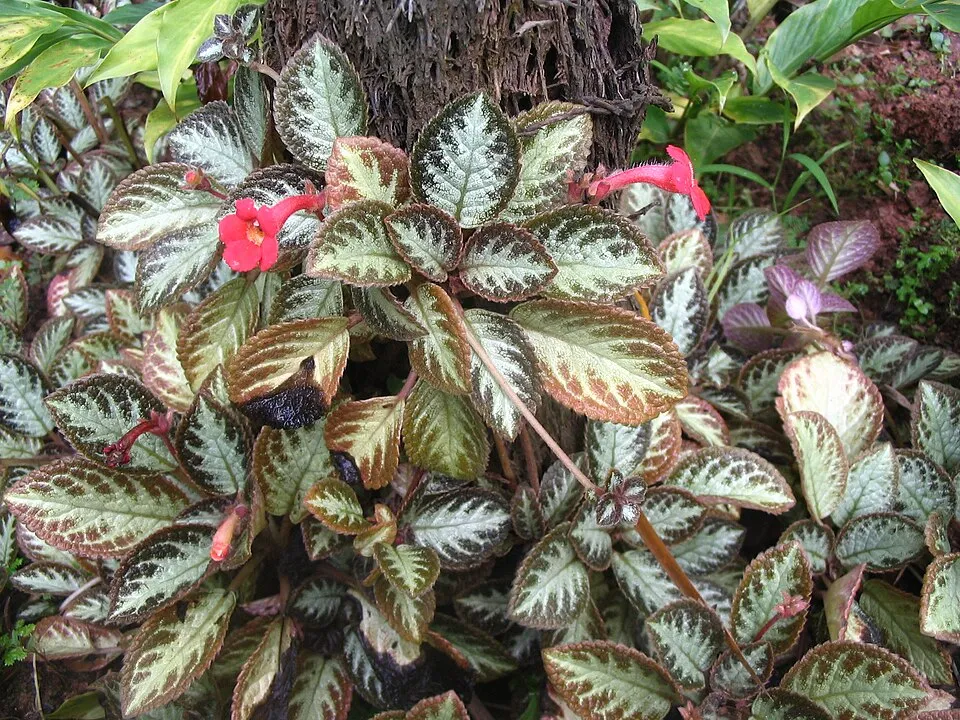
Episcia cupreata, commonly known as the Flame Violet, is an enchanting perennial herb belonging to the Gesneriaceae family, a group renowned for its diverse and often showy flowering plants. This species typically exhibits a compact, trailing, or stoloniferous growth habit, reaching heights of approximately 30 to 45 cm (12 to 18 inches) with an indefinite spread due to its production of 'runners' or stolons that root readily upon contact with suitable substrate.
The foliage is perhaps its most striking feature: rounded to ovate leaves, often reaching 10 cm in length and 6 cm in width, display a captivating quilted texture, also known as bullate, and a rich palette of metallic bronze, coppery-red, or deep green hues, frequently accented with contrasting veins or margins. The adaxial surface is typically velvety due to the presence of fine hairs, while the abaxial side might show a paler green or purplish tint.
The stems of Episcia cupreata are soft, succulent, and somewhat brittle, covered in fine, reddish hairs that give them a distinctive fuzzy appearance. These stoloniferous stems are crucial for the plant's natural propagation, allowing it to rapidly colonize suitable ground cover in its native habitats. The flowers are a dazzling spectacle of vibrant orange to fiery red, tubular in shape, and typically borne singly or in small clusters from the leaf axils.
Each flower consists of five fused petals, often with a yellow throat speckled with red, creating a striking contrast that attracts hummingbirds and other pollinators in its natural environment. Flowering can occur intermittently throughout the year under optimal conditions.
Native to the tropical rainforests of Central and South America, particularly endemic to regions of Colombia and Ecuador, Episcia cupreata thrives as an understory plant. It prefers the warm, consistently humid microclimates found beneath the dense canopy, where light is filtered and diffuse.
Its natural habitat typically consists of rich, organic soil with good drainage, often growing epiphytically or lithophytically on moss-covered rocks and tree trunks, highlighting its adaptability within its specific ecological niche.
Trusted Scientific References
1. Authoritative external sources for Episcia cupreata
1.1 Wikipedia — Episcia cupreata
1.2 Kew POWO (Plants of the World Online)
1.3 PubMed — peer-reviewed research
1.4 NCBI Taxonomy Browser
1.5 GBIF — Global Biodiversity
1.1.Episcia — Highlights
- ✓Striking metallic bronze, coppery — red, or deep green foliage.
- ✓Velvety, bullate (quilted) — Velvety, bullate (quilted) leaf texture.
- ✓Dazzling fiery red — orange tubular flowers with yellow throats.
- ✓Trailing or stoloniferous — Trailing or stoloniferous growth habit, producing 'runners'.
- ✓Native to humid — Native to humid tropical rainforests of Colombia and Ecuador.
- ✓Belongs to the — Belongs to the Gesneriaceae family, known for ornamental plants.
- ✓Propagates easily from — Propagates easily from stolons, making it a popular houseplant.
- ✓Attracts hummingbirds in — Attracts hummingbirds in its natural habitat.
- ✓Perennial herbaceous plant, — Perennial herbaceous plant, often grown as groundcover or in hanging baskets.
- ✓Adaptable to indoor — Adaptable to indoor environments with suitable humidity and light.
1.2.Episcia — Concise Overview
- ✓Episcia cupreata, or Flame Violet, is a striking perennial herb.
- ✓Known for its vibrant, metallic foliage and fiery red-orange flowers.
- ✓Native to the tropical rainforests of Central and South America.
- ✓Traditionally used in folk medicine for anti-inflammatory and wound healing properties.
- ✓Requires high humidity, warm temperatures, and indirect light for optimal growth.
- ✓Primarily cultivated as an ornamental houseplant for its aesthetic appeal.
2.Episcia — Botanical Identity
3.Episcia — Key Data
4.Episcia — Physical Description
5.Episcia — Ecological Habitat
6.Episcia — Traditional Uses
7.Episcia — Key Phytochemicals
- ✓Flavonoids — Compounds like quercetin and kaempferol are present, offering antioxidant, anti-inflammatory, and potentially antiallergic actions.
- ✓Phenolic Acids — Caffeic acid and gallic acid contribute to the plant's antioxidant capacity and may possess antimicrobial properties.
- ✓Anthocyanins — These pigments are responsible for the vibrant red and purple hues in the leaves and flowers, providing significant antioxidant benefits.
- ✓Triterpenoids — Including compounds like ursolic acid, these contribute to the plant's traditional anti-inflammatory and hepatoprotective effects.
- ✓Saponins — Triterpenoid saponins may be present, known for their expectorant, anti-inflammatory, and mild hemolytic activities.
- ✓Tannins — Both hydrolyzable and condensed tannins are likely, imparting astringent properties, useful for wound healing and as antimicrobials.
- ✓Phytosterols — Beta-sitosterol and related compounds contribute to anti-inflammatory and cholesterol-lowering potential.
- ✓Glycosides — Various glycosides, including cardiac glycosides in trace amounts, may be present, influencing diverse pharmacological effects.
- ✓Alkaloids — While typically in low concentrations, trace alkaloids might contribute to various biological activities.
- ✓Mucilage — Polysaccharides providing demulcent and soothing properties, particularly beneficial for topical applications and digestive comfort.
8.Episcia — Scientific Evidence
- ✓Potential Anti-inflammatory Activity — Traditional uses suggest that extracts may help reduce inflammation, possibly due to the presence of flavonoids and triterpenoids.
- ✓Antioxidant Properties — Rich in phenolic compounds and anthocyanins, Episcia cupreata may help neutralize free radicals and protect cells from oxidative damage.
- ✓Antimicrobial Effects — Ethnobotanical accounts indicate topical application for minor infections, suggesting potential antibacterial or antifungal properties.
- ✓Wound Healing Support — Crushed leaves or poultices have been traditionally applied to minor cuts and abrasions to promote healing and soothe irritated skin.
- ✓Digestive Aid (Traditional) — In some folk medicine systems, infusions from the leaves were used to alleviate mild gastrointestinal discomfort and aid digestion.
- ✓Skin Soothing — The plant's demulcent properties, possibly from mucilage, could provide relief for irritated or inflamed skin conditions when applied topically.
- ✓Fever Reduction (Folk Medicine) — Historically, certain preparations were used to help reduce fever in traditional healing practices.
- ✓Minor Pain Relief — Its potential anti-inflammatory action may contribute to alleviating mild aches and pains, particularly those associated with inflammation.
- ✓Respiratory Support — Traditional remedies sometimes utilized this plant for its expectorant qualities to ease congestion and respiratory discomfort.
- ✓General Tonic (Traditional) — Some cultures valued it as a general tonic to support overall well-being and vitality.
8.1.Episcia — Indications & Uses
9.Episcia — Safety Considerations
9.1.Episcia — Reported Side Effects
- ✓Skin Irritation — Direct contact with plant sap may cause mild dermatitis or allergic reactions in sensitive individuals.
- ✓Gastrointestinal Upset — Ingestion of large quantities, especially by pets or children, could lead to stomach upset, nausea, or vomiting.
- ✓Allergic Reactions — Individuals sensitive to plants in the Gesneriaceae family may experience allergic symptoms like itching or rash.
- ✓Drug Interactions — While not well-researched, theoretical interactions with medications could occur due to unknown phytochemicals, especially with blood thinners or sedatives.
- ✓Toxicity Concerns — Misidentification or excessive consumption of any unresearched plant carries inherent risks of toxicity.
- ✓Photosensitivity — Some plant compounds can increase skin sensitivity to sunlight, though not specifically documented for Episcia cupreata.
- ✓Oral Irritation — Chewing or ingesting raw plant material may cause temporary irritation or numbness in the mouth and throat.
9.2.Episcia — Toxicity Assessment
- ✓Consult Healthcare Professional — Always seek advice from a qualified medical herbalist or doctor before using Episcia cupreata for medicinal purposes.
- ✓Pregnancy and Lactation — Not recommended for use by pregnant or nursing women due to insufficient safety data.
- ✓Children — Administer to children with extreme caution and only under professional guidance; keep plants out of reach of young children and pets.
- ✓Patch Test — Before topical application, perform a patch test on a small area of skin to check for allergic reactions or irritation.
- ✓Avoid Excessive Internal Consumption — Due to limited research, internal use should be approached with caution and in small, infrequent doses.
- ✓Known Allergies — Individuals with known allergies to plants in the Gesneriaceae family or other flowering plants should exercise caution.
- ✓Purity and Dosage — Ensure plant material is correctly identified and free from contaminants; adhere strictly to recommended dosages if using therapeutically.
10.Episcia — Usage Guide
- ✓Herbal Infusion (Tea) — Dried leaves can be steeped in hot water to create a mild infusion, traditionally used for digestive support or as a general tonic.
- ✓Topical Poultice — Fresh, crushed leaves can be applied directly to the skin as a poultice to soothe minor irritations, cuts, or insect bites.
- ✓Tincture — An alcohol-based extract can be prepared from the leaves and stems, allowing for concentrated internal or external use with proper dilution.
- ✓Decoction — For tougher plant parts, a decoction can be made by simmering in water, traditionally used for stronger internal remedies or washes.
- ✓Herbal Oil Infusion — Dried plant material can be infused into a carrier oil (e.g., olive, almond) for use in balms, salves, or massage oils for skin conditions.
- ✓Herbal Bath — Adding a strong infusion or decoction to bathwater can provide a soothing and relaxing experience for irritated skin or general well-being.
- ✓Extract Powder — Dried and powdered leaves can be encapsulated or mixed into formulations for standardized dosing, though less common for this ornamental plant.
- ✓Floral Water/Hydrosol — Steam distillation of the flowers and leaves could theoretically produce a hydrosol with subtle skin-soothing properties.
11.Episcia — Cultivation & Care
- ✓Light — Provide bright, indirect light; direct sun can scorch leaves and diminish vibrant coloration.
- ✓Soil — Use a well-draining, rich, and slightly acidic potting mix, ideally with peat moss, perlite, and vermiculite.
- ✓Watering — Keep soil consistently moist but never waterlogged; allow the top inch to dry slightly between waterings.
- ✓Humidity — Maintain high humidity (70-80%) through misting, pebble trays, or a humidifier, crucial for optimal growth.
- ✓Temperature — Thrives in warm tropical conditions, ideally between 18-27°C (65-80°F); avoid temperatures below 15°C (60°F).
- ✓Propagation — Easily propagated by rooting stolons (runners) or leaf cuttings in moist soil or water.
- ✓Fertilization — Feed with a balanced liquid fertilizer diluted to half strength every 2-4 weeks during the active growing season (spring to fall).
- ✓Pest Control — Monitor for common houseplant pests like spider mites, mealybugs, and aphids; treat with insecticidal soap if necessary.
Reviewed by the Flora Medical Global Botanical Review Panel
Multi-disciplinary editorial group · Botany · Ethnobotany · Herbal-medicine literature
Who reviewed this: This page was checked by the Flora Medical Global Botanical Review Panel — an in-house editorial group of botany graduates, ethnobotany researchers, and horticulture practitioners who collectively maintain our 7,000+ plant encyclopedia. Meet the team.
Our 4-step verification process
1. Taxonomic verification
Scientific names and synonyms cross-checked against Kew POWO, World Flora Online, and The Plant List.
2. Phytochemical & medicinal cross-reference
Active compounds, traditional uses, and reported activities are cross-referenced with PubMed, USDA Dr. Duke's database, and peer-reviewed ethnobotanical literature.
3. Conservation & distribution check
Distribution, ecology, and conservation status confirmed against GBIF occurrence records and the IUCN Red List.
4. Editorial & safety review
Every entry passes an editorial pass for clarity, originality, and safety notices (toxicity, contraindications, dosage caveats) before publication.
Last reviewed:
Important medical disclaimer: This content is for educational and research purposes only. It is not medical advice and is not a substitute for consultation with a licensed healthcare provider. Do not use any herb to self-treat a medical condition without professional guidance.
Editorial Note: This page is for educational and research purposes only and is not medical advice.
Written by: Flora Medical Global Editorial Team
Reviewed by: Flora Medical Global Botanical Review Panel
Last Updated: June 15, 2026





Episcia — Comments & Community Reviews
Rate this plant