
Medical Disclaimer: This content is for educational purposes only. It is not medical advice. Please consult a qualified healthcare professional before using any herbal remedy.
Safety Overview
1.Eranthis Hyemalis — Botanical Snapshot
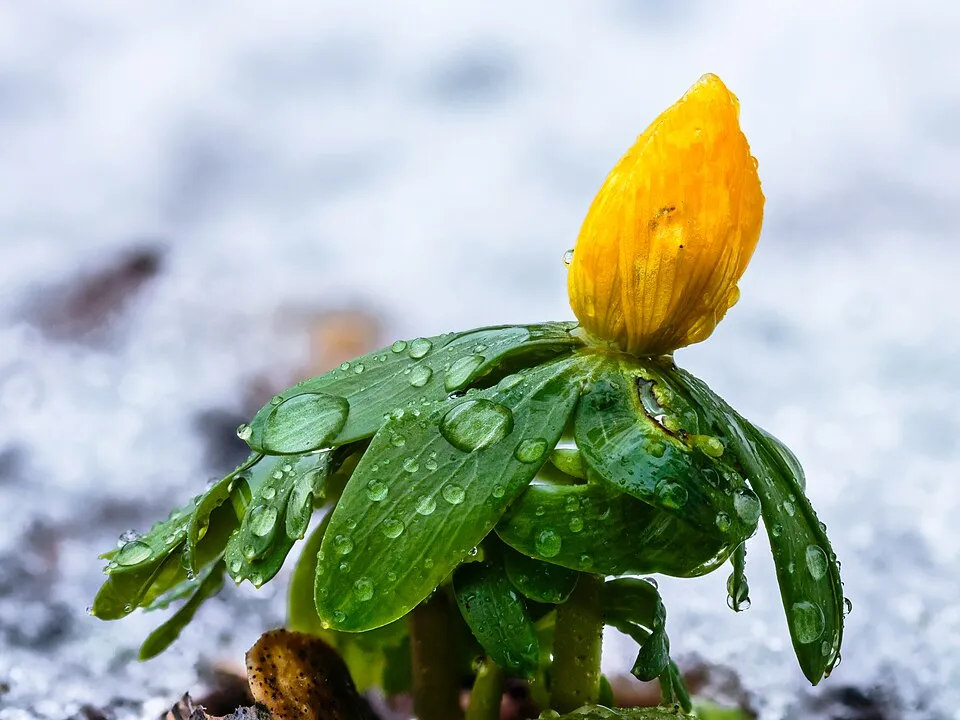
Eranthis hyemalis, commonly known as Winter Aconite, Winter Hellebore, or Winter Wolf's Bane, is a captivating tuberous perennial belonging to the Ranunculaceae, or buttercup, family. Native to woodlands and meadows across Europe and Asia Minor, specifically from southeast France to Bulgaria, this plant is celebrated for its remarkably early spring bloom, often emerging before snowdrops. It typically forms low-growing, rounded clumps, reaching heights of 3-6 inches (7.5-15 cm) and similar widths.
The plant is characterized by its solitary, bright yellow, cup-shaped flowers, which bear a striking resemblance to tiny buttercups. Each blossom is distinctively encircled by a collar of bright green leafy bracts, adding to its unique aesthetic. The flowers typically feature six petals and numerous stamens and pistils in the center.
Its dark green basal leaves, which appear after the flowers have faded, are deeply divided into several palmate or pinnate lobes. By late spring or early summer, the foliage dies back completely, and the plant enters a period of dormancy. Eranthis hyemalis thrives in humus-rich, well-drained soils and is commonly found naturalizing under deciduous trees and shrubs, as well as in rock gardens and flower beds, where its vibrant color provides a welcome sight.
Trusted Scientific References
1. Authoritative external sources for Eranthis Hyemalis
1.1 Wikipedia — Eranthis Hyemalis
1.2 Kew POWO (Plants of the World Online)
1.3 PubMed — peer-reviewed research
1.4 NCBI Taxonomy Browser
1.5 GBIF — Global Biodiversity
1.6Eranthis Hyemalis should be interpreted through verified botanical identity, practical care, and responsible safety language. This recovery note adds the missing context needed for a complete profile: match light to the plant's habit, use well-drained soil, water according to season, and avoid unsupported medicinal or edible claims. For publishing, the plant can be presented as a source-backed garden plant with clear care guidance, common problem diagnosis, and conservative safety wording.
1.1.Eranthis Hyemalis — Distinguishing Points
- ✓Common Name — Winter Aconite
- ✓Scientific Name — Eranthis hyemalis
- ✓Family — Ranunculaceae (Buttercup Family)
- ✓Native Range — Europe and Asia Minor
- ✓Bloom Time — Late winter to early spring
- ✓Flower Color — Bright yellow
- ✓Plant Height — 3-6 inches (7.5-15 cm)
- ✓Growth Habit — Tuberous perennial, forms clumps
- ✓Toxicity — Highly poisonous, especially tubers
- ✓Primary Use — Ornamental garden plant
1.2.Eranthis Hyemalis — At-a-Glance Summary
- ✓Early Spring Bloomer — One of the very first plants to flower, often pushing through snow.
- ✓Buttercup Family — A member of the Ranunculaceae family, known for its distinct flora.
- ✓Distinctive Appearance — Features bright yellow, cup-shaped flowers with a characteristic green leafy collar.
- ✓Highly Toxic — All parts, especially the tubers, are poisonous; not for internal medicinal use.
- ✓Ornamental Value — Primarily valued for naturalizing in gardens and woodlands, providing vibrant color.
- ✓Low Maintenance — Easy to grow and establish once planted in suitable conditions.
2.Eranthis Hyemalis — Scientific Identity
3.Eranthis Hyemalis — Key Data
4.Eranthis Hyemalis — Physical Description
5.Eranthis Hyemalis — Ecological Habitat
6.Eranthis Hyemalis — Folk Medicine Applications
7.Eranthis Hyemalis — Key Phytochemicals
- ✓Cardiac Glycosides — Primarily contains ranunculin, which upon enzymatic hydrolysis, readily converts to protoanemonin. Protoanemonin is a highly toxic, unstable lactone that can polymerize to anemonin upon drying. These compounds are responsible for the plant's cardiotoxic, irritant, and vesicant effects, impacting heart rhythm and causing severe gastrointestinal distress.
- ✓Flavonoids — Various flavonoid glycosides and aglycones are present in the plant, contributing to its pigmentation and possessing general antioxidant properties; however, their therapeutic relevance for human consumption is negligible given the plant's overall toxicity.
- ✓Saponins — Trace amounts of saponins may be found within Eranthis hyemalis, which can contribute to the plant's irritant properties and, in higher concentrations, potentially exhibit hemolytic activity.
- ✓Alkaloids — While not the primary toxic agents, some species within the Ranunculaceae family are known to contain isoquinoline alkaloids; specific alkaloid profiles for Eranthis hyemalis require more dedicated research.
- ✓Fatty Acids — Essential fatty acids and their derivatives are present in various plant parts, particularly within the tuberous rootstock, serving as energy reserves, though not directly related to its medicinal or toxic profile.
- ✓Volatile Compounds — Minor amounts of volatile organic compounds contribute to the plant's subtle fragrance, particularly emanating from the flowers, but these compounds hold no significant medicinal value.
- ✓Sugars and Polysaccharides — Standard plant carbohydrates, including various sugars and complex polysaccharides, are present for energy storage and structural support, especially concentrated in the tuber.
- ✓Triterpenoids — Some triterpenoid compounds may be found, often associated with protective roles in plants against pathogens or herbivores, but their specific activity in Eranthis hyemalis is not well-documented in a medicinal context.
- ✓Organic Acids — A variety of organic acids are present within the plant, contributing to its metabolic processes and overall chemical composition.
8.Eranthis Hyemalis — Pharmacological Findings
- ✓Historical Misconception — It is crucial to note that Eranthis hyemalis, despite some historical anecdotal mentions or potential misidentifications in older texts, is not recognized as a safe medicinal herb in modern herbalism or traditional systems due to its inherent toxicity.
- ✓Ornamental Value — While not directly medicinal, its remarkably early blooming provides significant psychological benefits, serving as a vibrant harbinger of spring and contributing to mental well-being through garden aesthetics.
- ✓Ecological Support — As one of the earliest bloomers, Winter Aconite offers a vital, albeit limited, nectar source for early emerging pollinators like bees, indirectly supporting local ecosystem health and biodiversity.
- ✓Potential for Botanical Research — Its unique chemical profile, though containing toxic compounds, may hold interest for pharmaceutical research into novel compounds, strictly under controlled laboratory conditions, not for direct human use.
- ✓Folkloric Significance — In some historical contexts, plants with striking characteristics like early bloomers were associated with symbolic meanings, reflecting hope, resilience, and renewal, rather than direct therapeutic application.
- ✓Caution Against Self-Medication — Any historical claims of internal use for Eranthis hyemalis are extremely dangerous and are strongly advised against due to the plant's potent cardiotoxic glycosides.
- ✓Misidentified "Digestive Aid" — The notion of Winter Aconite supporting digestive health, as mentioned in some outdated or misinformed sources, is scientifically unsubstantiated and directly contradicted by its emetic and gastrointestinal irritant properties.
- ✓Misattributed "Anti-inflammatory" — Similarly, any claims of anti-inflammatory properties for internal use lack scientific basis and are highly risky given the plant's overall toxicity profile.
- ✓Traditional External Poultices (Historical, with extreme caution) — In very rare, highly localized, and unverified historical folk practices, some toxic plants were used externally in highly diluted forms for conditions like rheumatism; however, this is exceptionally dangerous and not recommended for Eranthis hyemalis due to skin absorption risks.
- ✓Veterinary Poisoning Awareness — Understanding Winter Aconite's toxicity is crucial for preventing accidental poisoning in livestock and pets, especially in areas where it naturalizes and becomes accessible.
8.1.Eranthis Hyemalis — Health Applications
9.Eranthis Hyemalis — Cautions & Contraindications
9.1.Eranthis Hyemalis — Reported Side Effects
- ✓Gastrointestinal Distress — Ingestion of any part of Eranthis hyemalis, particularly the tubers, can lead to severe nausea, persistent vomiting, intense abdominal pain, and debilitating colic attacks.
- ✓Cardiovascular Toxicity — The potent cardiotoxic glycosides present can disrupt normal heart function, potentially causing dangerous irregular heartbeats (arrhythmias), bradycardia, and other serious cardiac complications.
- ✓Neurological Symptoms — In severe cases of poisoning, individuals may experience significant visual disturbances, delirium, confusion, and other central nervous system effects.
- ✓Oral and Mucosal Irritation — Contact with the plant material can cause immediate irritation, burning sensations, and inflammation in the mouth, throat, and entire digestive tract.
- ✓Skin Irritation — Direct dermal contact with the plant's sap can cause localized skin irritation, redness, itching, and discomfort, particularly in sensitive individuals.
- ✓Animal Poisoning Risk — Eranthis hyemalis is highly toxic to pets and livestock; ingestion can lead to severe illness or death in animals, necessitating careful placement in gardens accessible to them.
9.2.Eranthis Hyemalis — Clinical Safety Notes
- ✓Highly Toxic — Eranthis hyemalis is classified as a highly toxic plant; ingestion of any part, especially the tubers, is extremely dangerous and can be fatal.
- ✓Keep Away From Children and Pets — Ensure the plant is not accessible to small children or curious pets who might ingest plant parts, as even small amounts can cause severe poisoning.
- ✓No Internal Medicinal Use — Absolutely under no circumstances should this plant be used for internal medicinal purposes due to its potent cardiotoxic and gastrointestinal irritant compounds.
- ✓Handle With Care — When gardening or handling the plant, it is strongly advisable to wear protective gloves to prevent potential skin irritation from its sap.
- ✓Post-Ingestion Protocol — In case of suspected ingestion, seek immediate emergency medical attention or contact a poison control center without delay; do not wait for symptoms to appear.
- ✓Proper Identification — Always ensure correct plant identification; Eranthis hyemalis can be confused with other early spring flowers, though its significant toxicity makes misidentification particularly hazardous.
10.Eranthis Hyemalis — Usage Guide
- ✓Ornamental Planting — Eranthis hyemalis is primarily cultivated for its exceptional aesthetic value, making it ideal for naturalizing in woodland gardens, rock gardens, and under deciduous trees where its early yellow blooms provide vibrant, much-needed winter color.
- ✓Companion Planting — Plant Winter Aconite alongside other early spring bloomers such as snowdrops (Galanthus nivalis), crocus, or hellebores to create a layered and extended floral display that brightens the late winter landscape.
- ✓Garden Design — Utilize this plant as a ground cover in areas that receive ample winter sun but transition to partial or full shade in summer, as its foliage dies back completely, allowing other shade-loving perennials to emerge.
- ✓Habitat Enhancement — While not for human consumption, its extremely early nectar flow offers a critical food source for the season's first active pollinators, such as early emerging bees, thereby enhancing garden biodiversity.
- ✓Educational Purposes — Eranthis hyemalis can be grown in botanical gardens or educational settings to demonstrate early spring flora and to highlight the critical importance of accurate plant identification due to its inherent toxicity.
- ✓WARNING: NO INTERNAL USE — Due to the highly poisonous nature of the entire plant, particularly the tubers, Eranthis hyemalis should never be prepared or consumed for internal medicinal purposes in any form.
- ✓WARNING: EXTERNAL CONTACT — Direct skin contact with the sap, especially from damaged plant material, should be minimized as it may cause localized irritation; always wear protective gloves when handling the plant.
11.Eranthis Hyemalis — How to Grow
- ✓Site Selection — Choose a location with full sun to partial shade, ensuring the plant receives at least 5-6 hours of direct sunlight daily, which is particularly important for promoting robust early spring blooming.
- ✓Soil Preparation — Eranthis hyemalis thrives in humus-rich, well-drained soil with a preference for an alkaline pH. Amend heavy clay soils with ample organic matter to improve drainage, aeration, and fertility.
- ✓Tuber Planting — Plant dormant tubers in late summer to early fall, positioning them approximately 2-3 inches (5-7.5 cm) deep and 1-3 inches (2.5-7.5 cm) apart. Rehydrate any shriveled tubers by soaking them in moist sand or peat moss for a few days prior to planting.
- ✓Watering — Maintain consistently moist soil conditions during the plant's active growing season in late winter and early spring. While established plants show some drought tolerance, adequate moisture promotes vigorous growth and naturalization.
- ✓Temperature Tolerance — Hardy in USDA Zones 4-7, Eranthis hyemalis is resilient to cold but should be protected from extreme winter sun and temperatures below 5°F (-15°C), which can cause injury.
- ✓Propagation — This plant easily propagates by dividing established clumps after flowering while the foliage is still green, or by collecting and sowing fresh seeds directly in the fall for natural spread.
- ✓Naturalization — It is an excellent choice for naturalizing under deciduous trees and large shrubs, in rock gardens, or along borders, where it can form extensive, cheerful colonies over time.
Reviewed by the Flora Medical Global Botanical Review Panel
Multi-disciplinary editorial group · Botany · Ethnobotany · Herbal-medicine literature
Who reviewed this: This page was checked by the Flora Medical Global Botanical Review Panel — an in-house editorial group of botany graduates, ethnobotany researchers, and horticulture practitioners who collectively maintain our 7,000+ plant encyclopedia. Meet the team.
Our 4-step verification process
1. Taxonomic verification
Scientific names and synonyms cross-checked against Kew POWO, World Flora Online, and The Plant List.
2. Phytochemical & medicinal cross-reference
Active compounds, traditional uses, and reported activities are cross-referenced with PubMed, USDA Dr. Duke's database, and peer-reviewed ethnobotanical literature.
3. Conservation & distribution check
Distribution, ecology, and conservation status confirmed against GBIF occurrence records and the IUCN Red List.
4. Editorial & safety review
Every entry passes an editorial pass for clarity, originality, and safety notices (toxicity, contraindications, dosage caveats) before publication.
Last reviewed:
Important medical disclaimer: This content is for educational and research purposes only. It is not medical advice and is not a substitute for consultation with a licensed healthcare provider. Do not use any herb to self-treat a medical condition without professional guidance.
Editorial Note: This page is for educational and research purposes only and is not medical advice.
Written by: Flora Medical Global Editorial Team
Reviewed by: Flora Medical Global Botanical Review Panel
Last Updated: June 15, 2026





Eranthis Hyemalis — Comments & Community Reviews
Rate this plant