
Medical Disclaimer: This content is for educational purposes only. It is not medical advice. Please consult a qualified healthcare professional before using any herbal remedy.
Safety Overview
1.Eremurus — Introduction & Highlights
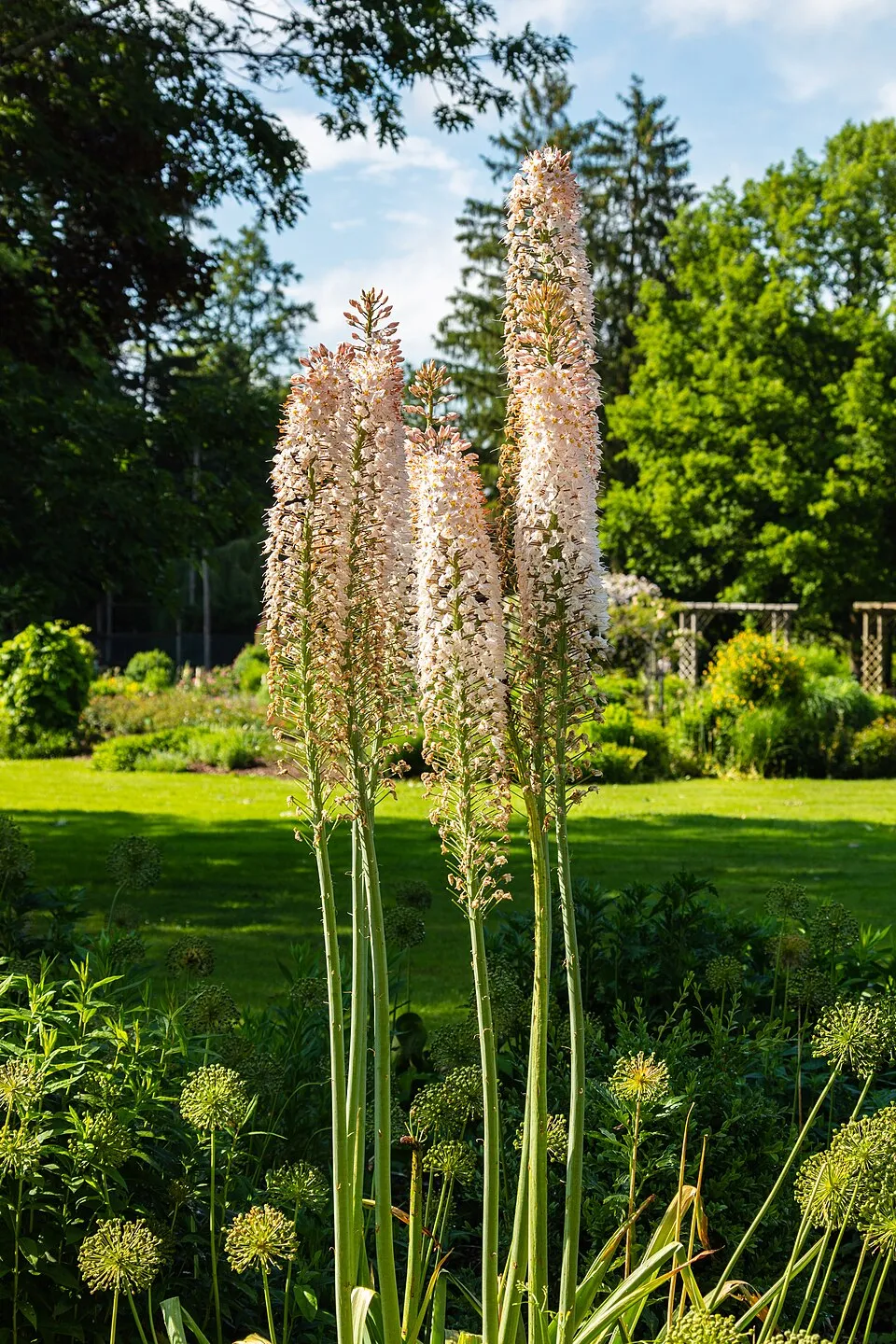
Eremurus robustus, widely recognized as the giant foxtail lily or desert candle, is a majestic perennial herbaceous plant native to the arid and semi-arid regions of Central Asia, particularly flourishing across Afghanistan, Iran, Kazakhstan, Turkmenistan, Uzbekistan, Kyrgyzstan, and Tajikistan. Belonging to the family Asphodelaceae, it is characterized by its distinctive tuberous root system, which allows it to store water and nutrients, enabling survival in challenging, dry environments.
From this robust rootstock emerges a basal rosette of long, strap-like, glaucous-green leaves that can reach up to 60 cm in length, providing a lush ground cover before the spectacular flowering display.
The defining feature of Eremurus robustus is its towering, unbranched flowering spike, which can ascend to impressive heights of 2 to 3 meters (6 to 10 feet). These sturdy scapes are adorned with dense, elongated racemes of numerous star-shaped flowers. The blossoms, typically appearing in late spring to early summer, range in color from creamy white to pale yellow, often with a hint of pink or orange, and emit a delicate fragrance that attracts a variety of pollinators, including bees and butterflies.
Each individual flower features six tepals, six stamens, and a superior ovary. The plant thrives in full sun exposure and requires well-drained, sandy or loamy soils, making it an excellent choice for xeriscaping and adding dramatic vertical interest to botanical gardens and landscapes. Its natural habitat includes rocky slopes, steppes, and semi-desert areas, reflecting its adaptability to harsh conditions.
Trusted Scientific References
1. Authoritative external sources for Eremurus robustus
1.1 Wikipedia — Eremurus robustus
1.2 Kew POWO (Plants of the World Online)
1.3 PubMed — peer-reviewed research
1.4 NCBI Taxonomy Browser
1.5 GBIF — Global Biodiversity
1.6Eremurus should be interpreted through verified botanical identity, practical care, and responsible safety language. This recovery note adds the missing context needed for a complete profile: match light to the plant's habit, use well-drained soil, water according to season, and avoid unsupported medicinal or edible claims. For publishing, the plant can be presented as a source-backed garden plant with clear care guidance, common problem diagnosis, and conservative safety wording.
1.1.Eremurus — Key Features
- ✓Architectural Garden Plant — Provides dramatic vertical interest with towering flower spikes.
- ✓Drought Tolerant — Excellent for xeriscaping and arid garden conditions once established.
- ✓Central Asian Native — Thrives in harsh, dry environments of its indigenous regions.
- ✓Striking Floral Display — Produces dense racemes of star-shaped, fragrant flowers in spring/summer.
- ✓Tuberous Root System — Enables water storage and resilience in dry climates.
- ✓Traditional Medicinal Uses — Employed for anti-inflammatory and diuretic purposes in folk medicine.
- ✓Rich Phytochemistry — Contains saponins, flavonoids, and alkaloids contributing to its bioactivity.
- ✓Low Maintenance — Relatively easy to grow in suitable conditions with minimal watering.
- ✓Pollinator Attractor — Fragrant flowers draw bees and butterflies to the garden.
1.2.Eremurus — Concise Overview
- ✓Eremurus robustus is a striking perennial known as Giant Foxtail Lily or Desert Candle, native to Central Asia.
- ✓Traditionally used in systems like Ayurveda for its potential anti-inflammatory and diuretic properties.
- ✓Rich in bioactive compounds including saponins, flavonoids, and alkaloids.
- ✓Prized horticulturally for its tall, dramatic floral spikes and drought tolerance, ideal for xeriscaping.
- ✓Requires well-drained soil and full sun; minimal water once established.
- ✓Internal use is strongly discouraged without expert medical or herbalist supervision due to limited safety data.
2.Eremurus — Systematic Position
3.Eremurus — Reference Facts
4.Eremurus — Plant Morphology
5.Eremurus — Habitat & Distribution
6.Eremurus — Cultural & Traditional Roles
7.Eremurus — Secondary Metabolites
- ✓Saponins — These triterpenoid glycosides are prominent in Eremurus robustus, known for their detergent-like properties, contributing to anti-inflammatory, immune-modulating, and expectorant actions.
- ✓Flavonoids — A diverse group of polyphenolic compounds such as quercetin and kaempferol derivatives, offering significant antioxidant, anti-inflammatory, and cardioprotective benefits.
- ✓Alkaloids — Nitrogen-containing organic compounds that can exhibit a wide range of pharmacological activities, though specific alkaloids in Eremurus robustus and their precise actions are less characterized.
- ✓Phenolic Acids — Compounds like caffeic acid and ferulic acid, known for their potent antioxidant and anti-inflammatory properties, contributing to cellular protection.
- ✓Polysaccharides — Complex carbohydrates that can possess immunomodulatory effects, supporting overall immune system health and function.
- ✓Sterols — Plant sterols, such as beta-sitosterol, are present and may contribute to anti-inflammatory and cholesterol-lowering effects.
- ✓Glycosides — Various other glycosidic compounds, beyond saponins, which can have diverse biological activities depending on their aglycone and sugar moieties.
- ✓Anthraquinones — While less studied in Eremurus robustus, some species in related families contain anthraquinones, which can have laxative or antimicrobial properties.
- ✓Minerals and Vitamins — The plant biomass naturally contains essential minerals like potassium, calcium, and magnesium, along with trace vitamins, supporting general physiological processes.
8.Eremurus — Research Insights
- ✓Anti-inflammatory Properties — Eremurus robustus has been traditionally used to alleviate inflammation, possibly due to its saponin and flavonoid content which can modulate inflammatory pathways.
- ✓Diuretic Effects — Historically, the plant has been employed to promote urine production, aiding in the removal of excess fluids and potentially supporting kidney function.
- ✓Antioxidant Activity — The presence of flavonoids and other phenolic compounds suggests Eremurus robustus may help neutralize free radicals, protecting cells from oxidative stress.
- ✓Wound Healing Support — Traditional applications sometimes included the use of plant extracts for minor cuts and abrasions, potentially due to antimicrobial and anti-inflammatory actions.
- ✓Digestive Aid — In some traditional systems, extracts were believed to assist with digestive discomfort, though specific mechanisms are not well documented.
- ✓Immunomodulatory Potential — Certain plant constituents like saponins might influence immune responses, potentially enhancing the body's natural defense mechanisms.
- ✓Analgesic Qualities — Folk medicine hints at its use for pain relief, possibly by reducing inflammation and nerve sensitivity, though this requires further scientific validation.
- ✓Skin Health — Topical applications have been suggested for various skin conditions, likely benefiting from its anti-inflammatory and antioxidant properties.
- ✓Respiratory Support — Traditional uses in some cultures included remedies for respiratory ailments, possibly acting as an expectorant or soothing agent.
8.1.Eremurus — Reported Uses
9.Eremurus — Precautions & Warnings
9.1.Eremurus — Reported Side Effects
- ✓Gastrointestinal Upset — High saponin content may cause nausea, vomiting, or diarrhea if ingested in large quantities or by sensitive individuals.
- ✓Skin Irritation — Direct contact with fresh plant sap or concentrated extracts may cause contact dermatitis or allergic reactions in some people.
- ✓Allergic Reactions — Individuals sensitive to plants in the Asphodelaceae family may experience allergic symptoms such as rash, itching, or swelling.
- ✓Kidney Overload — Due to its diuretic properties, excessive use could potentially strain the kidneys, especially in individuals with pre-existing renal conditions.
- ✓Unknown Interactions — Lack of extensive research means potential interactions with medications, supplements, or other herbs are largely unknown.
- ✓Toxicity Concerns — As with many plants containing saponins, internal use without proper preparation and dosage guidance carries a risk of toxicity.
9.2.Eremurus — Clinical Safety Notes
- ✓Expert Consultation Required — Internal use of Eremurus robustus is not recommended without the guidance of a qualified medical herbalist or healthcare professional due to limited scientific data.
- ✓Pregnancy and Lactation — Avoid use during pregnancy and breastfeeding due to insufficient safety data and potential abortifacient or adverse effects.
- ✓Children — Not recommended for use in children due to lack of safety studies.
- ✓Pre-existing Conditions — Individuals with kidney disease, heart conditions, or gastrointestinal disorders should avoid use.
- ✓Allergic Sensitivity — Perform a patch test before topical application to check for skin sensitivity or allergic reactions.
- ✓Dosage — Adhere strictly to recommended dosages by an expert; self-medication is strongly discouraged.
- ✓Drug Interactions — Potential interactions with diuretics, blood thinners, or other medications are unknown; consult a physician.
10.Eremurus — How to Use
- ✓Decoction (Root) — Dried or fresh tuberous roots can be simmered in water to create a decoction, traditionally used for internal complaints like inflammation or as a diuretic.
- ✓Poultice (Root/Leaf) — Crushed fresh roots or leaves can be applied topically as a poultice for minor skin irritations, wounds, or localized inflammation.
- ✓Infusion (Leaf) — Dried leaves can be steeped in hot water to make an herbal infusion, though less common than root preparations.
- ✓Tincture (Root) — A concentrated alcoholic extract of the root can be prepared, allowing for easier dosage and longer shelf life, used internally under expert guidance.
- ✓Topical Oil — Infused oils made from the roots or leaves could be used for massage or direct application to the skin for anti-inflammatory benefits.
- ✓Powdered Root — Dried and ground root powder can be encapsulated or mixed with liquids, though internal use should be strictly supervised by a qualified herbalist.
- ✓External Wash — Diluted decoctions can be used as a wash for skin conditions or as a compress to reduce swelling.
11.Eremurus — Propagation & Care
- ✓Soil Preference — Requires very well-drained, sandy or loamy soil; heavy clay soils must be amended to prevent root rot.
- ✓Light Requirements — Thrives in full sun (at least 6-8 hours direct sunlight daily) but can tolerate partial shade in hotter climates.
- ✓Planting Depth and Spacing — Plant tubers 15-20 cm deep, spreading their octopus-like roots horizontally, with 60-90 cm spacing between plants.
- ✓Watering Regimen — Water sparingly once established, as Eremurus robustus is drought-tolerant; avoid excessive moisture, especially during dormancy.
- ✓Propagation — Primarily propagated by division of mature tubers in late summer or early autumn, or by seed, which can take several years to flower.
- ✓Winter Protection — In colder zones (USDA 4-6), apply a thick layer of mulch (straw, leaves) over the planting site in late autumn to protect tubers from freezing.
- ✓Dormancy Care — Allow foliage to die back naturally after flowering; tubers prefer a dry dormancy period in summer.
Reviewed by the Flora Medical Global Botanical Review Panel
Multi-disciplinary editorial group · Botany · Ethnobotany · Herbal-medicine literature
Who reviewed this: This page was checked by the Flora Medical Global Botanical Review Panel — an in-house editorial group of botany graduates, ethnobotany researchers, and horticulture practitioners who collectively maintain our 7,000+ plant encyclopedia. Meet the team.
Our 4-step verification process
1. Taxonomic verification
Scientific names and synonyms cross-checked against Kew POWO, World Flora Online, and The Plant List.
2. Phytochemical & medicinal cross-reference
Active compounds, traditional uses, and reported activities are cross-referenced with PubMed, USDA Dr. Duke's database, and peer-reviewed ethnobotanical literature.
3. Conservation & distribution check
Distribution, ecology, and conservation status confirmed against GBIF occurrence records and the IUCN Red List.
4. Editorial & safety review
Every entry passes an editorial pass for clarity, originality, and safety notices (toxicity, contraindications, dosage caveats) before publication.
Last reviewed:
Important medical disclaimer: This content is for educational and research purposes only. It is not medical advice and is not a substitute for consultation with a licensed healthcare provider. Do not use any herb to self-treat a medical condition without professional guidance.
Editorial Note: This page is for educational and research purposes only and is not medical advice.
Written by: Flora Medical Global Editorial Team
Reviewed by: Flora Medical Global Botanical Review Panel
Last Updated: June 15, 2026





Eremurus — Comments & Community Reviews
Rate this plant