
Medical Disclaimer: This content is for educational purposes only. It is not medical advice. Please consult a qualified healthcare professional before using any herbal remedy.
Safety Overview
1.Erica Carnea — At a Glance
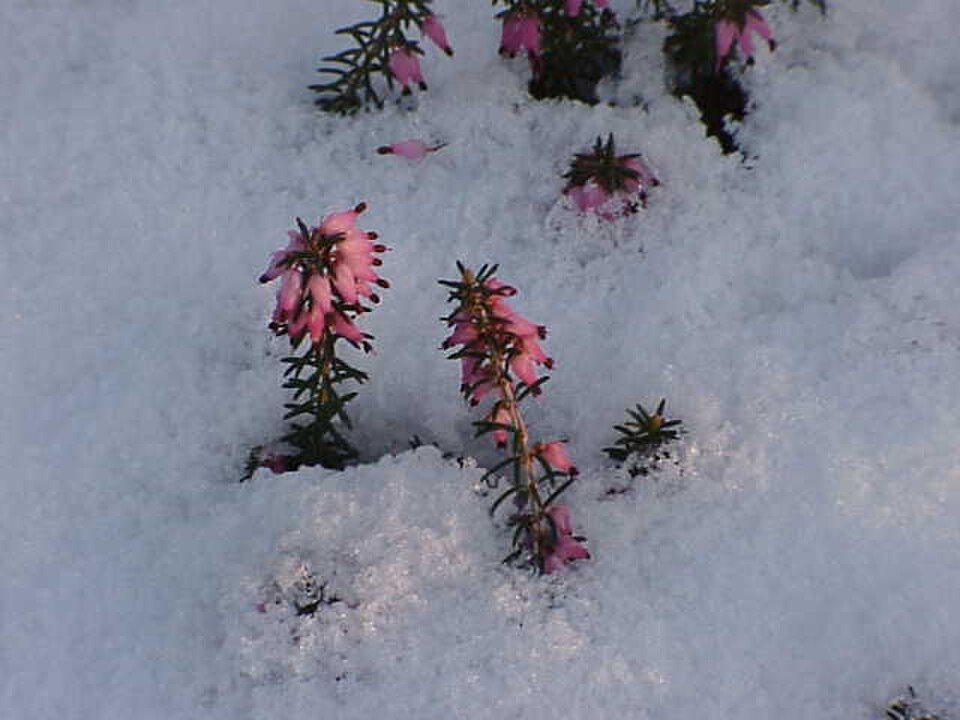
Erica carnea, commonly known as winter heath or spring heath, is an enchanting, low-growing evergreen shrub belonging to the expansive Ericaceae family, a group renowned for its heathland flora. This resilient species forms a dense, spreading mat, typically reaching a modest height of 15 to 30 cm (6 to 12 inches) and extending 30 to 60 cm (12 to 24 inches) in width. Its robust, mounding habit is supported by numerous slender, highly branched woody stems. The foliage is a distinctive feature, characterized by small, imbricate, needle-like leaves, usually arranged in whorls of four, displaying a vibrant, dark green color that persists throughout the year, providing continuous aesthetic appeal even under winter snow.
These leaves possess a tough, somewhat leathery texture, an adaptation reflecting its often harsh native environments. From late winter, typically January or February, through early spring, Erica carnea produces a profusion of small, urn-shaped to bell-shaped flowers. These delicate blooms, often hanging in racemes, exhibit a charming spectrum of colors, including soft whites, pale pinks, deeper rose, and magenta shades, depending on the cultivar. Each flower features four petals fused into a tube, surrounding prominent stamens that frequently extend beyond the corolla.
These nectar-rich blossoms serve as a vital early-season food source, attracting various pollinators, especially bees, which are crucial for local biodiversity and ecosystem health. The fruit is a small, inconspicuous capsule, containing numerous minute seeds, primarily dispersed by wind or water. Erica carnea is primarily indigenous to the mountainous regions of central and southeastern Europe, thriving in subalpine meadows, open woodlands, heathlands, and on rocky slopes, often colonizing disturbed sites where competition from larger plants is limited.
Trusted Scientific References
1. Authoritative external sources for Erica carnea
1.1 Wikipedia — Erica carnea
1.2 Kew POWO (Plants of the World Online)
1.3 PubMed — peer-reviewed research
1.4 NCBI Taxonomy Browser
1.5 GBIF — Global Biodiversity
1.1.Erica Carnea — Highlights
- ✓Early Winter to Spring Blooms — Provides vibrant color when most plants are dormant.
- ✓Evergreen Foliage — Offers year-round visual interest with needle-like, dark green leaves.
- ✓Low — Growing Groundcover — Forms a dense, spreading mat, excellent for slopes and rock gardens.
- ✓Cold Hardy — Exceptionally resilient in cold climates (USDA Zones 5-7).
- ✓Pollinator Attractor — Nectar-rich flowers are a vital early food source for bees and other pollinators.
- ✓Adaptable to Soil — Tolerates slightly alkaline soil, though prefers acidic, well-drained conditions.
- ✓Deer Resistant — Generally not favored by deer, making it suitable for areas with wildlife.
- ✓Urn — Shaped Flowers — Distinctive bell-shaped or urn-shaped flowers in various pink, white, and red hues.
- ✓Low Maintenance — Requires minimal care once established, mainly spring pruning.
- ✓European Native — Indigenous to mountainous regions of central and southeastern Europe.
1.2.Erica Carnea — In Brief
- ✓Winter Heath (Erica carnea) is a hardy evergreen shrub valued for its early winter blooms.
- ✓Traditionally used for its potential diuretic and anti-inflammatory properties.
- ✓Rich in flavonoids, phenolic acids, and tannins, contributing to its antioxidant profile.
- ✓Requires well-drained, acidic soil and full sun to partial shade for optimal growth.
- ✓Primarily used in herbal infusions, decoctions, or topical preparations.
- ✓Exercise caution during pregnancy, breastfeeding, and with pre-existing medical conditions.
2.Erica Carnea — Botanical Identity
3.Erica Carnea — Key Data
4.Erica Carnea — Physical Description
5.Erica Carnea — Origin & Spread
6.Erica Carnea — Heritage Uses
7.Erica Carnea — Chemical Profile
- ✓Flavonoids — Quercetin, myricetin, and kaempferol derivatives are present, known for their antioxidant, anti-inflammatory, and cardioprotective actions.
- ✓Phenolic Acids — Caffeic acid, chlorogenic acid, and ferulic acid contribute to the plant's antioxidant capacity and may exert anti-inflammatory effects.
- ✓Tannins — Predominantly condensed tannins, which provide astringent properties, contributing to potential antimicrobial and anti-diarrheal effects.
- ✓Triterpenoids — Ursolic acid and oleanolic acid, often found in the Ericaceae family, are recognized for their anti-inflammatory and hepatoprotective activities.
- ✓Coumarins — Simple coumarins or their glycosides might be present, potentially influencing blood flow and exhibiting mild antiseptic properties.
- ✓Glycosides — Various phenolic glycosides and flavonoid glycosides enhance the bioavailability and activity of their respective aglycones.
- ✓Volatile Compounds — Trace amounts of essential oils and other volatile organic compounds may contribute to the plant's characteristic scent and potential minor therapeutic effects.
- ✓Saponins — Steroidal or triterpenoid saponins could be present, potentially contributing to expectorant or diuretic actions.
- ✓Anthocyanins — Pigments responsible for the pink and purple hues in flowers, also powerful antioxidants.
- ✓Catechins — Similar to those found in green tea, these polyphenols offer significant antioxidant and anti-inflammatory benefits.
8.Erica Carnea — Evidence-Based Benefits
- ✓Anti-inflammatory Properties — Compounds such as flavonoids and phenolic acids found in Erica carnea may help reduce inflammation, offering relief from conditions like arthritis and muscle soreness.
- ✓Antioxidant Activity — Rich in antioxidants, winter heath helps neutralize free radicals, protecting cells from oxidative stress and supporting overall cellular health.
- ✓Diuretic Effects — Traditionally, some members of the Erica genus have been used as mild diuretics, potentially aiding in the elimination of excess fluids and supporting kidney function.
- ✓Urinary Tract Support — Its mild diuretic and antiseptic properties may contribute to maintaining a healthy urinary system and alleviating minor urinary discomfort.
- ✓Skin Soothing — Extracts of Erica carnea could possess soothing properties, making them potentially beneficial for irritated or sensitive skin conditions, often applied topically.
- ✓Circulatory Health — Certain constituents may support healthy circulation by strengthening capillary walls and reducing vascular permeability.
- ✓Detoxification Aid — By supporting kidney and urinary function, Erica carnea may assist the body’s natural detoxification processes.
- ✓Antimicrobial Potential — Preliminary research on related species suggests potential antimicrobial activity, which could help in combating certain bacterial or fungal infections.
- ✓Respiratory Comfort — Traditionally, infusions have been used to ease minor respiratory discomforts, possibly due to mild expectorant actions.
- ✓Bone and Joint Health — While not a primary use, its anti-inflammatory effects could indirectly support joint comfort and mobility.
8.1.Erica Carnea — Conditions Traditionally Used For
9.Erica Carnea — Cautions & Contraindications
9.1.Erica Carnea — Side Effects & Warnings
- ✓Allergic Reactions — Sensitive individuals may experience skin irritation or allergic contact dermatitis from topical use.
- ✓Gastrointestinal Upset — Oral consumption, especially in large quantities, may lead to mild digestive issues like nausea or stomach discomfort.
- ✓Diuretic Effect — Due to its potential diuretic action, excessive intake might lead to electrolyte imbalance, especially with prolonged use.
- ✓Drug Interactions — May potentially interact with diuretic medications, increasing their effect, or with blood thinners due to coumarin content.
- ✓Pregnancy and Breastfeeding — Lack of sufficient safety data advises against use during pregnancy and breastfeeding.
- ✓Hypotension Risk — Theoretical risk of lowering blood pressure if consumed in very high doses, particularly for individuals with pre-existing low blood pressure.
- ✓Kidney Issues — Individuals with pre-existing severe kidney conditions should consult a physician before use due to its diuretic properties.
9.2.Erica Carnea — Clinical Safety Notes
- ✓Professional Consultation — Always consult a healthcare professional before using Erica carnea for medicinal purposes, especially if pregnant, nursing, or on medication.
- ✓Patch Test — Perform a patch test on a small area of skin before extensive topical application to check for allergic reactions.
- ✓Dosage Adherence — Adhere strictly to recommended dosages; excessive intake may increase the risk of adverse effects.
- ✓Children and Infants — Not recommended for use in children or infants due to insufficient safety data.
- ✓Pre-existing Conditions — Individuals with kidney disease, heart conditions, or blood pressure issues should exercise caution and seek medical advice.
- ✓Avoid During Surgery — Discontinue use at least two weeks before scheduled surgery due to potential interactions with blood thinners.
- ✓Quality Sourcing — Ensure plant material is sourced from reputable suppliers to avoid contamination or misidentification.
10.Erica Carnea — Usage Guide
- ✓Herbal Infusion (Tea) — Dried flowers and leaves can be steeped in hot water to create a mild tea, traditionally used for urinary or respiratory support.
- ✓Decoction — For tougher plant parts, a decoction can be prepared by simmering in water, often used for more potent extraction of compounds.
- ✓Tincture — Alcohol-based extracts of Erica carnea can be made, offering a concentrated form for internal or external application.
- ✓Poultice/Compress — Crushed fresh or rehydrated dried plant material can be applied directly to the skin as a poultice for soothing minor irritations.
- ✓Bath Additive — Infusions can be added to bathwater for a relaxing and skin-soothing experience, potentially benefiting minor skin discomforts.
- ✓Topical Ointment/Cream — Extracts can be incorporated into salves or creams for targeted application on skin for anti-inflammatory benefits.
- ✓Honey Infusion — Fresh flowers can be infused into honey, creating a subtly flavored and potentially beneficial sweetener.
- ✓Floral Water (Hydrosol) — Steam distillation of the flowers can yield a gentle floral water for skin tonics or refreshing sprays.
11.Erica Carnea — Cultivation & Care
- ✓Soil Preference — Requires well-drained, acidic to neutral soil; tolerates slightly alkaline conditions but thrives in peat-rich, sandy loam.
- ✓Light Requirements — Prefers full sun to partial shade; afternoon shade is beneficial in hot climates to prevent scorching.
- ✓Watering — Needs consistent moisture, especially when young; established plants are moderately drought-tolerant but benefit from regular watering in dry spells.
- ✓Pruning — Prune immediately after flowering in spring to encourage dense growth and prevent leggy, woody stems; cut back flowering spikes by half.
- ✓Temperature and Hardiness — Extremely cold-hardy (USDA Zones 5-7), tolerating harsh winter conditions, ideal for winter interest gardens.
- ✓Drainage — Critical for plant health; avoid heavy clay soils or areas with poor drainage to prevent root rot.
- ✓Fertilization — Generally low-fertility requirements; a light application of an acid-loving plant fertilizer in spring can be beneficial.
- ✓Propagation — Easily propagated by semi-hardwood cuttings taken in summer or by layering.
Reviewed by the Flora Medical Global Botanical Review Panel
Multi-disciplinary editorial group · Botany · Ethnobotany · Herbal-medicine literature
Who reviewed this: This page was checked by the Flora Medical Global Botanical Review Panel — an in-house editorial group of botany graduates, ethnobotany researchers, and horticulture practitioners who collectively maintain our 7,000+ plant encyclopedia. Meet the team.
Our 4-step verification process
1. Taxonomic verification
Scientific names and synonyms cross-checked against Kew POWO, World Flora Online, and The Plant List.
2. Phytochemical & medicinal cross-reference
Active compounds, traditional uses, and reported activities are cross-referenced with PubMed, USDA Dr. Duke's database, and peer-reviewed ethnobotanical literature.
3. Conservation & distribution check
Distribution, ecology, and conservation status confirmed against GBIF occurrence records and the IUCN Red List.
4. Editorial & safety review
Every entry passes an editorial pass for clarity, originality, and safety notices (toxicity, contraindications, dosage caveats) before publication.
Last reviewed:
Important medical disclaimer: This content is for educational and research purposes only. It is not medical advice and is not a substitute for consultation with a licensed healthcare provider. Do not use any herb to self-treat a medical condition without professional guidance.
Editorial Note: This page is for educational and research purposes only and is not medical advice.
Written by: Flora Medical Global Editorial Team
Reviewed by: Flora Medical Global Botanical Review Panel
Last Updated: June 15, 2026





Erica Carnea — Comments & Community Reviews
Rate this plant