
Medical Disclaimer: This content is for educational purposes only. It is not medical advice. Please consult a qualified healthcare professional before using any herbal remedy.
Safety Overview
1.Eryngium Planum — Essential Profile
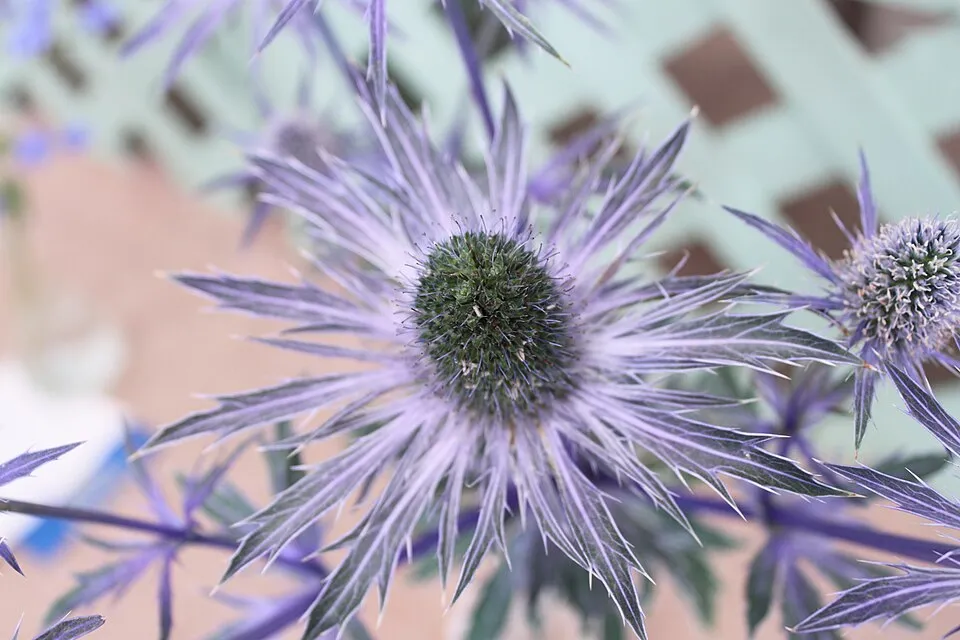
Eryngium planum, commonly known as Blue Eryngo or Flat Sea Holly, is a striking perennial herb belonging to the Apiaceae family. This captivating plant is celebrated for its unique morphology, featuring sturdy, often metallic-blue tinged stems that typically ascend to a height of 0.5 to 1 meter. The basal leaves are characteristically deeply lobed or spiny, contrasting with the more thistle-like, often entire upper leaves.
Its most distinctive feature is the inflorescence: dense, ovoid flower heads composed of numerous small, sessile, tubular flowers, encased by prominent, spiny, and intensely blue bracts. These vibrant floral structures emerge from mid-summer to early autumn, attracting a diverse array of pollinators, including bees and butterflies, thereby significantly enhancing garden biodiversity.
Native to the dry grasslands, prairies, and stony slopes of central and eastern Europe and central Asia, Eryngium planum thrives in environments that mimic its natural habitat. It prefers full sun exposure and well-drained, even poor or moderately fertile, sandy or gravelly soils, demonstrating remarkable drought tolerance once established. While it can tolerate some partial shade, optimal flowering and stem coloration are achieved in brighter conditions.
Its robust nature and aesthetic appeal have led to its widespread cultivation as an ornamental plant in temperate gardens globally, making it a popular choice for xeriscaping, rock gardens, and perennial borders. Taxonomically, its placement within the Saniculoideae subfamily highlights its unique evolutionary path within the larger Apiaceae family, distinguishing it from more common umbellifers.
Trusted Scientific References
1. Authoritative external sources for Eryngium Planum
1.1 Wikipedia — Eryngium Planum
1.2 Kew POWO (Plants of the World Online)
1.3 PubMed — peer-reviewed research
1.4 NCBI Taxonomy Browser
1.5 GBIF — Global Biodiversity
1.6Eryngium Planum should be interpreted through verified botanical identity, practical care, and responsible safety language. This recovery note adds the missing context needed for a complete profile: match light to the plant's habit, use well-drained soil, water according to season, and avoid unsupported medicinal or edible claims. For publishing, the plant can be presented as a source-backed garden plant with clear care guidance, common problem diagnosis, and conservative safety wording.
1.1.Eryngium Planum — Highlights
- ✓Botanical Name — Eryngium planum
- ✓Common Names — Blue Eryngo, Flat Sea Holly
- ✓Plant Family — Apiaceae (Carrot Family)
- ✓Distinctive Metallic Blue — Distinctive Metallic Blue Flowers and Bracts
- ✓Thistle — like Basal Foliage
- ✓Perennial Herb, Hardy — Perennial Herb, Hardy and Drought Tolerant
- ✓Attracts Pollinators such — Attracts Pollinators such as Bees and Butterflies
- ✓Traditional Medicinal Uses — Traditional Medicinal Uses for UTIs and Dysmenorrhea
- ✓Rich in Antioxidant and Anti — inflammatory Compounds
- ✓Low Maintenance Ornamental — Low Maintenance Ornamental Garden Plant
- ✓Native to Central — Native to Central and Eastern Europe/Asia
1.2.Eryngium Planum — Snapshot Summary
- ✓Eryngium planum, or Blue Eryngo, is a striking perennial herb in the Apiaceae family.
- ✓Renowned for its unique metallic-blue flower heads and thistle-like foliage.
- ✓Traditionally used for urinary tract issues, menstrual cramps, and respiratory ailments.
- ✓Rich in bioactive compounds including flavonoids, essential oils, and phenolic acids.
- ✓Thrives in full sun and well-drained, lean soils, exhibiting excellent drought tolerance.
- ✓Caution advised for pregnant/breastfeeding individuals and those with Apiaceae allergies.
2.Eryngium Planum — Botanical Identity
3.Eryngium Planum — Key Data
4.Eryngium Planum — Botanical Features
5.Eryngium Planum — Native Range & Habitat
6.Eryngium Planum — Folk Medicine Applications
7.Eryngium Planum — Chemical Profile
- ✓Flavonoids — Key compounds include quercetin, kaempferol derivatives, and rutin, contributing significantly to the plant's antioxidant and anti-inflammatory activities.
- ✓Phenolic Acids — Contains caffeic acid, chlorogenic acid, and rosmarinic acid, which are potent antioxidants and support anti-inflammatory responses.
- ✓Essential Oils — Composed of various monoterpenes and sesquiterpenes such as alpha-pinene, limonene, beta-caryophyllene, and germacrene D, responsible for its aromatic properties and exhibiting antimicrobial, anti-inflammatory, and even monoamine oxidase inhibitory activities.
- ✓Saponins — These triterpenoid glycosides contribute to the plant's diuretic and expectorant properties, aiding in fluid balance and respiratory health.
- ✓Coumarins — Furanocoumarins and simple coumarins are present, which may offer antispasmodic, anti-inflammatory, and potentially photosensitizing effects.
- ✓Polyacetylenes — Unique to the Apiaceae family, these compounds can exhibit cytotoxic and antimicrobial activities, contributing to the plant's defense mechanisms.
- ✓Triterpenoids — Beyond saponins, other triterpenoid structures are found, often contributing to anti-inflammatory and adaptogenic properties.
- ✓Vitamins — Contains trace amounts of vitamins, notably Vitamin C and Vitamin A precursors, supporting general health and immune function.
- ✓Minerals — Provides essential minerals that contribute to its overall nutritional and therapeutic profile, supporting various physiological processes.
- ✓Alkaloids — While less prominent, some species within the genus may contain trace amounts of alkaloids, which can have diverse pharmacological effects.
8.Eryngium Planum — Scientific Evidence
- ✓Menstrual Cramp Relief — Early research indicates that certain Eryngium species may help alleviate the discomfort of dysmenorrhea by reducing pain intensity, potentially comparable to conventional pain relievers.
- ✓Urinary Tract Support — Traditionally, Eryngium planum has been employed as a diuretic and antiseptic to aid in the management of urinary tract infections (UTIs) and support overall bladder health.
- ✓Respiratory Health — The herb is historically used to soothe inflammation of the main airways in the lungs, such as in cases of bronchitis, and to help ease coughs.
- ✓Kidney Stone Management — Folk medicine suggests its diuretic and antispasmodic properties may assist in the prevention and passage of kidney stones, though scientific evidence is limited.
- ✓Anti-inflammatory Action — Rich in phenolic compounds and flavonoids, Eryngium planum exhibits anti-inflammatory effects that can help mitigate systemic inflammation.
- ✓Antioxidant Properties — Its high content of antioxidants, including various phenolic acids, helps combat oxidative stress and protect cells from damage caused by free radicals.
- ✓Digestive Aid — In traditional systems, it has been used to support digestion and alleviate gastrointestinal discomfort, promoting overall digestive wellness.
- ✓Antispasmodic Effects — The plant's constituents may possess antispasmodic properties, which can help relax smooth muscles and relieve cramps, particularly in the urinary and gastrointestinal tracts.
- ✓Prostate Health — Some traditional uses point to its application in addressing inflammation of the prostate due to infection, though more robust research is needed.
- ✓Expectorant Qualities — Its traditional use in respiratory conditions also suggests expectorant properties, helping to clear mucus from the airways.
8.1.Eryngium Planum — Reported Uses
9.Eryngium Planum — Safety Considerations
9.1.Eryngium Planum — Warnings
- ✓Gastrointestinal Upset — High doses of Eryngium planum may lead to digestive issues such as nausea, vomiting, or diarrhea in sensitive individuals.
- ✓Allergic Reactions — Individuals with known allergies to plants in the Apiaceae family (e.g., celery, fennel, dill, parsley) may experience cross-reactivity, leading to skin rashes, itching, or swelling.
- ✓Photosensitivity — Although rare, some furanocoumarins present in Apiaceae plants can increase sensitivity to sunlight, potentially causing skin reactions.
- ✓Uterine Stimulation — Due to potential emmenagogue effects, large amounts may stimulate uterine contractions, posing a risk during pregnancy.
- ✓Drug Interactions — The presence of coumarins might theoretically interact with anticoagulant medications, increasing the risk of bleeding, though specific evidence for Eryngium planum is limited.
- ✓Diuretic Effects — While beneficial, excessive use could lead to electrolyte imbalances, especially in individuals on diuretic medications or with pre-existing kidney conditions.
9.2.Eryngium Planum — Safety Overview
- ✓Professional Consultation — Always consult a healthcare professional before using Eryngium planum, particularly if you have underlying health conditions or are taking medications.
- ✓Pregnancy and Breastfeeding — Not recommended for use during pregnancy or breastfeeding due to insufficient safety data and potential uterine stimulant effects.
- ✓Apiaceae Allergy — Individuals with allergies to the Apiaceae family (e.g., celery, carrot, parsley, fennel) should avoid Eryngium planum due to potential allergic reactions.
- ✓Dosage Adherence — Adhere strictly to recommended dosages; large quantities may induce adverse effects, particularly gastrointestinal disturbances.
- ✓Kidney Conditions — Use with caution in individuals with kidney disorders, as its diuretic action could potentially exacerbate certain conditions.
- ✓Discontinue Use — Discontinue use immediately if any adverse reactions or allergic symptoms occur and seek medical advice.
- ✓Children — Keep out of reach of children and do not administer to infants or young children without professional guidance.
10.Eryngium Planum — Preparations & Uses
- ✓Herbal Infusion (Tea) — Prepare by steeping dried aerial parts or root pieces in hot water for 10-15 minutes, traditionally consumed for urinary and respiratory support.
- ✓Decoction — For stronger preparations, especially from the root, simmer the plant material in water for 20-30 minutes, then strain and consume.
- ✓Tincture — A concentrated liquid extract made by macerating fresh or dried plant material in alcohol, typically taken in small, diluted doses.
- ✓Topical Poultice — Fresh, crushed leaves can be applied externally as a poultice to soothe minor skin irritations or localized inflammation.
- ✓Encapsulated Powder — Dried and powdered plant material can be encapsulated for convenient oral administration, offering a standardized dosage.
- ✓Essential Oil — The essential oil, extracted from the aerial parts, can be diffused for aromatherapy or diluted and applied topically for its antimicrobial and anti-inflammatory benefits (use with extreme caution).
- ✓Culinary Use — While less common for Eryngium planum, young leaves of some Eryngium species are used in salads or cooked, and roots can be boiled and eaten like parsnips.
- ✓Syrups and Elixirs — Traditional preparations sometimes involve creating syrups or elixirs by combining decoctions with honey or other sweeteners for respiratory ailments.
11.Eryngium Planum — Cultivation & Care
- ✓Site Selection — Choose a location with full sun exposure for optimal growth and vibrant flower color; while it tolerates partial shade, flowering may be less prolific.
- ✓Soil Requirements — Plant in well-drained soil, ideally sandy or gravelly, with low to moderate fertility. Eryngium planum thrives in poor, lean conditions and tolerates chalky soil.
- ✓Watering Regimen — Water regularly during establishment, but once mature, it is remarkably drought-tolerant, requiring minimal supplemental irrigation.
- ✓Propagation — Can be propagated from seeds (which benefit from cold stratification), root cuttings, or by division in spring or autumn.
- ✓Fertilization — Fertilizing is generally not necessary in average garden soil; excessive nutrients can lead to leggy growth and reduced flowering.
- ✓Pruning — Deadhead spent flowers to prevent excessive self-seeding and to encourage a tidier appearance, though leaving some can provide winter interest.
- ✓Pest and Disease Resistance — Eryngium planum is generally resistant to most common garden pests and diseases, making it a low-maintenance choice.
- ✓Winter Care — The plant is cold-hardy and requires no special winter protection in most temperate climates, with foliage often persisting through mild winters.
Reviewed by the Flora Medical Global Botanical Review Panel
Multi-disciplinary editorial group · Botany · Ethnobotany · Herbal-medicine literature
Who reviewed this: This page was checked by the Flora Medical Global Botanical Review Panel — an in-house editorial group of botany graduates, ethnobotany researchers, and horticulture practitioners who collectively maintain our 7,000+ plant encyclopedia. Meet the team.
Our 4-step verification process
1. Taxonomic verification
Scientific names and synonyms cross-checked against Kew POWO, World Flora Online, and The Plant List.
2. Phytochemical & medicinal cross-reference
Active compounds, traditional uses, and reported activities are cross-referenced with PubMed, USDA Dr. Duke's database, and peer-reviewed ethnobotanical literature.
3. Conservation & distribution check
Distribution, ecology, and conservation status confirmed against GBIF occurrence records and the IUCN Red List.
4. Editorial & safety review
Every entry passes an editorial pass for clarity, originality, and safety notices (toxicity, contraindications, dosage caveats) before publication.
Last reviewed:
Important medical disclaimer: This content is for educational and research purposes only. It is not medical advice and is not a substitute for consultation with a licensed healthcare provider. Do not use any herb to self-treat a medical condition without professional guidance.
Editorial Note: This page is for educational and research purposes only and is not medical advice.
Written by: Flora Medical Global Editorial Team
Reviewed by: Flora Medical Global Botanical Review Panel
Last Updated: June 15, 2026





Eryngium Planum — Comments & Community Reviews
Rate this plant