
Medical Disclaimer: This content is for educational purposes only. It is not medical advice. Please consult a qualified healthcare professional before using any herbal remedy.
Safety Overview
1.Espostoa Lanata — Plant Snapshot
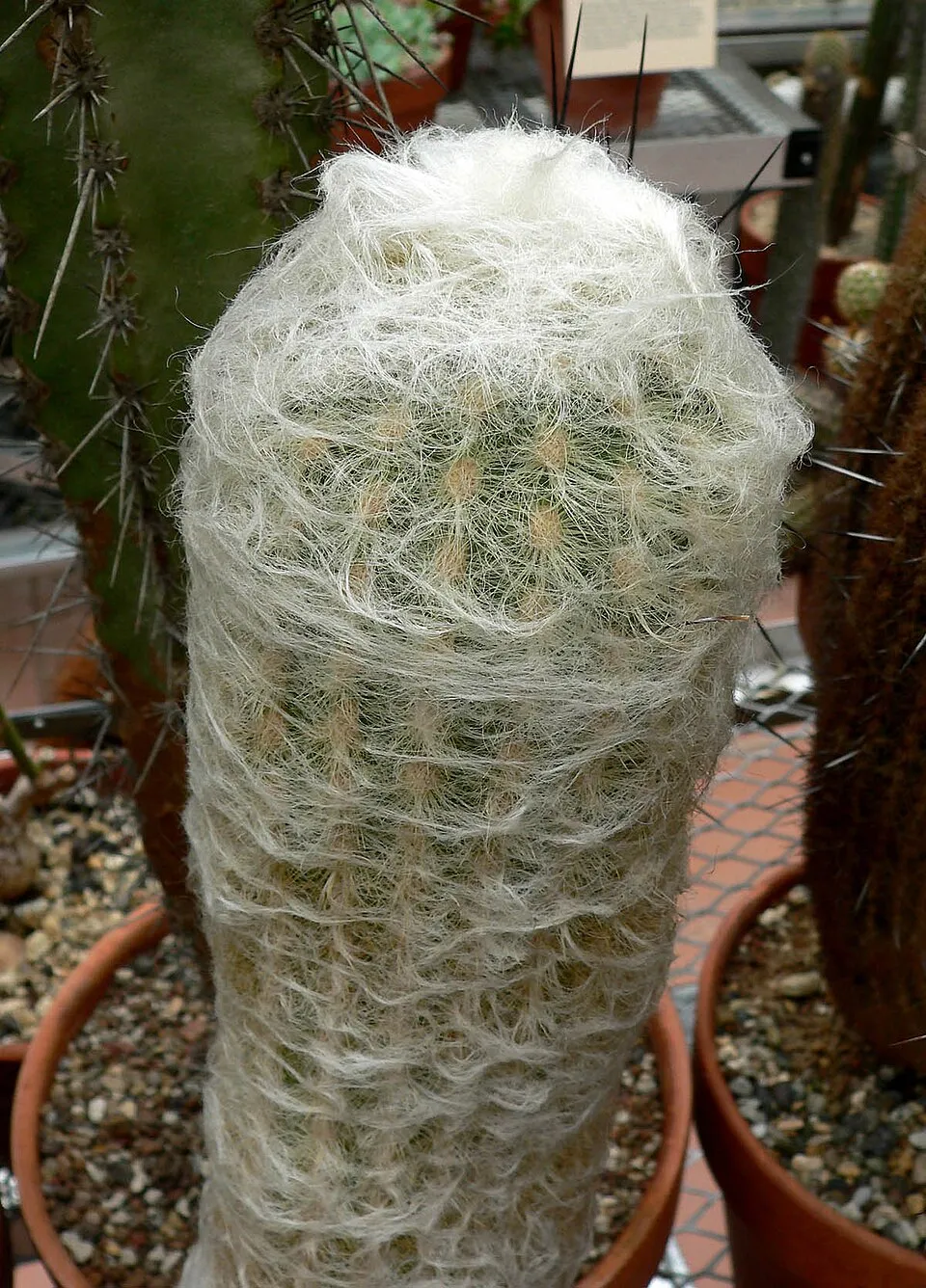
Espostoa lanata, commonly known as the Peruvian old man cactus or 'Old Man of the Andes', is a distinctive columnar cactus belonging to the Cactaceae family. Native to the high-altitude arid regions spanning southern Ecuador and Peru, this species thrives in dry hills, thorny desert matorral, and dry forests, at elevations ranging from 250 to 3,000 meters. It exhibits a majestic, often tree-like stature, capable of reaching heights of up to 4 meters (approximately 13 feet) in its natural habitat, with a trunk diameter of up to 100 cm and stems measuring 6-10 cm in diameter. Its most striking feature is the dense covering of long, soft, white, woolly hairs that envelop its cylindrical stems, providing protection against intense solar radiation and minimizing water loss, giving it an appearance reminiscent of a wise, snow-bearded elder.
Beneath this protective wool, the stem is typically green, ribbed with 18 to 25 prominent ribs that bear areoles from which the wool and sharp spines (1 to 2.5 cm long, yellow to reddish-brown) emerge. Espostoa lanata produces nocturnal, funnel-shaped flowers, typically yellow to creamy-white, measuring about 2.5 to 4 centimeters in diameter. These blooms emerge from a specialized lateral flowering structure called a cephalium, attracting nocturnal pollinators. Following successful pollination, the cactus develops small, edible, berry-like fruits, which are often purplish-red, sweet, and juicy, containing numerous tiny black seeds.
Its fibrous, shallow root system spreads wide to efficiently capture scarce surface moisture. Taxonomically, it is classified as 'Least Concern' on the IUCN Red List, indicating stable populations and no major immediate threats.
Trusted Scientific References
1. Authoritative external sources for Espostoa lanata
1.1 Wikipedia — Espostoa lanata
1.2 Kew POWO (Plants of the World Online)
1.3 PubMed — peer-reviewed research
1.4 NCBI Taxonomy Browser
1.5 GBIF — Global Biodiversity
1.6Espostoa Lanata should be interpreted through verified botanical identity, practical care, and responsible safety language. This recovery note adds the missing context needed for a complete profile: match light to the plant's habit, use well-drained soil, water according to season, and avoid unsupported medicinal or edible claims. For publishing, the plant can be presented as a source-backed indoor plant with clear care guidance, common problem diagnosis, and conservative safety wording.
1.1.Espostoa Lanata — Standout Qualities
- ✓Dense White Wool — Characteristic long, soft hairs covering the stems.
- ✓Columnar Growth Habit — Forms tall, upright, often branching structures.
- ✓Native to Andes — Indigenous to high-altitude arid regions of Peru and Ecuador.
- ✓Edible Berry — like Fruit — Produces sweet, purplish-red fruits.
- ✓Nocturnal Flowers — Yellow to creamy-white blooms emerging from a cephalium.
- ✓Spiny Areoles — Sharp spines hidden beneath the protective wool.
- ✓Drought Adaptation — Succulent stems and CAM photosynthesis for water retention.
- ✓Slow Growing — A long-lived, slow-maturing cactus species.
- ✓Ornamental Appeal — Highly valued for its unique visual texture and form.
- ✓Resilient in Harsh Climates — Thrives in intense sun and dry conditions.
1.2.Espostoa Lanata — Concise Overview
- ✓Iconic Andean Cactus — Distinguished by dense white wool and columnar growth.
- ✓Edible, Nutritious Fruit — Produces sweet, juicy purplish-red berries.
- ✓Drought-Tolerant — Highly adapted to arid, high-altitude environments.
- ✓Traditional Non-Medicinal Uses — Fruit consumed, wool used for stuffing.
- ✓Conservation Status 'Least Concern' — Stable wild populations in Peru and Ecuador.
- ✓Ornamental Value — Prized for its unique aesthetic in desert landscaping.
2.Espostoa Lanata — Systematic Position
3.Espostoa Lanata — Reference Facts
4.Espostoa Lanata — Morphological Account
5.Espostoa Lanata — Habitat & Distribution
6.Espostoa Lanata — Ethnobotanical Uses
7.Espostoa Lanata — Secondary Metabolites
- ✓The phytochemistry of Espostoa lanata, particularly its edible fruit, suggests the presence of general plant compounds common to cacti and succulent fruits, although specific medicinal constituents are not well-documented:
- ✓Polysaccharides — Primarily found as mucilage within the stems and fruit pulp, these complex carbohydrates contribute to the plant's water retention capabilities and provide dietary fiber, supporting digestive health.
- ✓Simple Sugars — The sweet taste of the fruit indicates the presence of monosaccharides and disaccharides such as glucose, fructose, and sucrose, which provide natural energy.
- ✓Anthocyanins — These water-soluble pigments are responsible for the purplish-red color of the fruit and are known for their antioxidant properties, protecting cells from oxidative damage.
- ✓Ascorbic Acid (Vitamin C) — Common in many fruits, Vitamin C acts as an antioxidant and is vital for immune function, collagen synthesis, and overall cellular health.
- ✓Carotenoids — While not explicitly identified, many cacti fruits contain carotenoids, which are precursors to Vitamin A and possess antioxidant activities, contributing to overall plant pigmentation.
- ✓Minerals — The fruit and plant tissues likely contain essential minerals such as potassium, calcium, magnesium, and phosphorus, important for various physiological functions.
- ✓Organic Acids — Various organic acids, contributing to the fruit's flavor profile, may also be present, influencing its pH and stability.
- ✓Alkaloids — While many cacti are known to contain various alkaloids, specific types and their concentrations in Espostoa lanata are not well-characterized, and no known psychoactive or medicinal alkaloids are reported for this species.
8.Espostoa Lanata — What Research Suggests
- ✓While Espostoa lanata is not traditionally documented for specific medicinal benefits, its edible fruits offer several nutritional contributions and general wellness support:
- ✓Hydration Support — The juicy fruits provide a source of water, which is particularly beneficial in the arid environments where the plant naturally grows, aiding in maintaining proper bodily hydration.
- ✓Dietary Fiber Contribution — The fruit contains dietary fiber, which is essential for healthy digestion, promoting bowel regularity and contributing to a feeling of fullness, which can support weight management.
- ✓Antioxidant Properties — The purplish-red coloration of the fruit suggests the presence of anthocyanins and other phenolic compounds, which are known antioxidants that help protect body cells from oxidative stress and free radical damage.
- ✓Vitamin and Mineral Content — Like many fruits, Espostoa lanata's berries likely contain various vitamins (such as Vitamin C) and minerals (like potassium and calcium), contributing to overall nutritional intake and supporting immune function and bone health.
- ✓Low Calorie Snack — The sweet and juicy nature of the fruit makes it a refreshing, low-calorie snack option, suitable for direct consumption and contributing to a balanced diet.
- ✓Potential for Gut Health — The combination of water and fiber in the fruit can support a healthy gut microbiome, which is increasingly recognized for its role in overall health and well-being.
- ✓General Wellness — Regular consumption of diverse fruits, including those from cacti like Espostoa lanata, contributes to a varied diet rich in micronutrients, supporting general vitality and health maintenance.
8.1.Espostoa Lanata — Conditions Traditionally Used For
9.Espostoa Lanata — Precautions & Warnings
9.1.Espostoa Lanata — Side Effects & Warnings
- ✓Spiny Handling Risk — The sharp spines beneath the woolly hairs can cause punctures or irritation if handled without proper protection, leading to minor injuries.
- ✓Allergic Reactions — While rare, individuals with sensitivities to cactus components might experience mild skin irritation upon contact with the plant's sap or hairs.
- ✓Digestive Upset from Fruit — Excessive consumption of the fruit, particularly due to its fiber content, could potentially lead to mild digestive discomfort such as bloating or loose stools in sensitive individuals.
- ✓Lack of Medicinal Research — Due to the absence of documented medicinal uses, ingesting parts of the plant other than the ripe fruit is not recommended, as potential unknown effects have not been studied.
- ✓Cross-Contamination — If harvested from the wild, there's a minor risk of contamination from environmental pollutants, though this is not specific to the plant itself.
9.2.Espostoa Lanata — Safety Overview
- ✓Edible Fruit — The purplish-red fruits are traditionally consumed raw and are considered safe for consumption by local communities.
- ✓Handling Caution — Always exercise caution when handling the plant due to its sharp spines, using thick gloves or tools to avoid injury.
- ✓No Documented Toxicity — There are no known reports of significant toxicity associated with the consumption of Espostoa lanata fruit or contact with the plant.
- ✓Conservation Status — Classified as 'Least Concern' by the IUCN, indicating stable wild populations and no immediate threats from harvesting.
- ✓Internal Use of Other Parts — Due to a lack of scientific research on the internal use of stems or other vegetative parts, such consumption is not recommended.
- ✓Pregnancy and Lactation — As with any plant product lacking extensive research, pregnant or breastfeeding individuals should consult a healthcare professional before consuming the fruit or using plant materials.
- ✓Children and Pets — Keep the plant out of reach of small children and pets to prevent accidental contact with spines.
10.Espostoa Lanata — How to Use
- ✓Fresh Fruit Consumption — The purplish-red, berry-like fruits are traditionally consumed raw, directly from the plant, offering a sweet and juicy refreshment.
- ✓Fruit Juices and Smoothies — The pulp and juice from the ripe fruits can be incorporated into beverages, providing a unique flavor and nutritional boost.
- ✓Jams and Preserves — The fruits can be cooked down with sugar to create jams, jellies, or preserves, extending their shelf life and culinary utility.
- ✓Decorative Use — The striking appearance of the Peruvian old man cactus, with its dense white wool, makes it a popular ornamental plant in xeriscapes and succulent collections.
- ✓Fiber for Stuffing — The soft, woolly hairs that cover the stems are traditionally harvested and used as a natural filling material for pillows and cushions in its native regions.
- ✓Seed Collection — The tiny black seeds from the ripe fruits can be collected for propagation, allowing for the cultivation of new plants.
- ✓Landscape Plant — Due to its drought tolerance and unique aesthetic, it is used in arid landscaping and rock gardens.
11.Espostoa Lanata — Growing Guide
- ✓Soil Requirements — Prefers well-drained, sandy or gravelly soil, ideally with a pH range of 6.0 to 7.5, mimicking its natural arid, rocky habitat.
- ✓Light Exposure — Requires full sun exposure to thrive, needing at least 6-8 hours of direct sunlight daily for optimal growth and flowering.
- ✓Watering Schedule — Water sparingly, allowing the soil to dry out completely between waterings, especially during dormant periods; overwatering is detrimental and can lead to root rot.
- ✓Temperature and Frost — Can tolerate occasional, short-lived frosts down to -3°C (27°F), but prolonged freezing temperatures should be avoided to prevent damage.
- ✓Growth Rate — Espostoa lanata is a slow-growing cactus species, requiring patience from cultivators.
- ✓Propagation — Primarily propagated by seeds, which can be sown in well-drained soil in warm conditions, or occasionally by stem cuttings allowed to callus before planting.
- ✓Fertilization — Fertilize minimally during the active growing season (spring/summer) with a low-nitrogen, high-potassium fertilizer specifically formulated for cacti and succulents.
Reviewed by the Flora Medical Global Botanical Review Panel
Multi-disciplinary editorial group · Botany · Ethnobotany · Herbal-medicine literature
Who reviewed this: This page was checked by the Flora Medical Global Botanical Review Panel — an in-house editorial group of botany graduates, ethnobotany researchers, and horticulture practitioners who collectively maintain our 7,000+ plant encyclopedia. Meet the team.
Our 4-step verification process
1. Taxonomic verification
Scientific names and synonyms cross-checked against Kew POWO, World Flora Online, and The Plant List.
2. Phytochemical & medicinal cross-reference
Active compounds, traditional uses, and reported activities are cross-referenced with PubMed, USDA Dr. Duke's database, and peer-reviewed ethnobotanical literature.
3. Conservation & distribution check
Distribution, ecology, and conservation status confirmed against GBIF occurrence records and the IUCN Red List.
4. Editorial & safety review
Every entry passes an editorial pass for clarity, originality, and safety notices (toxicity, contraindications, dosage caveats) before publication.
Last reviewed:
Important medical disclaimer: This content is for educational and research purposes only. It is not medical advice and is not a substitute for consultation with a licensed healthcare provider. Do not use any herb to self-treat a medical condition without professional guidance.
Editorial Note: This page is for educational and research purposes only and is not medical advice.
Written by: Flora Medical Global Editorial Team
Reviewed by: Flora Medical Global Botanical Review Panel
Last Updated: June 15, 2026





Espostoa Lanata — Comments & Community Reviews
Rate this plant