
Medical Disclaimer: This content is for educational purposes only. It is not medical advice. Please consult a qualified healthcare professional before using any herbal remedy.
Safety Overview
1.Etlingera — Introduction & Highlights
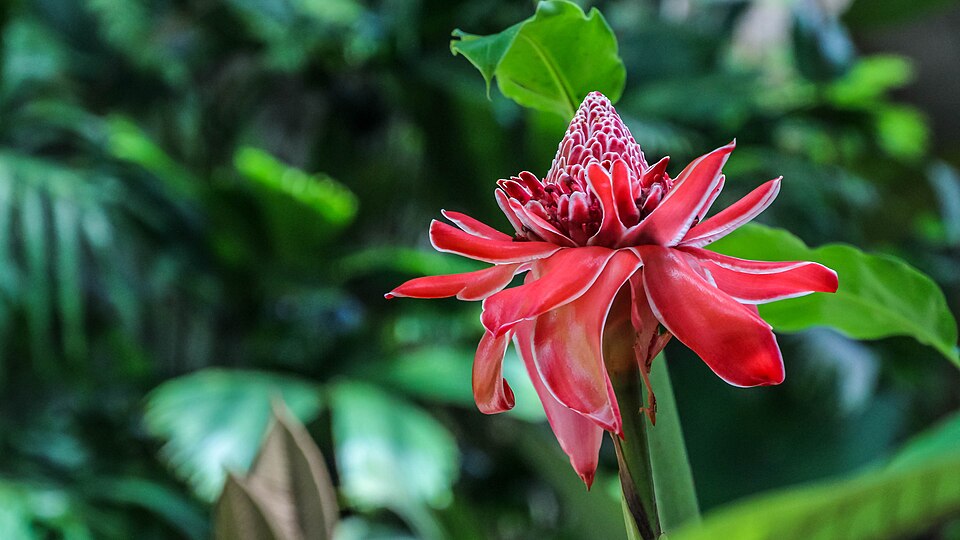
Etlingera elatior, commonly known as torch ginger, is a magnificent perennial herbaceous plant native to the humid tropical rainforests of Indonesia, thriving in lowland and mid-montane regions. This striking member of the Zingiberaceae family, closely related to other gingers, can reach impressive heights of up to 4 meters (13 feet). Its robust pseudostems are cloaked in smooth, dark green to brownish skin, anchoring large, lanceolate leaves that can extend up to 2 meters (6.5 feet) in length, creating a dramatic backdrop in its natural habitat and cultivated landscapes alike.
The plant's most iconic feature is its spectacular inflorescence, which emerges from thick, sturdy stalks. These vibrant flower heads, often bright pink or red, though sometimes white, can measure up to 30 centimeters (12 inches) in diameter. The inflorescence consists of numerous floral and involucral bracts, with the latter serving a protective role.
E. elatior exhibits a distinct reproductive cycle, beginning with peduncle elongation, followed by the establishment of the inflorescence bud, and culminating in the gradual opening of its true flowers. Its preference for rich, well-draining soils and high humidity underscores its tropical origins, making it suitable for frost-free environments where it can flourish as a prominent ornamental and culturally significant species.
Trusted Scientific References
1. Authoritative external sources for Etlingera elatior
1.1 Wikipedia — Etlingera elatior
1.2 Kew POWO (Plants of the World Online)
1.3 PubMed — peer-reviewed research
1.4 NCBI Taxonomy Browser
1.5 GBIF — Global Biodiversity
1.6Etlingera should be interpreted through verified botanical identity, practical care, and responsible safety language. This recovery note adds the missing context needed for a complete profile: match light to the plant's habit, use well-drained soil, water according to season, and avoid unsupported medicinal or edible claims. For publishing, the plant can be presented as a source-backed garden plant with clear care guidance, common problem diagnosis, and conservative safety wording.
1.1.Etlingera — Standout Qualities
- ✓Striking Inflorescence — Large, vibrant pink or red flower heads, up to 30 cm in diameter.
- ✓Tall Herbaceous Perennial — Can reach heights of up to 4 meters, creating a dramatic presence.
- ✓Lanceolate Leaves — Impressive leaf size, up to 2 meters long, providing lush tropical foliage.
- ✓Zingiberaceae Family Member — Related to ginger, sharing some phytochemical characteristics.
- ✓Native to Tropical Rainforests — Thrives in high humidity and rich, well-draining soils.
- ✓Culinary Versatility — Flower buds and young shoots are prized ingredients in Southeast Asian cuisine.
- ✓Traditional Medicinal Uses — Employed for anti-inflammatory, antipyretic, and digestive benefits.
- ✓Rich Phytochemical Profile — Contains significant levels of flavonoids, phenols, and terpenoids.
- ✓Ornamental Value — Widely cultivated globally for its dramatic aesthetic appeal in gardens.
- ✓Pseudostems — Robust, smooth stems lending to its structural integrity and tropical look.
1.2.Etlingera — At-a-Glance Summary
- ✓Etlingera elatior is a tropical perennial known for its striking inflorescence.
- ✓Traditionally used in Southeast Asian medicine for fever, skin issues, and digestion.
- ✓Rich in antioxidants, anti-inflammatory compounds, and antimicrobials.
- ✓Culinary uses are prominent, especially the flower buds in regional dishes.
- ✓Requires warm, humid conditions for cultivation, sensitive to frost.
- ✓Consult a healthcare professional before medicinal use, especially for specific conditions.
2.Etlingera — Scientific Profile
3.Etlingera — Botanical Stats
4.Etlingera — Plant Morphology
5.Etlingera — Geographic Distribution
6.Etlingera — Cultural & Traditional Roles
7.Etlingera — Active Compounds
- ✓Phenols — Abundant phenolic compounds contribute significantly to Etlingera elatior's antioxidant capacity, protecting against cellular damage.
- ✓Flavonoids — Key flavonoids include quercetin, kaempferol, apigenin, luteolin, and myricetin, known for their anti-inflammatory, antioxidant, and potential antitumor activities.
- ✓Glycosides — Various glycosidic compounds are present, which often play roles in the plant's defense mechanisms and pharmacological effects.
- ✓Saponins — These compounds contribute to the plant's foaming properties and may exhibit hypocholesterolemic and immunomodulatory effects.
- ✓Tannins — Present in significant amounts, tannins offer astringent properties and contribute to the plant's antimicrobial and antioxidant actions.
- ✓Steroids — A variety of steroidal compounds are found, which can have diverse biological activities, including anti-inflammatory potential.
- ✓Terpenoids — These volatile organic compounds provide characteristic aromas and contribute to the plant's antimicrobial and anti-inflammatory properties.
- ✓Anthocyanins — Responsible for the vibrant red and pink hues of the inflorescence, anthocyanins are potent antioxidants with potential anti-inflammatory benefits.
- ✓Flavonol Glucuronides — Specific compounds like kaempferol 3-glucuronide, quercetin 3-rhamnoside, quercetin 3-glucoside, and quercetin 3-glucuronide are identified in leaves, enhancing the plant's therapeutic profile.
8.Etlingera — Research Insights
- ✓Anti-inflammatory — Etlingera elatior contains compounds like kaempferol that help modulate inflammatory pathways, potentially reducing swelling and pain in conditions such as arthritis.
- ✓Antioxidant Activity — Rich in phenols and flavonoids, torch ginger effectively scavenges free radicals, protecting cells from oxidative stress and supporting overall cellular health.
- ✓Antimicrobial Properties — Extracts from various parts of Etlingera elatior have demonstrated efficacy against a range of bacteria and fungi, making it useful in traditional treatments for infections.
- ✓Antitumor Potential — Preliminary research indicates that certain phytoconstituents in E. elatior may inhibit the growth of cancer cells, suggesting its role in cancer prevention or adjunctive therapy.
- ✓Antipyretic Effects — Traditionally, the flower buds of torch ginger are consumed to help reduce fever, possibly by influencing thermoregulatory mechanisms.
- ✓Digestive Aid — In traditional Ayurvedic practices, consumption of E. elatior is believed to alleviate digestive issues, potentially by reducing gut inflammation and supporting healthy microbial balance.
- ✓Skin Irritation Relief — Leaves of Etlingera elatior are traditionally applied topically to soothe skin irritations and rashes, leveraging its anti-inflammatory and antiseptic qualities.
- ✓Anti-hyperglycemic — Studies suggest that torch ginger may help regulate blood sugar levels, offering a potential benefit for individuals managing hyperglycemia.
- ✓Anti-hyperuricemic — Research indicates that E. elatior could assist in lowering uric acid levels, which might be beneficial in conditions like gout.
- ✓Skin Whitening — Certain extracts, particularly from the inflorescence, are explored in cosmetic applications for their potential to inhibit melanin production, contributing to skin brightening.
- ✓Anti-aging Properties — The high antioxidant content of torch ginger helps combat skin aging by neutralizing free radicals that contribute to wrinkles and loss of elasticity.
8.1.Etlingera — Conditions Traditionally Used For
9.Etlingera — Risk Profile
9.1.Etlingera — Caution Notes
- ✓Allergic Reactions — Individuals sensitive to plants in the Zingiberaceae family may experience skin rashes, itching, or digestive upset.
- ✓Gastrointestinal Discomfort — Large quantities consumed orally might lead to mild stomach upset, nausea, or diarrhea in some individuals.
- ✓Skin Sensitivity — Topical application of fresh plant material could cause mild irritation or contact dermatitis in individuals with sensitive skin.
- ✓Drug Interactions — Due to its potential anti-inflammatory or blood-sugar-modulating effects, it might interact with medications like anticoagulants or antidiabetics.
- ✓Pregnancy and Lactation — Lack of sufficient research on safety during pregnancy and breastfeeding warrants caution and medical consultation.
- ✓Hypotension Risk — Theoretical potential for blood pressure lowering effects, especially if consumed in large amounts or with hypotensive medications.
- ✓Hypoglycemia Risk — Could potentially lower blood sugar, posing a risk for individuals on diabetes medication or with hypoglycemia.
9.2.Etlingera — Toxicity Assessment
- ✓Consult Healthcare Provider — Always seek advice from a doctor or qualified herbalist before using Etlingera elatior, especially if pregnant, nursing, or on medication.
- ✓Patch Test for Topical Use — Before widespread topical application, perform a patch test on a small skin area to check for allergic reactions.
- ✓Moderate Consumption — Adhere to traditional or recommended dosages; excessive intake may increase the risk of side effects.
- ✓Avoid During Pregnancy/Lactation — Insufficient safety data for pregnant or breastfeeding women, thus use should be avoided.
- ✓Children and Infants — Not recommended for use in children or infants without professional medical guidance.
- ✓Monitor for Interactions — Be aware of potential interactions with prescription drugs, particularly those affecting blood clotting or blood sugar.
- ✓Quality Sourcing — Ensure the plant material is sourced from reputable suppliers to avoid contamination or misidentification.
10.Etlingera — How to Use
- ✓Culinary Ingredient — Young flower buds are widely used in Southeast Asian cuisine, adding a tangy, aromatic flavor to salads, curries, and stir-fries.
- ✓Herbal Tea Infusion — Dried leaves or flower buds can be steeped in hot water to create a tea, traditionally consumed for digestive issues or as an anti-inflammatory.
- ✓Topical Poultice — Crushed leaves or rhizomes can be applied directly to the skin as a poultice for soothing irritations, rashes, or minor wounds.
- ✓Essential Oil Extraction — Essential oils from flowers and leaves are extracted for aromatherapy or as components in cosmetic formulations, valued for their scent and bioactive compounds.
- ✓Decoction — Rhizomes can be boiled in water to create a concentrated decoction, used internally for various traditional remedies or externally for bathing.
- ✓Flavoring Agent — The distinctive taste of torch ginger can be incorporated into sauces, marinades, and traditional desserts.
- ✓Bath Additive — Infusions of leaves or flowers can be added to bathwater for a refreshing and skin-soothing experience, often used in traditional postpartum care.
- ✓Fresh Consumption — Young shoots and flower petals can be eaten raw in salads, providing crisp texture and unique flavor.
11.Etlingera — Propagation & Care
- ✓Climate Preference — Thrives in warm, humid tropical climates with no frost; optimal temperature range is 20-30°C.
- ✓Light Requirements — Prefers partial shade to full sun; too much direct, intense sun can scorch leaves, while too little inhibits flowering.
- ✓Soil Conditions — Requires rich, well-draining, fertile soil with a slightly acidic to neutral pH (6.0-7.0), mimicking its rainforest habitat.
- ✓Watering — Needs consistent moisture; keep soil evenly damp but not waterlogged. High humidity is crucial for optimal growth.
- ✓Fertilization — Benefits from regular feeding with a balanced, slow-release fertilizer during the growing season (spring and summer).
- ✓Propagation — Primarily propagated by division of rhizomes or from seeds, though rhizome division is faster and more reliable.
- ✓Pest and Disease Management — Generally robust, but watch for common tropical plant pests like spider mites or mealybugs, and root rot in waterlogged conditions.
- ✓Container Growing — Can be grown in large containers in non-tropical zones, moved indoors during colder months, requiring ample space.
Reviewed by the Flora Medical Global Botanical Review Panel
Multi-disciplinary editorial group · Botany · Ethnobotany · Herbal-medicine literature
Who reviewed this: This page was checked by the Flora Medical Global Botanical Review Panel — an in-house editorial group of botany graduates, ethnobotany researchers, and horticulture practitioners who collectively maintain our 7,000+ plant encyclopedia. Meet the team.
Our 4-step verification process
1. Taxonomic verification
Scientific names and synonyms cross-checked against Kew POWO, World Flora Online, and The Plant List.
2. Phytochemical & medicinal cross-reference
Active compounds, traditional uses, and reported activities are cross-referenced with PubMed, USDA Dr. Duke's database, and peer-reviewed ethnobotanical literature.
3. Conservation & distribution check
Distribution, ecology, and conservation status confirmed against GBIF occurrence records and the IUCN Red List.
4. Editorial & safety review
Every entry passes an editorial pass for clarity, originality, and safety notices (toxicity, contraindications, dosage caveats) before publication.
Last reviewed:
Important medical disclaimer: This content is for educational and research purposes only. It is not medical advice and is not a substitute for consultation with a licensed healthcare provider. Do not use any herb to self-treat a medical condition without professional guidance.
Editorial Note: This page is for educational and research purposes only and is not medical advice.
Written by: Flora Medical Global Editorial Team
Reviewed by: Flora Medical Global Botanical Review Panel
Last Updated: June 15, 2026





Etlingera — Comments & Community Reviews
Rate this plant