

Medical Disclaimer: This content is for educational purposes only. It is not medical advice. Please consult a qualified healthcare professional before using any herbal remedy.
Safety Overview
1.Eucomis — Introduction & Highlights
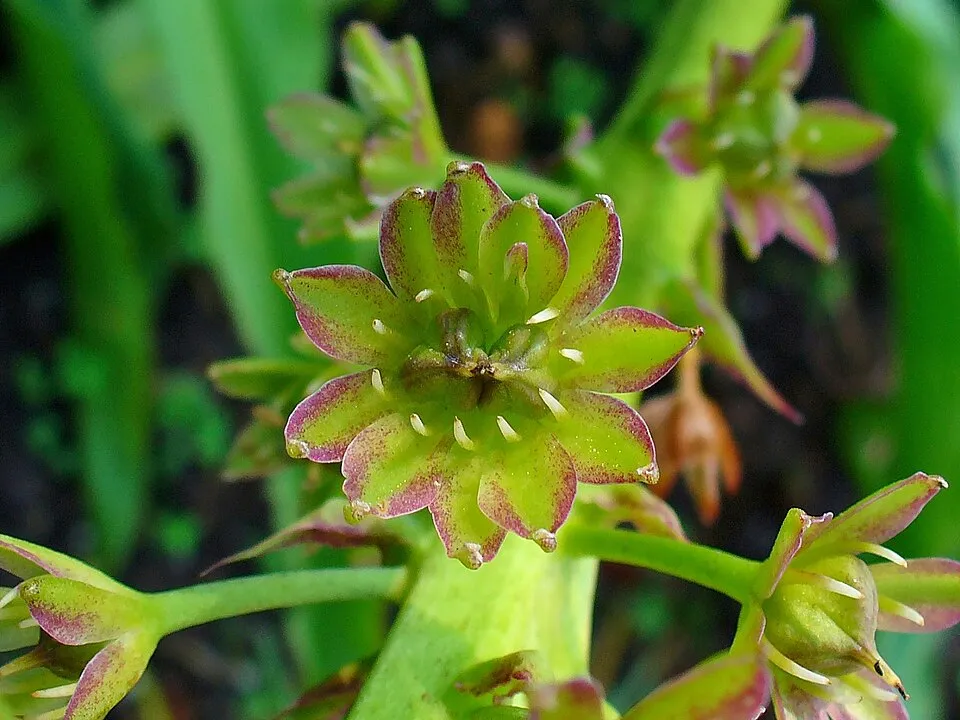
Eucomis comosa, widely recognized as the Pineapple Flower or Pineapple Lily, is a captivating perennial herbaceous plant belonging to the Asparagaceae family. Native to the sun-drenched grasslands and rocky areas of Southern Africa, particularly South Africa, Lesotho, and Eswatini, this species is celebrated for its truly unique and ornamental inflorescence. The plant typically attains a height of 30 to 60 centimeters, featuring a basal rosette of lush, lanceolate leaves that provide a verdant foundation.
Its most striking characteristic is the robust, upright flower stalk, crowned by a dense raceme of small, star-shaped flowers, topped with a tuft of leafy bracts, creating a resemblance to a miniature pineapple. These waxy bracts, along with the flowers, exhibit a spectrum of colors from subtle greens to deep purples and pristine whites, blooming profusely from mid to late summer, often over an extended period of 6-8 weeks. Following the floral display, purplish seeds develop, prolonging the plant's visual appeal into the autumn.
Eucomis comosa thrives in well-drained, organically rich loamy soils and prefers locations ranging from full sun to partial shade, making it a versatile and low-maintenance choice for diverse garden settings. Beyond its aesthetic charm, it serves as an excellent pollinator plant, attracting bees and butterflies, thereby contributing significantly to local biodiversity. Historically, this species has also been known by synonyms such as Asphodelus comosus and Eucomis punctata.
Trusted Scientific References
1. Authoritative external sources for Eucomis comosa
1.1 Wikipedia — Eucomis comosa
1.2 Kew POWO (Plants of the World Online)
1.3 PubMed — peer-reviewed research
1.4 NCBI Taxonomy Browser
1.5 GBIF — Global Biodiversity
1.6Eucomis should be interpreted through verified botanical identity, practical care, and responsible safety language. This recovery note adds the missing context needed for a complete profile: match light to the plant's habit, use well-drained soil, water according to season, and avoid unsupported medicinal or edible claims. For publishing, the plant can be presented as a source-backed garden plant with clear care guidance, common problem diagnosis, and conservative safety wording.
1.1.Eucomis — Standout Qualities
- ✓Unique Ornamental Value — Features a striking inflorescence resembling a miniature pineapple, making it a garden focal point.
- ✓Southern African Native — Endemic to the grasslands and rocky terrains of South Africa, Lesotho, and Eswatini.
- ✓Pollinator Magnet — Its nectar-rich flowers attract bees and butterflies, supporting garden biodiversity.
- ✓Traditional Medicinal Plant — Historically utilized in Southern African folk medicine for various ailments, including fevers and inflammation.
- ✓Resilient Summer Bulb — A long-lived perennial that is relatively low maintenance once established.
- ✓Versatile in Landscaping — Suitable for garden beds, borders, rock gardens, and container cultivation.
- ✓Rich Phytochemical Profile — Contains a diverse array of active compounds, including saponins, flavonoids, and alkaloids.
- ✓Extended Bloom Period — Provides a captivating floral display for 6-8 weeks from mid to late summer.
- ✓Adaptable to Soil Types — Thrives in well-drained, organically rich soils, tolerating a range of conditions.
- ✓Drought Tolerant — Once mature and established, it exhibits good tolerance to periods of dryness.
1.2.Eucomis — Snapshot Summary
- ✓Distinctive pineapple-like inflorescence, native to Southern Africa.
- ✓Traditionally used for anti-inflammatory, diuretic, and antipyretic effects.
- ✓Rich in saponins, flavonoids, and various alkaloids.
- ✓Requires well-drained soil, moderate watering, and full sun to partial shade.
- ✓Ornamental plant, also valued for attracting pollinators.
- ✓Further scientific validation is needed to substantiate its full medicinal potential.
2.Eucomis — Taxonomic Classification
3.Eucomis — Botanical Stats
4.Eucomis — Plant Morphology
5.Eucomis — Habitat & Distribution
6.Eucomis — Ethnobotanical Uses
7.Eucomis — Bioactive Constituents
- ✓Saponins — Eucomis comosa is notably rich in steroidal saponins, such as eucomosaponins, which are believed to be responsible for its traditional anti-inflammatory and diuretic properties.
- ✓Flavonoids — Compounds like quercetin and kaempferol derivatives are present, acting as potent antioxidants and contributing to the plant's anti-inflammatory and cellular protective effects.
- ✓Alkaloids — Various nitrogen-containing compounds are found, which can possess diverse pharmacological activities, though specific alkaloid profiles and their precise roles require further investigation.
- ✓Phenolic Acids — Including caffeic acid and chlorogenic acid, these compounds contribute significantly to the plant's overall antioxidant capacity and protective effects against oxidative stress.
- ✓Glycosides — A broad category of compounds where a sugar molecule is attached to a non-sugar component; these can influence various biological activities depending on the specific aglycone.
- ✓Polysaccharides — Complex carbohydrates found in the tubers and other parts, potentially contributing to immune modulation and general cellular health.
- ✓Triterpenes — These compounds are structurally related to saponins and often exhibit anti-inflammatory, hepatoprotective, and adaptogenic properties.
- ✓Anthocyanins — Pigments responsible for the purple coloration in certain cultivars and flower parts, also known for their strong antioxidant and anti-inflammatory attributes.
- ✓Phytosterols — Plant sterols such as beta-sitosterol are present, which are known for their potential to support cardiovascular health and modulate immune responses.
- ✓Volatile Compounds — While not as prominent as in aromatic herbs, some volatile organic compounds may be present in trace amounts, contributing to the plant's overall biochemical complexity.
8.Eucomis — Modern Studies
- ✓Anti-inflammatory Properties — Traditional uses suggest Eucomis comosa may help reduce inflammation, likely due to the presence of saponins and flavonoids that can modulate inflammatory pathways.
- ✓Diuretic Effects — Historically, the plant has been employed to promote increased urine output, aiding in fluid balance and potentially assisting in the removal of metabolic waste.
- ✓Antipyretic Action — In Southern African folk medicine, preparations from the tubers were traditionally administered to alleviate fevers.
- ✓Antioxidant Activity — The rich content of flavonoids and phenolic acids contributes to scavenging free radicals, thereby protecting cells from oxidative damage.
- ✓Antimicrobial Potential — Certain saponins and alkaloids found in Eucomis comosa may exhibit inhibitory effects against various microorganisms, contributing to its traditional use in minor infections.
- ✓Immune System Support — General plant compounds like polysaccharides and some phytochemicals can offer modulatory effects on the immune system, enhancing overall resilience.
- ✓Pain Relief (Analgesic) — Linked to its anti-inflammatory capabilities, the plant may offer mild pain-relieving effects, particularly in conditions associated with inflammation.
- ✓Digestive Aid — While not a primary use, some traditional applications of plants with similar chemical profiles suggest a supportive role in digestive comfort, though specific evidence for Eucomis comosa is limited.
- ✓Cardiovascular Health Support — Flavonoids are known to support vascular integrity and overall cardiovascular well-being, potentially offering indirect benefits.
- ✓Wound Healing — Topical applications in traditional practices, possibly due to antiseptic and anti-inflammatory compounds, may aid in the healing of minor skin abrasions.
- ✓Detoxification Support — The diuretic action can indirectly support the body's natural detoxification processes by enhancing renal elimination.
- ✓Metabolic Regulation — As with many plants rich in diverse phytochemicals, Eucomis comosa may contribute to general metabolic balance, though specific mechanisms require further study.
8.1.Eucomis — Indications & Uses
9.Eucomis — Risk Profile
9.1.Eucomis — Reported Side Effects
- ✓Gastrointestinal Upset — High doses, particularly of raw Eucomis comosa tubers, may induce nausea, vomiting, abdominal cramps, or diarrhea due to the concentration of saponins.
- ✓Skin Irritation — Direct contact with the sap or fresh plant material, especially for sensitive individuals, can lead to contact dermatitis, characterized by redness and itching.
- ✓Allergic Reactions — Although rare, individuals may experience allergic responses such as skin rashes, hives, or respiratory distress upon exposure or ingestion.
- ✓Electrolyte Imbalance — Excessive consumption of preparations with diuretic properties may disrupt the body's electrolyte balance, particularly potassium levels.
- ✓Interaction with Medications — Eucomis comosa may potentially interact with diuretic medications, blood thinners, or other drugs due to its active phytochemicals, altering their efficacy or increasing side effects.
- ✓Organ Toxicity — Long-term or high-dose internal use of Eucomis comosa, especially unpurified extracts, warrants further research into potential hepatotoxicity or nephrotoxicity.
9.2.Eucomis — Risk Assessment
- ✓Pregnancy and Lactation — The use of Eucomis comosa is strongly discouraged during pregnancy and breastfeeding due to insufficient safety data and potential abortifacient or adverse effects on infants.
- ✓Children — Not recommended for use in infants or young children without explicit guidance and supervision from a qualified medical professional.
- ✓Pre-existing Conditions — Individuals with kidney disease, liver impairment, heart conditions, or other chronic illnesses should exercise extreme caution and seek medical advice before use.
- ✓Dosage Adherence — Strict adherence to recommended dosages is critical; self-medication with unquantified preparations of Eucomis comosa is highly inadvisable.
- ✓Raw Consumption Warning — The plant, particularly its tubers, should never be consumed raw due to the presence of potentially toxic saponins that can cause severe gastrointestinal distress.
- ✓Professional Consultation — Always consult a qualified medical herbalist, ethnobotanist, or healthcare provider before incorporating Eucomis comosa into any medicinal regimen.
- ✓Allergic Sensitivity — Individuals with known allergies to plants in the Asparagaceae family or other bulbous plants should approach with caution.
10.Eucomis — How to Use
- ✓Decoction (for internal use) — Prepare a decoction from dried slices of Eucomis comosa tubers by simmering them in water for 15-20 minutes, traditionally used for fevers and inflammatory conditions.
- ✓Tincture (concentrated extract) — Macerate fresh or dried plant material, particularly the tubers, in a solvent like 40-60% ethanol for several weeks, then strain to obtain a potent medicinal tincture.
- ✓Poultice (topical application) — Crush fresh Eucomis comosa tubers or leaves into a paste and apply directly to inflamed areas or minor skin irritations for traditional anti-inflammatory relief.
- ✓Infusion (leaf/flower) — While tubers are the primary medicinal part, a milder infusion can be made by steeping dried leaves or flowers in hot water, typically used for general well-being rather than specific ailments.
- ✓Powdered Tuber — Dried tubers can be finely ground into a powder, which can then be encapsulated or mixed with a liquid, used with extreme caution and precise dosing for internal applications.
- ✓Topical Oil Infusion — Infuse dried Eucomis comosa plant material in a carrier oil (such as olive or almond oil) using gentle heat or solar infusion for several weeks, creating an oil for external massage on sore muscles or inflamed joints.
- ✓Medicinal Syrups — Combine a concentrated decoction of the tubers with honey or a natural sweetener to create a palatable syrup, often used to administer remedies for fever or general discomfort.
- ✓External Wash — A diluted decoction can be used as an external wash for minor skin irritations, leveraging its potential antiseptic and anti-inflammatory properties.
11.Eucomis — Propagation & Care
- ✓Soil Requirements — Plant in well-drained, organically rich loamy soil. Avoid heavy clay or overly sandy conditions to prevent tuber rot.
- ✓Planting Depth and Spacing — Bury Eucomis comosa bulbs approximately 15-20 cm (6-8 inches) deep, spacing them 15-30 cm (6-12 inches) apart to allow for mature growth.
- ✓Watering Regimen — Provide consistent moisture during the active growing and flowering season, ensuring the soil remains moist but never waterlogged.
- ✓Light Exposure — Thrives best in full sun to partial shade, with more direct sunlight promoting a greater abundance of blooms.
- ✓Fertilization — Apply a balanced, slow-release granular fertilizer in early spring as new growth emerges to support vigorous development and flowering.
- ✓Winter Care (Cooler Climates) — In USDA Zones 6 and below, lift bulbs in the fall before the first hard frost and store them in a cool, dry, dark place for overwintering, or apply a thick layer of protective mulch if left in the ground.
- ✓Container Growing — Excellent for pots; ensure containers have adequate drainage, and plant bulbs with their tips at or just below the soil surface.
- ✓Pest and Disease Management — Generally low maintenance and resistant to most pests; ensure good air circulation to prevent fungal issues in humid conditions.
Reviewed by the Flora Medical Global Botanical Review Panel
Multi-disciplinary editorial group · Botany · Ethnobotany · Herbal-medicine literature
Who reviewed this: This page was checked by the Flora Medical Global Botanical Review Panel — an in-house editorial group of botany graduates, ethnobotany researchers, and horticulture practitioners who collectively maintain our 7,000+ plant encyclopedia. Meet the team.
Our 4-step verification process
1. Taxonomic verification
Scientific names and synonyms cross-checked against Kew POWO, World Flora Online, and The Plant List.
2. Phytochemical & medicinal cross-reference
Active compounds, traditional uses, and reported activities are cross-referenced with PubMed, USDA Dr. Duke's database, and peer-reviewed ethnobotanical literature.
3. Conservation & distribution check
Distribution, ecology, and conservation status confirmed against GBIF occurrence records and the IUCN Red List.
4. Editorial & safety review
Every entry passes an editorial pass for clarity, originality, and safety notices (toxicity, contraindications, dosage caveats) before publication.
Last reviewed:
Important medical disclaimer: This content is for educational and research purposes only. It is not medical advice and is not a substitute for consultation with a licensed healthcare provider. Do not use any herb to self-treat a medical condition without professional guidance.
Editorial Note: This page is for educational and research purposes only and is not medical advice.
Written by: Flora Medical Global Editorial Team
Reviewed by: Flora Medical Global Botanical Review Panel
Last Updated: June 15, 2026





Eucomis — Comments & Community Reviews
Rate this plant