

Medical Disclaimer: This content is for educational purposes only. It is not medical advice. Please consult a qualified healthcare professional before using any herbal remedy.
Safety Overview
1.Eucomis Comosa — Essential Profile
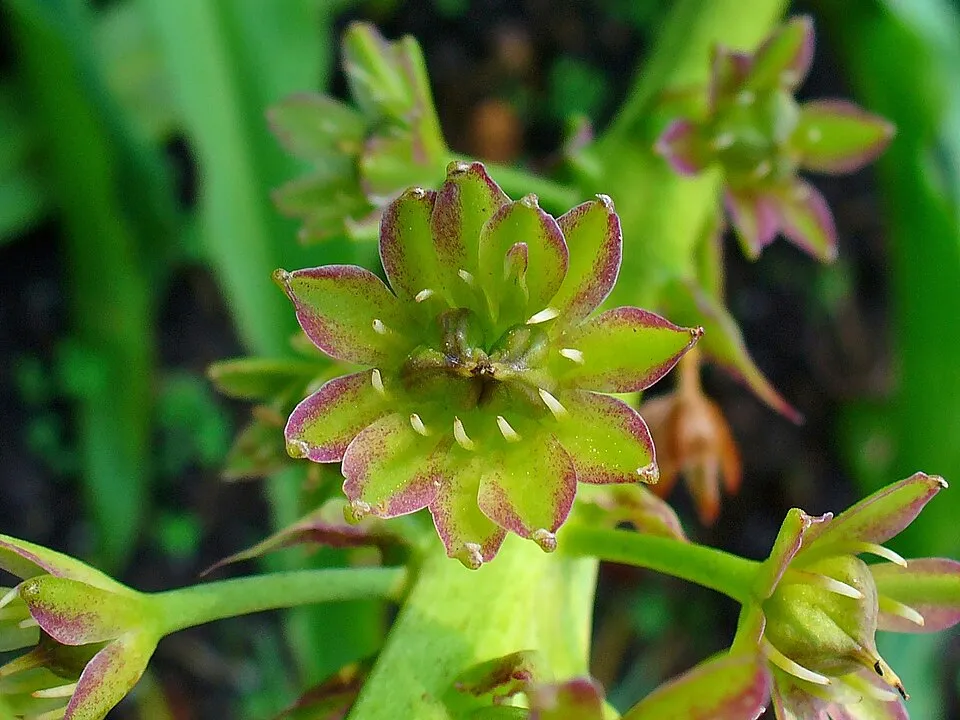
Eucomis comosa, commonly known as Pineapple Lily or King's Flower, is a distinctive perennial herbaceous bulb native to the grasslands and open woodlands of South Africa. This captivating plant belongs to the Asparagaceae family, specifically within the subfamily Scilloideae. It emerges from a subterranean bulb, developing a rosette of broad, strap-like basal leaves that can reach up to 60 cm in length, often with a subtle undulation or spotting depending on the cultivar. From the center of this rosette, a sturdy, upright flower stalk ascends, typically reaching heights of 0.6 to 1 meter.
The most striking feature is its dense, cylindrical inflorescence, crowned by a tuft of green bracts that strikingly resemble the top of a pineapple fruit, hence its popular common name. Small, star-shaped flowers, varying in color from creamy white to pink, purple, or greenish, bloom sequentially from the bottom upwards over a period of 6-8 weeks during late summer, usually starting in July. These nectar-rich blossoms are a magnet for pollinators, including bees and butterflies, playing a vital role in local ecosystems. Following successful pollination, the flowers give way to purplish seed pods, extending the plant's ornamental appeal into the autumn.
Eucomis comosa thrives in well-drained, organically rich soils and prefers full sun to partial shade, demonstrating notable resilience to various environmental conditions, making it a versatile and cherished ornamental in temperate gardens worldwide. Historically, it has also been known by synonyms such as Asphodelus comosus and Eucomis punctata.
Trusted Scientific References
1. Authoritative external sources for Eucomis Comosa
1.1 Wikipedia — Eucomis Comosa
1.2 Kew POWO (Plants of the World Online)
1.3 PubMed — peer-reviewed research
1.4 NCBI Taxonomy Browser
1.5 GBIF — Global Biodiversity
1.6Eucomis Comosa should be interpreted through verified botanical identity, practical care, and responsible safety language. This recovery note adds the missing context needed for a complete profile: match light to the plant's habit, use well-drained soil, water according to season, and avoid unsupported medicinal or edible claims. For publishing, the plant can be presented as a source-backed garden plant with clear care guidance, common problem diagnosis, and conservative safety wording.
1.1.Eucomis Comosa — Distinguishing Points
- ✓Distinctive Pineapple — like Inflorescence — Crowned with a tuft of green bracts.
- ✓Vibrant Summer Blooms — Flowers emerge sequentially from bottom to top.
- ✓Pollinator Magnet — Attracts bees and butterflies, supporting biodiversity.
- ✓Perennial Bulb — Returns year after year with proper care and overwintering.
- ✓Adaptable Ornamental — Thrives in garden beds, borders, and containers.
- ✓Low Maintenance — Relatively easy to grow once established in suitable conditions.
- ✓Extended Ornamental Value — Purplish seed pods prolong visual interest post-flowering.
- ✓Resilient Growth — Tolerates various environmental stresses with good drainage.
- ✓South African Native — Originates from the diverse flora of Southern Africa.
- ✓Traditional Medicinal Potential — Historically noted for various health-supporting properties.
1.2.Eucomis Comosa — At-a-Glance Summary
- ✓Eucomis comosa, or Pineapple Lily, is a unique South African ornamental bulb.
- ✓Renowned for its distinctive pineapple-like flower spike and vibrant blooms.
- ✓Traditionally used for anti-inflammatory, digestive, and wound-healing benefits.
- ✓Contains beneficial compounds like flavonoids, saponins, and alkaloids.
- ✓Requires well-drained soil and moist conditions during summer growth.
- ✓Exercise caution with internal use due to potential toxicity; consult experts.
2.Eucomis Comosa — Nomenclature & Classification
3.Eucomis Comosa — Vital Statistics
4.Eucomis Comosa — Botanical Description
5.Eucomis Comosa — Ecological Habitat
6.Eucomis Comosa — Traditional Uses
7.Eucomis Comosa — Chemical Profile
- ✓Flavonoids — Key compounds like quercetin, kaempferol, and their glycosides are present, known for their potent antioxidant, anti-inflammatory, and cardioprotective activities.
- ✓Saponins — Steroidal saponins, including eucomosides, are characteristic, contributing to potential adaptogenic, expectorant, and cholesterol-modulating effects.
- ✓Alkaloids — Various alkaloid types, though specific to Eucomis comosa may vary, are often associated with analgesic, antispasmodic, and certain central nervous system modulating properties.
- ✓Phenolic Acids — Compounds such as chlorogenic acid and gallic acid contribute significantly to the plant's antioxidant capacity and may also exhibit antimicrobial actions.
- ✓Glycosides — Beyond saponin glycosides, other therapeutic glycosides might be present, potentially influencing cardiac function or providing anti-inflammatory benefits.
- ✓Polysaccharides — Complex carbohydrates that can possess immunomodulatory effects, supporting the body's natural defense system.
- ✓Phytosterols — Including beta-sitosterol, which are known for their anti-inflammatory and cholesterol-lowering properties.
- ✓Terpenoids — A diverse group of compounds, some of which may contribute to the plant's aromatic profile and possess anti-inflammatory or antimicrobial activities.
- ✓Anthocyanins — If present in the flowers or leaves (especially in 'Sparkling Burgundy' cultivars), these pigments offer strong antioxidant benefits and contribute to color.
- ✓Volatile Oils — Trace amounts of essential oils may contribute to the plant's subtle fragrance and possess mild antimicrobial or insect-repellent qualities.
8.Eucomis Comosa — Pharmacological Findings
- ✓Anti-inflammatory Support — Traditionally, Eucomis comosa has been employed to help reduce inflammation throughout the body, potentially due to the presence of flavonoids and saponins which may modulate inflammatory pathways.
- ✓Digestive Aid — The plant is historically recognized for its ability to alleviate common digestive discomforts, such as indigestion and bloating, by potentially soothing the gastrointestinal tract and promoting healthy digestive function.
- ✓Respiratory Health — In some traditional practices, preparations from Pineapple Lily were used to support respiratory health, possibly acting as an expectorant to help clear congestion and ease breathing.
- ✓Wound Healing Acceleration — Topical applications have been traditionally used to promote the healing of minor cuts and abrasions, suggesting potential antiseptic and regenerative properties that aid tissue repair.
- ✓Antimicrobial Properties — Extracts from Eucomis comosa are believed to possess antimicrobial qualities, traditionally used to combat various microbial infections and prevent their spread on the skin or internally.
- ✓Antioxidant Defense — Rich in phenolic compounds and flavonoids, the plant may offer antioxidant benefits, helping to neutralize free radicals and protect cells from oxidative stress and damage.
- ✓Dermatological Applications — Beyond wound healing, it has been traditionally applied for general skin health, aiming to soothe irritations, reduce redness, and maintain skin vitality.
- ✓Pain Management — Anecdotal evidence suggests its use as a mild analgesic, potentially helping to alleviate discomfort associated with inflammation or minor injuries.
- ✓Immune System Modulation — Certain constituents like polysaccharides and saponins found in the plant might contribute to modulating immune responses, enhancing the body's natural defense mechanisms.
- ✓Cardiovascular Support — Some traditional systems suggest potential benefits for cardiovascular health, possibly through the actions of specific glycosides or saponins on heart function or lipid metabolism, though more research is needed.
8.1.Eucomis Comosa — Conditions Traditionally Used For
9.Eucomis Comosa — Safety & Side Effects
9.1.Eucomis Comosa — Possible Adverse Reactions
- ✓Gastrointestinal Upset — Ingestion, especially of raw or large quantities of the bulb, may lead to nausea, vomiting, abdominal pain, or diarrhea.
- ✓Skin Irritation — Direct contact with sap or unprepared plant material can cause contact dermatitis or skin irritation in sensitive individuals.
- ✓Allergic Reactions — Individuals with plant allergies may experience allergic responses, including rashes, itching, or respiratory symptoms.
- ✓Potential Cardiotoxicity — As with many plants in the Asparagaceae family containing cardiac glycosides or similar compounds, excessive internal consumption could potentially affect heart rhythm or function.
- ✓Drug Interactions — May interact with certain medications, particularly cardiac drugs, diuretics, or blood thinners, due to its potential active constituents.
- ✓Hepatic/Renal Strain — Prolonged or high-dose internal use may place undue strain on liver and kidney function.
- ✓Oral Irritation — Chewing or ingesting raw plant parts can cause irritation or burning sensation in the mouth and throat.
9.2.Eucomis Comosa — Toxicity Assessment
- ✓Pregnancy and Lactation — Not recommended for use during pregnancy or breastfeeding due due to insufficient safety data and potential cardiotoxic compounds.
- ✓Children — Avoid internal use in children; external use should be done with caution and under professional guidance.
- ✓Pre-existing Conditions — Individuals with cardiac conditions, kidney disease, liver disorders, or gastrointestinal sensitivities should avoid use.
- ✓Drug Interactions — Consult a healthcare professional before use if taking any medications, especially anticoagulants, cardiac glycosides, or diuretics.
- ✓Proper Identification — Ensure accurate identification of Eucomis comosa; misidentification with other toxic bulbs can lead to severe adverse effects.
- ✓Professional Guidance — Always consult a qualified medical herbalist or healthcare provider before using Eucomis comosa for medicinal purposes.
- ✓Topical Use Caution — Perform a patch test before extensive topical application to check for skin sensitivity or allergic reactions.
- ✓Avoid Raw Ingestion — The raw bulb should not be ingested due to potential toxicity and gastrointestinal distress.
10.Eucomis Comosa — Preparations & Uses
- ✓Decoction (Bulb/Root) — For internal use, a decoction can be prepared by simmering dried bulb or root slices in water, traditionally used for digestive and respiratory issues.
- ✓Infusion (Leaves) — A milder infusion can be made from dried leaves, steeped in hot water, often used for general wellness or as a gentle digestive aid.
- ✓Tincture — An alcohol-based extract of the bulb or root, allowing for concentrated internal use, typically administered in drops.
- ✓Poultice (Topical) — Crushed fresh or rehydrated dried bulb material can be applied directly to the skin as a poultice for wound healing or reducing localized inflammation.
- ✓External Wash/Compress — A diluted decoction or infusion can be used as an external wash or compress for skin irritations, minor cuts, or as an antiseptic rinse.
- ✓Powdered Form — Dried and powdered plant material can be encapsulated for convenient oral administration, often used for systemic anti-inflammatory or immune support.
- ✓Syrups — Infusions can be sweetened to create syrups, particularly useful for respiratory ailments to soothe coughs and clear congestion.
- ✓Ointments/Creams — Extracts can be incorporated into topical ointments or creams for targeted skin applications, such as for dermatitis or minor injuries.
11.Eucomis Comosa — Cultivation & Care
- ✓Soil Requirements — Prefers well-drained, organically rich soil with a slightly acidic to neutral pH, ensuring good aeration for bulb health.
- ✓Planting Depth and Spacing — Plant bulbs approximately 8 inches (20 cm) deep and space them 6-12 inches (15-30 cm) apart to allow for mature growth.
- ✓Watering — Keep the soil consistently moist, but not waterlogged, especially during the active growth and flowering periods in summer; reduce watering during dormancy.
- ✓Light Exposure — Thrives in full sun to partial shade, with full sun generally promoting the most robust flowering and growth.
- ✓Overwintering — In cooler climates (USDA Zone 6 and below), bulbs may need a thick layer of mulch for protection, or they can be lifted and stored indoors in a cool, dry place for winter.
- ✓Container Growing — Excellent for containers, where the bulb tips can be planted just at the soil surface; containers should also be moved indoors or mulched in colder zones.
- ✓Fertilization — Apply a balanced, slow-release granular fertilizer in spring as new growth emerges, or a liquid feed every 2-4 weeks during the growing season.
- ✓Propagation — Primarily propagated by offsets (bulbils) that form around the mother bulb, or by seed, though seed propagation takes longer to reach flowering size.
Reviewed by the Flora Medical Global Botanical Review Panel
Multi-disciplinary editorial group · Botany · Ethnobotany · Herbal-medicine literature
Who reviewed this: This page was checked by the Flora Medical Global Botanical Review Panel — an in-house editorial group of botany graduates, ethnobotany researchers, and horticulture practitioners who collectively maintain our 7,000+ plant encyclopedia. Meet the team.
Our 4-step verification process
1. Taxonomic verification
Scientific names and synonyms cross-checked against Kew POWO, World Flora Online, and The Plant List.
2. Phytochemical & medicinal cross-reference
Active compounds, traditional uses, and reported activities are cross-referenced with PubMed, USDA Dr. Duke's database, and peer-reviewed ethnobotanical literature.
3. Conservation & distribution check
Distribution, ecology, and conservation status confirmed against GBIF occurrence records and the IUCN Red List.
4. Editorial & safety review
Every entry passes an editorial pass for clarity, originality, and safety notices (toxicity, contraindications, dosage caveats) before publication.
Last reviewed:
Important medical disclaimer: This content is for educational and research purposes only. It is not medical advice and is not a substitute for consultation with a licensed healthcare provider. Do not use any herb to self-treat a medical condition without professional guidance.
Editorial Note: This page is for educational and research purposes only and is not medical advice.
Written by: Flora Medical Global Editorial Team
Reviewed by: Flora Medical Global Botanical Review Panel
Last Updated: June 15, 2026





Eucomis Comosa — Comments & Community Reviews
Rate this plant