
Medical Disclaimer: This content is for educational purposes only. It is not medical advice. Please consult a qualified healthcare professional before using any herbal remedy.
Safety Overview
1.Eupatorium Purpureum — Essential Profile
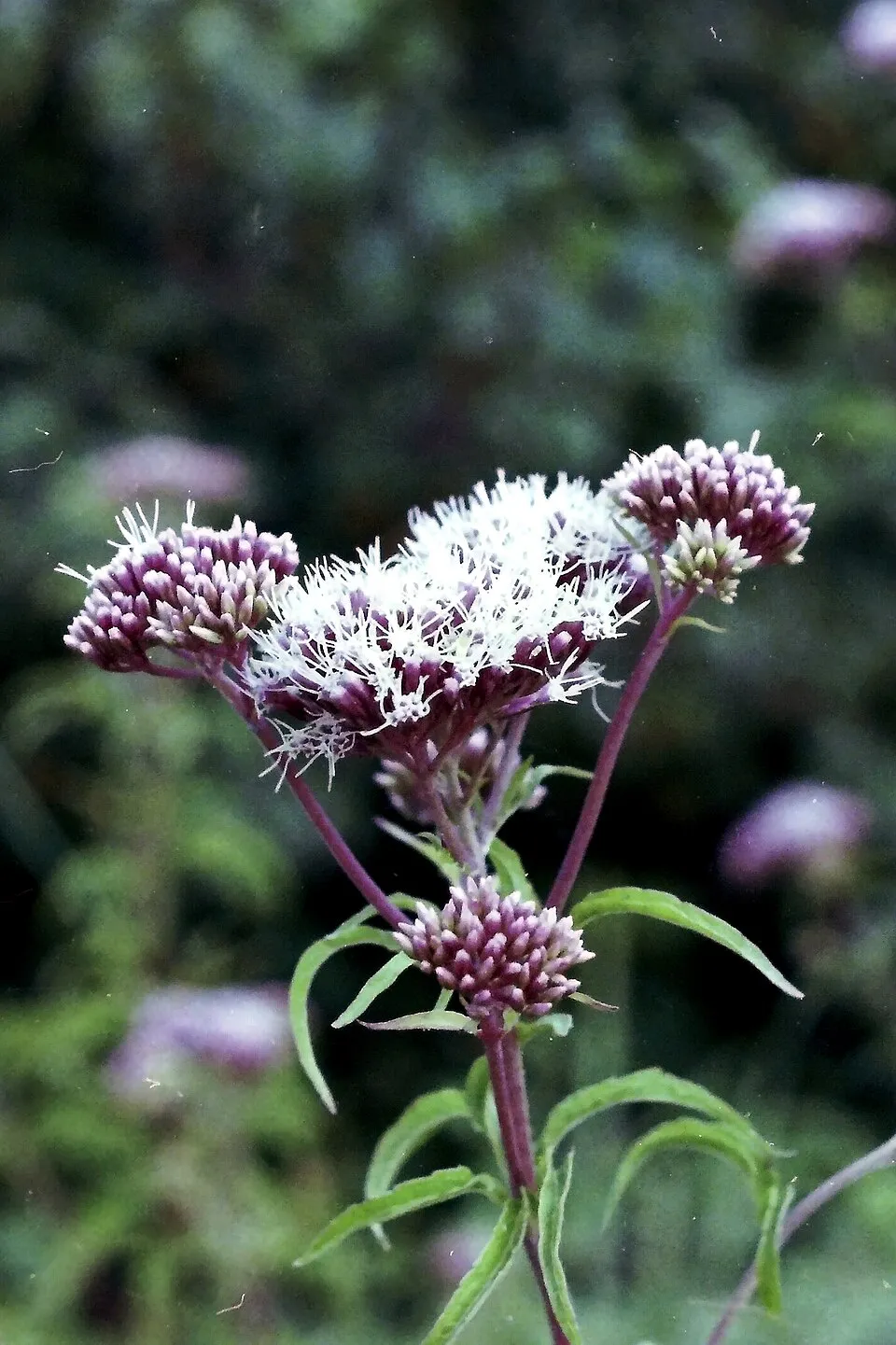
Eupatorium purpureum, commonly known as Gravel Root or Joe Pye Weed, is a statuesque herbaceous perennial belonging to the Asteraceae family. Native to the eastern and central regions of North America, it thrives in moist woodlands, stream banks, and damp meadows, often forming impressive colonies. The plant typically exhibits an upright growth habit, reaching heights of 1 to 2.5 meters (3 to 8 feet), characterized by sturdy, purplish-tinged stems.
Its large, lanceolate to ovate leaves are arranged in whorls of 3 to 7 around the stem, featuring serrated margins and a prominent venation pattern. The foliage emits a faint vanilla-like scent when crushed. During late summer and early autumn, Eupatorium purpureum produces dense, dome-shaped clusters of small, fragrant, rose-purple to pinkish-mauve flowers.
These inflorescences are highly attractive to a wide array of pollinators, including bees, butterflies (especially monarch butterflies), and other beneficial insects, making it a valuable species for supporting local biodiversity. The root system consists of a fibrous rhizome from which the medicinal properties are traditionally derived, giving rise to its common name 'Gravel Root' due to its historical use in addressing urinary calculi.
Trusted Scientific References
1. Authoritative external sources for Eupatorium Purpureum
1.1 Wikipedia — Eupatorium Purpureum
1.2 Kew POWO (Plants of the World Online)
1.3 PubMed — peer-reviewed research
1.4 NCBI Taxonomy Browser
1.5 GBIF — Global Biodiversity
1.6Eupatorium Purpureum should be interpreted through verified botanical identity, practical care, and responsible safety language. This recovery note adds the missing context needed for a complete profile: match light to the plant's habit, use well-drained soil, water according to season, and avoid unsupported medicinal or edible claims. For publishing, the plant can be presented as a source-backed garden plant with clear care guidance, common problem diagnosis, and conservative safety wording.
1.1.Eupatorium Purpureum — Highlights
- ✓Common Name — Gravel Root, Joe Pye Weed, Kidney Root.
- ✓Botanical Family — Asteraceae, known for its composite flower heads.
- ✓Native Range — Eastern and Central North America, thriving in moist environments.
- ✓Primary Traditional Use — Diuretic, renal stone solvent, urinary tract support.
- ✓Key Constituents — Flavonoids, resins, volatile oils, and notably, hepatotoxic pyrrolizidine alkaloids (PAs).
- ✓Safety Concern — High risk of liver damage and other severe adverse effects due to PAs.
- ✓Pollinator Plant — Highly attractive to bees and butterflies, supporting biodiversity.
- ✓Growth Habit — Tall, robust perennial, reaching up to 2.5 meters with purple stems.
- ✓Leaf Arrangement — Distinctive whorled leaves, typically 3-7 per node.
- ✓Flower Description — Dense, dome-shaped clusters of rose-purple to pinkish-mauve flowers blooming late summer to early autumn.
1.2.Eupatorium Purpureum — In Brief
- ✓Eupatorium purpureum, or Gravel Root, is a North American perennial from the Asteraceae family.
- ✓Traditionally used as a diuretic and for kidney/urinary stones, earning its name.
- ✓Contains beneficial flavonoids and problematic hepatotoxic pyrrolizidine alkaloids (PAs).
- ✓Internal use is LIKELY UNSAFE due to PA-induced liver damage, cancer, and birth defects.
- ✓Contraindicated in pregnancy, breastfeeding, liver disease, and interacts with certain medications.
- ✓Only certified 'PA-free' preparations, under expert guidance, should be considered, if at all.
2.Eupatorium Purpureum — Nomenclature & Classification
3.Eupatorium Purpureum — Vital Statistics
4.Eupatorium Purpureum — Botanical Description
5.Eupatorium Purpureum — Ecological Habitat
6.Eupatorium Purpureum — Heritage Uses
7.Eupatorium Purpureum — Phytochemistry
- ✓Volatile Oils — Present in small quantities (around 0.07%), these contribute to the plant's characteristic aroma and may possess mild antimicrobial or anti-inflammatory properties.
- ✓Flavonoids — Compounds like euparin are found in Eupatorium purpureum, recognized for their antioxidant and potential anti-inflammatory activities, supporting cellular health.
- ✓Resins — Eupurpurin is a notable resinous constituent, historically thought to contribute to the plant's effects on the urinary system, though its specific mechanisms are still under investigation.
- ✓Pyrrolizidine Alkaloids (PAs) — Critically, the plant contains hepatotoxic PAs, which are a significant safety concern due to their potential to cause liver damage and other adverse effects, especially with long-term or high-dose internal use.
- ✓Minerals — The root contains various inorganic compounds including iron phosphate, potassium chloride, silica, calcium, and sodium, which are essential micronutrients.
- ✓Acid Phosphates — These contribute to the overall mineral profile and may play roles in metabolic processes within the plant.
- ✓Triterpenes — While not always explicitly listed, many Asteraceae plants contain triterpenes known for their diverse biological activities, including anti-inflammatory potential.
- ✓Phenolic Acids — These compounds are common in plants and contribute to antioxidant capacity, working synergistically with flavonoids.
- ✓Saponins — Some Eupatorium species may contain saponins, which can have expectorant or diuretic properties, though their presence and significance in E. purpureum are variable.
8.Eupatorium Purpureum — Pharmacological Findings
- ✓Diuretic Action — Eupatorium purpureum has traditionally been used to stimulate urine flow, aiding the body in flushing out excess fluids and solutes from the renal system.
- ✓Renal Stone Solvent — Historically, Gravel Root was highly valued for its purported ability to assist in the dissolution and expulsion of urinary and kidney stones, often referred to as 'gravel'.
- ✓Urinary Tract Support — It has been employed in traditional herbalism to address various urinary tract issues, including infections of the bladder, urethra, and prostate, as well as painful urination.
- ✓Anti-inflammatory Properties — The plant contains compounds that may help reduce inflammation, contributing to its traditional use in conditions like arthritis-like pain and gout.
- ✓Stimulating Nervine — Folk medicine suggests a stimulating and toning effect on the renal apparatus, promoting healthy kidney function.
- ✓Alterative Action — Considered an alterative, it was believed to gradually restore proper body function and health, often through improving metabolic waste elimination.
- ✓Fever Reducer — In some traditional systems, Eupatorium purpureum was utilized to help alleviate fevers associated with various illnesses, including malaria, dengue, and typhus.
- ✓Gout Management — Its potential to aid in the elimination of uric acid has made it a traditional remedy for managing symptoms associated with gout.
- ✓Digestive Aid — Some historical uses point to its application in reducing stomach acid, although this is less common and less supported by modern understanding.
- ✓General Tonic — Traditionally viewed as a tonic, it was believed to strengthen and invigorate the body, particularly the urinary system.
8.1.Eupatorium Purpureum — Reported Uses
9.Eupatorium Purpureum — Safety Considerations
9.1.Eupatorium Purpureum — Caution Notes
- ✓Liver Damage (Hepatotoxicity) — The primary concern is severe liver damage caused by hepatotoxic pyrrolizidine alkaloids (PAs) present in the plant.
- ✓Cancer Risk — PAs are known carcinogens and can increase the risk of cancer with prolonged exposure.
- ✓Birth Defects — Consumption during pregnancy can lead to birth defects dueating to the teratogenic effects of PAs.
- ✓Allergic Reactions — Individuals sensitive to the Asteraceae/Compositae family (e.g., ragweed, chrysanthemums) may experience allergic reactions.
- ✓Gastrointestinal Upset — Nausea, vomiting, or stomach discomfort may occur in some individuals.
- ✓Skin Irritation — Applying crude preparations to broken skin can lead to rapid absorption of dangerous PAs and systemic toxicity.
9.2.Eupatorium Purpureum — Toxicity Assessment
- ✓Pyrrolizidine Alkaloid (PA) Content — Eupatorium purpureum contains hepatotoxic PAs, making non-certified preparations LIKELY UNSAFE for internal use.
- ✓Pregnancy and Breastfeeding — Strictly contraindicated during pregnancy and breastfeeding due to the risk of birth defects and harm to the infant from PAs.
- ✓Liver Disease — Individuals with pre-existing liver conditions should absolutely avoid Gravel Root, as PAs can exacerbate liver damage.
- ✓Allergic Sensitivity — Caution is advised for those with allergies to plants in the Asteraceae family, such as ragweed, daisies, or marigolds.
- ✓Drug Interactions (Lithium) — May act as a diuretic, potentially decreasing lithium excretion and leading to increased lithium levels and serious side effects.
- ✓Drug Interactions (CYP3A4 Inducers) — Medications that induce liver enzymes (like CYP3A4) could potentially enhance the toxic effects of PAs by promoting their breakdown into harmful metabolites.
- ✓Professional Consultation — Always consult a qualified healthcare provider before using Gravel Root, especially to ensure the use of certified 'hepatotoxic PA-free' products, if any are available.
10.Eupatorium Purpureum — Preparation Methods
- ✓Decoction — Prepare by simmering 1 teaspoon of dried Gravel Root (rhizome) in 1 cup of water for 15-20 minutes, then strain; consume 1 to 2 cups per day.
- ✓Fresh Root Tincture — A tincture can be made with fresh root at a 1:4 ratio in 35% alcohol; typical dosage is 1-5 ml, three times daily.
- ✓Dried Root Tincture — For dried root, a 1:5 ratio in 25% alcohol is common; dosage is also 1-5 ml, three times daily.
- ✓External Application (Caution) — Historically, poultices or washes were applied to skin for rheumatism, but this is LIKELY UNSAFE due to pyrrolizidine alkaloid absorption through broken skin.
- ✓Infused Oil — While less common for internal use due to PA concerns, roots can be infused in oil for topical preparations, strictly on unbroken skin and with caution.
- ✓Professional Guidance — Due to the presence of hepatotoxic pyrrolizidine alkaloids, any internal use of Eupatorium purpureum should only be undertaken under the strict supervision of a qualified healthcare professional who can ensure PA-free preparations.
- ✓Short-Term Use — If used, it is generally recommended for short durations to minimize the risk of cumulative pyrrolizidine alkaloid toxicity.
11.Eupatorium Purpureum — How to Grow
- ✓Soil Preference — Thrives in rich, fertile, well-drained soils, ideally loamy or sandy, mimicking its natural woodland habitat.
- ✓Light Requirements — Prefers full sun to partial shade, requiring at least 6 hours of direct sunlight daily for optimal growth and flowering.
- ✓Watering Regimen — Requires consistent moisture; regular watering is crucial, especially during dry periods, but avoid waterlogging to prevent root rot.
- ✓Fertilization — A balanced, slow-release fertilizer can be applied in early spring to promote vigorous growth, or liquid feed every 4-6 weeks during the growing season.
- ✓Propagation — Can be propagated by seed, basal cuttings in spring, or division of rhizomes in spring or fall, which also helps rejuvenate older clumps.
- ✓Pruning — Deadheading spent flowers encourages a tidier appearance, while cutting back dead or damaged foliage in late autumn or early spring promotes healthy new growth.
- ✓Pest and Disease Control — Generally robust, but watch for powdery mildew in humid conditions or slug damage on young shoots; proper air circulation helps prevent fungal issues.
Reviewed by the Flora Medical Global Botanical Review Panel
Multi-disciplinary editorial group · Botany · Ethnobotany · Herbal-medicine literature
Who reviewed this: This page was checked by the Flora Medical Global Botanical Review Panel — an in-house editorial group of botany graduates, ethnobotany researchers, and horticulture practitioners who collectively maintain our 7,000+ plant encyclopedia. Meet the team.
Our 4-step verification process
1. Taxonomic verification
Scientific names and synonyms cross-checked against Kew POWO, World Flora Online, and The Plant List.
2. Phytochemical & medicinal cross-reference
Active compounds, traditional uses, and reported activities are cross-referenced with PubMed, USDA Dr. Duke's database, and peer-reviewed ethnobotanical literature.
3. Conservation & distribution check
Distribution, ecology, and conservation status confirmed against GBIF occurrence records and the IUCN Red List.
4. Editorial & safety review
Every entry passes an editorial pass for clarity, originality, and safety notices (toxicity, contraindications, dosage caveats) before publication.
Last reviewed:
Important medical disclaimer: This content is for educational and research purposes only. It is not medical advice and is not a substitute for consultation with a licensed healthcare provider. Do not use any herb to self-treat a medical condition without professional guidance.
Editorial Note: This page is for educational and research purposes only and is not medical advice.
Written by: Flora Medical Global Editorial Team
Reviewed by: Flora Medical Global Botanical Review Panel
Last Updated: June 15, 2026





Eupatorium Purpureum — Comments & Community Reviews
Rate this plant