

Medical Disclaimer: This content is for educational purposes only. It is not medical advice. Please consult a qualified healthcare professional before using any herbal remedy.
Safety Overview
1.Euphorbia Ammak — Plant Snapshot
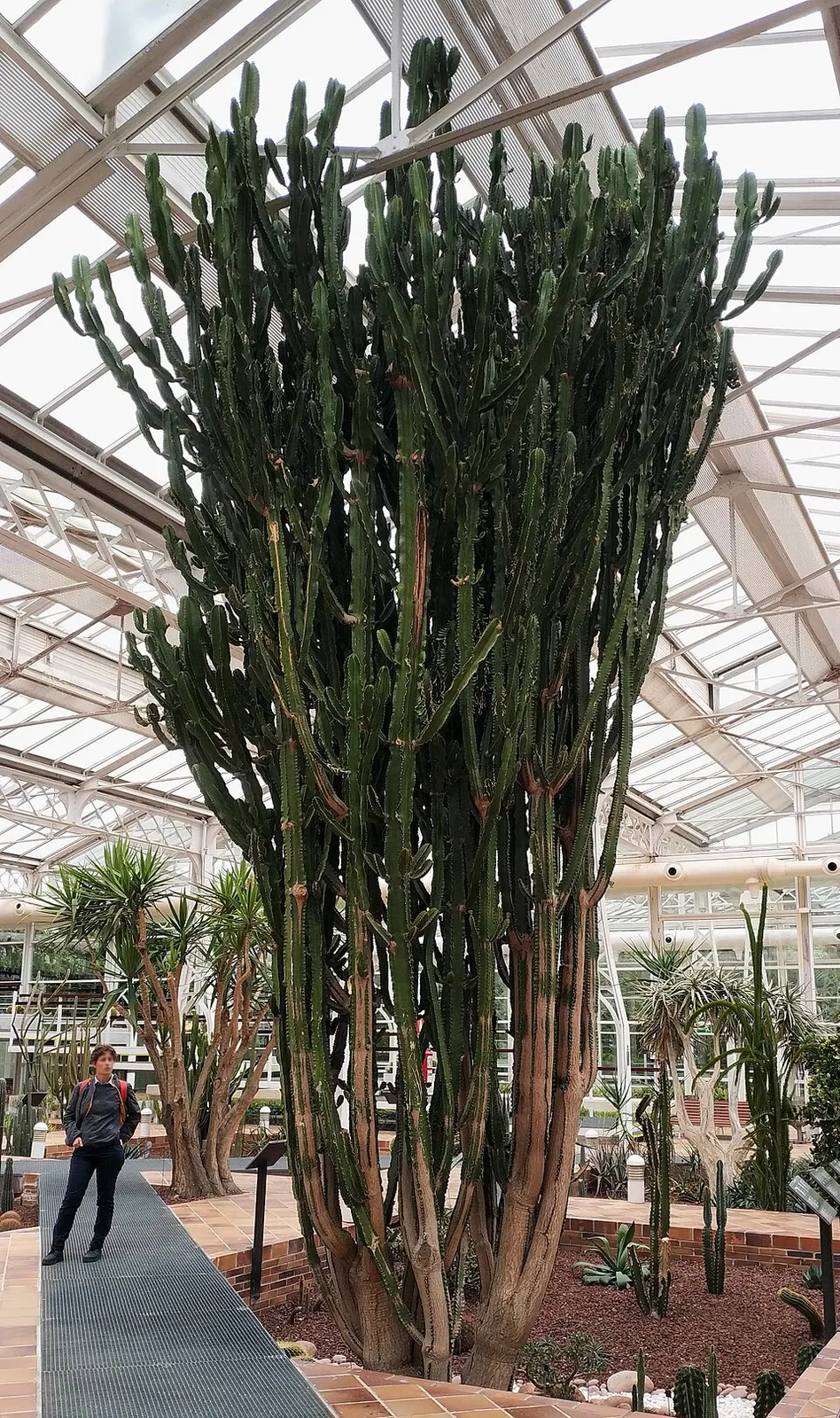
Euphorbia ammak, commonly known as the Arabian Euphorbia or African Milk Tree, is a striking succulent belonging to the expansive Euphorbiaceae family. This distinctive plant typically reaches heights of 3-4 feet, though it can grow taller under optimal conditions, forming a robust, upright, and often candelabra-like structure. Its most notable feature is a thick, segmented stem, mottled in shades of green to grayish-green, which exhibits a pronounced ribbed texture.
These ribs are frequently adorned with yellow or white spines, adding to its unique and somewhat architectural aesthetic. The leaves of Euphorbia ammak are generally sparse, small, elongated, and slightly fleshy, typically developing a yellowish-green hue that complements the stem coloration. Flowering is inconspicuous, with small, pale yellow-green to creamy cyathia (flower-like structures) grouped near the stem apex, which are not overtly showy but integrate harmoniously with the plant’s overall form.
Native to the arid and semi-arid regions of East Africa, particularly the Arabian Peninsula, Euphorbia ammak is exceptionally well-adapted to dry climates. Its succulent morphology, characterized by efficient water storage in its stems and reduced leaf surface area, enables it to thrive in less hospitable conditions with minimal water requirements.
This resilience makes it a popular choice for xeriscaping in suitable climates and a highly valued ornamental plant for indoor cultivation, where its fascinating form and texture serve as a captivating focal point and conversation piece.
Trusted Scientific References
1. Authoritative external sources for Euphorbia ammak
1.1 Wikipedia — Euphorbia ammak
1.2 Kew POWO (Plants of the World Online)
1.3 PubMed — peer-reviewed research
1.4 NCBI Taxonomy Browser
1.5 GBIF — Global Biodiversity
1.6Euphorbia Ammak should be interpreted through verified botanical identity, practical care, and responsible safety language. This recovery note adds the missing context needed for a complete profile: match light to the plant's habit, use well-drained soil, water according to season, and avoid unsupported medicinal or edible claims. For publishing, the plant can be presented as a source-backed indoor plant with clear care guidance, common problem diagnosis, and conservative safety wording.
1.1.Euphorbia Ammak — Key Features
- ✓Striking Succulent Morphology — Features thick, ribbed, segmented stems with prominent spines, creating a unique ornamental appeal.
- ✓Drought — Tolerant — Highly adapted to arid environments, requiring minimal water and thriving in dry conditions.
- ✓Low Maintenance — Easy to care for, making it suitable for both experienced and novice plant enthusiasts.
- ✓Caustic Milky Latex — Produces a white, irritating sap that can cause severe skin and eye irritation.
- ✓Native to Arid Regions — Indigenous to East Africa and the Arabian Peninsula, reflecting its resilience in harsh climates.
- ✓In Vitro Cytotoxic Compounds — Research has identified euphol, alpha-glutinol, and stigmasterol with demonstrated activity against cancer cell lines in labs.
- ✓Ornamental Value — Widely cultivated for its distinctive form, adding an exotic touch to indoor and outdoor spaces.
- ✓Inconspicuous Flowers — Produces small, yellowish-green cyathia that are not the primary aesthetic feature.
- ✓Architectural Growth Habit — Often grows in an upright, candelabra-like fashion, creating a sculptural presence.
- ✓Adaptable to Containers — Can be successfully grown in pots, making it a popular indoor plant.
1.2.Euphorbia Ammak — At-a-Glance Summary
- ✓Unique succulent with architectural form, native to arid regions.
- ✓Contains cytotoxic compounds (euphol, alpha-glutinol, stigmasterol) identified in in vitro research.
- ✓Milky latex is highly caustic and irritating to skin and mucous membranes.
- ✓Primarily valued as an ornamental plant for its drought tolerance and striking appearance.
- ✓Requires minimal water and bright sunlight, making it low-maintenance.
- ✓Not recommended for traditional medicinal use due to toxicity and lack of clinical evidence.
2.Euphorbia Ammak — Scientific Profile
3.Euphorbia Ammak — Reference Facts
4.Euphorbia Ammak — Structural Profile
5.Euphorbia Ammak — Where It Grows
6.Euphorbia Ammak — Ethnobotanical Uses
7.Euphorbia Ammak — Secondary Metabolites
- ✓Triterpenoids — Key compounds include euphol (Eupha-8,24-dien-3β-ol) and alpha-glutinol (Glutin-5-en-3α-ol), both isolated from the leaves of Euphorbia ammak and exhibiting significant in vitro cytotoxicity against HeLa cells. These compounds are large, complex molecules derived from squalene.
- ✓Phytosterols — Stigmasterol (C29H48O), a plant sterol, has been identified in Euphorbia ammak leaves and also demonstrated in vitro cytotoxic activity. Phytosterols are structurally similar to cholesterol and are known for various biological roles.
- ✓Diterpenoids — While not specifically isolated in the referenced study for E. ammak leaves, diterpenoids are a hallmark class of compounds in many Euphorbia species, often responsible for their potent biological activities and sometimes their irritant properties.
- ✓Flavonoids — General to the Euphorbia genus, flavonoids are polyphenolic compounds known for their antioxidant, anti-inflammatory, and potentially anti-cancer effects. Their presence in E. ammak is probable, though not detailed in the specific study.
- ✓Phenolic Compounds — Broadly, phenolic compounds are common in plants and contribute to antioxidant defense. Other Euphorbia species contain various phenolics, suggesting their likely presence in E. ammak.
- ✓Latex Constituents — The milky latex characteristic of Euphorbia species, including E. ammak, contains complex mixtures of diterpene esters, triterpenoids, and other irritant compounds responsible for its caustic nature.
- ✓Hydrocarbons — Waxy coatings and internal structures of succulents often contain long-chain hydrocarbons, contributing to their drought resistance and protective barriers.
- ✓Fatty Acids — Plant lipids, including various fatty acids, are fundamental components of cell membranes and can also serve as precursors for other bioactive compounds.
8.Euphorbia Ammak — Modern Studies
- ✓Potential Anti-Proliferative Activity (In Vitro) — Extracts from Euphorbia ammak leaves, specifically euphol, alpha-glutinol, and stigmasterol, have demonstrated significant cytotoxic effects against human cervical adenocarcinoma (HeLa) cells in laboratory settings.
- ✓Support for Cancer Research — The identification of compounds like euphol, which showed the best activity in preliminary in vitro studies, highlights Euphorbia ammak's potential as a source for novel anti-cancer agents, warranting further investigation.
- ✓Immunomodulatory Potential (Genus-Specific) — While not directly studied for Euphorbia ammak, various Euphorbia species are known to contain compounds that exhibit immunomodulatory properties, influencing immune responses.
- ✓Anti-inflammatory Effects (Genus-Specific) — The presence of triterpenoids and other phenolic compounds, common in the Euphorbia genus, often correlates with anti-inflammatory activity, though specific studies on E. ammak are limited.
- ✓Antioxidant Properties (Hypothesized) — Many plant secondary metabolites, including flavonoids and phenolics found in Euphorbia species, possess antioxidant capabilities that could protect cells from oxidative stress.
- ✓Antimicrobial Activity (Genus-Specific) — Some Euphorbia species have shown antimicrobial properties against bacteria and fungi, suggesting that similar compounds in E. ammak might possess such effects, albeit untested.
- ✓Traditional Anti-Cancer Use (Genus-Specific) — Historically, several plants within the broader Euphorbia genus have been employed in traditional medicine systems for their reported anti-cancer properties, inspiring modern research into E. ammak's constituents.
- ✓Source of Bioactive Triterpenoids — The isolation of euphol and alpha-glutinol from Euphorbia ammak leaves provides a natural source for these triterpenoid compounds, known for their diverse biological activities.
8.1.Euphorbia Ammak — Reported Uses
9.Euphorbia Ammak — Adverse Effects
9.1.Euphorbia Ammak — Warnings
- ✓Skin Irritation — Direct contact with the milky latex can cause severe skin irritation, dermatitis, redness, itching, and blistering due to its caustic nature.
- ✓Eye Damage — Exposure of the latex to eyes can lead to intense pain, inflammation, temporary blindness, and potentially permanent corneal damage.
- ✓Mucous Membrane Irritation — Ingestion or contact with mucous membranes (mouth, nose) causes burning sensations, swelling, and severe gastrointestinal distress.
- ✓Allergic Reactions — Individuals sensitive to Euphorbia species may experience allergic contact dermatitis or more systemic allergic responses upon exposure.
- ✓Gastrointestinal Upset — Accidental ingestion can result in nausea, vomiting, abdominal pain, diarrhea, and other severe digestive disturbances.
- ✓Toxic Ingestion — Ingestion of significant quantities of any part of the plant, particularly the latex, can be highly toxic and potentially life-threatening.
- ✓Photosensitivity — Some Euphorbia species contain compounds that can induce photosensitivity, increasing skin's susceptibility to sunburn after contact.
9.2.Euphorbia Ammak — Safety Overview
- ✓Protective Gear — Always wear gloves, long sleeves, and eye protection when handling Euphorbia ammak, especially during pruning or repotting, to prevent latex exposure.
- ✓Keep Out of Reach — Position the plant where it cannot be easily accessed by children or pets, who may accidentally come into contact with or ingest the toxic latex.
- ✓First Aid for Skin Contact — In case of skin contact, immediately wash the affected area thoroughly with soap and plenty of water for at least 15-20 minutes.
- ✓First Aid for Eye Contact — If latex enters the eyes, flush them immediately with copious amounts of water for at least 15 minutes and seek urgent medical attention.
- ✓Avoid Ingestion — Emphasize that no part of Euphorbia ammak should ever be ingested; it is considered toxic if consumed.
- ✓Proper Disposal — Dispose of plant trimmings and cuttings carefully, ensuring they are not accessible to children or animals and do not pose an environmental hazard.
- ✓Consult a Physician — In cases of severe exposure, ingestion, or persistent symptoms, seek immediate professional medical advice.
10.Euphorbia Ammak — How to Use
- ✓Ornamental Display — Primarily cultivated as an ornamental plant for its unique architectural form and drought-tolerant nature in homes, offices, and xeriscape gardens.
- ✓Landscape Design — Utilized in arid and semi-arid landscape designs as a focal point or structural element, particularly in regions with warm climates.
- ✓Botanical Research — Plant extracts and isolated compounds are used in scientific laboratories for in vitro studies to explore their pharmacological activities, such as cytotoxicity.
- ✓Phytochemical Analysis — Employed in analytical chemistry for the isolation and structural elucidation of novel plant secondary metabolites, like triterpenoids and sterols.
- ✓Cautionary Handling — When handling for any purpose, always wear protective gloves and eyewear to prevent contact with the irritating milky latex.
- ✓Educational Specimen — Serves as an excellent specimen for botanical education, demonstrating succulent adaptations and the diversity of the Euphorbiaceae family.
- ✓No Internal Use — Due to the caustic nature of its latex and lack of established traditional medicinal uses, Euphorbia ammak should not be ingested or used internally.
- ✓Topical Application (Extreme Caution) — Any potential topical application should only be considered under strict medical and scientific supervision, given the severe irritant properties of the latex.
11.Euphorbia Ammak — Propagation & Care
- ✓Soil — Requires a well-draining succulent or cactus potting mix to prevent root rot, often amended with perlite or coarse sand.
- ✓Light — Thrives in bright, direct sunlight for at least 6 hours daily; insufficient light can lead to etiolation (stretching).
- ✓Watering — Water sparingly, allowing the soil to dry out completely between waterings, especially during winter dormancy. Overwatering is the most common cause of failure.
- ✓Temperature — Prefers warm temperatures between 65-85°F (18-29°C) and is not frost-tolerant; bring indoors if temperatures drop below 50°F (10°C).
- ✓Fertilization — Fertilize lightly with a balanced, diluted liquid succulent fertilizer once or twice during the growing season (spring/summer).
- ✓Propagation — Can be propagated from stem cuttings; allow cuttings to callus for several days before planting in dry, well-draining soil.
- ✓Pests and Diseases — Generally resistant to most pests, but watch for mealybugs or scale insects, especially in humid conditions. Root rot is the primary disease concern due to overwatering.
- ✓Air Circulation — Good air circulation is beneficial to prevent fungal issues, particularly in indoor environments.
Reviewed by the Flora Medical Global Botanical Review Panel
Multi-disciplinary editorial group · Botany · Ethnobotany · Herbal-medicine literature
Who reviewed this: This page was checked by the Flora Medical Global Botanical Review Panel — an in-house editorial group of botany graduates, ethnobotany researchers, and horticulture practitioners who collectively maintain our 7,000+ plant encyclopedia. Meet the team.
Our 4-step verification process
1. Taxonomic verification
Scientific names and synonyms cross-checked against Kew POWO, World Flora Online, and The Plant List.
2. Phytochemical & medicinal cross-reference
Active compounds, traditional uses, and reported activities are cross-referenced with PubMed, USDA Dr. Duke's database, and peer-reviewed ethnobotanical literature.
3. Conservation & distribution check
Distribution, ecology, and conservation status confirmed against GBIF occurrence records and the IUCN Red List.
4. Editorial & safety review
Every entry passes an editorial pass for clarity, originality, and safety notices (toxicity, contraindications, dosage caveats) before publication.
Last reviewed:
Important medical disclaimer: This content is for educational and research purposes only. It is not medical advice and is not a substitute for consultation with a licensed healthcare provider. Do not use any herb to self-treat a medical condition without professional guidance.
Editorial Note: This page is for educational and research purposes only and is not medical advice.
Written by: Flora Medical Global Editorial Team
Reviewed by: Flora Medical Global Botanical Review Panel
Last Updated: June 15, 2026





Euphorbia Ammak — Comments & Community Reviews
Rate this plant