
Medical Disclaimer: This content is for educational purposes only. It is not medical advice. Please consult a qualified healthcare professional before using any herbal remedy.
Safety Overview
1.Euphorbia Ingens — At a Glance
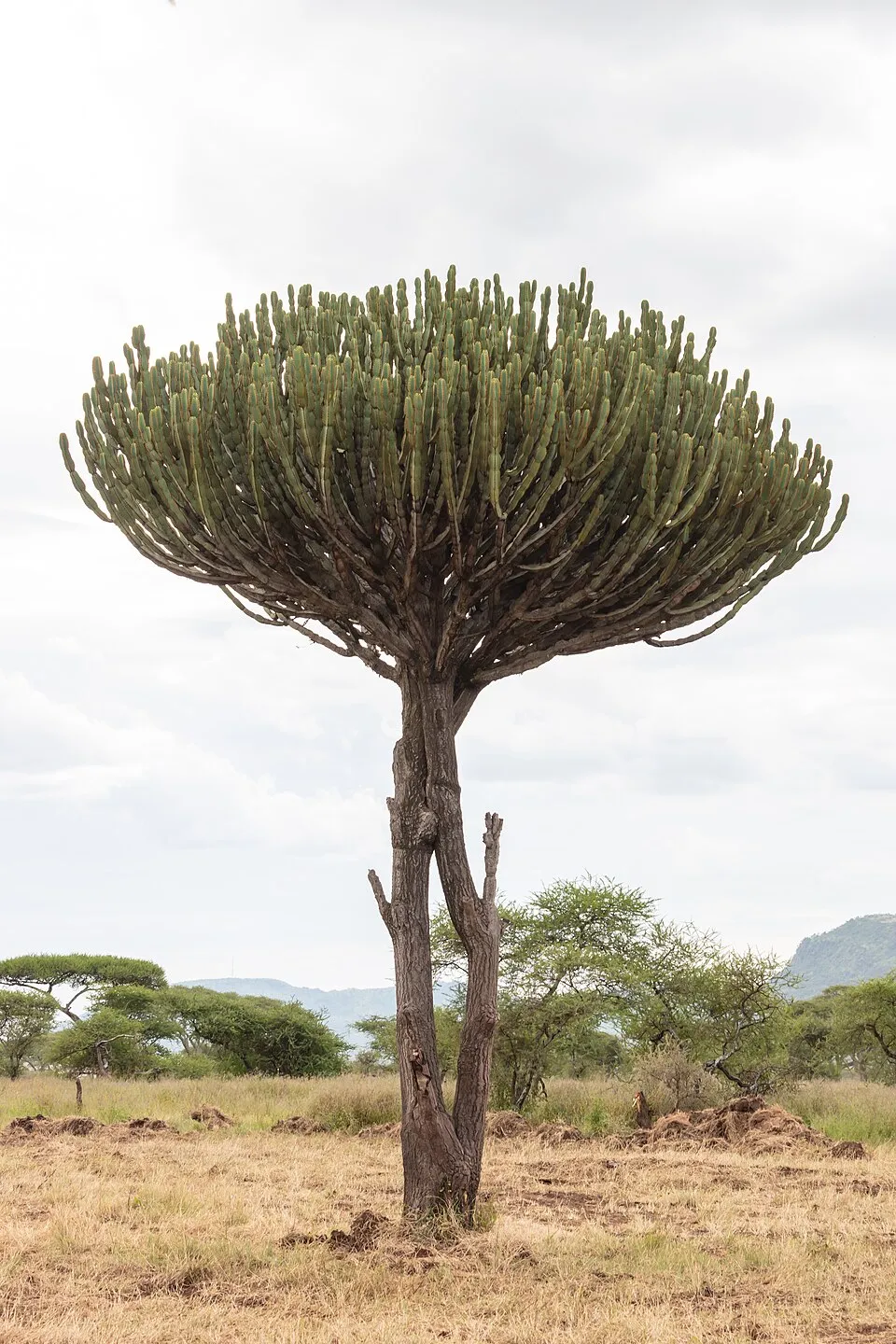
Euphorbia ingens, commonly known as the African Milk Barrel or Candelabra Tree, is a majestic succulent native to the arid and semi-savanna regions of southern and eastern Africa, including countries like South Africa, Zimbabwe, Mozambique, and Kenya. This striking plant is characterized by its robust, tree-like growth, often reaching impressive heights of 6 to 8 meters in its natural environment, forming a distinct candelabra shape. Its thick trunk supports numerous erect, segmented branches, typically 3.5 to 7.5 centimeters in diameter, which are a vibrant dark green and feature five prominent ridges. Young stems are often adorned with paired, short spines measuring 0.5 to 2 millimeters.
The leaves are ephemeral and inconspicuous, usually small and clustered at the apex of newer growth, quickly falling off as the stem matures. During the cooler months, from autumn to winter, Euphorbia ingens produces small, greenish-yellow cyathia—the characteristic flower structure of the Euphorbia genus—along the ridges of its uppermost segments. These flowers are pollinated by various insects, including butterflies and bees. The plant then develops round, three-lobed capsule fruits that mature from green to a deep purple.
Ecologically, it plays a role in its native habitat, providing shelter and food (seeds) for birds. Taxonomically, it belongs to the extensive Euphorbiaceae family, known for its diverse species and the milky latex present in most members. It thrives in well-drained, sandy soils and can withstand prolonged droughts, making it a highly adaptable species in cultivation.
Trusted Scientific References
1. Authoritative external sources for Euphorbia ingens
1.1 Wikipedia — Euphorbia ingens
1.2 Kew POWO (Plants of the World Online)
1.3 PubMed — peer-reviewed research
1.4 NCBI Taxonomy Browser
1.5 GBIF — Global Biodiversity
1.6Euphorbia Ingens should be interpreted through verified botanical identity, practical care, and responsible safety language. This recovery note adds the missing context needed for a complete profile: match light to the plant's habit, use well-drained soil, water according to season, and avoid unsupported medicinal or edible claims. For publishing, the plant can be presented as a source-backed indoor plant with clear care guidance, common problem diagnosis, and conservative safety wording.
1.1.Euphorbia Ingens — Highlights
- ✓Striking Candelabra Shape — Distinctive multi-branched, tree-like succulent form.
- ✓Tall Growth Habit — Can reach 6-8 meters in height in natural habitats.
- ✓Dark Green, Ribbed Stems — Cylindrical, segmented branches with 5 prominent ridges.
- ✓Ephemeral Leaves — Small, quickly deciduous leaves at branch tips.
- ✓Toxic Milky Latex — Contains a highly irritant and poisonous white sap.
- ✓Drought Tolerant — Adaptable to arid and semi-arid environments.
- ✓Native to Southern and Eastern Africa — Indigenous to a wide range of dry regions.
- ✓Small Greenish — Yellow Cyathia — Unique flower structures characteristic of Euphorbia.
- ✓Red, Three — Lobed Capsule Fruits — Develop after flowering, turning purple when ripe.
- ✓Low Maintenance Ornamental — Popular for landscaping and indoor cultivation.
1.2.Euphorbia Ingens — Quick Summary
- ✓Euphorbia ingens is a large, striking succulent native to Southern and Eastern Africa.
- ✓Known as African Milk Barrel or Candelabra Tree for its distinctive form.
- ✓All parts contain a highly toxic, milky latex that causes severe irritation and poisoning.
- ✓Traditionally used for ailments like ulcers and as a purgative, but these uses are highly dangerous.
- ✓Primarily cultivated as an ornamental plant due to its unique appearance and low maintenance.
- ✓Extreme caution is advised when handling due to its caustic latex.
2.Euphorbia Ingens — Scientific Identity
3.Euphorbia Ingens — Vital Statistics
4.Euphorbia Ingens — Physical Description
5.Euphorbia Ingens — Origin & Spread
6.Euphorbia Ingens — Folk Medicine Applications
7.Euphorbia Ingens — Phytochemistry
- ✓Diterpenoids — The latex of Euphorbia ingens is rich in diterpenoid esters, particularly ingenol and phorbol derivatives, which are primarily responsible for its irritant and cytotoxic properties.
- ✓Triterpenoids — Various triterpenes, including euphols and cycloartanes, are present in the plant, contributing to the structural integrity of the latex and potentially exhibiting diverse biological activities.
- ✓Flavonoids — Found in the plant tissues, flavonoids like quercetin and kaempferol derivatives are common antioxidants and may offer protective effects against oxidative stress.
- ✓Tannins — Present in varying amounts, tannins contribute to the plant's astringent properties and may play a role in traditional antiseptic applications.
- ✓Alkaloids — While less prominent than in other plant families, some Euphorbia species can contain trace amounts of alkaloids, which may have pharmacological effects.
- ✓Saponins — These glycosides can be present, contributing to the plant's defense mechanisms and potentially possessing hemolytic properties, enhancing the toxicity of the latex.
- ✓Resins — The milky latex itself is a complex emulsion containing various resins, which are mixtures of terpenoids, fatty acids, and other organic compounds.
- ✓Fatty Acids — The latex also contains a variety of fatty acids, which can contribute to its physical properties and may have some biological activity.
- ✓Polysaccharides — Structural polysaccharides are present in the plant cell walls, and some may also be found in the latex, contributing to its viscous nature.
- ✓Phenolic Compounds — Beyond flavonoids, other phenolic compounds are present, acting as antioxidants and contributing to the plant's defense against pathogens and herbivores.
8.Euphorbia Ingens — Evidence-Based Benefits
- ✓Antiseptic Potential — Traditionally, the milky latex has been anecdotally used topically by some local communities for its purported antiseptic properties on minor cuts and wounds, despite its irritant nature.
- ✓Purgative Action — Historical ethnobotanical records indicate the latex was sometimes used as a powerful purgative to induce bowel movements in traditional African medicine, due to its strong irritating effect on the digestive tract.
- ✓Ulcer Treatment — Certain traditional healing practices have employed preparations involving Euphorbia ingens for the management of ulcers, though the exact mechanism and safety profile remain largely unstudied.
- ✓Anti-Cancer Research Interest — The Venda and Sotho people have traditionally utilized parts of the plant, including the latex, in remedies against certain cancers, prompting modern research into specific compounds for potential cytotoxic activity.
- ✓Wound Healing Support — Beyond its antiseptic use, the latex has been explored in preliminary research for compounds that might contribute to wound healing processes, possibly by stimulating cellular repair or exhibiting antimicrobial effects.
- ✓Natural Pest Repellent — The toxic latex acts as a natural defense mechanism for the plant, and its compounds are being investigated for their potential as natural pesticides or insect repellents in agricultural applications.
- ✓Anti-inflammatory Properties (Preclinical) — While highly irritant, some Euphorbia species contain diterpenoids that, in modified forms or specific concentrations, might exhibit anti-inflammatory effects, though this requires extensive research for E. ingens.
- ✓Detoxification Aid (Traditional) — In some traditional contexts, purgatives like Euphorbia ingens were believed to aid in 'detoxification' by expelling toxins from the body, emphasizing its historical role in cleansing rituals.
- ✓Antimicrobial Activity — Research into the latex of various Euphorbia species often reveals compounds with broad-spectrum antimicrobial activity, suggesting a potential for E. ingens extracts against bacteria and fungi.
- ✓Pain Relief (Topical, Caution) — Due to its irritant properties, topical application might, in some traditional beliefs, create a counter-irritant effect that temporarily distracts from underlying pain, though this is highly risky.
8.1.Euphorbia Ingens — Therapeutic Indications
9.Euphorbia Ingens — Safety Considerations
9.1.Euphorbia Ingens — Possible Adverse Reactions
- ✓Severe Skin Irritation — Direct contact with the milky latex can cause immediate and intense skin irritation, redness, itching, and blistering.
- ✓Ocular Damage — Contact with eyes can lead to severe pain, inflammation, temporary or permanent blindness, and corneal damage.
- ✓Gastrointestinal Poisoning — Ingestion of any part of the plant, especially the latex, causes severe gastrointestinal upset, including nausea, vomiting, abdominal pain, and diarrhea.
- ✓Allergic Reactions — Individuals sensitive to latex or other plant compounds may experience allergic dermatitis or more severe systemic allergic responses.
- ✓Mucous Membrane Irritation — Contact with mucous membranes (mouth, nose, genitals) causes intense burning, swelling, and inflammation.
- ✓Systemic Toxicity — Large doses ingested can lead to systemic poisoning, affecting cardiovascular and neurological systems, potentially leading to collapse or death.
- ✓Photosensitivity — Some Euphorbia compounds can induce photosensitivity, increasing skin's susceptibility to sunburn.
9.2.Euphorbia Ingens — Safety Overview
- ✓Highly Toxic Latex — All parts of Euphorbia ingens contain a caustic, milky latex that is extremely poisonous and acts as a severe irritant to skin, eyes, and mucous membranes.
- ✓Avoid Ingestion — Internal consumption of any part of the plant is strictly contraindicated due to the high risk of severe gastrointestinal poisoning and systemic toxicity.
- ✓Protective Gear Essential — Always wear gloves, eye protection, and long sleeves when handling the plant, especially when pruning or taking cuttings.
- ✓Keep Away from Children and Pets — Ensure the plant is placed out of reach of children and domestic animals to prevent accidental exposure or ingestion.
- ✓No Self-Medication — Despite historical traditional uses, Euphorbia ingens is not recommended for medicinal self-treatment due to its high toxicity and lack of scientific safety data.
- ✓Seek Medical Attention Immediately — In case of skin or eye contact, rinse thoroughly with water and seek immediate medical advice. For ingestion, contact poison control immediately.
- ✓Not for Pregnant/Lactating Women — Due to its toxicity, use is strictly contraindicated during pregnancy and lactation.
10.Euphorbia Ingens — Preparation Methods
- ✓Topical Application (Extreme Caution) — Historically, the latex was applied directly to minor cuts or wounds for antiseptic purposes, but this is highly dangerous due to severe irritation and potential blindness.
- ✓Purgative Ingestion (Highly Not Recommended) — Traditionally, small, diluted quantities of the latex were ingested as a purgative, but this carries a significant risk of severe poisoning and gastrointestinal distress.
- ✓Anti-Cancer Decoctions (Ethnobotanical) — In some African traditions, preparations involving plant parts were used orally for cancer treatment, but scientific validation and safety are lacking, making it unsafe for self-administration.
- ✓Ulcer Remedies (Traditional, Unverified) — Infusions or poultices from plant parts were anecdotally used for ulcers, but again, this is not scientifically supported and poses significant health risks.
- ✓Fish Poisoning (Indigenous Use) — Stems of Euphorbia ingens have been used by local communities in South Africa and Zimbabwe to poison fish, demonstrating its potent toxicity.
- ✓Wood Utilization — The light and solid wood is used in construction for doors, planks, and boat production in its native regions, representing a non-medicinal traditional use.
- ✓Ornamental Cultivation — Primarily cultivated globally for its striking architectural form in gardens, rockeries, and as an indoor specimen, valued for its aesthetic appeal.
11.Euphorbia Ingens — Cultivation & Care
- ✓Sunlight — Requires full sun exposure to thrive, ideally 6-8 hours of direct sunlight daily for robust growth.
- ✓Soil — Prefers well-drained, sandy, or gritty soil mixtures to prevent root rot, mimicking its native arid habitat.
- ✓Watering — Needs infrequent watering; allow the soil to dry out completely between waterings, especially during dormant periods.
- ✓Temperature — Thrives in warm temperatures, ideally between 20-35°C (68-95°F), and is not frost-tolerant.
- ✓Propagation — Can be propagated from stem cuttings, which should be allowed to callus for several weeks before planting in well-drained soil.
- ✓Fertilization — Benefits from light feeding with a balanced, diluted succulent fertilizer during its active growing season (spring and summer).
- ✓Pruning — Prune only to remove dead or damaged branches, or to control size; wear protective gloves and eyewear due to toxic latex.
- ✓Pest Control — Generally pest-resistant due to its toxic latex, but watch for common succulent pests like mealybugs in overly stressed conditions.
Reviewed by the Flora Medical Global Botanical Review Panel
Multi-disciplinary editorial group · Botany · Ethnobotany · Herbal-medicine literature
Who reviewed this: This page was checked by the Flora Medical Global Botanical Review Panel — an in-house editorial group of botany graduates, ethnobotany researchers, and horticulture practitioners who collectively maintain our 7,000+ plant encyclopedia. Meet the team.
Our 4-step verification process
1. Taxonomic verification
Scientific names and synonyms cross-checked against Kew POWO, World Flora Online, and The Plant List.
2. Phytochemical & medicinal cross-reference
Active compounds, traditional uses, and reported activities are cross-referenced with PubMed, USDA Dr. Duke's database, and peer-reviewed ethnobotanical literature.
3. Conservation & distribution check
Distribution, ecology, and conservation status confirmed against GBIF occurrence records and the IUCN Red List.
4. Editorial & safety review
Every entry passes an editorial pass for clarity, originality, and safety notices (toxicity, contraindications, dosage caveats) before publication.
Last reviewed:
Important medical disclaimer: This content is for educational and research purposes only. It is not medical advice and is not a substitute for consultation with a licensed healthcare provider. Do not use any herb to self-treat a medical condition without professional guidance.
Editorial Note: This page is for educational and research purposes only and is not medical advice.
Written by: Flora Medical Global Editorial Team
Reviewed by: Flora Medical Global Botanical Review Panel
Last Updated: June 15, 2026





Euphorbia Ingens — Comments & Community Reviews
Rate this plant