
Medical Disclaimer: This content is for educational purposes only. It is not medical advice. Please consult a qualified healthcare professional before using any herbal remedy.
Safety Overview
1.Exacum Affine — Essential Profile
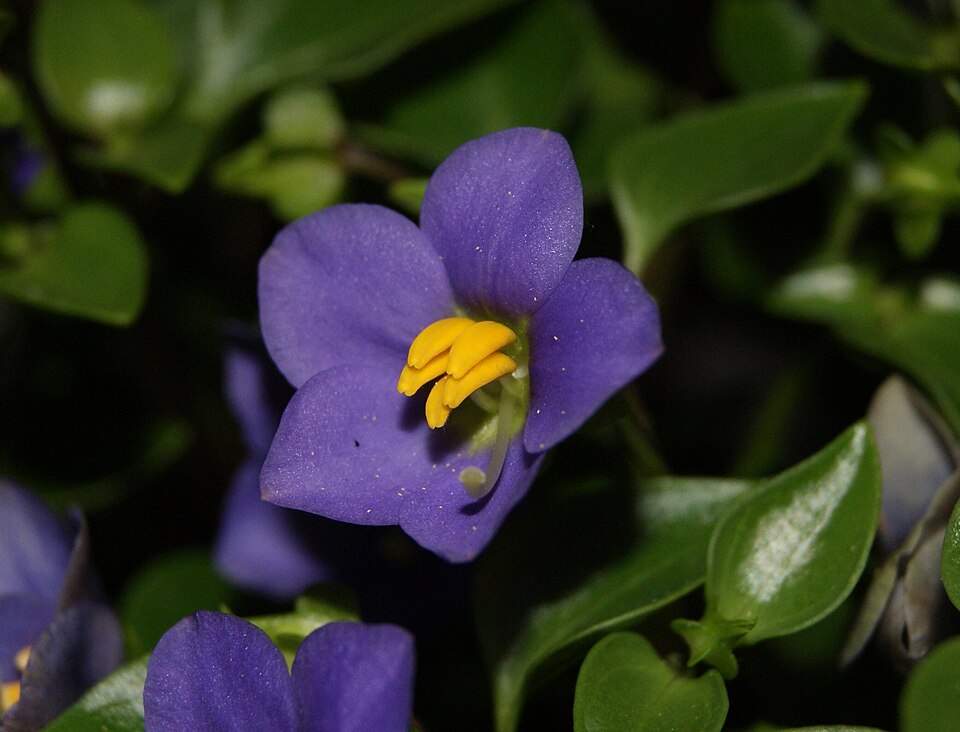
Exacum affine, commonly known as Persian Violet, is a captivating and relatively compact herbaceous plant native to the island of Socotra in the Arabian Sea, belonging to the family Gentianaceae. This charming species typically forms a bushy mound, reaching a modest height and width of approximately 15 to 30 centimeters (6-12 inches). Its morphology is characterized by small, ovate, dark green leaves that provide a lush backdrop to its abundant floral display.
The plant is highly prized for its vibrant, star-shaped flowers, which are predominantly a striking violet-blue hue, beautifully contrasted by prominent bright yellow anthers at their center. While the classic form boasts these signature violet-blue blossoms, horticultural cultivars have expanded the palette to include white and pink varieties. These fragrant flowers emerge in profusion, typically blooming from late spring through summer and into early fall, making Exacum affine a popular choice for indoor ornamental cultivation, where it adds a consistent splash of color and delicate aroma to domestic environments.
Its natural habitat on Socotra suggests a preference for specific climatic conditions, though it has adapted well to controlled indoor settings globally.
Trusted Scientific References
1. Authoritative external sources for Exacum affine
1.1 Wikipedia — Exacum affine
1.2 Kew POWO (Plants of the World Online)
1.3 PubMed — peer-reviewed research
1.4 NCBI Taxonomy Browser
1.5 GBIF — Global Biodiversity
1.6Exacum Affine should be interpreted through verified botanical identity, practical care, and responsible safety language. This recovery note adds the missing context needed for a complete profile: match light to the plant's habit, use well-drained soil, water according to season, and avoid unsupported medicinal or edible claims. For publishing, the plant can be presented as a source-backed indoor plant with clear care guidance, common problem diagnosis, and conservative safety wording.
1.1.Exacum Affine — Highlights
- ✓Native to the — Native to the unique island of Socotra.
- ✓Belongs to the — Belongs to the Gentianaceae family, known for beautiful flowering plants.
- ✓Exhibits a compact, — Exhibits a compact, bushy growth habit, ideal for indoor spaces.
- ✓Produces abundant, distinctive star — shaped flowers.
- ✓Signature vibrant violet — blue petals contrasted with bright yellow anthers.
- ✓Highly popular as — Highly popular as an indoor ornamental plant for its aesthetic appeal.
- ✓Contains intriguing phytochemicals — Contains intriguing phytochemicals like flavonoids and phenolic acids.
- ✓Relatively low maintenance — Relatively low maintenance for dedicated indoor gardeners.
- ✓Offers a long — Offers a long blooming period from summer into fall.
- ✓Emits a delicate, — Emits a delicate, pleasant fragrance, enhancing its ornamental value.
1.2.Exacum Affine — Quick Summary
- ✓Exacum affine, or Persian Violet, is a vibrant, star-flowered ornamental plant.
- ✓Native to Socotra, it is highly valued for its violet-blue blooms and delicate fragrance.
- ✓Contains flavonoids, phenolic acids, and volatile oils, suggesting potential mild antioxidant and anti-inflammatory properties.
- ✓Scientific evidence for medicinal efficacy in humans is extremely limited; primarily grown for aesthetic appeal.
- ✓Requires bright, indirect light and consistent moisture for optimal indoor cultivation.
- ✓Not recommended for internal medicinal use due to insufficient safety data.
2.Exacum Affine — Scientific Identity
3.Exacum Affine — Vital Statistics
4.Exacum Affine — Physical Description
5.Exacum Affine — Native Range & Habitat
6.Exacum Affine — Folk Medicine Applications
7.Exacum Affine — Phytochemistry
- ✓Flavonoids — Key compounds such as quercetin and kaempferol derivatives are typically present, known for their potent antioxidant and anti-inflammatory properties, contributing significantly to the plant's defensive mechanisms.
- ✓Phenolic Acids — Includes caffeic acid and chlorogenic acid, which are widely recognized for their strong antioxidant capacities and potential roles in cellular protection and anti-inflammatory pathways.
- ✓Volatile Oils — These aromatic compounds, primarily terpenoids, are responsible for the characteristic fragrance of Exacum affine flowers and may possess mild antiseptic or mood-enhancing qualities.
- ✓Triterpenes — A diverse group of compounds often found in plants, triterpenes can exhibit various biological activities, including anti-inflammatory, adaptogenic, and cytotoxic effects, though specific identification in Exacum affine requires further study.
- ✓Saponins — These glycosides are known for their foaming properties and can have expectorant, immune-modulating, or even hemolytic activities, depending on their specific structure.
- ✓Alkaloids — While not extensively studied in Exacum affine, alkaloids are nitrogen-containing compounds often associated with significant pharmacological activities, warranting careful investigation for their potential presence and effects.
- ✓Glycosides — Various types of sugar-bound compounds are likely present, influencing the bioavailability and activity of other phytochemicals within the plant system.
- ✓Tannins — These polyphenolic compounds are known for their astringent properties, which can contribute to tissue toning and protective effects, potentially present in the plant's vegetative parts.
8.Exacum Affine — Pharmacological Findings
- ✓Anti-inflammatory Support — Traditional practices and phytochemical analysis suggest Exacum affine may possess mild anti-inflammatory properties, potentially attributed to its flavonoid content, though scientific validation in human studies is limited.
- ✓Antioxidant Activity — The presence of phenolic acids and flavonoids contributes to the plant's potential antioxidant capacity, which could help neutralize free radicals and protect cellular integrity.
- ✓Aromatic Properties — The volatile oils found in Exacum affine are responsible for its delicate fragrance, which in an ornamental context, can contribute to a soothing atmosphere and enhance general well-being.
- ✓Potential Antimicrobial Effects — Some plant-derived compounds, including certain flavonoids and phenolic acids, are known to exhibit mild antimicrobial activity, a property that may be present in Exacum affine extracts.
- ✓Cellular Protection — Through its antioxidant constituents, Exacum affine may offer a degree of protection against oxidative stress-induced cellular damage, a common factor in various chronic conditions.
- ✓Mild Astringent Action — The phenolic compounds and potential tannins in the plant could theoretically impart mild astringent qualities, which might be traditionally considered for topical applications.
- ✓Supports General Well-being — As a visually appealing and fragrant ornamental, the presence of Persian Violet can positively impact mood and reduce stress, thereby indirectly supporting psychological well-being.
- ✓Traditional Topical Application (Exploratory) — While not widely documented, some obscure traditional uses might have involved topical applications for minor skin discomfort, leveraging its theoretical anti-inflammatory traits.
8.1.Exacum Affine — Indications & Uses
9.Exacum Affine — Safety Considerations
9.1.Exacum Affine — Caution Notes
- ✓Allergic Reactions — Individuals sensitive to plants in the Gentianaceae family or to specific plant compounds may experience skin irritation or allergic contact dermatitis upon contact.
- ✓Gastrointestinal Upset — If accidentally ingested, particularly in large quantities, Exacum affine may cause mild gastrointestinal discomfort due to unknown compounds or irritants.
- ✓Photosensitivity — While not confirmed, some plant compounds can induce photosensitivity, making skin more susceptible to sunburn when exposed to sunlight after contact.
- ✓Drug Interactions (Theoretical) — Given the lack of extensive research, potential interactions with prescription medications, especially those metabolized by the liver, cannot be ruled out.
- ✓Toxicity (Unknown) — Due to limited scientific investigation into its safety profile for internal use, the potential for unknown toxicities if ingested remains a concern.
- ✓Skin Irritation — Direct handling of the plant sap by individuals with sensitive skin might lead to localized irritation or a mild rash.
9.2.Exacum Affine — Risk Assessment
- ✓Limited Human Data — Exacum affine has not been extensively studied for its safety in human internal consumption, and thus, its medicinal use is not recommended.
- ✓Not for Internal Consumption — This plant is primarily ornamental; ingestion is strongly advised against due to the unknown effects of its chemical constituents.
- ✓Pregnancy and Lactation — Pregnant or breastfeeding individuals should strictly avoid any internal or extensive topical use due to the complete lack of safety data.
- ✓Children and Pets — Keep Exacum affine plants out of reach of children and pets to prevent accidental ingestion, as its safety for them is unknown.
- ✓Allergic Individuals — Persons with known plant allergies or sensitive skin should exercise caution when handling the plant and perform a patch test before any topical application.
- ✓Consult Healthcare Professional — Always seek advice from a qualified healthcare provider before considering any traditional or exploratory medicinal use of Exacum affine.
- ✓Potential Interactions — Due to uncharacterized phytochemistry, there is a theoretical potential for interaction with medications; caution is advised.
10.Exacum Affine — Usage Guide
- ✓Ornamental Cultivation — Primarily cultivated as an indoor decorative plant, enhancing living spaces with its vibrant blooms and delicate fragrance.
- ✓Aromatic Infusion (Hypothetical) — While not for medicinal ingestion, dried flowers could theoretically be used in mild aromatic infusions for room scenting, not for consumption.
- ✓Topical Application (Traditional/Exploratory) — In some traditional contexts, a mild poultice or infused oil might be considered for external use on minor skin irritations, always with extreme caution and prior research.
- ✓Potpourri Ingredient — The dried flowers of Exacum affine can be incorporated into potpourri mixtures to contribute a subtle, natural fragrance to indoor environments.
- ✓Botanical Specimen — Used by botanical enthusiasts and researchers for study, cultivation, and aesthetic appreciation in gardens or academic collections.
- ✓Research Extract Preparation — For scientific investigation into its phytochemical profile and potential bioactivities in controlled laboratory settings, not for human use.
- ✓Home Decor Accent — Placed in homes and offices as a living accent piece, appreciated for its consistent flowering and visual appeal.
11.Exacum Affine — Cultivation & Care
- ✓Light Requirements — Persian Violet thrives in bright, indirect light; direct harsh sunlight can scorch its delicate leaves, while insufficient light will reduce flowering.
- ✓Soil Preference — It requires a well-draining, rich potting mix that is slightly acidic to neutral, typically a peat-based blend amended with perlite or sand for aeration.
- ✓Watering Schedule — Maintain consistent soil moisture, allowing the top inch of soil to dry out slightly between waterings, but avoid waterlogging which can lead to root rot.
- ✓Temperature and Humidity — Prefers warm indoor temperatures between 18-24°C (65-75°F) and benefits from high humidity, making it ideal for bathrooms or with regular misting.
- ✓Propagation — Exacum affine can be successfully propagated from seeds, sown indoors in early spring, or from stem cuttings taken during the active growing season.
- ✓Fertilization — Feed with a balanced liquid fertilizer diluted to half strength every 2-4 weeks during its active growing and flowering periods, reducing frequency in winter.
- ✓Pruning — Pinch back spent flowers and leggy stems to encourage bushier growth and prolong the blooming period, promoting a more compact and attractive plant.
Reviewed by the Flora Medical Global Botanical Review Panel
Multi-disciplinary editorial group · Botany · Ethnobotany · Herbal-medicine literature
Who reviewed this: This page was checked by the Flora Medical Global Botanical Review Panel — an in-house editorial group of botany graduates, ethnobotany researchers, and horticulture practitioners who collectively maintain our 7,000+ plant encyclopedia. Meet the team.
Our 4-step verification process
1. Taxonomic verification
Scientific names and synonyms cross-checked against Kew POWO, World Flora Online, and The Plant List.
2. Phytochemical & medicinal cross-reference
Active compounds, traditional uses, and reported activities are cross-referenced with PubMed, USDA Dr. Duke's database, and peer-reviewed ethnobotanical literature.
3. Conservation & distribution check
Distribution, ecology, and conservation status confirmed against GBIF occurrence records and the IUCN Red List.
4. Editorial & safety review
Every entry passes an editorial pass for clarity, originality, and safety notices (toxicity, contraindications, dosage caveats) before publication.
Last reviewed:
Important medical disclaimer: This content is for educational and research purposes only. It is not medical advice and is not a substitute for consultation with a licensed healthcare provider. Do not use any herb to self-treat a medical condition without professional guidance.
Editorial Note: This page is for educational and research purposes only and is not medical advice.
Written by: Flora Medical Global Editorial Team
Reviewed by: Flora Medical Global Botanical Review Panel
Last Updated: June 15, 2026





Exacum Affine — Comments & Community Reviews
Rate this plant