
Medical Disclaimer: This content is for educational purposes only. It is not medical advice. Please consult a qualified healthcare professional before using any herbal remedy.
Safety Overview
1.Fenestraria — Botanical Snapshot
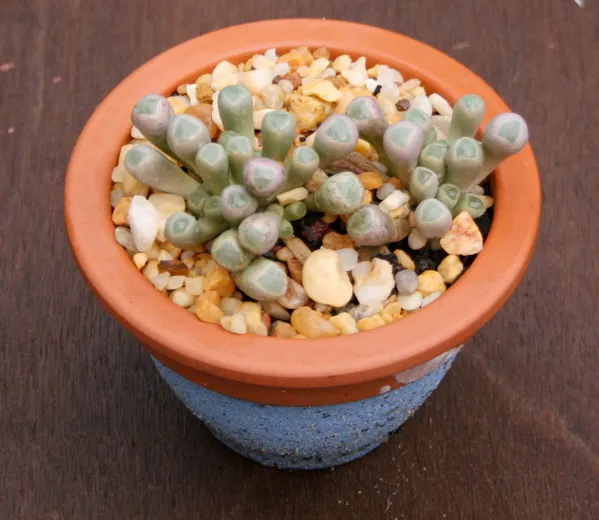
Fenestraria rhopalophylla, commonly known as Window-Leaf Plant or Baby Toes, is a remarkable succulent belonging to the Aizoaceae family, endemic to the extremely arid coastal regions of Namibia and the Northern Cape of South Africa. This captivating plant is a master of xerophytic adaptation, characterized by its unique morphology: club-shaped, cylindrical leaves with distinct, translucent apical 'windows'. These specialized leaf tips are an evolutionary marvel, allowing sunlight to penetrate the subterranean or semi-subterranean portions of the plant, where the primary photosynthetic tissues reside, thereby minimizing exposure to intense desert sun and significantly reducing transpirational water loss from the exposed surface.
The genus name 'Fenestraria' is derived from the Latin 'fenestra' (window), while 'rhopalophylla' combines the Greek 'rhopalon' (club) and 'phyllon' (leaf), precisely describing its distinctive form. There are two recognized forms: 'aurantiaca', which typically produces vibrant yellow flowers and is found south of the Orange River, and 'rhopalophylla', which bears white flowers and is more prevalent north of the river in Namibia. In its natural habitat, Fenestraria rhopalophylla often grows almost entirely buried in sandy or calciferous soils, with only its 'windows' visible, making it incredibly cryptic.
Its primary ecological role is as a hardy desert survivor, thriving in environments with less than 100 mm of annual winter rainfall. Due to its specific geographical confinement and unique adaptations, its significance has historically been botanical and horticultural, rather than medicinal.
Trusted Scientific References
1. Authoritative external sources for Fenestraria rhopalophylla
1.1 Wikipedia — Fenestraria rhopalophylla
1.2 Kew POWO (Plants of the World Online)
1.3 PubMed — peer-reviewed research
1.4 NCBI Taxonomy Browser
1.5 GBIF — Global Biodiversity
1.6Fenestraria should be interpreted through verified botanical identity, practical care, and responsible safety language. This recovery note adds the missing context needed for a complete profile: match light to the plant's habit, use well-drained soil, water according to season, and avoid unsupported medicinal or edible claims. For publishing, the plant can be presented as a source-backed indoor plant with clear care guidance, common problem diagnosis, and conservative safety wording.
1.1.Fenestraria — Distinguishing Points
- ✓Distinctive 'window' leaves — Distinctive 'window' leaves for light harvesting.
- ✓Native to arid — Native to arid coastal regions of Namibia and South Africa.
- ✓Belongs to the — Belongs to the Aizoaceae (Mesembryanthemaceae) family.
- ✓Exhibits extreme xerophytic — Exhibits extreme xerophytic adaptations for water conservation.
- ✓Grows semi — subterraneously in its natural habitat.
- ✓Produces white or yellow daisy — like flowers.
- ✓Popular ornamental plant — Popular ornamental plant for succulent collectors.
- ✓Exemplifies convergent evolution — Exemplifies convergent evolution in desert plants.
- ✓Two recognized forms — 'aurantiaca' (yellow flowers) and 'rhopalophylla' (white flowers).
- ✓Relatively low maintenance — Relatively low maintenance for indoor cultivation with proper care.
1.2.Fenestraria — At-a-Glance Summary
- ✓Fenestraria rhopalophylla, or Baby Toes, is a unique succulent from Namibia and South Africa.
- ✓Features translucent 'window' leaves for subterranean photosynthesis.
- ✓Primarily valued for its botanical uniqueness and ornamental appeal, not medicinal uses.
- ✓Adapts to extreme desert conditions, minimizing water loss.
- ✓Requires specific, well-draining soil and minimal watering in cultivation.
- ✓No known traditional or modern medicinal applications or significant toxicity.
2.Fenestraria — Nomenclature & Classification
3.Fenestraria — Vital Statistics
4.Fenestraria — Physical Description
5.Fenestraria — Origin & Spread
6.Fenestraria — Folk Medicine Applications
7.Fenestraria — Phytochemistry
- ✓Fenestraria rhopalophylla is not known for producing pharmacologically active phytochemicals typically associated with medicinal plants. Its chemical composition is primarily geared towards structural integrity and physiological function in its extreme environment.
- ✓Oxalic Acid Crystals — Present as optical fibers within the leaves, these crystalline structures are crucial for light transmission to the buried photosynthetic tissues, rather than for medicinal activity.
- ✓Cellulose — Forms the primary structural component of its cell walls, providing rigidity and support to the club-shaped leaves.
- ✓Lignin — Contributes to the structural integrity and hardiness of the plant tissues, particularly in supporting its semi-subterranean growth.
- ✓Waxes and Cutin — Found on the epidermal surface, these compounds form a protective cuticle that minimizes water loss, a vital adaptation in arid environments.
- ✓Chlorophylls (a & b) — Essential photosynthetic pigments located in the chloroplasts of the buried leaf tissues, responsible for light absorption and energy conversion.
- ✓Carotenoids — Accessory pigments involved in photosynthesis and photoprotection, helping to dissipate excess light energy and protect chlorophyll.
- ✓Sugars and Starches — Primary carbohydrates produced through photosynthesis, serving as energy storage and metabolic fuel for the plant's growth and survival.
- ✓Mineral Salts — Absorbed from the soil, these inorganic compounds are vital for various physiological processes, including osmotic regulation and enzyme function.
8.Fenestraria — Scientific Evidence
- ✓Fenestraria rhopalophylla is not traditionally or scientifically recognized for direct medicinal benefits in humans. Its value lies primarily in its unique botanical adaptations and ornamental appeal.
- ✓Ecological Significance — This plant serves as an exceptional model for studying xerophytic adaptations, particularly its unique light-harvesting mechanism and water conservation strategies in extreme desert environments.
- ✓Horticultural Value — Prized by succulent enthusiasts worldwide for its distinctive appearance, Fenestraria rhopalophylla is a popular ornamental plant, contributing to biodiversity appreciation and indoor gardening.
- ✓Photosynthetic Innovation — Research focuses on its specialized 'window' leaves and internal optical fibers of crystalline oxalic acid, which efficiently transmit light to buried photosynthetic tissues, offering insights into plant physiology.
- ✓Water Conservation — Its semi-subterranean growth habit and reduced exposed surface area are crucial adaptations for minimizing water loss through transpiration, providing a case study for drought resilience.
- ✓Habitat Indicator — In its native range, the presence of Fenestraria rhopalophylla indicates specific sandy or calciferous soil conditions and extreme aridity, serving as a bio-indicator for certain desert ecosystems.
- ✓Educational Tool — Often used in botanical education to illustrate convergent evolution, plant adaptations to harsh environments, and the diversity within the Aizoaceae family.
- ✓Genetic Research — Its unique evolutionary path and distinct forms ('aurantiaca' and 'rhopalophylla') provide interesting subjects for genetic and phylogenetic studies within the Mesembryanthemaceae subfamily.
- ✓Soil Stabilization — In its natural habitat, its clumping growth habit can contribute to the stabilization of loose desert sands, playing a minor role in preventing erosion.
8.1.Fenestraria — Reported Uses
9.Fenestraria — Cautions & Contraindications
9.1.Fenestraria — Caution Notes
- ✓As Fenestraria rhopalophylla is not intended for internal consumption or medicinal use, direct pharmacological side effects are not applicable.
- ✓Ingestion Risk — While not highly toxic, ingestion by pets or small children may cause mild gastrointestinal upset due to plant matter.
- ✓Skin Irritation — Minimal risk of skin irritation from sap, but direct contact should still be avoided, especially for individuals with sensitive skin.
- ✓Allergic Reactions — Rare, but individuals sensitive to plants in the Aizoaceae family might experience mild allergic contact dermatitis upon handling.
- ✓Horticultural Pests — Overwatering or poor air circulation can lead to fungal diseases or pest infestations (e.g., mealybugs, root rot), impacting plant health.
- ✓Environmental Stress — Improper cultivation (e.g., too much direct sun, extreme cold) can lead to leaf scorching, stunted growth, or plant death.
9.2.Fenestraria — Safety Overview
- ✓Fenestraria rhopalophylla is considered safe for ornamental cultivation and handling, with no specific medicinal safety concerns.
- ✓Non-Toxic for External Use — No known dermal toxicity or significant irritant properties when handled appropriately.
- ✓Internal Consumption Advisory — Advised against internal consumption due to lack of research and potential for mild gastrointestinal discomfort if ingested.
- ✓Pet and Child Safety — Keep out of reach of curious pets and young children to prevent accidental ingestion, despite low toxicity.
- ✓Handling Precautions — Wear gloves if sensitive skin is a concern, though typically not necessary.
- ✓Environmental Impact — Cultivation should adhere to responsible horticultural practices to prevent introduction of non-native species into local ecosystems.
- ✓Allergen Status — Generally not considered a significant allergen; however, individual sensitivities can vary.
- ✓No Contraindications for Medicinal Use — As it has no recognized medicinal uses, there are no specific medicinal contraindications.
10.Fenestraria — Preparation Methods
- ✓Fenestraria rhopalophylla is exclusively used as an ornamental plant and for botanical study, with no known traditional or modern medicinal applications.
- ✓Horticultural Display — Primarily grown as a striking houseplant or in succulent collections due to its unusual 'windowed' leaves and compact, clumping form.
- ✓Educational Specimen — Utilized in botanical gardens and academic settings to demonstrate xerophytic adaptations, specialized photosynthetic structures, and the diversity of the Aizoaceae family.
- ✓Xeriscaping (in suitable climates) — Can be incorporated into arid garden designs in regions mimicking its native desert climate, though less common than other succulents.
- ✓Photography Subject — Its unique morphology, especially the translucent leaf tips and often cryptic growth, makes it a popular subject for botanical photography.
- ✓Research Material — Employed in physiological studies focusing on light transmission, water economy, and evolutionary biology within succulent plants.
- ✓Indoor Decor — Placed in sunny windowsills or under grow lights, it adds a unique architectural element to indoor plant arrangements.
- ✓Container Gardening — Thrives in shallow, wide pots that accommodate its clumping growth habit and allow for good drainage.
11.Fenestraria — How to Grow
- ✓Cultivating Fenestraria rhopalophylla requires attention to its desert adaptations for optimal growth.
- ✓Soil Requirements — Use a highly porous, well-draining succulent mix, typically a 50/50 blend of potting soil and coarse grit or sand, to prevent root rot.
- ✓Light Exposure — Provide bright, indirect light; direct intense sun can scorch leaves, especially if grown with more leaf surface exposed than in habitat.
- ✓Watering Schedule — Water sparingly, allowing the soil to dry out completely between waterings, especially during dormant periods. Overwatering is the most common cause of failure.
- ✓Potting Technique — It is recommended to plant with only the root ball in the soil, leaving most of the 'toes' exposed, rather than burying them as they appear in habitat, to prevent rot in cultivation.
- ✓Temperature Range — Prefers warm temperatures (20-30°C) during its active growing season and can tolerate cooler temperatures (down to 5°C) in winter if kept dry.
- ✓Fertilization — Fertilize very lightly with a balanced, diluted succulent fertilizer during the active growing season (spring/autumn), about once a month, or not at all.
- ✓Propagation — Easily propagated by offsets or by seed. Allow offsets to callus before planting in dry soil.
- ✓Flowering — Expect white or yellow daisy-like flowers, typically appearing in late summer or autumn, especially from mature, well-established clumps.
Reviewed by the Flora Medical Global Botanical Review Panel
Multi-disciplinary editorial group · Botany · Ethnobotany · Herbal-medicine literature
Who reviewed this: This page was checked by the Flora Medical Global Botanical Review Panel — an in-house editorial group of botany graduates, ethnobotany researchers, and horticulture practitioners who collectively maintain our 7,000+ plant encyclopedia. Meet the team.
Our 4-step verification process
1. Taxonomic verification
Scientific names and synonyms cross-checked against Kew POWO, World Flora Online, and The Plant List.
2. Phytochemical & medicinal cross-reference
Active compounds, traditional uses, and reported activities are cross-referenced with PubMed, USDA Dr. Duke's database, and peer-reviewed ethnobotanical literature.
3. Conservation & distribution check
Distribution, ecology, and conservation status confirmed against GBIF occurrence records and the IUCN Red List.
4. Editorial & safety review
Every entry passes an editorial pass for clarity, originality, and safety notices (toxicity, contraindications, dosage caveats) before publication.
Last reviewed:
Important medical disclaimer: This content is for educational and research purposes only. It is not medical advice and is not a substitute for consultation with a licensed healthcare provider. Do not use any herb to self-treat a medical condition without professional guidance.
Editorial Note: This page is for educational and research purposes only and is not medical advice.
Written by: Flora Medical Global Editorial Team
Reviewed by: Flora Medical Global Botanical Review Panel
Last Updated: June 15, 2026





Fenestraria — Comments & Community Reviews
Rate this plant