
Medical Disclaimer: This content is for educational purposes only. It is not medical advice. Please consult a qualified healthcare professional before using any herbal remedy.
Safety Overview
1.Ficus Shivereana — Overview
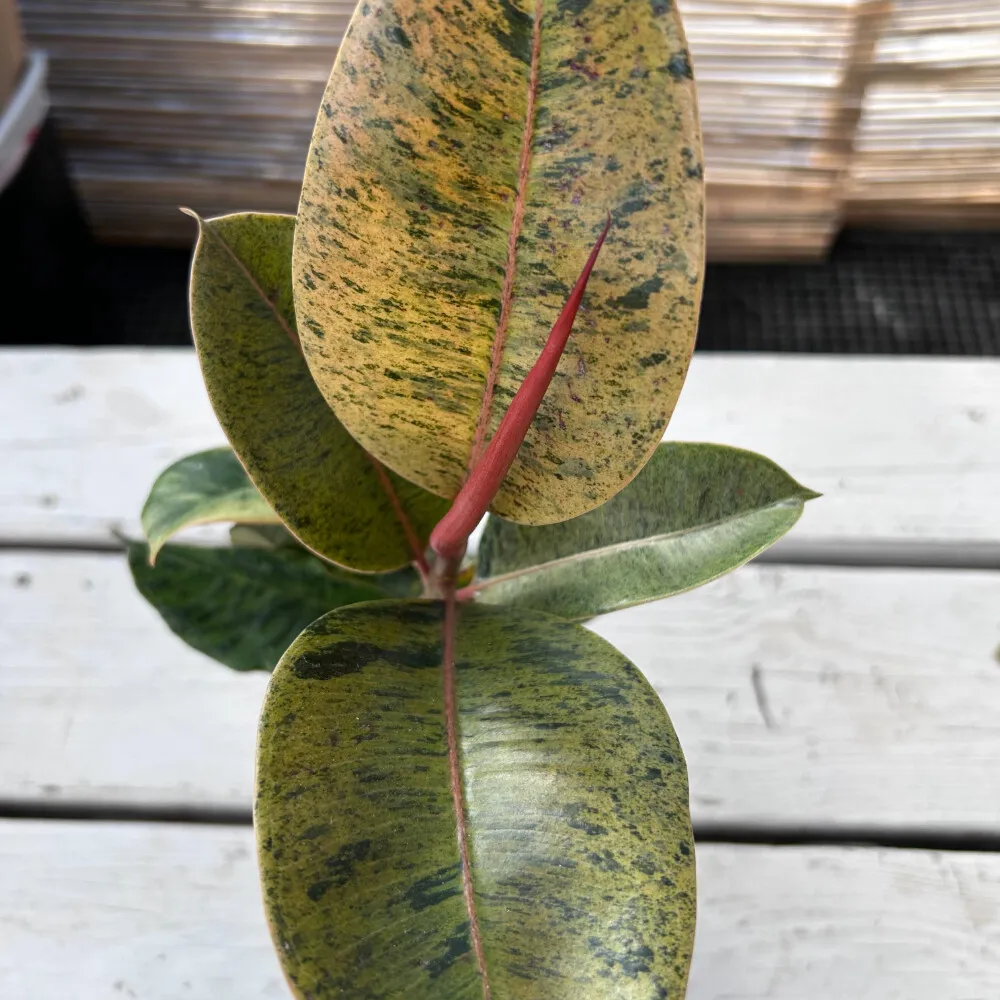
Ficus elastica 'Shivereana', widely recognized as the Moonshine Rubber Plant, is a captivating cultivar celebrated for its exceptionally attractive and distinctive foliage. This evergreen perennial, originating from the tropical and subtropical regions of Southeast Asia, thrives in warm, humid environments, making it an ideal indoor specimen. Its large, ovate leaves, often reaching up to 10 inches in length, display a mesmerizing mottled pattern of cream, pale green, and lime green, creating a vibrant visual impact. The leaves are characteristically glossy and smooth, enhancing their aesthetic appeal.
When cultivated indoors with appropriate care, 'Shivereana' typically attains a height of 3 to 6 feet, though it can grow larger in optimal conditions. The plant's bark is robust, brown, and subtly rugged, lending it a sturdy and established appearance. While the Ficus genus is known to produce small, inconspicuous syconium flowers, these are rarely observed in indoor settings, as the plant is primarily valued for its ornamental leaves. As it matures, Ficus elastica 'Shivereana' may develop aerial roots from its stems, adding another layer of unique architectural interest.
Its hybrid nature contributes to its unique leaf variegation, making it a highly sought-after decorative plant for homes and offices. Beyond its beauty, this plant is also recognized for its capacity to enhance indoor air quality.
Trusted Scientific References
1. Authoritative external sources for Ficus elastica Shivereana
1.1 Wikipedia — Ficus elastica Shivereana
1.2 Kew POWO (Plants of the World Online)
1.3 PubMed — peer-reviewed research
1.4 NCBI Taxonomy Browser
1.5 GBIF — Global Biodiversity
1.6Ficus Shivereana should be interpreted through verified botanical identity, practical care, and responsible safety language. This recovery note adds the missing context needed for a complete profile: match light to the plant's habit, use well-drained soil, water according to season, and avoid unsupported medicinal or edible claims. For publishing, the plant can be presented as a source-backed indoor plant with clear care guidance, common problem diagnosis, and conservative safety wording.
1.1.Ficus Shivereana — Key Features
- ✓Striking Variegated Foliage — Unique cream and lime green mottled leaves.
- ✓Indoor Air Purification — Filters common volatile organic compounds.
- ✓Tropical Evergreen Perennial — Thrives in warm, humid indoor conditions.
- ✓Moderate Growth Rate — Reaches 3-6 feet indoors with proper care.
- ✓Develops Aerial Roots — Adds unique architectural interest as it matures.
- ✓Low — to-Moderate Maintenance — Requires consistent care but generally hardy.
- ✓Aesthetically Pleasing — Enhances decor in homes and offices.
- ✓Contains Irritant Latex — Milky sap is toxic if ingested and can cause skin irritation.
- ✓Hybrid Cultivar — A distinctive variety of the common Ficus elastica.
- ✓Adaptable to Pots — Grows well in containers, making it suitable for indoor cultivation.
1.2.Ficus Shivereana — Quick Summary
- ✓Striking variegated ornamental plant, ideal for indoor aesthetics.
- ✓Recognized for its ability to purify indoor air by filtering VOCs.
- ✓Contains milky latex that is an irritant and toxic if ingested by pets or humans.
- ✓Requires bright, indirect light, consistent watering, and high humidity for optimal growth.
- ✓Traditional uses of Ficus elastica latex include anti-inflammatory and wound healing properties, applied topically.
- ✓Relatively low-maintenance houseplant once its specific environmental needs are met.
2.Ficus Shivereana — Scientific Profile
3.Ficus Shivereana — Botanical Stats
4.Ficus Shivereana — Structural Profile
5.Ficus Shivereana — Geographic Distribution
6.Ficus Shivereana — Historical Applications
7.Ficus Shivereana — Active Compounds
- ✓Flavonoids — Key compounds like quercetin and rutin are found in the leaves, contributing to antioxidant and anti-inflammatory activities.
- ✓Triterpenoids — Compounds such as lupeol and β-amyrin are present, particularly in the latex, exhibiting anti-inflammatory and potentially cytotoxic properties.
- ✓Phenolic Acids — Gallic acid and caffeic acid are among the phenolic compounds found, known for their antioxidant and antimicrobial actions.
- ✓Alkaloids — Various alkaloidal compounds may be present in trace amounts, contributing to diverse biological activities.
- ✓Saponins — These natural compounds possess detergent-like properties and are associated with a range of pharmacological effects.
- ✓Tannins — Found in the bark and leaves, tannins provide astringent properties and contribute to antioxidant defense.
- ✓Phytosterols — Including β-sitosterol, these plant steroids are recognized for their anti-inflammatory and cholesterol-lowering potential.
- ✓Latex Components — The milky white sap contains rubber polymers, proteolytic enzymes like ficin, and various secondary metabolites, responsible for its traditional uses and irritant properties.
- ✓Glycosides — Various glycosides, comprising a sugar and non-sugar component, can be found, influencing different biological functions.
8.Ficus Shivereana — Modern Studies
- ✓Air Purification — Ficus elastica, including the 'Shivereana' cultivar, is known to filter common indoor volatile organic compounds (VOCs) such as formaldehyde, benzene, and xylene from the air, contributing to a healthier indoor environment.
- ✓Anti-inflammatory Properties (Traditional) — Historically, the latex of Ficus elastica has been utilized in Ayurvedic medicine for its purported anti-inflammatory effects, applied topically to reduce swelling and discomfort.
- ✓Wound Healing Support (Traditional) — In some traditional practices, the latex of the Ficus elastica has been used topically to aid in the healing of minor cuts and abrasions, believed to have antiseptic qualities.
- ✓Antioxidant Activity — Research on Ficus elastica leaf extracts indicates the presence of phenolic compounds and flavonoids that exhibit antioxidant properties, helping to neutralize free radicals.
- ✓Antimicrobial Potential — Studies suggest that certain compounds found in Ficus species, including Ficus elastica latex, may possess antimicrobial activity against various pathogens.
- ✓Pain Relief (Traditional) — Linked to its anti-inflammatory uses, traditional applications of Ficus elastica latex were sometimes aimed at alleviating localized pain.
- ✓Stress Reduction (Environmental) — The presence of indoor plants like Ficus Shivereana is associated with improved mood, reduced stress perception, and enhanced psychological well-being, aligning with Traditional Chinese Medicine principles of creating serene environments.
- ✓Digestive Aid (Limited Traditional Context) — While not specific to Ficus elastica 'Shivereana', some Ficus species have traditional uses related to digestive health, though direct application for this cultivar is not advised.
8.1.Ficus Shivereana — Conditions Traditionally Used For
9.Ficus Shivereana — Adverse Effects
9.1.Ficus Shivereana — Reported Side Effects
- ✓Skin Irritation — Contact with the plant's milky latex can cause dermatitis, redness, itching, and swelling.
- ✓Eye Irritation — Accidental contact of latex with eyes can lead to severe irritation, pain, and temporary vision impairment.
- ✓Gastrointestinal Upset (Ingestion) — Ingesting any part of the plant, especially the latex, can cause nausea, vomiting, diarrhea, and oral irritation in humans.
- ✓Pet Toxicity — Ficus elastica 'Shivereana' is toxic to cats and dogs, leading to oral irritation, excessive drooling, vomiting, and difficulty swallowing if ingested.
- ✓Allergic Reactions — Individuals sensitive to natural rubber latex may experience allergic reactions upon contact with the plant's sap.
- ✓Photosensitivity — While less common for Ficus elastica, some Ficus species latex can induce photosensitivity reactions on the skin.
9.2.Ficus Shivereana — Safety Profile
- ✓Toxic to Pets — Keep Ficus Shivereana out of reach of domestic animals due to its toxic latex, which can cause severe oral and gastrointestinal upset.
- ✓Latex Irritant — The milky sap is a known irritant; always wear gloves when handling the plant, especially during pruning or propagation.
- ✓Not for Internal Consumption — No part of Ficus elastica 'Shivereana' should be ingested by humans due to potential toxicity and gastrointestinal distress.
- ✓Eye Protection — Exercise caution to prevent latex contact with eyes; flush immediately with water and seek medical attention if exposure occurs.
- ✓Children Precaution — Ensure young children cannot access or chew on the plant's leaves or stems to prevent accidental ingestion.
- ✓Allergic Sensitivity — Individuals with known latex allergies should avoid direct contact with the plant's sap.
- ✓Consult a Professional — In case of significant exposure or adverse reactions, seek advice from a poison control center or healthcare provider.
10.Ficus Shivereana — Preparation & Dosage
- ✓Indoor Air Purification — Place the Ficus Shivereana in living or office spaces to leverage its natural ability to filter common indoor air pollutants.
- ✓Ornamental Display — Utilize its striking variegated foliage as a decorative element to enhance interior aesthetics and create a vibrant atmosphere.
- ✓Traditional Topical Application (Ficus elastica latex) — Historically, diluted latex of Ficus elastica was applied externally to reduce inflammation or aid in minor wound healing, strictly with caution due to irritancy.
- ✓Environmental Stress Reduction — Position the plant where its presence can contribute to a calming and serene environment, supporting psychological well-being.
- ✓Propagation for Plant Multiplication — Take stem tip cuttings in spring or summer and root them in water or moist soil to expand your collection.
- ✓Foliar Dusting — Regularly wipe leaves with a damp cloth to remove dust, ensuring optimal photosynthesis and maintaining aesthetic appeal.
- ✓Humidity Enhancement — Group with other tropical plants or use a nearby humidifier to create a beneficial microclimate for its humidity needs.
11.Ficus Shivereana — Growth Requirements
- ✓Light — Provide bright, indirect light; direct sunlight can scorch leaves and diminish variegation.
- ✓Soil — Use a well-drained, aerated potting mix, ideally amended with perlite or orchid bark to prevent waterlogging.
- ✓Watering — Water thoroughly when the top half of the soil is dry; allow excess water to drain completely to avoid root rot.
- ✓Humidity — Maintain high humidity, preferably above 50%; consider using a humidifier or pebble tray.
- ✓Temperature — Thrives in stable temperatures between 60-80°F (15-27°C), avoiding cold drafts.
- ✓Fertilizer — Feed with a balanced liquid houseplant fertilizer diluted to half strength monthly during spring and summer.
- ✓Pruning — Prune in spring or summer to maintain shape and size, removing up to 25% of growth; wear gloves due to latex.
- ✓Repotting — Repot annually or when root-bound, moving to a pot one size larger with fresh soil.
Reviewed by the Flora Medical Global Botanical Review Panel
Multi-disciplinary editorial group · Botany · Ethnobotany · Herbal-medicine literature
Who reviewed this: This page was checked by the Flora Medical Global Botanical Review Panel — an in-house editorial group of botany graduates, ethnobotany researchers, and horticulture practitioners who collectively maintain our 7,000+ plant encyclopedia. Meet the team.
Our 4-step verification process
1. Taxonomic verification
Scientific names and synonyms cross-checked against Kew POWO, World Flora Online, and The Plant List.
2. Phytochemical & medicinal cross-reference
Active compounds, traditional uses, and reported activities are cross-referenced with PubMed, USDA Dr. Duke's database, and peer-reviewed ethnobotanical literature.
3. Conservation & distribution check
Distribution, ecology, and conservation status confirmed against GBIF occurrence records and the IUCN Red List.
4. Editorial & safety review
Every entry passes an editorial pass for clarity, originality, and safety notices (toxicity, contraindications, dosage caveats) before publication.
Last reviewed:
Important medical disclaimer: This content is for educational and research purposes only. It is not medical advice and is not a substitute for consultation with a licensed healthcare provider. Do not use any herb to self-treat a medical condition without professional guidance.
Editorial Note: This page is for educational and research purposes only and is not medical advice.
Written by: Flora Medical Global Editorial Team
Reviewed by: Flora Medical Global Botanical Review Panel
Last Updated: June 15, 2026





Ficus Shivereana — Comments & Community Reviews
Rate this plant