

Medical Disclaimer: This content is for educational purposes only. It is not medical advice. Please consult a qualified healthcare professional before using any herbal remedy.
Safety Overview
1.Fiddle Leaf Fig Bambino — Plant Snapshot
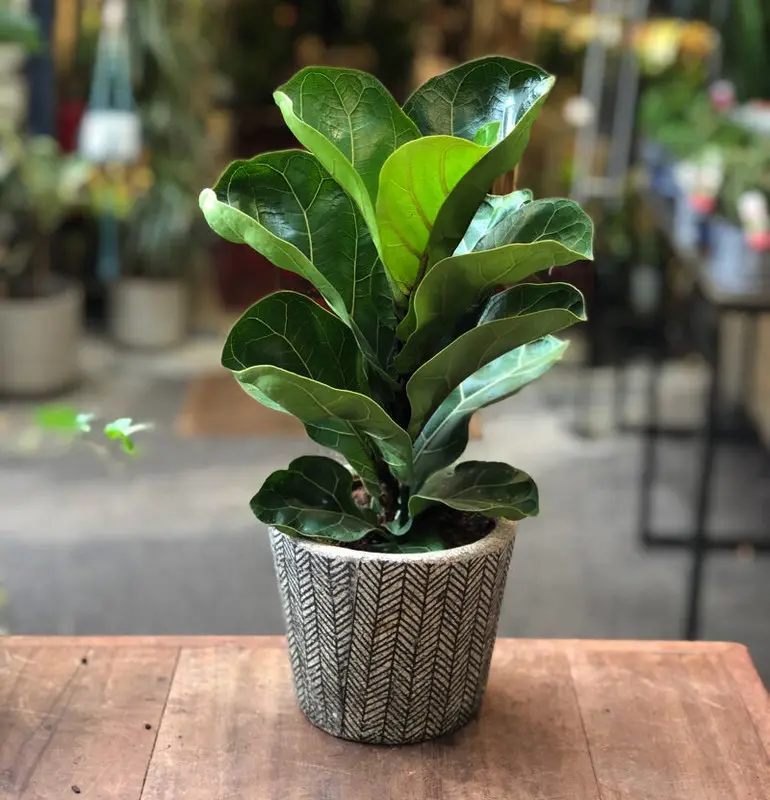
Ficus lyrata Bambino, widely recognized as the Fiddle Leaf Fig Bambino, is an appealing, compact cultivar derived from the larger Ficus lyrata species. This evergreen broadleaf tree, native to the tropical rainforests of West Africa, has been selectively bred to thrive as an indoor ornamental, typically reaching a manageable height of 0.6 to 1 meter (2 to 3 feet) in domestic settings. Its defining characteristic is its striking foliage: large, glossy, and leathery leaves that distinctly resemble a violin or lyre, which can extend up to 20 cm (8 inches) long and 15 cm (6 inches) wide.
These rich, dark green leaves often feature subtle, lighter veins and emerge from sturdy, upright stems. The smooth, greyish-brown bark contributes to its sleek, architectural presence. While the parent species, Ficus lyrata, can grow into a substantial tree exceeding 15 meters (50 feet) in its native habitat and produce small, inconspicuous figs, the 'Bambino' cultivar rarely flowers or fruits indoors.
It flourishes in bright, indirect light, appreciating consistent warmth and moderate to high humidity, making it a popular choice for enhancing interior landscapes due to its adaptable nature and dramatic aesthetic appeal.
Trusted Scientific References
1. Authoritative external sources for Ficus lyrata Bambino
1.1 Wikipedia — Ficus lyrata Bambino
1.2 Kew POWO (Plants of the World Online)
1.3 PubMed — peer-reviewed research
1.4 NCBI Taxonomy Browser
1.5 GBIF — Global Biodiversity
1.6Fiddle Leaf Fig Bambino should be interpreted through verified botanical identity, practical care, and responsible safety language. This recovery note adds the missing context needed for a complete profile: match light to the plant's habit, use well-drained soil, water according to season, and avoid unsupported medicinal or edible claims. For publishing, the plant can be presented as a source-backed indoor plant with clear care guidance, common problem diagnosis, and conservative safety wording.
1.1.Fiddle Leaf Fig Bambino — Standout Qualities
- ✓Compact Size — Reaches 2-3 feet tall, perfect for smaller indoor spaces.
- ✓Lyre — Shaped Leaves — Distinctive, large, glossy, dark green foliage.
- ✓Air Purifying — Helps remove indoor toxins like formaldehyde.
- ✓Ornamental Value — Highly sought after for its dramatic aesthetic appeal.
- ✓Easy Care — Relatively low maintenance with proper light and watering.
- ✓Tropical Origin — Native to West African rainforests, thrives in warm humidity.
- ✓Non — Flowering Indoors — Typically does not produce flowers or fruits as a houseplant.
- ✓Mildly Toxic — Sap is an irritant and plant is toxic if ingested by humans or pets.
- ✓Broadleaf Evergreen — Maintains lush foliage year-round.
- ✓Adaptable Houseplant — Tolerates common indoor conditions with care.
1.2.Fiddle Leaf Fig Bambino — In Brief
- ✓Compact Fiddle Leaf Fig cultivar, ideal for indoor spaces.
- ✓Recognised for air-purifying qualities and aesthetic value.
- ✓Requires bright, indirect light and consistent watering.
- ✓Milky sap contains irritants and is toxic if ingested.
- ✓Enhances well-being and reduces stress in home environments.
- ✓Low maintenance as a houseplant but sensitive to overwatering.
2.Fiddle Leaf Fig Bambino — Systematic Position
3.Fiddle Leaf Fig Bambino — Reference Facts
4.Fiddle Leaf Fig Bambino — Structural Profile
5.Fiddle Leaf Fig Bambino — Where It Grows
6.Fiddle Leaf Fig Bambino — Historical Applications
7.Fiddle Leaf Fig Bambino — Secondary Metabolites
- ✓Latex — Ficus lyrata contains a milky white latex sap rich in proteolytic enzymes like ficin, which can cause skin irritation and gastrointestinal upset if ingested.
- ✓Furanocoumarins — These phototoxic compounds are present in various Ficus species and can lead to dermatological reactions when skin is exposed to sap and then sunlight.
- ✓Calcium Oxalate Crystals — Known as raphides, these needle-like crystals are abundant in the plant's tissues and are responsible for the oral and gastrointestinal irritation upon ingestion.
- ✓Triterpenoids — Found in the plant's sap and tissues, these compounds contribute to the plant's defense mechanisms and may have some anti-inflammatory properties in other species, though not directly medicinally utilized here.
- ✓Flavonoids — General plant pigments with antioxidant properties, though their specific role or concentration in Ficus lyrata Bambino's 'medicinal' benefit is indirect.
- ✓Alkaloids — While not extensively studied for Ficus lyrata, various Ficus species may contain trace amounts of alkaloids, contributing to the plant's overall chemical profile.
- ✓Saponins — These natural detergents are found in some Ficus plants and can contribute to the irritant properties of the sap upon contact or ingestion.
- ✓Volatile Organic Compounds (VOCs) — The plant itself can emit certain VOCs, but its primary 'air-purifying' action is absorption rather than emission of beneficial compounds.
8.Fiddle Leaf Fig Bambino — Research Insights
- ✓Indoor Air Purification — The large, broad leaves of Ficus lyrata Bambino can effectively absorb common volatile organic compounds (VOCs) such as formaldehyde and benzene from indoor environments, contributing to cleaner air quality.
- ✓Stress Reduction and Mental Well-being — The presence of lush, living plants like the Fiddle Leaf Fig Bambino in interior spaces has been linked to reduced psychological stress, improved mood, and enhanced cognitive function, fostering a calming atmosphere.
- ✓Humidity Regulation — Through transpiration, Ficus lyrata Bambino can release moisture into the air, subtly increasing indoor humidity levels, which can be beneficial for respiratory health and skin hydration, especially in dry climates.
- ✓Aesthetic Enhancement — As a visually striking ornamental plant, it significantly improves the aesthetic appeal of living and working spaces, contributing to a sense of comfort and beauty that indirectly supports well-being.
- ✓Connection to Nature — For urban dwellers, caring for and observing the growth of plants like the Fiddle Leaf Fig Bambino offers a tangible connection to nature, promoting mindfulness and a sense of responsibility.
- ✓Improved Focus and Productivity — Studies suggest that incorporating plants into offices and study areas can lead to increased concentration and productivity, potentially by reducing mental fatigue and improving air quality.
- ✓Acoustic Damping — The dense foliage of Ficus lyrata Bambino can help absorb sound waves, slightly reducing ambient noise levels in enclosed spaces, creating a more peaceful environment.
- ✓Biophilic Design Element — Integrating Fiddle Leaf Fig Bambino into biophilic design principles can enhance human connection to natural environments, promoting overall health and well-being in built spaces.
8.1.Fiddle Leaf Fig Bambino — Health Applications
9.Fiddle Leaf Fig Bambino — Adverse Effects
9.1.Fiddle Leaf Fig Bambino — Caution Notes
- ✓Skin Irritation — Contact with the milky sap of Ficus lyrata Bambino can cause dermatitis, redness, itching, and blistering in sensitive individuals.
- ✓Oral Irritation — Ingestion of any part of the plant can lead to severe irritation of the mouth, throat, and gastrointestinal tract due to calcium oxalate crystals.
- ✓Gastrointestinal Distress — Symptoms after ingestion may include excessive drooling, vomiting, diarrhea, and abdominal pain in both humans and pets.
- ✓Allergic Reactions — Some individuals may experience allergic reactions to the plant's sap, including respiratory symptoms if airborne particles are inhaled.
- ✓Phototoxicity — While less common with F. lyrata, furanocoumarins in other Ficus species can cause skin sensitivity to sunlight after contact with sap.
- ✓Pet Toxicity — Ficus lyrata Bambino is toxic to cats, dogs, and horses, causing oral irritation and digestive upset if ingested.
- ✓Eye Irritation — Accidental contact of the sap with eyes can cause pain, redness, and temporary vision disturbances.
9.2.Fiddle Leaf Fig Bambino — Risk Assessment
- ✓Keep Out of Reach of Children and Pets — Ficus lyrata Bambino is toxic if ingested; ensure it is placed where young children and animals cannot access it.
- ✓Wear Gloves When Handling — Always use gloves when pruning, repotting, or handling the plant to avoid contact with the irritating sap.
- ✓Avoid Contact with Sap — If skin contact occurs, wash the affected area thoroughly with soap and water immediately.
- ✓Seek Medical Attention for Ingestion — In case of accidental ingestion, especially by children or pets, contact a poison control center or veterinarian without delay.
- ✓Monitor for Allergic Reactions — Individuals with known sensitivities to latex or other plant saps should exercise extra caution.
- ✓Proper Disposal of Plant Waste — Dispose of pruned leaves and stems carefully, ensuring they are not accessible to pets or wildlife.
- ✓Not for Internal Use — Ficus lyrata Bambino is strictly an ornamental plant and should never be consumed or used in traditional herbal preparations.
10.Fiddle Leaf Fig Bambino — Application Forms
- ✓Ornamental Display — Position the Fiddle Leaf Fig Bambino as a striking focal point in living rooms, offices, or other interior spaces to enhance aesthetic appeal.
- ✓Air Purification Placement — Strategically place the plant in areas with good air circulation to maximize its potential for absorbing indoor air pollutants.
- ✓Well-being Enhancement — Integrate the plant into personal spaces like bedrooms or meditation corners to promote a calming and natural environment.
- ✓Biophilic Design Integration — Incorporate Ficus lyrata Bambino into interior design schemes that aim to connect occupants with nature, improving overall comfort and productivity.
- ✓Educational Tool — Use the plant as a living example in botanical education, discussing plant care, photosynthesis, and indoor environmental benefits.
- ✓Gifting — Present the Fiddle Leaf Fig Bambino as a thoughtful and lasting gift for housewarmings, office openings, or special occasions.
- ✓Home Staging — Utilize the plant to add vibrancy and a touch of nature to homes being prepared for sale, enhancing their perceived value and appeal.
11.Fiddle Leaf Fig Bambino — Growth Requirements
- ✓Light — Provide bright, indirect light; direct afternoon sun can scorch the leaves of Fiddle Leaf Fig Bambino.
- ✓Watering — Water thoroughly when the top 2-3 inches of soil are dry, ensuring adequate drainage to prevent root rot.
- ✓Humidity — Maintain medium to high humidity, especially in dry indoor environments; misting or a pebble tray can help.
- ✓Soil — Use a well-draining, loamy potting mix that retains some moisture but prevents waterlogging.
- ✓Temperature — Keep temperatures between 18-24°C (65-75°F); avoid sudden temperature fluctuations or cold drafts.
- ✓Fertilization — Feed with a balanced liquid fertilizer every 2-4 weeks during the growing season (spring and summer), reducing in fall and winter.
- ✓Pruning — Prune to maintain desired shape and size, removing any yellowing or damaged leaves; use clean, sharp shears.
- ✓Repotting — Repot Ficus lyrata Bambino every 1-2 years into a slightly larger pot with fresh soil, typically in spring.
Reviewed by the Flora Medical Global Botanical Review Panel
Multi-disciplinary editorial group · Botany · Ethnobotany · Herbal-medicine literature
Who reviewed this: This page was checked by the Flora Medical Global Botanical Review Panel — an in-house editorial group of botany graduates, ethnobotany researchers, and horticulture practitioners who collectively maintain our 7,000+ plant encyclopedia. Meet the team.
Our 4-step verification process
1. Taxonomic verification
Scientific names and synonyms cross-checked against Kew POWO, World Flora Online, and The Plant List.
2. Phytochemical & medicinal cross-reference
Active compounds, traditional uses, and reported activities are cross-referenced with PubMed, USDA Dr. Duke's database, and peer-reviewed ethnobotanical literature.
3. Conservation & distribution check
Distribution, ecology, and conservation status confirmed against GBIF occurrence records and the IUCN Red List.
4. Editorial & safety review
Every entry passes an editorial pass for clarity, originality, and safety notices (toxicity, contraindications, dosage caveats) before publication.
Last reviewed:
Important medical disclaimer: This content is for educational and research purposes only. It is not medical advice and is not a substitute for consultation with a licensed healthcare provider. Do not use any herb to self-treat a medical condition without professional guidance.
Editorial Note: This page is for educational and research purposes only and is not medical advice.
Written by: Flora Medical Global Editorial Team
Reviewed by: Flora Medical Global Botanical Review Panel
Last Updated: June 15, 2026





Fiddle Leaf Fig Bambino — Comments & Community Reviews
Rate this plant