

Medical Disclaimer: This content is for educational purposes only. It is not medical advice. Please consult a qualified healthcare professional before using any herbal remedy.
Safety Overview
1.Filipendula Rubra — At a Glance
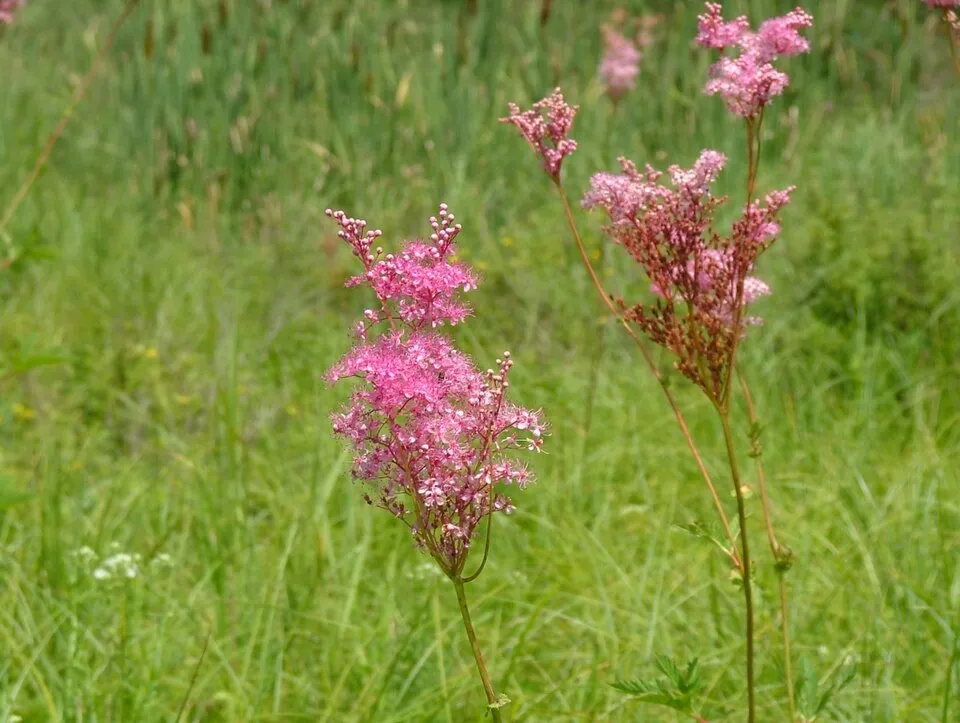
Filipendula rubra, commonly known as Queen-of-the-Prairie, stands as a magnificent, herbaceous perennial within the diverse Rosaceae family, celebrated for its striking ornamental appeal and ecological contributions. This impressive plant typically commands attention with its robust, upright growth habit, frequently attaining heights of 1.5 to 2.5 meters (5 to 8 feet). Its morphology is characterized by strong, often reddish-tinged stems that provide a sturdy framework for its abundant foliage and spectacular floral displays. The leaves are deeply lobed, pinnately compound, and a vibrant dark green, often measuring up to 30 cm in length. These large, lanceolate leaflets form a dense, visually appealing backdrop, with their undersides sometimes exhibiting a lighter, almost silvery hue due to fine pubescence.
The plant develops a fibrous and rhizomatous root system, enabling it to spread gradually and establish dense colonies. This contributes significantly to its stability in moist soils and enhances its effectiveness in erosion control in its natural habitats. The most captivating feature of Filipendula rubra is its stunning plumes of delicate, soft pink to rose-red flowers. These tiny, five-petaled blooms are densely packed into broad, fluffy panicles or racemes, which can span 10-20 cm across and typically emerge in early to mid-summer, from June to August. The ethereal, cloud-like appearance of these flower clusters is a major draw for various pollinators, including bees, butterflies, and other beneficial insects, making it an excellent choice for pollinator gardens.
The flowers emit a faint, sweet fragrance, adding another layer to its sensory appeal. Following the flowering period, small, dry achenes develop, each containing the plant's seeds. Native to the moist, lowland regions of the eastern and central United States, Filipendula rubra thrives in specific ecological niches, including wet prairies, open meadows, fens, swamps, and along the banks of rivers, streams, and lakeshores. It demonstrates a strong preference for full sun to partial shade, adapting well to consistently moist, rich, and acidic soils, although it can tolerate average or even drier conditions once well-established.
Trusted Scientific References
1. Authoritative external sources for Filipendula rubra
1.1 Wikipedia — Filipendula rubra
1.2 Kew POWO (Plants of the World Online)
1.3 PubMed — peer-reviewed research
1.4 NCBI Taxonomy Browser
1.5 GBIF — Global Biodiversity
1.1.Filipendula Rubra — Highlights
- ✓Common Name — Queen-of-the-Prairie
- ✓Scientific Name — Filipendula rubra
- ✓Family — Rosaceae (Rose Family)
- ✓Height — Reaches 1.5 to 2.5 meters (5 to 8 feet) tall
- ✓Flowers — Delicate, soft pink to rose-red, densely packed in fluffy panicles
- ✓Leaves — Deeply lobed, pinnately compound, dark green foliage
- ✓Habitat — Native to wet prairies, fens, and moist meadows of eastern/central USA
- ✓Medicinal Potential — Contains salicylates, suggesting anti-inflammatory and analgesic properties
- ✓Ecological Role — Attracts a wide range of pollinators, including bees and butterflies
- ✓Growth Habit — Robust, upright perennial with rhizomatous spread
1.2.Filipendula Rubra — Concise Overview
- ✓Filipendula rubra, or Queen-of-the-Prairie, is a stately Rosaceae perennial.
- ✓Known for its vibrant pink, fluffy flower plumes and impressive height.
- ✓Contains salicylates, offering potential anti-inflammatory and analgesic benefits.
- ✓Thrives in moist, rich, acidic soils in full sun to partial shade.
- ✓Important for pollinators and a striking ornamental landscape plant.
- ✓Exercise caution due to salicylate content, especially for children and those with aspirin sensitivity.
2.Filipendula Rubra — Botanical Identity
3.Filipendula Rubra — Key Data
4.Filipendula Rubra — Botanical Features
5.Filipendula Rubra — Ecological Habitat
6.Filipendula Rubra — Traditional Uses
7.Filipendula Rubra — Key Phytochemicals
- ✓Salicylate Derivatives — Key compounds include methyl salicylate and spirein, which are responsible for the plant's potential anti-inflammatory, analgesic, and antipyretic actions, similar to aspirin's mechanism.
- ✓Flavonoids — Such as quercetin, kaempferol, and their glycosides, contribute significant antioxidant activity, protecting cells from oxidative damage and exhibiting anti-inflammatory effects.
- ✓Tannins — Primarily ellagitannins and gallotannins, impart astringent properties, useful for toning tissues, reducing inflammation, and offering mild antiseptic benefits.
- ✓Phenolic Acids — Including caffeic acid, ferulic acid, and gallic acid, are potent antioxidants that scavenge free radicals and support cellular health.
- ✓Volatile Oils — Contains aromatic compounds like benzaldehyde and salicylic aldehyde, contributing to the plant's characteristic fragrance and potentially offering mild antiseptic qualities.
- ✓Glycosides — Various glycosides are present, influencing the plant's overall pharmacological activity and contributing to its bitter taste.
- ✓Mucilage — Provides demulcent properties, offering soothing effects on mucous membranes, particularly in the digestive tract.
- ✓Mineral Salts — Contains trace amounts of essential minerals absorbed from the soil, contributing to its overall nutritional profile.
- ✓Sugars — Simple and complex carbohydrates are present, serving as energy reserves for the plant.
- ✓Organic Acids — Various organic acids contribute to the plant's metabolism and may have minor therapeutic effects.
8.Filipendula Rubra — Scientific Evidence
- ✓Anti-inflammatory Support — Contains salicylate compounds, similar to those found in Meadowsweet (Filipendula ulmaria), which are recognized for their natural anti-inflammatory properties, potentially aiding in systemic inflammation reduction.
- ✓Analgesic Potential — The presence of salicylates suggests a natural pain-relieving effect, traditionally used to alleviate mild to moderate discomfort such as headaches, muscle aches, and joint pain.
- ✓Antipyretic Action — Historically, plants rich in salicylates have been employed to help reduce fever by promoting perspiration and cooling the body.
- ✓Digestive Aid — May offer soothing benefits for the digestive tract, traditionally used to ease mild stomach upset and promote healthy digestion, though specific research for F. rubra is limited.
- ✓Antioxidant Properties — Rich in flavonoids and phenolic acids, Filipendula rubra contributes to antioxidant defense, helping to neutralize free radicals and protect cells from oxidative stress.
- ✓Astringent Effects — Tannins present in the plant provide astringent qualities, which can be beneficial for toning tissues and potentially assisting in wound healing or reducing mild skin irritations when applied topically.
- ✓Diuretic Support — Traditional use suggests a mild diuretic action, potentially aiding in the excretion of excess fluids and supporting kidney function.
- ✓Antimicrobial Activity — Certain phenolic compounds and volatile oils may contribute to mild antimicrobial properties, offering a natural defense against some pathogens.
- ✓Gout and Arthritis Relief — Due to its anti-inflammatory and potential diuretic actions, it has been traditionally considered for supporting conditions like gout and various forms of arthritis by helping to reduce swelling and pain.
- ✓Circulatory Health — The mild blood-thinning effects associated with salicylates may contribute to supporting healthy circulation, though this should be considered with caution.
8.1.Filipendula Rubra — Indications & Uses
9.Filipendula Rubra — Safety Considerations
9.1.Filipendula Rubra — Possible Adverse Reactions
- ✓Gastric Irritation — Due to salicylate content, may cause stomach upset, nausea, or heartburn, especially if taken on an empty stomach.
- ✓Allergic Reactions — Individuals sensitive to aspirin or other salicylates may experience allergic reactions, including skin rashes, itching, or respiratory issues like asthma.
- ✓Anticoagulant Effects — Salicylates can thin the blood, increasing the risk of bleeding or bruising, particularly when combined with other blood-thinning medications.
- ✓Reye's Syndrome Risk — Avoid use in children and adolescents recovering from viral infections (e.g., flu, chickenpox) due to the potential risk of Reye's Syndrome, similar to aspirin.
- ✓Tinnitus — High doses may lead to ringing in the ears or temporary hearing impairment.
- ✓Drug Interactions — Can interact with non-steroidal anti-inflammatory drugs (NSAIDs), anticoagulants, and certain diabetic medications.
- ✓Nausea and Vomiting — May occur with excessive doses or in sensitive individuals.
9.2.Filipendula Rubra — Clinical Safety Notes
- ✓Pregnancy and Lactation — Avoid use during pregnancy and breastfeeding due to insufficient safety data and potential salicylate effects.
- ✓Children and Adolescents — Contraindicated in individuals under 16 years old, especially during viral illnesses, due to the risk of Reye's Syndrome.
- ✓Aspirin Allergy — Absolutely contraindicated for individuals with known allergies or hypersensitivity to aspirin or other salicylates.
- ✓Bleeding Disorders — Use with extreme caution, or avoid, in individuals with bleeding disorders or those on anticoagulant therapy.
- ✓Kidney and Liver Disease — Patients with pre-existing kidney or liver conditions should use this herb only under strict medical supervision.
- ✓Prior to Surgery — Discontinue use at least two weeks before any scheduled surgery to minimize the risk of increased bleeding.
- ✓Medical Consultation — Always consult a healthcare professional before using Filipendula rubra, especially if you have underlying health conditions or are taking other medications.
10.Filipendula Rubra — Usage Guide
- ✓Herbal Infusion (Tea) — Steep 1-2 teaspoons of dried flowers or leaves in hot water for 5-10 minutes; traditionally used for fever reduction and digestive comfort.
- ✓Decoction (Root/Stem) — Simmer 1 teaspoon of dried, chopped root or stem in 250 ml (1 cup) of water for 15-20 minutes; often used for more potent anti-inflammatory or diuretic effects.
- ✓Tincture — Prepare an alcohol-based extract using fresh or dried plant material; take prescribed drops diluted in water for systemic benefits.
- ✓Topical Poultice — Crush fresh leaves and apply directly to minor wounds, skin irritations, or aching joints for localized anti-inflammatory and astringent relief.
- ✓Fluid Extract — A more concentrated liquid preparation, typically taken in smaller doses under professional guidance for specific therapeutic goals.
- ✓Capsules/Tablets — Standardized extracts or powdered dried herb can be encapsulated for convenient internal administration, ensuring consistent dosing.
- ✓Topical Wash/Compress — Use a cooled infusion or decoction as a wash for skin conditions, or soak a cloth to apply as a compress for localized pain or swelling.
- ✓Herbal Bath — Add a strong infusion of the plant to bathwater to soothe muscle aches and promote relaxation.
11.Filipendula Rubra — Cultivation & Care
- ✓Site Selection — Choose a location with full sun to partial shade; F. rubra thrives with at least 6 hours of direct sunlight daily.
- ✓Soil Preparation — Prefers consistently moist, rich, organic soils with an acidic pH (below 6.8); amend heavy clay or sandy soils with compost to improve drainage and fertility.
- ✓Watering Requirements — Requires ample moisture, especially during dry periods; ensure the soil remains consistently damp but not waterlogged to mimic its native wetland habitats.
- ✓Propagation — Best propagated by dividing rootstocks in early spring or fall; seeds require cold stratification for successful germination.
- ✓Planting — Space plants 60-90 cm (2-3 feet) apart to accommodate their mature size and spread, allowing for good air circulation.
- ✓Fertilization — Benefits from a balanced, slow-release fertilizer in spring, or a top-dressing of compost to maintain soil fertility.
- ✓Maintenance — Generally low maintenance; deadhead spent flowers for tidiness, though it is not strictly necessary for continued blooming or plant health.
- ✓Pest and Disease Control — Typically resistant to most common pests and diseases, but monitor for occasional issues like powdery mildew in humid conditions or slug damage.
Reviewed by the Flora Medical Global Botanical Review Panel
Multi-disciplinary editorial group · Botany · Ethnobotany · Herbal-medicine literature
Who reviewed this: This page was checked by the Flora Medical Global Botanical Review Panel — an in-house editorial group of botany graduates, ethnobotany researchers, and horticulture practitioners who collectively maintain our 7,000+ plant encyclopedia. Meet the team.
Our 4-step verification process
1. Taxonomic verification
Scientific names and synonyms cross-checked against Kew POWO, World Flora Online, and The Plant List.
2. Phytochemical & medicinal cross-reference
Active compounds, traditional uses, and reported activities are cross-referenced with PubMed, USDA Dr. Duke's database, and peer-reviewed ethnobotanical literature.
3. Conservation & distribution check
Distribution, ecology, and conservation status confirmed against GBIF occurrence records and the IUCN Red List.
4. Editorial & safety review
Every entry passes an editorial pass for clarity, originality, and safety notices (toxicity, contraindications, dosage caveats) before publication.
Last reviewed:
Important medical disclaimer: This content is for educational and research purposes only. It is not medical advice and is not a substitute for consultation with a licensed healthcare provider. Do not use any herb to self-treat a medical condition without professional guidance.
Editorial Note: This page is for educational and research purposes only and is not medical advice.
Written by: Flora Medical Global Editorial Team
Reviewed by: Flora Medical Global Botanical Review Panel
Last Updated: June 15, 2026





Filipendula Rubra — Comments & Community Reviews
Rate this plant