
Medical Disclaimer: This content is for educational purposes only. It is not medical advice. Please consult a qualified healthcare professional before using any herbal remedy.
Safety Overview
1.Flowering Quince — Overview
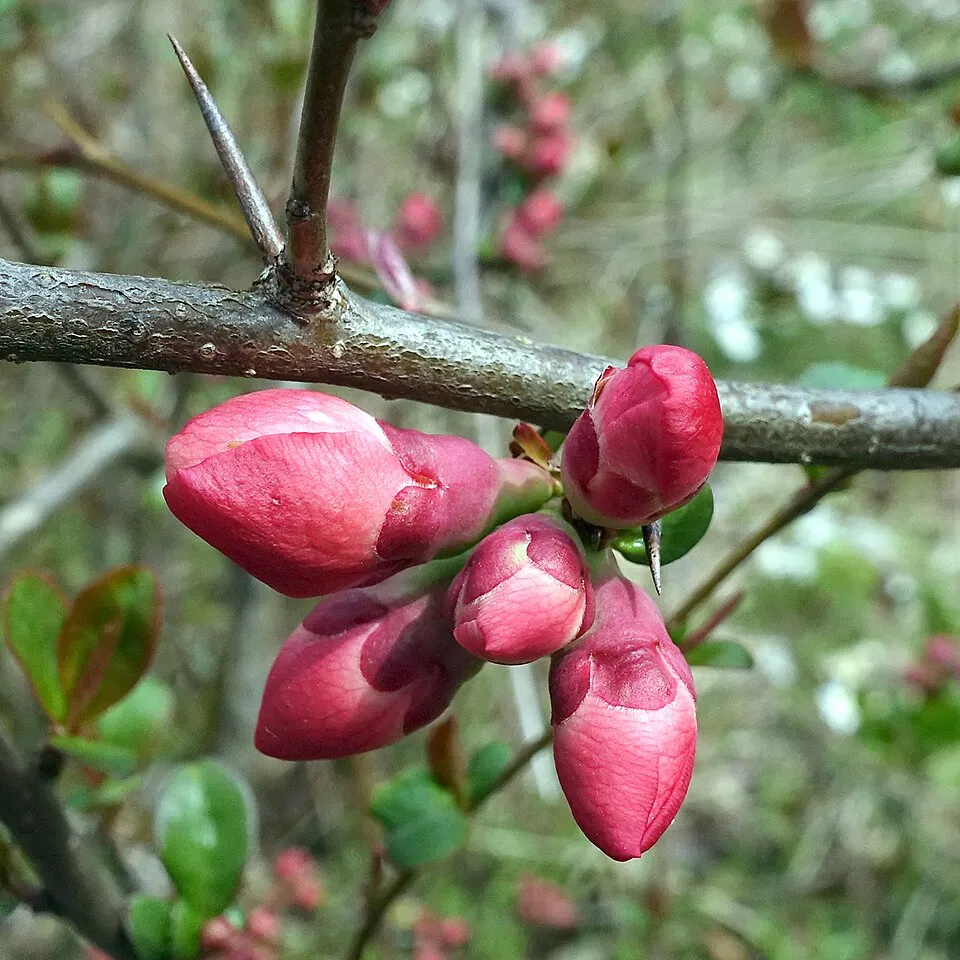
Flowering Quince, scientifically known as Chaenomeles speciosa, is a distinguished deciduous shrub belonging to the expansive Rosaceae family. This resilient plant typically attains a height of 3 to 6 feet (0.9 to 1.8 meters), forming a dense, multi-stemmed structure. Its foliage consists of glossy, dark green, ovate leaves, which are characteristically serrated along their margins and measure between 2 to 4 inches in length.
The most striking feature of Flowering Quince is its profusion of vibrant blossoms, which emerge in early spring before the leaves fully unfurl. These showy, five-petaled flowers present a captivating spectrum of colors, from pristine white and delicate pinks to intense deep reds and oranges, each blossom spanning approximately 1 to 2 inches in diameter. Following the floral display, the shrub produces small, hard, aromatic fruits known as quinces, which mature to a yellowish-green hue.
The bark is woody, possessing a rough, often fissured texture that ranges from light grayish to brownish, adding ornamental interest, particularly during the dormant winter months.
Native to the temperate regions of East Asia, primarily China, Chaenomeles speciosa is widely cultivated globally and flourishes in USDA hardiness zones 4 to 9. It exhibits remarkable adaptability to a diverse range of soil conditions, including sandy, clay, and loamy types, though it performs optimally in well-drained, fertile substrates.
While tolerant of poor drainage, consistent moisture and good aeration are preferred for robust growth. This versatile shrub is commonly utilized in landscaping for informal hedges, barrier plantings, or as a striking accent plant, contributing both aesthetic beauty and ecological benefits by supporting local pollinators and fostering biodiversity in garden ecosystems.
Trusted Scientific References
1. Authoritative external sources for Chaenomeles speciosa
1.1 Wikipedia — Chaenomeles speciosa
1.2 Kew POWO (Plants of the World Online)
1.3 PubMed — peer-reviewed research
1.4 NCBI Taxonomy Browser
1.5 GBIF — Global Biodiversity
1.1.Flowering Quince — Defining Traits
- ✓Deciduous shrub with a multi — stemmed growth habit.
- ✓Produces vibrant white, — Produces vibrant white, pink, or red flowers in early spring.
- ✓Bears hard, aromatic, yellowish — green fruits (quinces).
- ✓Leaves are glossy, — Leaves are glossy, dark green, ovate, and serrated.
- ✓Native to China — Native to China and widely cultivated in temperate regions.
- ✓Known for its — Known for its adaptability to various soil types and moderate drought tolerance.
- ✓Valued in traditional medicine for anti — inflammatory and pain-relieving properties.
- ✓Rich source of — Rich source of triterpenoid acids, flavonoids, and Vitamin C.
- ✓Supports local pollinators — Supports local pollinators and enhances garden biodiversity.
- ✓Can be used — Can be used for hedges, accent planting, or as a specimen shrub.
1.2.Flowering Quince — Snapshot Summary
- ✓Flowering Quince (Chaenomeles speciosa) is a versatile Rosaceae shrub with ornamental and medicinal value.
- ✓Traditionally used in TCM for rheumatism, digestive issues, and muscle relaxation.
- ✓Rich in triterpenoids, phenolic acids, flavonoids, and Vitamin C, offering antioxidant and anti-inflammatory benefits.
- ✓Exhibits potential antimicrobial, hepatoprotective, and antitumor activities.
- ✓Cultivated for its vibrant early spring flowers and aromatic, tart fruits.
- ✓Requires careful consideration for dosage and potential interactions, especially during pregnancy.
2.Flowering Quince — Scientific Profile
3.Flowering Quince — Botanical Stats
4.Flowering Quince — Structural Profile
5.Flowering Quince — Geographic Distribution
6.Flowering Quince — Cultural & Traditional Roles
7.Flowering Quince — Bioactive Constituents
- ✓Triterpenoid Acids — Key compounds like oleanolic acid (C30H48O3) and ursolic acid (C30H48O3) are characteristic markers, known for their anti-inflammatory, antitumor, and hepatoprotective activities.
- ✓Phenolic Acids — Includes gallic acid (C7H6O5), protocatechuic acid (C7H6O4), and p-hydroxybenzoic acid (C7H6O3), which contribute significantly to the plant's antioxidant and antimicrobial properties.
- ✓Phenylpropionic Acids — Notable examples are chlorogenic acid (C16H18O9) and caffeic acid (C9H8O4), potent antioxidants with anti-inflammatory and antiviral effects.
- ✓Flavonoids — A diverse group of compounds offering strong antioxidant, anti-inflammatory, and immunoregulatory benefits, protecting cells from oxidative damage.
- ✓Saccharides — Various sugars and polysaccharides are present, contributing to the plant's nutritional value and potentially influencing its immunomodulatory effects.
- ✓Essential Oils — Volatile aromatic compounds that contribute to the fruit's distinct fragrance and may possess antimicrobial and antinociceptive properties.
- ✓Alkaloids — While less prominent, some alkaloids have been isolated, which can have various physiological effects, though their specific roles in C. speciosa are still under investigation.
- ✓Vitamin C (Ascorbic Acid) — Abundant in the fruit, providing essential antioxidant support and crucial for immune function and collagen synthesis.
- ✓Organic Acids — A range of organic acids such as citric acid, malic acid, and succinic acid contribute to the fruit's sour taste and overall nutritional profile.
- ✓Fatty Acids — Includes compounds like octadecanoic acid and hexadecanoic acid, which are components of the plant's lipids and may have various biological roles.
8.Flowering Quince — What Research Suggests
- ✓Anti-inflammatory Properties — Chaenomeles speciosa contains triterpenoids and flavonoids that help modulate inflammatory pathways, reducing swelling and pain associated with various conditions.
- ✓Antinociceptive Effects — The plant's compounds, particularly triterpenoid acids, have demonstrated pain-relieving capabilities by interfering with pain signal transmission.
- ✓Antimicrobial Activity — Extracts of Flowering Quince exhibit inhibitory effects against certain bacteria and fungi, contributing to its traditional use in treating infections like dysentery.
- ✓Antioxidant Protection — Rich in phenolic acids, flavonoids, and vitamin C, Chaenomeles speciosa effectively neutralizes free radicals, mitigating oxidative stress and cellular damage.
- ✓Immunoregulatory Support — Specific polysaccharides and other constituents may modulate immune responses, helping to balance and strengthen the body's defense mechanisms.
- ✓Antiparkinsonian Potential — Preliminary research suggests that certain compounds in the plant could offer neuroprotective effects, potentially aiding in the management of Parkinson's disease symptoms.
- ✓Hepatoprotective Action — The fruit's active components may protect liver cells from damage caused by toxins, supporting overall liver health and function.
- ✓Antitumor Properties — Studies indicate that triterpenoid acids like oleanolic and ursolic acids can inhibit the proliferation of various cancer cell lines and induce apoptosis.
- ✓Muscle and Tendon Relaxation — In Traditional Chinese Medicine (TCM), the fruit is valued for its ability to relax muscles and tendons, alleviating spasms and discomfort.
- ✓Digestive Harmony — Traditionally used to harmonize the stomach, it can help soothe digestive upsets, including enteritis and cholera.
- ✓Vitamin C Deficiency Treatment — Historically, the fruit was consumed to prevent and treat scurvy due to its high ascorbic acid content.
- ✓Rheumatism Relief — The anti-inflammatory and antinociceptive properties contribute to its traditional application in managing symptoms of rheumatism.
8.1.Flowering Quince — Indications & Uses
9.Flowering Quince — Precautions & Warnings
9.1.Flowering Quince — Possible Adverse Reactions
- ✓Gastrointestinal Upset — High consumption of raw fruit due to its astringency can cause stomach discomfort or constipation in sensitive individuals.
- ✓Allergic Reactions — Rare, but individuals sensitive to other Rosaceae family plants might experience allergic symptoms.
- ✓Tannin Sensitivity — The presence of tannins can cause irritation in some people, particularly in large doses.
- ✓Drug Interactions — Potential interactions with medications, especially those affecting blood clotting or liver enzymes, due to its active compounds.
- ✓Hypotension — In theory, compounds with vasorelaxant properties could lower blood pressure if consumed in very high amounts.
- ✓Pregnancy and Lactation — Lack of sufficient safety data advises against use during pregnancy and breastfeeding.
- ✓Seed Toxicity — Quince seeds contain cyanogenic glycosides, which can release cyanide when ingested in large quantities, though typically not an issue with common fruit consumption.
9.2.Flowering Quince — Safety Overview
- ✓Pregnancy and Lactation — Contraindicated due to insufficient research on safety during these periods.
- ✓Children — Use with caution and under professional guidance; dosage adjustments are crucial for pediatric populations.
- ✓Gastrointestinal Sensitivity — Individuals with sensitive stomachs or pre-existing digestive conditions should use with care, starting with small doses.
- ✓Hypotension Risk — Patients on blood pressure lowering medications or with naturally low blood pressure should consult a healthcare provider.
- ✓Bleeding Disorders — Potential for interaction with anticoagulant or antiplatelet drugs due to its effects on blood clotting; avoid before surgery.
- ✓Allergies — Avoid if allergic to plants in the Rosaceae family (e.g., apples, pears).
- ✓Seed Ingestion — Avoid ingesting large quantities of raw seeds due to potential cyanogenic glycosides; cooked fruit typically renders these harmless.
10.Flowering Quince — Preparation & Dosage
- ✓Herbal Tea (Fruit) — Dried slices of Flowering Quince fruit (Mugua) can be steeped in hot water to make a soothing herbal tea, often used for digestive discomfort or general wellness.
- ✓Decoction (Fruit) — A stronger preparation involves simmering the dried fruit in water for an extended period, traditionally consumed for conditions like rheumatism or muscle pain.
- ✓Tincture (Fruit/Leaf) — Alcoholic extracts can be made from the fruit or sometimes the leaves, allowing for concentrated dosing and longer shelf life.
- ✓Culinary Use (Fruit) — The hard, tart fruits can be cooked to make jellies, jams, preserves, or added to baked goods, often combined with sweeter fruits due to their astringency.
- ✓Topical Application (Poultice) — Mashed or powdered fruit can be prepared as a poultice and applied externally to soothe sore muscles or joints.
- ✓Syrup (Fruit) — Infusions of the fruit can be reduced into a syrup, useful for coughs or as a general tonic, sweetened with honey or sugar.
- ✓Infused Oil (Fruit) — Dried fruit can be infused into a carrier oil for topical application as a massage oil for aching muscles or skin issues.
- ✓Dietary Supplement (Extract) — Standardized extracts of Flowering Quince are available in capsule or tablet form for specific therapeutic applications.
11.Flowering Quince — Growth Requirements
- ✓Site Selection — Plant in a location with full sun to partial shade; full sun promotes more abundant flowering and fruiting.
- ✓Soil Requirements — Prefers well-drained, fertile soil, but is highly adaptable to a variety of soil types including sandy, clay, and loamy.
- ✓Watering — Water regularly, especially during dry periods and for newly planted shrubs, to establish a strong root system.
- ✓Fertilization — Apply a balanced, slow-release fertilizer in early spring to support vigorous growth and flowering.
- ✓Pruning — Prune after flowering to maintain shape, remove dead or crossing branches, and encourage new growth for future blooms.
- ✓Propagation — Can be propagated by seeds (requires stratification), softwood cuttings in summer, or by division of suckers.
- ✓Hardiness — Thrives in USDA hardiness zones 4 to 9, tolerating a wide range of temperatures.
- ✓Pest and Disease Control — Generally resistant to most pests and diseases, but monitor for common issues like leaf spot or scale insects.
Reviewed by the Flora Medical Global Botanical Review Panel
Multi-disciplinary editorial group · Botany · Ethnobotany · Herbal-medicine literature
Who reviewed this: This page was checked by the Flora Medical Global Botanical Review Panel — an in-house editorial group of botany graduates, ethnobotany researchers, and horticulture practitioners who collectively maintain our 7,000+ plant encyclopedia. Meet the team.
Our 4-step verification process
1. Taxonomic verification
Scientific names and synonyms cross-checked against Kew POWO, World Flora Online, and The Plant List.
2. Phytochemical & medicinal cross-reference
Active compounds, traditional uses, and reported activities are cross-referenced with PubMed, USDA Dr. Duke's database, and peer-reviewed ethnobotanical literature.
3. Conservation & distribution check
Distribution, ecology, and conservation status confirmed against GBIF occurrence records and the IUCN Red List.
4. Editorial & safety review
Every entry passes an editorial pass for clarity, originality, and safety notices (toxicity, contraindications, dosage caveats) before publication.
Last reviewed:
Important medical disclaimer: This content is for educational and research purposes only. It is not medical advice and is not a substitute for consultation with a licensed healthcare provider. Do not use any herb to self-treat a medical condition without professional guidance.
Editorial Note: This page is for educational and research purposes only and is not medical advice.
Written by: Flora Medical Global Editorial Team
Reviewed by: Flora Medical Global Botanical Review Panel
Last Updated: June 15, 2026





Flowering Quince — Comments & Community Reviews
Rate this plant