
Medical Disclaimer: This content is for educational purposes only. It is not medical advice. Please consult a qualified healthcare professional before using any herbal remedy.
Safety Overview
1.Fountain Grass — Essential Profile
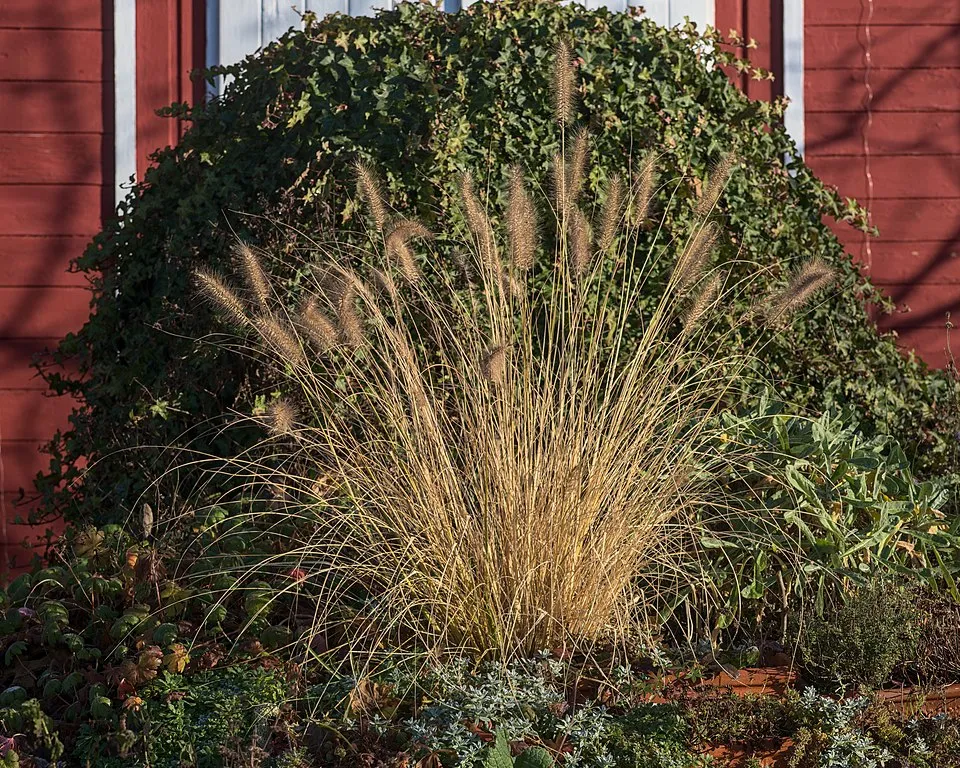
Fountain Grass, scientifically known as Pennisetum alopecuroides, and recently reclassified under the genus Cenchrus, is a resilient warm-season perennial grass celebrated for its distinctive ornamental appeal. Native to meadows and open woods, particularly alongside streams in Eastern Asia (primarily China and Japan) and Australia, this species forms dense, graceful clumps. Its finely textured, deep green foliage typically reaches heights of 1 to 4 feet, initially growing upright before arching elegantly to create a cascading, fountain-like silhouette.
The narrow, subtly serrated blades turn a rich orange-bronze in autumn, eventually fading to a dull beige, providing considerable winter interest. In late summer to early fall, showy, bottle-brush-like inflorescences emerge above the foliage, ranging in color from silvery-white to pink, copper, or deep purple, depending on the cultivar. These fuzzy plumes, which contain the hidden seeds, are particularly dramatic when backlit by the sun.
Pennisetum alopecuroides is adaptable, thriving in most well-drained soils and preferring full sun, though it tolerates part shade. It demonstrates remarkable drought tolerance once established and is hardy to USDA Zones 4 or 5, with some cultivars extending its range. Its robust nature and extensive root system also make it an effective choice for erosion control in various landscapes.
Trusted Scientific References
1. Authoritative external sources for Pennisetum alopecuroides
1.1 Wikipedia — Pennisetum alopecuroides
1.2 Kew POWO (Plants of the World Online)
1.3 PubMed — peer-reviewed research
1.4 NCBI Taxonomy Browser
1.5 GBIF — Global Biodiversity
1.6Fountain Grass should be interpreted through verified botanical identity, practical care, and responsible safety language. This recovery note adds the missing context needed for a complete profile: match light to the plant's habit, use well-drained soil, water according to season, and avoid unsupported medicinal or edible claims. For publishing, the plant can be presented as a source-backed garden plant with clear care guidance, common problem diagnosis, and conservative safety wording.
1.1.Fountain Grass — Highlights
- ✓Distinctive Fountain — like Form — Arching foliage and plumes create a graceful, cascading appearance.
- ✓Showy Plumes — Fuzzy, bottle-brush inflorescences in white, pink, copper, or purple emerge late summer.
- ✓Warm — Season Perennial — Begins growth later in spring, thriving in summer heat.
- ✓Drought Tolerant — Highly adaptable to dry conditions once established, ideal for xeriscaping.
- ✓Erosion Control — Extensive fibrous root system effectively stabilizes soil on slopes.
- ✓Deer Resistant — Generally unpalatable to deer, making it a reliable garden plant.
- ✓Low Maintenance — Requires minimal care, primarily annual trimming of old foliage.
- ✓Autumn Color — Foliage transitions to attractive orange-bronze hues in fall.
- ✓Winter Interest — Dried plumes and foliage persist, offering visual appeal through winter.
- ✓Diverse Cultivars — Available in various sizes and plume colors, offering versatility for landscape design.
1.2.Fountain Grass — At-a-Glance Summary
- ✓Ornamental Value — Highly prized for its distinctive fountain-like form and graceful plumes.
- ✓Ecological Benefits — Excellent for soil stabilization, erosion control, and supporting biodiversity.
- ✓Low Maintenance — Drought-tolerant and deer-resistant, requiring minimal care once established.
- ✓Warm-Season Perennial — Thrives in full sun and well-drained soils, hardy to USDA Zones 4/5.
- ✓Non-Medicinal — Primarily valued for aesthetic and environmental contributions, not for medicinal uses.
- ✓Taxonomic Reclassification — Now often classified under the genus Cenchrus.
2.Fountain Grass — Botanical Identity
3.Fountain Grass — Vital Statistics
4.Fountain Grass — Botanical Description
5.Fountain Grass — Ecological Habitat
6.Fountain Grass — Heritage Uses
7.Fountain Grass — Phytochemistry
- ✓The specific primary constituents of Pennisetum alopecuroides are not extensively documented in dedicated phytochemical studies, reflecting its primary role as an ornamental plant. However, as a member of the Poaceae family, it is expected to contain a range of secondary metabolites common to grasses.
- ✓Flavonoids — A class of polyphenolic compounds known for potential antioxidant and anti-inflammatory activities, commonly found in plant tissues for defense.
- ✓Phenolic Acids — Organic acids such as caffeic and ferulic acid, which contribute to antioxidant properties and play roles in plant structural integrity and defense mechanisms.
- ✓Polysaccharides — Complex carbohydrates that form structural components of the plant cell walls and may possess immunomodulatory potential, as observed in other grass species.
- ✓Lignans — Phytoestrogenic compounds with potential antioxidant properties, typically found in plant cell walls and seeds, contributing to plant defense.
- ✓Triterpenoids — A diverse group of compounds with various biological activities, including potential anti-inflammatory effects, found across the plant kingdom.
- ✓Waxes and Cutin — Lipids forming the protective outer layer of leaves and stems, crucial for reducing water loss and providing physical defense against environmental stressors.
- ✓Silica — Mineral deposits within epidermal cells, providing significant structural rigidity and enhancing defense against herbivores and pathogens.
- ✓Chlorophylls and Carotenoids — Pigments essential for photosynthesis, also acting as potent antioxidants within the plant's cellular systems.
- ✓Alkaloids — Nitrogen-containing compounds, generally present in low concentrations in Poaceae, with diverse pharmacological activities in other plant families, but not prominent here.
- ✓Fatty Acids — Components of plant lipids, essential for cell membrane structure and energy storage, found in seeds and vegetative parts.
8.Fountain Grass — Pharmacological Findings
- ✓While Pennisetum alopecuroides is primarily valued for its significant ornamental and ecological contributions, specific traditional or modern medicinal applications are not widely documented in established herbal pharmacopeias or scientific literature. However, like many plants, it possesses general attributes that contribute to environmental health and aesthetic well-being.
- ✓Aesthetic Enhancement — Provides visual tranquility and beauty in landscapes, promoting psychological well-being and a sense of calm.
- ✓Soil Stabilization — Its dense, fibrous root system effectively prevents soil erosion on slopes and in vulnerable areas, crucial for ecological health.
- ✓Habitat Provision — Offers shelter and nesting sites for small wildlife and insects, thereby supporting local biodiversity and ecosystem balance.
- ✓Air Quality Improvement — Contributes to local air purification through the natural process of photosynthesis, like most green plants.
- ✓Carbon Sequestration — Absorbs atmospheric carbon dioxide, playing a minor yet collective role in mitigating climate change.
- ✓Drought Resilience — Its ability to thrive in dry conditions makes it a sustainable and water-wise choice for xeriscaping and low-irrigation gardens.
- ✓Low Maintenance Landscaping — Reduces the need for intensive care, promoting sustainable and less resource-intensive garden practices.
- ✓Pest and Disease Resistance — Generally robust and resilient, minimizing the need for chemical interventions in garden management.
- ✓Noise Reduction — Large, dense clumps of grass can offer a minor degree of sound dampening in urban or noisy environments.
- ✓Stress Reduction — The presence of natural elements and green spaces in a garden setting is known to contribute to reduced human stress levels and improved mood.
8.1.Fountain Grass — Therapeutic Indications
9.Fountain Grass — Safety & Side Effects
9.1.Fountain Grass — Warnings
- ✓Allergic Reactions — Pollen produced by Fountain Grass can cause seasonal allergies (hay fever) or respiratory sensitivities in susceptible individuals.
- ✓Skin Irritation — Contact with the subtly serrated leaf blades may cause minor cuts or skin irritation for some individuals.
- ✓Invasiveness Risk — In warmer climates (USDA Zone 7 and above), it can self-seed prolifically and become weedy or invasive, outcompeting native species.
- ✓Digestive Upset (if ingested) — While not typically consumed, ingestion of large quantities by humans or pets could potentially cause mild gastrointestinal discomfort due to roughage.
- ✓Habitat Disruption — Unchecked spread in non-native ecosystems can alter local plant communities and disrupt natural habitats.
- ✓Marginal Hardiness — In colder zones (e.g., Zone 4), parts of the crown may die out in harsh winters, leading to lopsided or misshapen plants.
9.2.Fountain Grass — Toxicity Assessment
- ✓Non-toxic (Generally) — Pennisetum alopecuroides is generally considered non-toxic to humans and common pets through casual contact or incidental ingestion.
- ✓Pollen Allergen — Known to produce airborne pollen that can trigger seasonal allergic rhinitis in sensitive individuals.
- ✓Environmental Monitoring — In warmer regions, monitor its spread to manage self-seeding and prevent potential invasive tendencies.
- ✓Handling Precautions — Wear garden gloves when handling or pruning to avoid minor cuts from the finely serrated leaf margins.
- ✓Pest and Disease Resistant — Exhibits good natural resistance to most common garden pests and diseases, requiring minimal chemical intervention.
- ✓Deer Resistant — Generally not browsed by deer, making it a reliable choice for landscapes where deer are a concern.
- ✓Crown Rot Prevention — Ensure proper planting and well-drained soil to prevent crown rot, especially in very moist conditions.
10.Fountain Grass — Preparation Methods
- ✓Ornamental Planting — Utilized extensively in gardens, borders, and rockeries for its graceful form and aesthetic appeal.
- ✓Erosion Control — Planted on slopes, embankments, or other unstable soils to stabilize the ground due to its extensive fibrous root system.
- ✓Landscape Design — Employed as a specimen plant, focal point in smaller areas, or massed in large groups as a tall ground cover.
- ✓Water Garden Edging — Softens the edges of ponds, streams, or water features, with its reflection creating a particularly beautiful effect.
- ✓Winter Interest — Dried foliage and flower plumes provide architectural interest and texture in the landscape throughout the colder months.
- ✓Informal Edging — Creates a soft, natural border along hardscapes, pathways, or garden beds.
- ✓Wildlife Habitat — Provides shelter and seeds for local birds and other small garden creatures, enhancing garden biodiversity.
- ✓Container Planting — Smaller cultivars can be grown in containers for patios or balconies, offering portable aesthetic appeal.
11.Fountain Grass — How to Grow
- ✓Site Selection — Plant Fountain Grass in full sun for optimal flowering; it tolerates part shade but may flower less profusely.
- ✓Soil Requirements — Adaptable to most soil types, but prefers well-drained conditions to prevent crown rot, especially in moist environments.
- ✓Planting Depth — Ensure the crown of the plant is positioned above ground level, particularly in areas with heavy or moist soils.
- ✓Watering — Water regularly during establishment; once mature, it is drought-tolerant and requires minimal supplemental irrigation.
- ✓Pruning — In late winter or early spring before new growth appears, cut back old foliage to 3-6 inches above the ground.
- ✓Division — Divide mature clumps every three years in spring to rejuvenate the plant and prevent the center from dying out.
- ✓Hardiness — Hardy in USDA Zones 4-5, though it can be marginally hardy in zone 4, requiring careful siting and potentially winter protection.
- ✓Pest & Disease Management — Generally deer-resistant and experiences few pest or disease problems, making it a low-maintenance choice.
Reviewed by the Flora Medical Global Botanical Review Panel
Multi-disciplinary editorial group · Botany · Ethnobotany · Herbal-medicine literature
Who reviewed this: This page was checked by the Flora Medical Global Botanical Review Panel — an in-house editorial group of botany graduates, ethnobotany researchers, and horticulture practitioners who collectively maintain our 7,000+ plant encyclopedia. Meet the team.
Our 4-step verification process
1. Taxonomic verification
Scientific names and synonyms cross-checked against Kew POWO, World Flora Online, and The Plant List.
2. Phytochemical & medicinal cross-reference
Active compounds, traditional uses, and reported activities are cross-referenced with PubMed, USDA Dr. Duke's database, and peer-reviewed ethnobotanical literature.
3. Conservation & distribution check
Distribution, ecology, and conservation status confirmed against GBIF occurrence records and the IUCN Red List.
4. Editorial & safety review
Every entry passes an editorial pass for clarity, originality, and safety notices (toxicity, contraindications, dosage caveats) before publication.
Last reviewed:
Important medical disclaimer: This content is for educational and research purposes only. It is not medical advice and is not a substitute for consultation with a licensed healthcare provider. Do not use any herb to self-treat a medical condition without professional guidance.
Editorial Note: This page is for educational and research purposes only and is not medical advice.
Written by: Flora Medical Global Editorial Team
Reviewed by: Flora Medical Global Botanical Review Panel
Last Updated: June 15, 2026





Fountain Grass — Comments & Community Reviews
Rate this plant