

Medical Disclaimer: This content is for educational purposes only. It is not medical advice. Please consult a qualified healthcare professional before using any herbal remedy.
Safety Overview
1.Franklinia Alatamaha — Overview
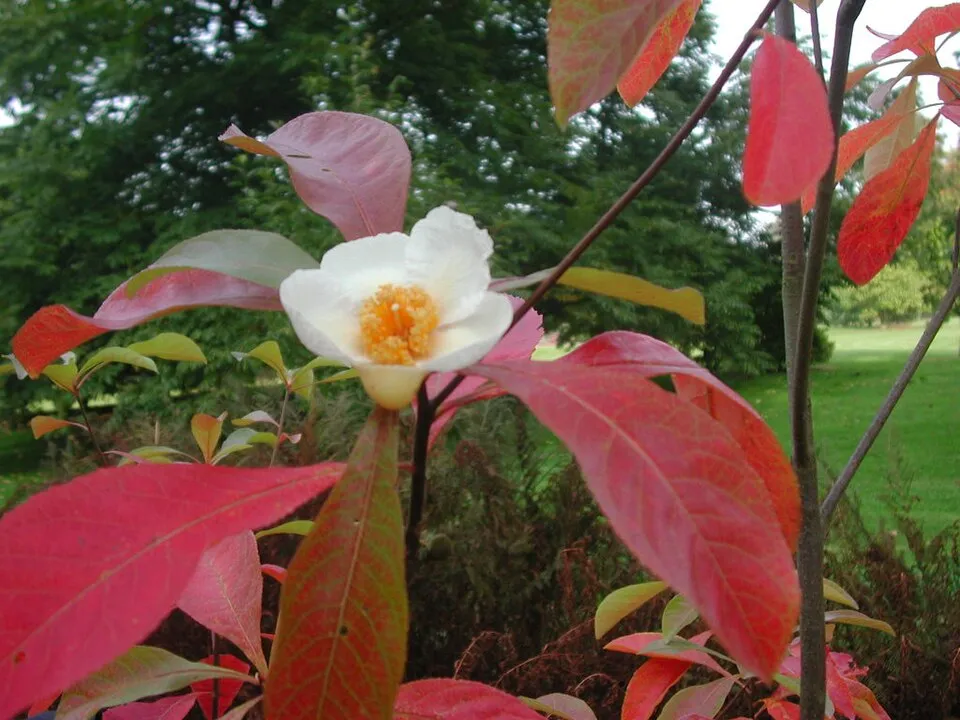
Franklinia alatamaha, commonly known as the Franklin tree, is an exceptionally rare and horticulturally significant deciduous tree belonging to the Theaceae family, which also includes the widely recognized tea plant (Camellia sinensis). This botanical treasure is uniquely endemic to a confined area within the Altamaha River basin in Georgia, USA. Its tragic fate saw it last observed in its natural habitat in 1803, marking its extinction in the wild. All existing specimens globally are direct descendants of seeds meticulously collected by the renowned botanist William Bartram in the late 18th century, who fittingly named the genus in homage to his close friend, Benjamin Franklin.
The Franklin tree typically grows to a height of 4 to 9 meters (13 to 30 feet), occasionally reaching up to 12 meters, forming an elegant, often multi-stemmed structure crowned by a broad, rounded canopy that provides excellent shade. Its bark is characteristically smooth and gray, often subtly marked with lighter vertical lines, gradually developing a finely furrowed texture with age. The root system tends to be fibrous and somewhat shallow, thriving best in well-drained, consistently moist, and acidic soil conditions. A remarkable feature is its foliage: elliptic to obovate leaves, 5 to 10 cm (2 to 4 inches) long, with finely serrated margins and a lustrous, deep green color throughout the summer.
These leaves undergo a spectacular transformation in autumn, displaying brilliant shades of golden-yellow, vibrant orange, and rich reddish-purple, offering outstanding seasonal visual appeal. The tree's most celebrated attribute is its striking flowers; large, cup-shaped blooms up to 8 cm (3 inches) in diameter, featuring five pure white petals encircling a prominent cluster of bright yellow stamens. These fragrant flowers appear from late summer into early autumn, an unusual blooming period for a temperate tree, making it a valuable late-season nectar source for pollinators such as bees and butterflies. The fruit is a distinctive five-valved woody capsule that matures over the following year, providing additional interest.
Trusted Scientific References
1. Authoritative external sources for Franklinia alatamaha
1.1 Wikipedia — Franklinia alatamaha
1.2 Kew POWO (Plants of the World Online)
1.3 PubMed — peer-reviewed research
1.4 NCBI Taxonomy Browser
1.5 GBIF — Global Biodiversity
1.1.Franklinia Alatamaha — Key Features
- ✓Extinct in the wild — All specimens are cultivated descendants of original collections.
- ✓Late — season flowering — Blooms profusely from late summer into early autumn, a unique trait.
- ✓Striking autumn foliage — Leaves transform into vibrant golden-yellow, orange, and reddish-purple.
- ✓Fragrant white flowers — Large, cup-shaped blooms with prominent yellow stamens.
- ✓Medium — sized deciduous tree — Typically grows 4-9 meters tall, suitable for various landscapes.
- ✓Member of Theaceae family — Related to Camellia and the tea plant.
- ✓Historical significance — Named after Benjamin Franklin by William Bartram.
- ✓High ornamental value — Prized for its beauty, rarity, and seasonal interest.
- ✓Conservation icon — Represents efforts to preserve endangered botanical species.
- ✓Prefers acidic, moist, well — drained soil — Specific cultivation requirements for optimal health.
1.2.Franklinia Alatamaha — Snapshot Summary
- ✓Franklinia alatamaha is a rare, deciduous tree, extinct in the wild, known for its late-season white flowers and brilliant fall foliage.
- ✓All existing trees descend from seeds collected by William Bartram in the 18th century.
- ✓It is primarily cultivated as an ornamental specimen, valued for its unique aesthetic appeal and conservation significance.
- ✓Requires specific growing conditions — moist, well-drained, acidic soil and protection from extreme heat or drought.
- ✓No established traditional or modern medicinal uses for humans; any potential benefits are speculative or indirect (e.g., ornamental, ecological).
- ✓Faces horticultural challenges including susceptibility to root rot, wilt, and certain pests.
2.Franklinia Alatamaha — Scientific Profile
3.Franklinia Alatamaha — Reference Facts
4.Franklinia Alatamaha — Plant Morphology
5.Franklinia Alatamaha — Geographic Distribution
6.Franklinia Alatamaha — Cultural & Traditional Roles
7.Franklinia Alatamaha — Active Compounds
- ✓Flavonoids — Expected to contain various flavonoids, common in the Theaceae family, which typically exhibit antioxidant and anti-inflammatory properties, though specific compounds in Franklinia alatamaha are not well-documented.
- ✓Tannins — Likely present, given its family lineage, contributing to astringent qualities. Tannins are often associated with plant defense mechanisms and potential antioxidant activity.
- ✓Phenolic Acids — These compounds, such as gallic acid or caffeic acid derivatives, are broadly distributed in plants and may be found in Franklinia alatamaha, contributing to general antioxidant capacity.
- ✓Terpenoids — While not extensively studied, triterpenoids or diterpenoids could be present, common in many plant species for defense and physiological functions.
- ✓Saponins — Some Theaceae members contain saponins, which are glycosides known for their foaming properties and sometimes for adaptogenic or immune-modulating activities, though their presence and role in Franklinia are speculative.
- ✓Catechins (Speculative) — As a relative of the tea plant, the presence of catechins, particularly epicatechin derivatives, might be hypothesized, which are potent antioxidants.
- ✓Plant Pigments (Anthocyanins, Carotenoids) — Responsible for the brilliant autumn foliage, these pigments are known antioxidants and play roles in plant protection against environmental stress.
- ✓Lignans — These phenolic compounds are occasionally found in woody plants and can have various biological activities, though specific data for Franklinia alatamaha is not available.
8.Franklinia Alatamaha — Research Insights
- ✓Ornamental Value for Mental Well-being — The exquisite beauty of Franklinia alatamaha, with its striking flowers and vibrant autumn foliage, offers significant aesthetic pleasure, contributing to reduced stress and improved mood, thereby promoting mental well-being in garden settings.
- ✓Ecological Support for Pollinators — Its late-season flowering provides a crucial nectar source for bees, butterflies, and other beneficial insects, supporting local biodiversity and ecological balance, which is an indirect benefit to ecosystem health.
- ✓Conservation Awareness and Education — As a species extinct in the wild, the Franklin tree serves as a living emblem for conservation efforts, raising awareness about habitat loss and the importance of botanical preservation, fostering a deeper connection to nature.
- ✓Potential Antioxidant Properties (Speculative) — While not traditionally used medicinally, as a member of the Theaceae family (which includes Camellia sinensis, the tea plant), Franklinia alatamaha may hypothetically contain beneficial phenolic compounds and antioxidants, though specific research is lacking.
- ✓Aesthetic Appeal in Landscaping — The unique flowering period and dramatic fall color make Franklinia alatamaha a highly valued specimen tree in landscaping, enhancing outdoor spaces and potentially increasing property value through its rare beauty.
- ✓Air Quality Improvement — Like all trees, Franklinia alatamaha contributes to local air quality by absorbing carbon dioxide and releasing oxygen, a general environmental benefit that supports overall human health indirectly.
- ✓Shade Provision and Temperature Regulation — Its moderate size and rounded crown offer appealing shade, which can help cool surrounding areas and reduce urban heat island effects, contributing to more comfortable living environments.
- ✓Soil Stabilization and Erosion Control — The fibrous root system of the Franklin tree can assist in stabilizing soil, particularly in its preferred well-drained, acidic conditions, mitigating erosion in garden or landscape applications.
8.1.Franklinia Alatamaha — Therapeutic Indications
9.Franklinia Alatamaha — Precautions & Warnings
9.1.Franklinia Alatamaha — Warnings
- ✓No known direct human side effects from ingestion or topical application, as Franklinia alatamaha is not consumed or used medicinally.
- ✓Horticultural challenges — The plant itself is susceptible to root rot in poorly drained soils, leading to wilting and decline.
- ✓Pest susceptibility — Sawflies can infest Franklinia alatamaha, causing defoliation and stress to the tree.
- ✓Disease vulnerability — It can be affected by pathogens, particularly if planted in soil previously used for cotton.
- ✓Drought intolerance — Franklinia alatamaha struggles in drought conditions, which can lead to leaf scorch, stress, and reduced vigor.
- ✓Transplant shock — Due to its sparsely fibrous root system, it is prone to transplant shock, requiring careful handling and site selection.
- ✓Urban stress intolerance — Generally struggles in harsh urban conditions, including compacted soils and pollution, affecting its overall health and longevity.
9.2.Franklinia Alatamaha — Safety Overview
- ✓Not for internal consumption — Franklinia alatamaha has no documented traditional or modern medicinal uses and should not be ingested.
- ✓Non-toxic for handling — No known dermal irritation or toxicity issues when handled as an ornamental plant.
- ✓Conservation status awareness — Handle with care due to its endangered status; propagation should prioritize genetic diversity and responsible sourcing.
- ✓Environmental considerations — Ensure proper cultivation to support the plant's health and prevent spread of diseases to other susceptible species.
- ✓Allergy potential — While not commonly reported, individuals with severe plant allergies should exercise caution around any flowering plant.
- ✓Pet safety — No specific toxicity data for pets, but generally, it's advisable to prevent pets from ingesting any non-food plant material.
- ✓Horticultural care — Adhere to recommended growing conditions to maintain plant vitality and prevent stress-related issues.
10.Franklinia Alatamaha — Preparation & Dosage
- ✓Specimen Planting — Cultivated primarily as a unique ornamental specimen tree in gardens and arboreta, valued for its late-season flowers and brilliant fall foliage.
- ✓Patio or Container Plant — Can be grown in large containers when young, allowing for placement where its fragrant blooms can be enjoyed up close.
- ✓Border Backing — Its moderate size and attractive form make it suitable for planting in the back of mixed borders, providing structure and seasonal interest.
- ✓Conservation and Education — Utilized in botanical gardens and educational institutions to showcase its rarity and promote awareness of endangered species.
- ✓Propagation by Seed — Seeds can be collected and stratified for propagation, contributing to its continued existence and distribution in cultivation.
- ✓Propagation by Cuttings — Softwood cuttings taken in summer can be rooted to produce new plants, a common method for horticultural propagation.
- ✓Landscape Design Element — Incorporated into landscape designs to add unique texture, color, and a focal point, especially in designs emphasizing native or rare plants.
- ✓Hybridization Programs — Used in specialized horticultural breeding programs to create new cultivars or hybrids, such as 'x Gordlinia grandiflora', combining desirable traits.
11.Franklinia Alatamaha — Growth Requirements
- ✓Site Selection — Plant in a location receiving full sun to partial afternoon shade, especially in hotter climates, to prevent leaf scorch.
- ✓Soil Requirements — Thrives in moist, well-drained, organically rich, and acidic soils (pH 5.0-6.5); avoid heavy clay or poorly drained sites.
- ✓Watering — Requires consistent moisture; do not allow the soil to dry out completely, especially during establishment and dry periods.
- ✓Fertilization — Fertilize sparingly with an acid-forming fertilizer in spring, if needed, to maintain soil health and vigor.
- ✓Transplanting — Known for a sparse, fibrous root system, making it difficult to transplant; choose a permanent location carefully when planting.
- ✓Pest and Disease Management — Watch for sawflies, root rot, and wilt; avoid planting in areas previously used for cotton due to shared pathogens.
- ✓Winter Protection — In colder zones, provide winter protection to young trees, though mature trees are generally hardy to USDA Zone 5.
- ✓Pruning — Minimal pruning is required, primarily to remove dead, damaged, or crossing branches to maintain a healthy structure.
Reviewed by the Flora Medical Global Botanical Review Panel
Multi-disciplinary editorial group · Botany · Ethnobotany · Herbal-medicine literature
Who reviewed this: This page was checked by the Flora Medical Global Botanical Review Panel — an in-house editorial group of botany graduates, ethnobotany researchers, and horticulture practitioners who collectively maintain our 7,000+ plant encyclopedia. Meet the team.
Our 4-step verification process
1. Taxonomic verification
Scientific names and synonyms cross-checked against Kew POWO, World Flora Online, and The Plant List.
2. Phytochemical & medicinal cross-reference
Active compounds, traditional uses, and reported activities are cross-referenced with PubMed, USDA Dr. Duke's database, and peer-reviewed ethnobotanical literature.
3. Conservation & distribution check
Distribution, ecology, and conservation status confirmed against GBIF occurrence records and the IUCN Red List.
4. Editorial & safety review
Every entry passes an editorial pass for clarity, originality, and safety notices (toxicity, contraindications, dosage caveats) before publication.
Last reviewed:
Important medical disclaimer: This content is for educational and research purposes only. It is not medical advice and is not a substitute for consultation with a licensed healthcare provider. Do not use any herb to self-treat a medical condition without professional guidance.
Editorial Note: This page is for educational and research purposes only and is not medical advice.
Written by: Flora Medical Global Editorial Team
Reviewed by: Flora Medical Global Botanical Review Panel
Last Updated: June 15, 2026





Franklinia Alatamaha — Comments & Community Reviews
Rate this plant