
Medical Disclaimer: This content is for educational purposes only. It is not medical advice. Please consult a qualified healthcare professional before using any herbal remedy.
Safety Overview
1.Frithia Pulchra — Introduction & Highlights
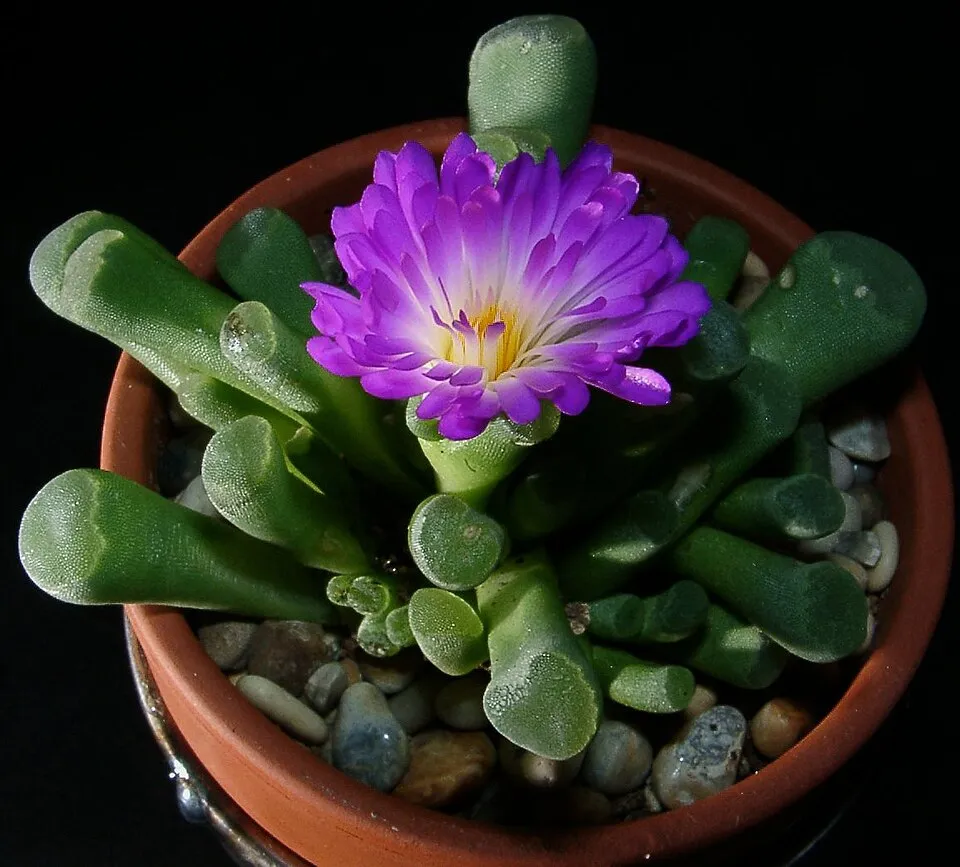
Frithia pulchra, commonly known as 'Fairy Elephant's Feet' or 'Purple Baby Tears', is a captivating succulent subshrub native to the arid and rocky slopes of Gauteng Province, South Africa. This diminutive plant typically reaches a modest height of 3 to 4 inches (approximately 7-10 centimeters) and spreads about 7 to 8 inches (18-20 centimeters) wide, forming a compact, stemless rosette. Its most striking feature is its thick, cylindrical leaves, which can extend up to 5 centimeters in length. The leaves are predominantly green but possess remarkable translucent, window-like areas at their tips.
These 'windows' are a specialized adaptation, allowing light to penetrate into the subterranean parts of the leaf, enabling photosynthesis even when the plant is partially buried or during periods of low light intensity, a common survival strategy in its native habitat. When in bloom, usually during late summer or winter, Frithia pulchra produces small, star-shaped flowers that emerge above the foliage. These flowers can vary in color, appearing in shades of yellow, magenta, or white, adding a vibrant contrast to its unique foliage. The plant's fleshy stems contribute to its robust texture, while its bark remains soft and pliable, characteristic of many succulents within the Aizoaceae family.
Phytogeographically, it is a member of the ice plant family, Aizoaceae, a group renowned for its specialized adaptations for water conservation in harsh desert environments. Frithia pulchra is listed as vulnerable in its native habitat, partly due to its ability to shrink below the ground surface to protect itself from desiccation, making it challenging to locate. As an indoor plant, it is valued for its sculptural beauty and low-maintenance requirements, making it a favorite among horticulturists and succulent enthusiasts.
Trusted Scientific References
1. Authoritative external sources for Frithia pulchra
1.1 Wikipedia — Frithia pulchra
1.2 Kew POWO (Plants of the World Online)
1.3 PubMed — peer-reviewed research
1.4 NCBI Taxonomy Browser
1.5 GBIF — Global Biodiversity
1.1.Frithia Pulchra — Defining Traits
- ✓Species — Frithia pulchra
- ✓Common Names — Fairy Elephant's Feet, Purple Baby Tears
- ✓Family — Aizoaceae (Ice Plant Family)
- ✓Native Region — Gauteng Province, South Africa
- ✓Distinctive Feature — Translucent 'window' tips on leaves for light capture.
- ✓Growth Habit — Small, stemless succulent subshrub, forming rosettes.
- ✓Flower Color — Star-shaped yellow, magenta, or white flowers, often blooming in winter.
- ✓Water Needs — Highly drought-tolerant; susceptible to root rot with overwatering.
- ✓Light Needs — Prefers bright, indirect light; avoid intense direct sun.
- ✓Toxicity — Non-toxic to humans, dogs, cats, and horses.
1.2.Frithia Pulchra — Concise Overview
- ✓Unique South African succulent known for its translucent 'window' leaf tips.
- ✓Primarily cultivated as an ornamental houseplant for its aesthetic appeal.
- ✓Requires extremely well-draining soil and careful, infrequent watering to prevent root rot.
- ✓Documented as non-toxic to humans and common household pets like dogs and cats.
- ✓Currently, there are no established traditional or modern medicinal uses for this plant.
- ✓Listed as vulnerable in its native habitat, emphasizing its conservation importance.
2.Frithia Pulchra — Scientific Profile
3.Frithia Pulchra — Reference Facts
4.Frithia Pulchra — Morphological Account
5.Frithia Pulchra — Geographic Distribution
6.Frithia Pulchra — Cultural & Traditional Roles
7.Frithia Pulchra — Secondary Metabolites
- ✓Succulent Polysaccharides — While not specifically isolated for Frithia pulchra, many succulents contain mucilaginous polysaccharides, complex carbohydrates essential for water retention and potentially offering moisturizing properties.
- ✓Betalains — The Aizoaceae family, to which Frithia pulchra belongs, is known for producing betalain pigments (e.g., betacyanins, betaxanthins) responsible for red, yellow, or purple coloration in flowers and sometimes leaves, which often exhibit antioxidant activity.
- ✓Flavonoids — These ubiquitous plant secondary metabolites are likely present in Frithia pulchra's tissues, contributing to antioxidant defense, UV protection, and potentially anti-inflammatory effects.
- ✓Phenolic Acids — Simple phenolic compounds, such as caffeic acid or ferulic acid derivatives, may be found, playing roles in antioxidant capacity and plant defense mechanisms against environmental stressors.
- ✓Triterpenoids and Sterols — These lipid-soluble compounds are common components of plant cell membranes and may be present in Frithia pulchra, contributing to its structural integrity and stress response.
- ✓Carotenoids — Pigments like beta-carotene and lutein are expected in the flowers and potentially leaves, functioning as accessory photosynthetic pigments and powerful antioxidants.
- ✓Organic Acids — Various organic acids, including malic acid, are involved in the plant's metabolic processes, particularly if it employs Crassulacean Acid Metabolism (CAM) for efficient water use.
- ✓Minerals and Trace Elements — As a living organism, Frithia pulchra will naturally accumulate essential macro and micronutrients (e.g., potassium, calcium, magnesium, iron) from its growing medium, vital for its physiological functions.
8.Frithia Pulchra — What Research Suggests
- ✓Air Quality Enhancement — While direct scientific evidence for Frithia pulchra's specific contribution to air purification is limited, the general presence of indoor plants has been shown to absorb volatile organic compounds (VOCs) and release oxygen, potentially fostering a healthier indoor atmosphere.
- ✓Psychological Well-being — The cultivation and presence of Frithia pulchra in living spaces can contribute to biophilia, reducing stress, improving mood, and enhancing overall mental well-being through a connection with nature.
- ✓Aesthetic Therapeutic Value — Its distinctive morphology, including translucent leaf tips and vibrant flowers, offers a visually engaging and calming presence that can provide a sense of tranquility and reduce visual fatigue.
- ✓Non-Toxic for Pets — A significant benefit for pet owners, Frithia pulchra is documented as non-toxic for common household pets such as dogs, cats, and horses, making it a safe ornamental choice.
- ✓Humidity Regulation (Minor) — Like other plants, Frithia pulchra releases small amounts of moisture through transpiration, which can subtly contribute to indoor humidity levels, particularly beneficial in arid environments or heated homes.
- ✓Focus and Concentration Aid — Studies suggest that incorporating living plants into workspaces can improve concentration and focus by reducing mental fatigue and providing a natural, soothing focal point.
- ✓Low-Maintenance Stress Reduction — The relatively easy care requirements of Frithia pulchra mean it demands less intensive effort from its owner, thereby reducing potential plant-related stress while still offering the rewards of plant cultivation.
- ✓Educational and Horticultural Interest — For plant enthusiasts, growing Frithia pulchra offers an opportunity to learn about unique botanical adaptations, desert ecosystems, and succulent care, providing intellectual stimulation and a fulfilling hobby.
- ✓Biophilic Design Element — Integrating Frithia pulchra into interior design aligns with biophilic principles, creating environments that support human health and well-being by mimicking natural settings.
- ✓Habitat Simulation — For those interested in creating miniature desert landscapes or terrariums, Frithia pulchra serves as an excellent specimen to simulate arid habitats, offering both aesthetic and educational value.
- ✓Stress Relief through Nurturing — The act of tending to and nurturing a living plant, even a low-maintenance one, can be a meditative and grounding experience, fostering a sense of purpose and contributing to stress reduction.
- ✓Enhances Indoor Biodiversity — Adding Frithia pulchra to an indoor plant collection diversifies the botanical array, enriching the indoor environment with varied forms and textures.
8.1.Frithia Pulchra — Indications & Uses
9.Frithia Pulchra — Adverse Effects
9.1.Frithia Pulchra — Warnings
- ✓Root Rot — The most common adverse effect for the plant itself is root rot, which is primarily caused by excessive watering, particularly during its dormant period, leading to plant demise.
- ✓Leaf Scorch — Exposure to intense, direct afternoon sunlight, especially in hot conditions, can cause the translucent leaf tips to burn or scorch, resulting in unsightly discoloration and damage.
- ✓Etiolation — Insufficient light levels will cause Frithia pulchra to stretch and become leggy, a condition known as etiolation, compromising its compact and aesthetically pleasing form.
- ✓Pest Infestation — While generally resilient, the plant can occasionally be affected by common succulent pests such as mealybugs or spider mites, which can weaken the plant if left untreated.
- ✓Stunted Growth — Inadequate pot size, improper nutrient balance, or consistent environmental stress can lead to stunted growth and a failure to thrive, impacting its overall vigor.
- ✓No Known Human Toxicity — There are no documented direct adverse side effects or toxicity to humans from handling or incidental contact with Frithia pulchra.
- ✓Non-Toxic to Pets — It is recognized as non-toxic for common household animals, including dogs, cats, and horses, alleviating concerns about accidental ingestion by pets.
9.2.Frithia Pulchra — Toxicity Assessment
- ✓Non-Toxic to Humans — Frithia pulchra is not known to be toxic to humans, making it safe for general handling and cultivation in residential and public spaces.
- ✓Pet-Safe Plant — This succulent is explicitly listed as non-toxic for dogs, cats, and horses, providing reassurance for pet owners considering it for their homes.
- ✓Avoid Ingestion — Although non-toxic, ingestion of any plant material in large quantities is generally not recommended and could potentially cause mild digestive upset.
- ✓Frost Sensitivity — The plant is highly sensitive to frost; exposure to freezing temperatures will cause severe damage or lead to the death of the plant.
- ✓Overwatering Risk — The primary cultivation hazard is overwatering, which invariably leads to root rot; adherence to a strict, infrequent watering schedule is crucial for its survival.
- ✓Handling Precautions — No specific handling precautions are typically required beyond general plant care, as Frithia pulchra lacks thorns, spines, or irritating sap.
- ✓Environmental Adaptation — Requires stable indoor temperatures and moderate humidity; extreme fluctuations in environmental conditions can stress the plant and negatively impact its health.
10.Frithia Pulchra — Preparation & Dosage
- ✓Ornamental Display — Primarily cultivated as an attractive indoor ornamental plant, Frithia pulchra is valued for its unique sculptural form and adds a distinctive element to homes and succulent collections.
- ✓Terrarium and Dish Garden Inclusion — Its compact size and intriguing foliage make it an excellent candidate for creating miniature desert landscapes, terrariums, or mixed succulent dish gardens.
- ✓Educational Specimen — Utilized in botanical gardens or educational settings to illustrate specialized plant adaptations, such as its translucent leaf windows for subterranean photosynthesis.
- ✓Biophilic Design Element — Incorporated into interior design schemes to introduce natural elements that foster a sense of well-being and connection to nature within living and working environments.
- ✓Pet-Friendly Home Decor — Ideal for households with pets due to its documented non-toxicity to dogs, cats, and horses, allowing for safe placement in various accessible areas within the home.
- ✓Horticultural Hobby — Provides an engaging and rewarding plant-care experience for succulent enthusiasts of all levels, fostering a sense of accomplishment and deepening botanical knowledge.
11.Frithia Pulchra — Growing Guide
- ✓Potting Medium — Requires an extremely well-draining succulent or cactus potting mix, often amended with additional perlite, pumice, or coarse sand to ensure rapid water runoff and aeration.
- ✓Container Size — Use small pots that closely match the plant's root ball dimensions; oversized containers retain excess moisture, increasing the risk of root rot.
- ✓Watering Regimen — Water thoroughly only when the soil is completely dry during the active growing season (spring to autumn); significantly reduce or cease watering during its winter dormancy.
- ✓Light Requirements — Thrives in bright, indirect sunlight; protect from intense, direct afternoon sun, which can scorch its delicate leaves, or provide partial shade in very hot climates.
- ✓Temperature and Humidity — Maintain warm temperatures, ideally between 18-28°C (65-82°F); it is highly sensitive to frost and extreme cold, requiring protection, and tolerates average indoor humidity.
- ✓Fertilization — During the active growing season, feed every 2-3 weeks with a diluted, low-nitrogen liquid fertilizer specifically formulated for succulents to support healthy growth and flowering.
- ✓Propagation — Can be propagated effectively through the division of offsets or by sowing seeds, with specific germination requirements often needed for successful propagation.
- ✓Pest and Disease Management — Generally robust, but susceptible to root rot from overwatering; monitor for common succulent pests like mealybugs or spider mites, treating promptly with appropriate methods if observed.
Reviewed by the Flora Medical Global Botanical Review Panel
Multi-disciplinary editorial group · Botany · Ethnobotany · Herbal-medicine literature
Who reviewed this: This page was checked by the Flora Medical Global Botanical Review Panel — an in-house editorial group of botany graduates, ethnobotany researchers, and horticulture practitioners who collectively maintain our 7,000+ plant encyclopedia. Meet the team.
Our 4-step verification process
1. Taxonomic verification
Scientific names and synonyms cross-checked against Kew POWO, World Flora Online, and The Plant List.
2. Phytochemical & medicinal cross-reference
Active compounds, traditional uses, and reported activities are cross-referenced with PubMed, USDA Dr. Duke's database, and peer-reviewed ethnobotanical literature.
3. Conservation & distribution check
Distribution, ecology, and conservation status confirmed against GBIF occurrence records and the IUCN Red List.
4. Editorial & safety review
Every entry passes an editorial pass for clarity, originality, and safety notices (toxicity, contraindications, dosage caveats) before publication.
Last reviewed:
Important medical disclaimer: This content is for educational and research purposes only. It is not medical advice and is not a substitute for consultation with a licensed healthcare provider. Do not use any herb to self-treat a medical condition without professional guidance.
Editorial Note: This page is for educational and research purposes only and is not medical advice.
Written by: Flora Medical Global Editorial Team
Reviewed by: Flora Medical Global Botanical Review Panel
Last Updated: June 15, 2026





Frithia Pulchra — Comments & Community Reviews
Rate this plant