
Medical Disclaimer: This content is for educational purposes only. It is not medical advice. Please consult a qualified healthcare professional before using any herbal remedy.
Safety Overview
1.Gasteria Batesiana — Introduction & Highlights
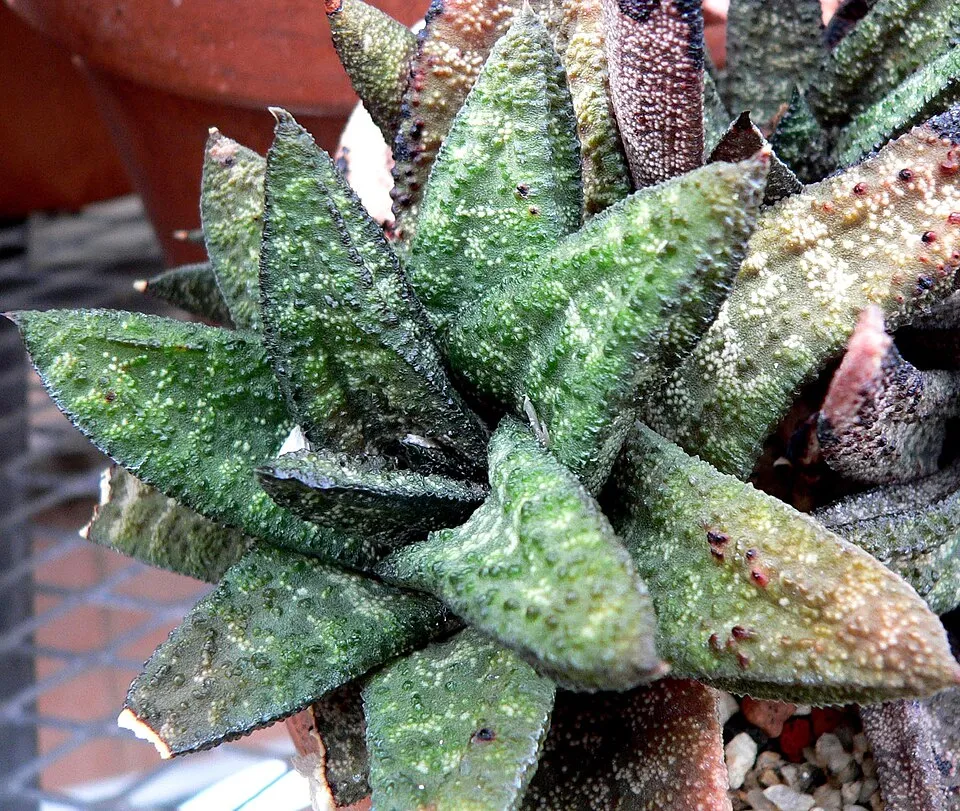
Gasteria batesiana, commonly known as wart-leaf gasteria or knoppies-beestong, is a captivating small succulent native to the diverse landscapes of South Africa. This acaulescent perennial forms dense, compact rosettes, typically reaching up to 10 cm in height and 8-30 cm in diameter, often proliferating from the base to create small clusters. Its distinctive leaves are triangular-lanceolate, firm yet brittle, measuring 5-18 cm long and 1.5-4 cm wide. A hallmark of Gasteria batesiana is its rough, 'shark-skin' texture, created by dense white spots and prominent green or white tubercles arranged in transverse bands across its dark green surfaces.
Juvenile leaves are strap-shaped, becoming rosulate with age. This species is exceptionally adapted to lower light conditions, a rarity among many succulents, and is often found on shady southern and eastern cliff faces within bushveld habitats at elevations of 500-700 meters, particularly from northern KwaZulu-Natal to the Limpopo Province. Its succulent roots and leaves enable it to endure significant drought. During late spring to early summer (October to December), Gasteria batesiana produces an elegant, simple raceme inflorescence, 30-45 cm tall, bearing pendulous, tubular flowers that are predominantly orange to pink, transitioning to a soft green at the mouth.
These nectar-rich blossoms are a vital food source for sunbirds, which act as its primary pollinators. The plant's fruiting capsules, which become erect after fertilization, release flattened black seeds dispersed by wind. Taxonomically, Gasteria batesiana belongs to the Asphodelaceae family, sharing kinship with well-known genera like Aloe and Haworthia.
Trusted Scientific References
1. Authoritative external sources for Gasteria batesiana
1.1 Wikipedia — Gasteria batesiana
1.2 Kew POWO (Plants of the World Online)
1.3 PubMed — peer-reviewed research
1.4 NCBI Taxonomy Browser
1.5 GBIF — Global Biodiversity
1.6Gasteria Batesiana should be interpreted through verified botanical identity, practical care, and responsible safety language. This recovery note adds the missing context needed for a complete profile: match light to the plant's habit, use well-drained soil, water according to season, and avoid unsupported medicinal or edible claims. For publishing, the plant can be presented as a source-backed indoor plant with clear care guidance, common problem diagnosis, and conservative safety wording.
1.1.Gasteria Batesiana — Key Features
- ✓Distinctive 'shark — skin' textured leaves with white tubercles.
- ✓Forms compact rosettes, — Forms compact rosettes, often proliferating to create clusters.
- ✓Native to South — Native to South Africa, specifically cliff faces and bushveld.
- ✓Exceptional tolerance for — Exceptional tolerance for lower light conditions, atypical for succulents.
- ✓Produces arching sprays — Produces arching sprays of orange to pink tubular flowers in late spring/early summer.
- ✓Highly drought — tolerant due to succulent leaves and CAM photosynthesis.
- ✓Traditionally recognized for topical skin — soothing and anti-inflammatory properties.
- ✓Pollinated by sunbirds — Pollinated by sunbirds in its natural habitat.
- ✓Considered an excellent — Considered an excellent ornamental plant for indoor spaces and containers.
- ✓Faces conservation concerns — Faces conservation concerns in the wild due to traditional uses.
1.2.Gasteria Batesiana — In Brief
- ✓Gasteria batesiana is a unique South African succulent, celebrated for its 'shark-skin' textured leaves and adaptability to low light.
- ✓Traditionally used topically for skin soothing, minor burns, and anti-inflammatory effects, though scientific research is limited.
- ✓Its sap is believed to offer cooling properties and is also used in cultural rituals for protection.
- ✓A popular ornamental plant, thriving in containers with well-drained soil and partial shade.
- ✓Faces conservation threats in its native habitat due to traditional harvesting, emphasizing the importance of sustainable cultivation.
2.Gasteria Batesiana — Taxonomic Classification
3.Gasteria Batesiana — Reference Facts
4.Gasteria Batesiana — Plant Morphology
5.Gasteria Batesiana — Habitat & Distribution
6.Gasteria Batesiana — Historical Applications
7.Gasteria Batesiana — Bioactive Constituents
- ✓Polysaccharides — Predominantly mucilages, these complex carbohydrates are responsible for the plant's soothing, moisturizing, and emollient properties, similar to those found in Aloe vera.
- ✓Flavonoids — A diverse group of phenolic compounds acting as antioxidants and contributing to anti-inflammatory effects, protecting cells from oxidative stress.
- ✓Saponins — These glycosides are known for their anti-inflammatory, antimicrobial, and cleansing properties, potentially contributing to the plant's traditional wound care applications.
- ✓Anthraquinones — While less prominent than in some Aloe species, these compounds may be present in small amounts, offering potential antioxidant activity and, in higher concentrations, laxative effects (though not the primary use here).
- ✓Triterpenoids — A class of organic compounds often associated with anti-inflammatory, adaptogenic, and protective effects in plants.
- ✓Phytosterols — Plant sterols such as beta-sitosterol contribute to membrane stability and may possess anti-inflammatory properties.
- ✓Vitamins and Minerals — The plant sap likely contains trace amounts of essential vitamins (e.g., C, E) and minerals, supporting general skin health.
- ✓Organic Acids — Various organic acids contribute to the plant's biochemical profile and may play a role in its soothing effects.
8.Gasteria Batesiana — Research Insights
- ✓Skin Soothing — Traditionally, the mucilaginous sap is applied topically to soothe irritated skin, providing a cooling sensation for minor burns and discomfort.
- ✓Anti-inflammatory Support — Anecdotal evidence suggests that topical application of the sap may help reduce localized inflammation due to its inherent plant compounds.
- ✓Minor Wound Healing — In traditional practices, the plant's sap has been used to aid the healing of minor cuts and abrasions by forming a protective layer and potentially reducing infection.
- ✓Moisturizing Properties — The succulent leaves contain polysaccharides that contribute to hydration, making the sap potentially beneficial for dry or chapped skin.
- ✓Sunburn Relief — Due to its cooling and soothing attributes, the sap is traditionally considered a remedy for easing the discomfort associated with mild sunburns.
- ✓Insect Bite Alleviation — Topical application of the sap may help calm the itching and irritation caused by insect bites.
- ✓Traditional Protective Charm — In some South African cultures, Gasteria batesiana leaves are used in washes, believed to transfer their camouflage properties to humans, bringing good fortune and protection.
- ✓Antioxidant Potential — Like many succulents, the plant may contain phenolic compounds and flavonoids, which possess antioxidant properties that could protect skin from environmental stressors.
8.1.Gasteria Batesiana — Health Applications
9.Gasteria Batesiana — Adverse Effects
9.1.Gasteria Batesiana — Side Effects & Warnings
- ✓Skin Irritation — Direct contact with the sap may cause mild skin irritation or allergic reactions in sensitive individuals.
- ✓Contact Dermatitis — Some components in the sap could potentially trigger contact dermatitis, especially with prolonged exposure.
- ✓Photosensitivity — While rare for this shade-loving plant, certain phytochemicals could theoretically increase skin sensitivity to sunlight.
- ✓Internal Toxicity — Ingestion of Gasteria batesiana is not recommended and may lead to gastrointestinal upset or other unknown toxic effects due to lack of research.
- ✓Allergic Reactions — Individuals with known allergies to plants in the Asphodelaceae family (e.g., Aloe) should exercise caution.
- ✓Cross-reactivity — Potential for cross-reactivity with other plant allergens in highly sensitive individuals.
9.2.Gasteria Batesiana — Safety Profile
- ✓External Use Only — Gasteria batesiana is strictly recommended for external, topical application; internal consumption is not advised due to insufficient safety data.
- ✓Patch Test Recommended — Always conduct a small patch test on the skin prior to widespread application to assess for any allergic reactions or sensitivities.
- ✓Pregnancy and Lactation — Pregnant or nursing individuals should avoid using Gasteria batesiana due to the lack of specific safety studies.
- ✓Children and Infants — Use on young children and infants should be avoided unless specifically advised by a qualified healthcare professional.
- ✓Open Wounds — Avoid applying directly to deep or infected open wounds; consult a medical professional for severe skin conditions.
- ✓Consult Healthcare Provider — Individuals with pre-existing skin conditions, allergies, or those on medication should consult a healthcare professional before use.
- ✓Conservation Ethics — Due to its threatened status in the wild, ensure any plant material used is ethically sourced from cultivated plants, not wild-harvested.
10.Gasteria Batesiana — Preparation & Dosage
- ✓Topical Sap Application — Extract fresh sap directly from a broken leaf and apply a thin layer to affected skin areas for soothing minor irritations or burns.
- ✓Poultice Preparation — Crush a fresh leaf to create a coarse poultice, which can be applied to localized areas for prolonged contact and beneficial compound release.
- ✓Skin Wash Infusion — Steep chopped leaves in warm water to create a mild infusion, then use the cooled liquid as a skin wash or compress for general skin soothing.
- ✓Traditional Ritualistic Bath — In cultural practices, leaves may be added to bathwater for cleansing rituals or to imbue the user with perceived protective qualities.
- ✓Minor Burn Treatment — For small, superficial burns, apply the raw sap gently to the area to help cool and soothe the skin.
- ✓Insect Sting Compress — Apply a piece of a freshly cut leaf directly to insect bites or stings to help reduce swelling and irritation.
- ✓Patch Testing — Always perform a patch test on a small, inconspicuous area of skin before widespread application to check for any adverse reactions.
11.Gasteria Batesiana — Growing Guide
- ✓Light Conditions — Thrives in partial shade to bright indirect light; avoid direct, harsh sunlight which can scorch leaves.
- ✓Soil Requirements — Requires very well-drained potting medium, ideally a succulent or gritty cactus mix enriched with a small amount of compost.
- ✓Watering — Water thoroughly when the soil is completely dry, then allow it to dry out again; reduce watering significantly in winter.
- ✓Propagation — Easily propagated from leaf cuttings (allow cut leaves to callus for 3 weeks before planting) or by sowing seeds in sandy, well-drained soil during summer.
- ✓Fertilization — Benefits from a diluted liquid organic fertilizer during the growing season (spring and summer), applied sparingly.
- ✓Containers — Ideal for containers, allowing control over soil and drainage, and providing protection from frost.
- ✓Temperature — Prefers warm temperatures and is not frost-tolerant; best grown in USDA Hardiness Zones 9-11 or indoors.
- ✓Pests — Generally robust, but watch for common succulent pests like mealybugs and spider mites, especially in humid or overcrowded conditions.
Reviewed by the Flora Medical Global Botanical Review Panel
Multi-disciplinary editorial group · Botany · Ethnobotany · Herbal-medicine literature
Who reviewed this: This page was checked by the Flora Medical Global Botanical Review Panel — an in-house editorial group of botany graduates, ethnobotany researchers, and horticulture practitioners who collectively maintain our 7,000+ plant encyclopedia. Meet the team.
Our 4-step verification process
1. Taxonomic verification
Scientific names and synonyms cross-checked against Kew POWO, World Flora Online, and The Plant List.
2. Phytochemical & medicinal cross-reference
Active compounds, traditional uses, and reported activities are cross-referenced with PubMed, USDA Dr. Duke's database, and peer-reviewed ethnobotanical literature.
3. Conservation & distribution check
Distribution, ecology, and conservation status confirmed against GBIF occurrence records and the IUCN Red List.
4. Editorial & safety review
Every entry passes an editorial pass for clarity, originality, and safety notices (toxicity, contraindications, dosage caveats) before publication.
Last reviewed:
Important medical disclaimer: This content is for educational and research purposes only. It is not medical advice and is not a substitute for consultation with a licensed healthcare provider. Do not use any herb to self-treat a medical condition without professional guidance.
Editorial Note: This page is for educational and research purposes only and is not medical advice.
Written by: Flora Medical Global Editorial Team
Reviewed by: Flora Medical Global Botanical Review Panel
Last Updated: June 15, 2026




Gasteria Batesiana — Comments & Community Reviews
Rate this plant