
Medical Disclaimer: This content is for educational purposes only. It is not medical advice. Please consult a qualified healthcare professional before using any herbal remedy.
Safety Overview
1.Gaura Lindheimeri — Botanical Snapshot
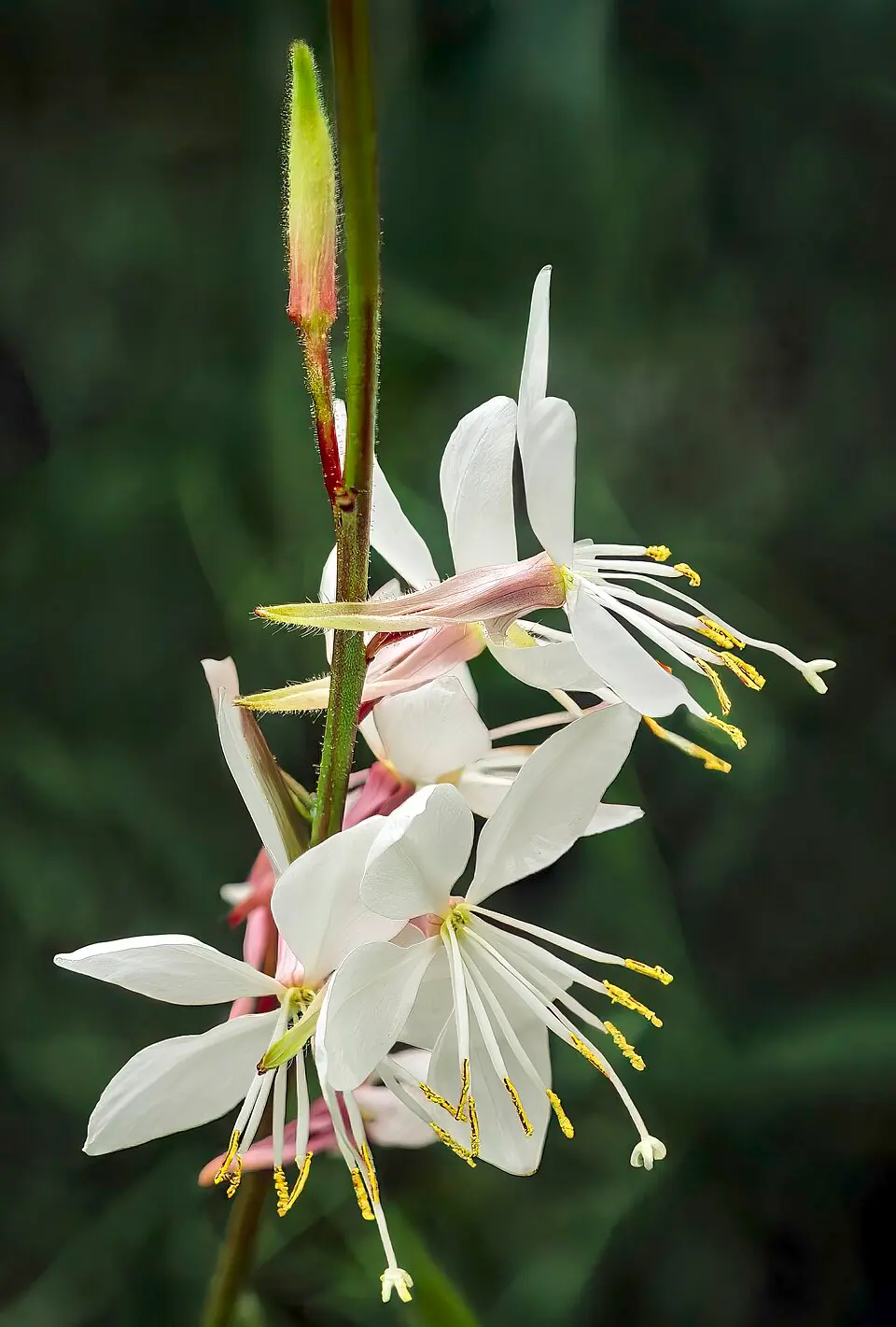
Gaura lindheimeri, commonly known as White Gaura, Beeblossom, or Whirling Butterflies, is a captivating herbaceous perennial belonging to the Onagraceae family. This graceful plant is characterized by its delicate, four-petaled flowers, which are typically white or pink and borne on long, slender, wiry stems, giving the appearance of butterflies fluttering in the breeze. The foliage consists of narrow, lance-shaped leaves, often green but sometimes mottled with burgundy.
Native to the grasslands and prairies of Texas, Louisiana, and northern Mexico, Gaura lindheimeri thrives in open, sunny environments. It exhibits an open, airy growth habit, reaching heights of 1 to 4 feet and spreading equally wide, blooming profusely from late spring until the first hard frost. A key characteristic for its survival in arid conditions is its deep, carrot-like taproot, which enables it to establish remarkable drought tolerance once mature.
Beyond its ornamental appeal, attracting a host of pollinators like bees, butterflies, and hummingbirds, the plant is gaining recognition for its potential botanical properties rooted in its rich phytochemical profile. Its classification has seen it sometimes referred to as Oenothera lindheimeri, reflecting its close phylogenetic relationship within the evening primrose family.
Trusted Scientific References
1. Authoritative external sources for Gaura lindheimeri
1.1 Wikipedia — Gaura lindheimeri
1.2 Kew POWO (Plants of the World Online)
1.3 PubMed — peer-reviewed research
1.4 NCBI Taxonomy Browser
1.5 GBIF — Global Biodiversity
1.6Gaura Lindheimeri should be interpreted through verified botanical identity, practical care, and responsible safety language. This recovery note adds the missing context needed for a complete profile: match light to the plant's habit, use well-drained soil, water according to season, and avoid unsupported medicinal or edible claims. For publishing, the plant can be presented as a source-backed garden plant with clear care guidance, common problem diagnosis, and conservative safety wording.
1.1.Gaura Lindheimeri — Notable Characteristics
- ✓Botanical Name — Gaura lindheimeri (syn. Oenothera lindheimeri).
- ✓Common Names — White Gaura, Beeblossom, Whirling Butterflies, Lindheimer's Gaura.
- ✓Family — Onagraceae (Evening Primrose family).
- ✓Native Region — Grasslands of Texas, Louisiana, and northern Mexico.
- ✓Bloom Time — Extended period from late spring through fall until frost.
- ✓Flower Color — Typically white or pink, appearing on slender, airy stems.
- ✓Key Constituents — Flavonoids (quercetin, kaempferol), phenolic acids, and tannins.
- ✓Primary Actions — Antioxidant, anti-inflammatory, astringent, and potentially wound healing.
- ✓Habitat Preference — Requires full sun and well-draining, lean soil; highly drought-tolerant.
- ✓Pollinator Attractor — Attracts bees, butterflies, and hummingbirds, enhancing garden biodiversity.
1.2.Gaura Lindheimeri — At-a-Glance Summary
- ✓Gaura lindheimeri is a graceful perennial known for its butterfly-like flowers and airy habit.
- ✓Rich in antioxidants, anti-inflammatory flavonoids, and astringent tannins.
- ✓Traditionally recognized for supporting skin health, wound healing, and digestive comfort.
- ✓Thrives in full sun, well-draining soil, and is highly drought-tolerant once established.
- ✓Generally safe for ornamental use; medicinal application requires caution and professional guidance.
2.Gaura Lindheimeri — Nomenclature & Classification
3.Gaura Lindheimeri — Fact Sheet
4.Gaura Lindheimeri — Botanical Description
5.Gaura Lindheimeri — Ecological Habitat
6.Gaura Lindheimeri — Traditional Uses
7.Gaura Lindheimeri — Key Phytochemicals
- ✓Flavonoids — Key compounds include quercetin and kaempferol, known for their potent antioxidant, anti-inflammatory, and neuroprotective activities.
- ✓Phenolic Acids — Such as gallic acid and caffeic acid, which contribute significantly to the plant's overall antioxidant capacity and possess mild antimicrobial properties.
- ✓Tannins — Both hydrolyzable and condensed tannins are present, imparting strong astringent properties crucial for wound healing and tissue toning, along with antioxidant benefits.
- ✓Polyphenols — A broad category encompassing flavonoids and phenolic acids, responsible for neutralizing free radicals and offering protective cellular effects.
- ✓Saponins — Potentially present in minor quantities, contributing to emulsifying properties and possibly mild anti-inflammatory or immune-modulating effects.
- ✓Triterpenoids — Common plant metabolites that can exhibit anti-inflammatory, adaptogenic, and protective actions within biological systems.
- ✓Plant Sterols — Including beta-sitosterol, which may contribute to anti-inflammatory effects and support cardiovascular health.
- ✓Glycosides — Various types of glycosides may be present, often linked to diverse biological activities depending on their aglycone structure.
- ✓Volatile Oils — Present in trace amounts, contributing to the plant's subtle aroma and potentially offering mild antiseptic qualities.
- ✓Polysaccharides — Mucilaginous compounds that can provide soothing effects to mucous membranes and contribute to immune support.
8.Gaura Lindheimeri — Pharmacological Findings
- ✓Antioxidant Support — The plant is rich in various polyphenolic compounds, including flavonoids and phenolic acids, which actively neutralize harmful free radicals, thereby protecting cellular structures from pervasive oxidative stress and promoting overall cellular health.
- ✓Anti-inflammatory Properties — Key flavonoids like quercetin and kaempferol, frequently identified in plants of the Onagraceae family, are associated with modulating inflammatory pathways, which can effectively mitigate minor inflammatory responses and alleviate discomfort throughout the body.
- ✓Astringent Action — A notable concentration of tannins in Gaura lindheimeri contributes significantly to its astringent properties, enabling it to tighten tissues, reduce minor surface bleeding, and diminish excessive secretions, making it beneficial for skin and mucosal integrity.
- ✓Wound Healing Potential — The synergistic action of astringent and potentially antimicrobial tannins, alongside other bioactive compounds, may promote accelerated wound healing by facilitating tissue regeneration, reducing infection risk, and forming a protective barrier over minor injuries.
- ✓Skin Soothing — Topically applied preparations derived from Gaura lindheimeri can offer soothing relief for minor skin irritations, redness, and itching, attributed to its combined anti-inflammatory and astringent effects, making it advantageous for sensitive or compromised skin conditions.
- ✓Digestive Support — Due to its astringent properties, traditional or inferred use might suggest a role in supporting digestive health by helping to firm loose stools and soothe irritated gastrointestinal mucosa, particularly in cases of mild diarrhea.
- ✓Antimicrobial Activity — The presence of tannins and certain phenolic compounds suggests potential mild antimicrobial effects, which could contribute to its use in traditional hygiene practices or as a supportive agent in managing minor skin infections.
- ✓Circulatory Health — Flavonoids present in the plant may contribute to supporting capillary strength and overall microcirculatory health, though this effect is generally subtle and part of broader plant-based benefits.
- ✓Immune System Modulation — While not a primary immune booster, the collective action of antioxidants and anti-inflammatory compounds can indirectly support a balanced immune response and overall resilience.
- ✓Respiratory Comfort — The astringent nature of Gaura lindheimeri could potentially offer mild relief for minor throat irritations when used in gargles or as a soothing agent for the upper respiratory tract.
8.1.Gaura Lindheimeri — Health Applications
9.Gaura Lindheimeri — Safety & Side Effects
9.1.Gaura Lindheimeri — Side Effects & Warnings
- ✓Allergic Reactions — Sensitive individuals may experience skin rashes, itching, or respiratory irritation upon contact or ingestion.
- ✓Gastrointestinal Upset — High doses or prolonged internal use may lead to mild nausea, stomach discomfort, or diarrhea.
- ✓Skin Sensitivity — Topical application can cause redness or irritation in individuals with hypersensitive skin, necessitating a patch test.
- ✓Photosensitivity — While rare, some plant compounds can potentially increase skin sensitivity to sunlight, especially with prolonged exposure.
- ✓Over-Astringency — Excessive internal intake of tannin-rich preparations could lead to constipation or, over time, potentially impair nutrient absorption.
- ✓Drug Interactions — Theoretical interactions with medications, particularly those affecting blood clotting or nutrient absorption, due to tannin content.
9.2.Gaura Lindheimeri — Safety Profile
- ✓Pregnancy and Lactation — Avoid use during pregnancy and breastfeeding due to insufficient research and lack of established safety data.
- ✓Children — Exercise caution; consult a qualified healthcare professional before administering to infants or young children.
- ✓Pre-existing Conditions — Individuals with chronic digestive disorders, liver conditions, or other serious health issues should seek medical advice prior to use.
- ✓Drug Interactions — Consult a healthcare provider if taking medications, especially blood thinners, iron supplements, or drugs affecting nutrient absorption, due to potential interactions.
- ✓Patch Test — Always perform a skin patch test on a small area before widespread topical application to check for allergic reactions.
- ✓Dosage Adherence — Adhere strictly to recommended dosages; excessive use can lead to adverse effects and diminish therapeutic benefits.
- ✓Non-toxic (ASPCA) — Generally considered non-toxic to dogs, cats, and horses, though minor digestive upset may occur if ingested in large quantities.
10.Gaura Lindheimeri — Preparations & Uses
- ✓Herbal Infusion — Dried leaves and flowers can be steeped in hot water to create a tea for internal consumption, primarily for digestive support or as a general tonic.
- ✓Decoction — Tougher plant parts, such as roots or stems, can be simmered in water to extract more potent compounds, suitable for concentrated internal use or external washes.
- ✓Tincture — An alcoholic extract of fresh or dried plant material, offering a concentrated form for internal administration, typically for anti-inflammatory or antioxidant benefits.
- ✓Poultice — Freshly crushed leaves and flowers can be applied directly to the skin to soothe minor irritations, aid wound healing, or reduce localized inflammation.
- ✓Topical Compress — A cloth soaked in a strong infusion or decoction can be applied to affected skin areas to provide soothing relief for redness, itching, or minor abrasions.
- ✓Herbal Salve/Cream — Plant material can be infused into an oil, which is then incorporated into a salve or cream for targeted topical application on skin issues.
- ✓Sitz Bath — A strong infusion added to bathwater can be used for localized comfort and astringent action in the perineal area, particularly for minor irritations.
11.Gaura Lindheimeri — Garden Cultivation
- ✓Site Selection — Requires full sun exposure for at least 6 hours daily, though some afternoon shade is beneficial in hotter climates to prevent scorching.
- ✓Soil Requirements — Prefers lean, well-draining soil, ideally sandy or loamy, with a slightly acidic to slightly alkaline pH range of 6.1-7.8; poor drainage can lead to root rot.
- ✓Planting Time — Best planted in spring after the last frost; in warmer zones, perennial varieties can also be planted in fall.
- ✓Watering — Water regularly until established, then deeply but infrequently to encourage the development of its drought-tolerant taproot system.
- ✓Fertilization — Minimal to no supplemental fertilizer is needed; over-fertilizing can lead to leggy growth and reduced flowering.
- ✓Spacing — Space plants 2 to 3 feet apart to allow for their mature spread and airy growth habit.
- ✓Pests and Diseases — Generally resistant when grown in optimal conditions, but watch for aphids, flea beetles, and powdery mildew in overly humid or shaded environments.
- ✓Transplanting — Difficult to transplant once established due to its deep taproot, so choose a permanent location carefully.
Reviewed by the Flora Medical Global Botanical Review Panel
Multi-disciplinary editorial group · Botany · Ethnobotany · Herbal-medicine literature
Who reviewed this: This page was checked by the Flora Medical Global Botanical Review Panel — an in-house editorial group of botany graduates, ethnobotany researchers, and horticulture practitioners who collectively maintain our 7,000+ plant encyclopedia. Meet the team.
Our 4-step verification process
1. Taxonomic verification
Scientific names and synonyms cross-checked against Kew POWO, World Flora Online, and The Plant List.
2. Phytochemical & medicinal cross-reference
Active compounds, traditional uses, and reported activities are cross-referenced with PubMed, USDA Dr. Duke's database, and peer-reviewed ethnobotanical literature.
3. Conservation & distribution check
Distribution, ecology, and conservation status confirmed against GBIF occurrence records and the IUCN Red List.
4. Editorial & safety review
Every entry passes an editorial pass for clarity, originality, and safety notices (toxicity, contraindications, dosage caveats) before publication.
Last reviewed:
Important medical disclaimer: This content is for educational and research purposes only. It is not medical advice and is not a substitute for consultation with a licensed healthcare provider. Do not use any herb to self-treat a medical condition without professional guidance.
Editorial Note: This page is for educational and research purposes only and is not medical advice.
Written by: Flora Medical Global Editorial Team
Reviewed by: Flora Medical Global Botanical Review Panel
Last Updated: June 15, 2026





Gaura Lindheimeri — Comments & Community Reviews
Rate this plant