

Medical Disclaimer: This content is for educational purposes only. It is not medical advice. Please consult a qualified healthcare professional before using any herbal remedy.
Safety Overview
1.Gazania Rigens — Plant Snapshot
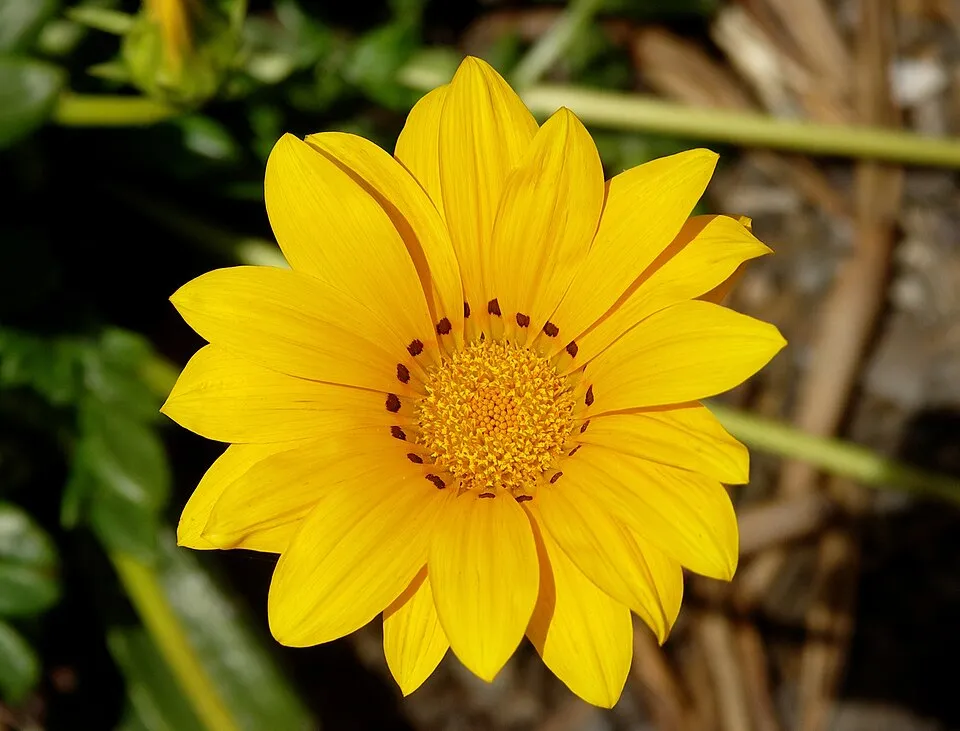
Gazania rigens, commonly known as the treasure flower or African daisy, is a captivating perennial herb native to the sun-drenched coastal regions of South Africa. This species, a prominent member of the expansive Asteraceae family, is celebrated for its striking, solitary, daisy-like capitula (flower heads) that exhibit pronounced heliotropism, meticulously tracking the sun's path and closing at dusk or on overcast days. The flower heads typically span 5-8 cm in diameter, showcasing an extraordinary palette of colors including brilliant yellows, fiery oranges, deep reds, bronze, and creamy whites, frequently adorned with intricate contrasting bands or dark markings at the base of the ray florets.
Its foliage forms a dense basal rosette, with lanceolate to spatulate leaves that often present a distinctive silvery-green hue due to a protective indumentum of fine, woolly hairs (pubescence). This adaptation is crucial for minimizing transpiration and enhancing drought tolerance in its arid native environment. Gazania rigens is a robust and resilient plant, thriving in full sun exposure and well-drained, often sandy or loamy, soils.
Its remarkable adaptability, combined with a prolonged blooming season from spring through autumn, has led to its widespread adoption as a highly valued ornamental plant in temperate and Mediterranean climates globally, serving as an ideal choice for xeriscaping, groundcover, borders, and container gardening. Propagation primarily occurs through seeds, basal cuttings, or division of its spreading rhizomatous clumps.
Trusted Scientific References
1. Authoritative external sources for Gazania rigens
1.1 Wikipedia — Gazania rigens
1.2 Kew POWO (Plants of the World Online)
1.3 PubMed — peer-reviewed research
1.4 NCBI Taxonomy Browser
1.5 GBIF — Global Biodiversity
1.6Gazania Rigens should be interpreted through verified botanical identity, practical care, and responsible safety language. This recovery note adds the missing context needed for a complete profile: match light to the plant's habit, use well-drained soil, water according to season, and avoid unsupported medicinal or edible claims. For publishing, the plant can be presented as a source-backed garden plant with clear care guidance, common problem diagnosis, and conservative safety wording.
1.1.Gazania Rigens — Standout Qualities
- ✓Striking heliotropic daisy — like flowers in vivid colors.
- ✓Native to the — Native to the coastal regions of South Africa.
- ✓Member of the — Member of the Asteraceae (daisy) family.
- ✓Drought — tolerant and low-maintenance perennial.
- ✓Silvery — green, pubescent leaves forming a basal rosette.
- ✓Contains antioxidant flavonoids and anti — inflammatory triterpenoids.
- ✓Primarily cultivated as — Primarily cultivated as an ornamental plant globally.
- ✓Attracts pollinators like — Attracts pollinators like butterflies.
- ✓Spreads via rhizomes, — Spreads via rhizomes, forming dense clumps.
- ✓Adaptable to various soil types, preferring well — drained conditions.
1.2.Gazania Rigens — Quick Summary
- ✓Gazania rigens, the Treasure Flower, is a vibrant South African perennial prized for its ornamental value.
- ✓Rich in flavonoids and phenolic acids, offering antioxidant and anti-inflammatory potential.
- ✓Primarily used ornamentally; medicinal applications are largely investigational and topical.
- ✓Thrives in full sun and well-drained soil, highly drought-tolerant and low maintenance.
- ✓Limited human safety data; internal use is not recommended.
- ✓Known for its heliotropic flowers that track the sun.
2.Gazania Rigens — Taxonomic Classification
3.Gazania Rigens — Reference Facts
4.Gazania Rigens — Plant Morphology
5.Gazania Rigens — Habitat & Distribution
6.Gazania Rigens — Cultural & Traditional Roles
7.Gazania Rigens — Secondary Metabolites
- ✓Flavonoids — Key compounds include luteolin, quercetin, apigenin, and their glycosides, known for potent antioxidant, anti-inflammatory, and potentially anticarcinogenic activities.
- ✓Phenolic Acids — Such as caffeic acid, chlorogenic acid, and ferulic acid, contributing significantly to the plant's antioxidant capacity and protective effects against oxidative damage.
- ✓Triterpenoids — Compounds like lupeol, beta-amyrin, and their derivatives are present, recognized for anti-inflammatory, hepatoprotective, and cytotoxic properties.
- ✓Sesquiterpenes — Including specific lactones, which can contribute to anti-inflammatory and antimicrobial actions, characteristic of the Asteraceae family.
- ✓Carotenoids — Responsible for the vibrant yellow, orange, and red hues of the flowers, acting as natural antioxidants and precursors to Vitamin A.
- ✓Saponins — Glycosides that may possess emulsifying, anti-inflammatory, and cholesterol-lowering properties, though their specific role in Gazania rigens requires further study.
- ✓Coumarins — A class of compounds that can exhibit anticoagulant, anti-inflammatory, and antimicrobial activities, found in various plant species.
- ✓Alkaloids — While not dominant, certain nitrogen-containing compounds may be present in trace amounts, contributing to the plant's overall biochemical profile.
- ✓Volatile Oils — Present in small quantities, these contribute to the plant's subtle fragrance and may possess mild antimicrobial or insect-repellent properties.
8.Gazania Rigens — Research Insights
- ✓Antioxidant Support — Gazania rigens is rich in phenolic compounds and flavonoids, which act as powerful antioxidants, effectively neutralizing free radicals and mitigating oxidative stress to protect cellular integrity.
- ✓Anti-inflammatory Properties — Preliminary research suggests that certain triterpenoids and sesquiterpenes within the plant may modulate inflammatory pathways, potentially offering relief for mild inflammatory conditions, particularly those affecting the skin or joints.
- ✓Antimicrobial Potential — Extracts from Gazania rigens have demonstrated in vitro activity against various pathogenic bacteria and fungi, indicating a potential role in natural antimicrobial formulations, though further research is needed.
- ✓Dermatological Applications — The plant's anti-inflammatory and antioxidant properties may support skin health, potentially aiding in the soothing of minor irritations or promoting healing in traditional topical preparations.
- ✓Wound Healing — Compounds like flavonoids and triterpenoids could contribute to accelerated wound healing processes by reducing inflammation and supporting tissue regeneration, observed in preliminary studies.
- ✓Pain Management — Its anti-inflammatory constituents might offer mild analgesic effects, traditionally used for symptomatic relief of localized pain or discomfort, though scientific validation is limited.
- ✓Immunomodulatory Effects — Some phytochemicals found in Asteraceae plants, including Gazania rigens, may possess immunomodulatory properties, potentially supporting the body's immune response.
- ✓Digestive Aid (Traditional) — Though not widely documented for Gazania specifically, some related Asteraceae species have traditional uses for mild digestive complaints, suggesting a possible, albeit unconfirmed, parallel for this plant.
- ✓Cardiovascular Health — Flavonoids are generally associated with cardiovascular benefits, and their presence in Gazania rigens suggests a theoretical potential for supporting vascular health, requiring specific investigation.
- ✓Cytotoxic Activity — Certain extracts have shown preliminary cytotoxic activity against some cell lines in laboratory settings, warranting further investigation into potential anti-proliferative applications.
8.1.Gazania Rigens — Indications & Uses
9.Gazania Rigens — Adverse Effects
9.1.Gazania Rigens — Possible Adverse Reactions
- ✓Allergic Reactions — Individuals sensitive to the Asteraceae family (e.g., ragweed, chamomile) may experience contact dermatitis or allergic reactions.
- ✓Skin Irritation — Direct contact with plant sap or highly concentrated extracts may cause mild skin irritation in sensitive individuals.
- ✓Gastrointestinal Upset — Internal consumption is not recommended due to lack of safety data and potential for digestive discomfort.
- ✓Photosensitivity — Some plant compounds can potentially increase skin sensitivity to sunlight, though this is not well-documented for Gazania rigens.
- ✓Drug Interactions — Theoretical possibility of interaction with anti-inflammatory or anticoagulant medications due to its chemical profile; consult a healthcare professional.
- ✓Pregnancy & Lactation — Insufficient safety data; internal use is contraindicated during pregnancy and breastfeeding.
- ✓Children — Lack of specific safety studies; internal use should be avoided in children.
9.2.Gazania Rigens — Safety Overview
- ✓Lack of Human Studies — Extensive clinical trials on the medicinal use of Gazania rigens in humans are lacking; primarily ornamental.
- ✓Topical Use Caution — Conduct a patch test on a small skin area before widespread topical application to check for sensitivity.
- ✓Avoid Internal Use — Not recommended for internal consumption due to unestablished safety and efficacy profiles.
- ✓Pregnant/Breastfeeding — Contraindicated for internal use during pregnancy and lactation due to insufficient safety data.
- ✓Allergic Individuals — Use with caution by individuals with known allergies to plants in the Asteraceae family.
- ✓Consult Professional — Always advise consultation with a healthcare professional before using any herbal preparation, especially for medicinal purposes.
- ✓Proper Identification — Ensure correct plant identification to avoid confusion with potentially toxic species.
10.Gazania Rigens — Application Forms
- ✓Topical Infusion — Infuse dried flowers and leaves in hot water to create a compress or wash for soothing minor skin irritations or promoting wound healing.
- ✓Poultice Application — Crush fresh leaves and flowers to form a poultice, applied directly to localized inflammatory areas or minor cuts to reduce swelling.
- ✓Herbal Oil Infusion — Macerate dried plant material in a carrier oil (e.g., olive, jojoba) for several weeks to create an infused oil suitable for topical massage on sore joints or dry skin.
- ✓Tincture Preparation (External) — Soak fresh or dried plant material in high-proof alcohol for several weeks to produce a concentrated extract for external application, diluted as needed.
- ✓Cosmetic Ingredient — Extracts may be incorporated into natural skincare products like creams, lotions, or balms for their antioxidant and anti-inflammatory properties.
- ✓Aromatic Use — While not strongly scented, the subtle fragrance of the flowers may be appreciated in potpourri or dried floral arrangements.
- ✓Investigational Extracts — For research purposes, various solvent extracts (e.g., ethanol, methanol, water) can be prepared to isolate and study specific phytochemicals for their bioactivities.
- ✓Garden Ornament — Primarily cultivated for its vibrant ornamental flowers, adding aesthetic value to landscapes and attracting pollinators.
11.Gazania Rigens — Growing Guide
- ✓Sun Exposure — Requires full sun, at least 6 hours daily, to ensure robust growth and prolific blooming.
- ✓Soil Requirements — Prefers sandy, loamy, well-drained soil; tolerates poor soil fertility and a wide pH range (acidic to alkaline).
- ✓Watering — Highly drought-tolerant; water only when the soil is completely dry to prevent root rot.
- ✓Fertilization — Generally not required, as Gazania rigens thrives in nutrient-deficient soils, consistent with its native habitat.
- ✓Propagation — Easily propagated from seeds (start indoors 10 weeks before last frost), basal cuttings in autumn, or by dividing established clumps.
- ✓Pruning — Deadhead spent flowers regularly to encourage continuous blooming; prune back foliage in late winter/early spring if growing as a perennial.
- ✓Overwintering — In USDA zones 9-11, it's perennial; in colder zones, plants can be dug up, cut back, and overwintered indoors in cool, sunny conditions.
- ✓Pests & Diseases — Largely trouble-free, but susceptible to root rot in overly moist conditions and occasional powdery mildew or mealybug infestations.
Reviewed by the Flora Medical Global Botanical Review Panel
Multi-disciplinary editorial group · Botany · Ethnobotany · Herbal-medicine literature
Who reviewed this: This page was checked by the Flora Medical Global Botanical Review Panel — an in-house editorial group of botany graduates, ethnobotany researchers, and horticulture practitioners who collectively maintain our 7,000+ plant encyclopedia. Meet the team.
Our 4-step verification process
1. Taxonomic verification
Scientific names and synonyms cross-checked against Kew POWO, World Flora Online, and The Plant List.
2. Phytochemical & medicinal cross-reference
Active compounds, traditional uses, and reported activities are cross-referenced with PubMed, USDA Dr. Duke's database, and peer-reviewed ethnobotanical literature.
3. Conservation & distribution check
Distribution, ecology, and conservation status confirmed against GBIF occurrence records and the IUCN Red List.
4. Editorial & safety review
Every entry passes an editorial pass for clarity, originality, and safety notices (toxicity, contraindications, dosage caveats) before publication.
Last reviewed:
Important medical disclaimer: This content is for educational and research purposes only. It is not medical advice and is not a substitute for consultation with a licensed healthcare provider. Do not use any herb to self-treat a medical condition without professional guidance.
Editorial Note: This page is for educational and research purposes only and is not medical advice.
Written by: Flora Medical Global Editorial Team
Reviewed by: Flora Medical Global Botanical Review Panel
Last Updated: June 15, 2026





Gazania Rigens — Comments & Community Reviews
Rate this plant