


Medical Disclaimer: This content is for educational purposes only. It is not medical advice. Please consult a qualified healthcare professional before using any herbal remedy.
Safety Overview
1.Geranium Macrorrhizum — Plant Snapshot
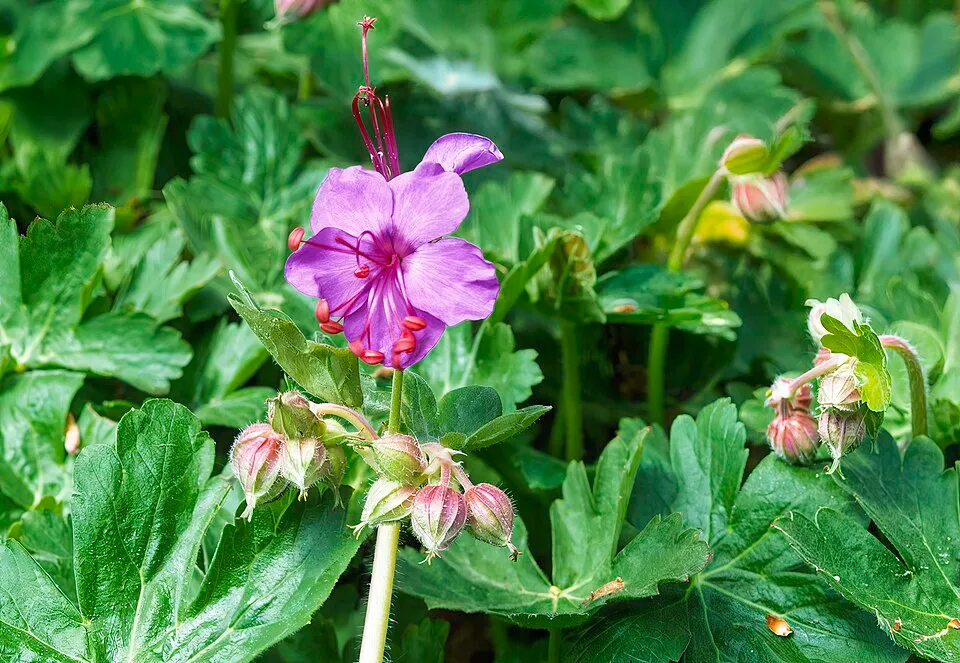
Geranium macrorrhizum, commonly known as Bigroot Geranium or Balkan Geranium, is a robust, rhizomatous perennial belonging to the Geraniaceae family. Native to the mountainous regions of the Balkans and southeastern Europe, this species is highly regarded for its exceptional hardiness and adaptability. It typically forms a dense, mounded habit, reaching heights of 10-18 inches (25-45 cm) with a spread of 18-24 inches (45-60 cm).
The plant's most notable feature is its deeply lobed, aromatic foliage, which remains semi-evergreen to evergreen in milder climates, providing year-round visual interest. When bruised, the leaves release a distinctive, pleasant scent, a characteristic that also contributes to its resistance against deer and rabbits. In autumn or cooler conditions, the dark green leaves often develop attractive reddish-bronze hues, enhancing its ornamental value.
Flowering occurs from late spring through early summer, typically between May and July, displaying abundant clusters of vibrant flowers. The individual blooms, about 1-1.5 inches (2.5-3.8 cm) in diameter, feature five petals that range in color from magenta-pink to purplish-red in the wild type. Cultivars like 'Ingwersen's Variety' offer softer pink tones, while 'Album' produces pure white flowers with striking red centers.
These blossoms are a valuable nectar source, attracting various pollinators, including bees and butterflies. Following the flowering period, small, beaked seed capsules develop. The vigorous, spreading rhizomatous root system is key to its success as an effective groundcover, adept at suppressing weeds and stabilizing soil, particularly on slopes or in erosion-prone areas.
Geranium macrorrhizum is remarkably drought-tolerant once established and thrives in a wide range of soil conditions, from poor, rocky substrates to well-drained loams. It performs optimally in full sun to partial shade but tolerates significant shade, albeit with reduced flowering. Its overall resilience and low-maintenance nature make it a garden all-star.
Trusted Scientific References
1. Authoritative external sources for Geranium macrorrhizum
1.1 Wikipedia — Geranium macrorrhizum
1.2 Kew POWO (Plants of the World Online)
1.3 PubMed — peer-reviewed research
1.4 NCBI Taxonomy Browser
1.5 GBIF — Global Biodiversity
1.1.Geranium Macrorrhizum — Key Features
- ✓Resilient Groundcover — Forms dense mats, effectively suppressing weeds and stabilizing soil.
- ✓Aromatic Foliage — Leaves release a pleasant scent when bruised, deterring deer and rabbits.
- ✓Semi — Evergreen to Evergreen — Provides year-round interest in milder climates, with attractive autumn color.
- ✓Drought Tolerant — Extremely hardy and requires minimal water once established.
- ✓Adaptable to Shade — Thrives in partial to full shade, including dry shade conditions.
- ✓Vibrant Flowers — Clusters of magenta-pink to purplish-red blooms attract pollinators.
- ✓Rhizomatous Spread — Spreads easily via underground rhizomes, making it easy to divide and propagate.
- ✓Low Maintenance — Requires minimal care, making it ideal for various garden settings.
- ✓Medicinal Properties — Contains compounds with traditional astringent and anti-inflammatory uses.
- ✓Soil Versatility — Tolerates a wide range of soil types, from poor to well-drained loam.
1.2.Geranium Macrorrhizum — Concise Overview
- ✓Geranium macrorrhizum is a resilient, aromatic, semi-evergreen perennial native to the Balkans.
- ✓Valued as an excellent, low-maintenance groundcover that suppresses weeds and resists deer.
- ✓Traditionally recognized for its astringent, anti-inflammatory, and antimicrobial properties.
- ✓Rich in tannins, flavonoids, and phenolic acids, contributing to its medicinal actions.
- ✓Used topically for wound healing and internally for digestive support like diarrhea.
- ✓Generally safe for external use, but internal use requires caution due to tannin content.
2.Geranium Macrorrhizum — Scientific Profile
3.Geranium Macrorrhizum — Reference Facts
4.Geranium Macrorrhizum — Morphological Account
5.Geranium Macrorrhizum — Geographic Distribution
6.Geranium Macrorrhizum — Cultural & Traditional Roles
7.Geranium Macrorrhizum — Bioactive Constituents
- ✓Tannins — Predominantly ellagitannins (like geraniin) and gallotannins, responsible for the plant's strong astringent properties, contributing to its anti-diarrheal and wound-healing effects.
- ✓Flavonoids — Including compounds such as quercetin and rutin, which are potent antioxidants and contribute to the plant's anti-inflammatory and capillary-strengthening activities.
- ✓Phenolic Acids — Such as gallic acid and caffeic acid, known for their antioxidant, anti-inflammatory, and antimicrobial properties, supporting cellular protection and immune response.
- ✓Essential Oils — Composed of various monoterpenes (e.g., limonene) and sesquiterpenes (e.g., beta-caryophyllene), which impart the characteristic aroma and may possess mild antiseptic and insect-repellent qualities.
- ✓Triterpenes — Including ursolic acid and oleanolic acid derivatives, which are often associated with anti-inflammatory and hepatoprotective effects in plants.
- ✓Coumarins — A class of phytochemicals that can have diverse biological activities, including anti-inflammatory and anticoagulant properties, though typically in lower concentrations.
- ✓Saponins — Glycosides that can exhibit foaming properties and have been researched for potential adaptogenic, immune-modulating, and anti-inflammatory actions.
- ✓Anthocyanins — Pigments found in the flowers and autumn foliage, providing antioxidant benefits and contributing to the plant's vibrant color.
8.Geranium Macrorrhizum — What Research Suggests
- ✓Astringent Properties — The high tannin content in Geranium macrorrhizum gives it potent astringent qualities, useful for tightening tissues and reducing secretions in mucous membranes.
- ✓Anti-inflammatory Effects — Compounds like flavonoids and phenolic acids contribute to its anti-inflammatory action, potentially alleviating swelling and pain in various conditions.
- ✓Antimicrobial Activity — Extracts from the plant have shown some efficacy against certain bacteria and fungi, suggesting potential use in treating minor infections.
- ✓Wound Healing — Applied topically, its astringent and antiseptic properties can aid in the faster healing of minor cuts, abrasions, and skin irritations by promoting tissue regeneration.
- ✓Diarrhea Management — Traditionally, the root decoctions were used internally to help reduce symptoms of diarrhea due to their ability to constrict intestinal tissues and absorb toxins.
- ✓Oral Health Support — As a gargle or mouthwash, its astringent action can help soothe sore throats, reduce gum inflammation (gingivitis), and mitigate mouth ulcers.
- ✓Antioxidant Protection — The presence of various phenolic compounds provides antioxidant benefits, helping to neutralize free radicals and protect cells from oxidative damage.
- ✓Hemostatic Action — The astringent nature can help stop minor bleeding by constricting blood vessels and promoting coagulation at the site of injury.
- ✓Digestive Aid — Beyond diarrhea, its properties may support overall digestive health by toning the intestinal lining and potentially reducing mild gastrointestinal discomfort.
- ✓Skin Conditioning — Used in topical preparations, it can help tighten pores, reduce oiliness, and improve the overall tone and texture of the skin.
8.1.Geranium Macrorrhizum — Indications & Uses
9.Geranium Macrorrhizum — Precautions & Warnings
9.1.Geranium Macrorrhizum — Caution Notes
- ✓Gastric Upset — High tannin content may cause stomach upset, nausea, or constipation in sensitive individuals or when consumed in large quantities.
- ✓Allergic Reactions — Rare, but individuals sensitive to plants in the Geraniaceae family may experience skin rashes or respiratory irritation.
- ✓Skin Irritation — Direct contact with fresh sap or concentrated extracts may cause mild skin irritation in some individuals, especially with prolonged exposure.
- ✓Iron Absorption Interference — Tannins can bind to iron, potentially reducing its absorption if consumed simultaneously with iron-rich foods or supplements.
- ✓Medication Interactions — Due to its astringent properties, it may theoretically interfere with the absorption of orally administered medications; consult a doctor.
- ✓Liver Toxicity — While not extensively studied for Geranium macrorrhizum, excessive intake of some highly tannic herbs has been linked to liver stress.
9.2.Geranium Macrorrhizum — Toxicity Assessment
- ✓Pregnancy and Lactation — Avoid use during pregnancy and lactation due to insufficient safety data and the presence of tannins.
- ✓Young Children — Not recommended for internal use in young children due to potential for gastric upset and lack of specific pediatric dosing.
- ✓Pre-existing Conditions — Individuals with gastrointestinal disorders, iron deficiency anemia, or liver conditions should consult a healthcare provider before use.
- ✓Medication Interactions — Exercise caution if taking medications that may be affected by tannins or those requiring precise absorption; consult a physician or pharmacist.
- ✓Topical Application — Perform a patch test on a small skin area before widespread topical application to check for allergic reactions or irritation.
- ✓Dosage — Adhere to recommended dosages; prolonged or excessive internal use may lead to adverse effects.
- ✓Quality Source — Always source plant material from reputable suppliers to ensure purity and avoid contamination.
10.Geranium Macrorrhizum — Preparation & Dosage
- ✓Decoction (Roots/Rhizomes) — Boil dried, chopped roots in water for 15-20 minutes to extract tannins and other compounds, used for internal astringent actions or external washes.
- ✓Infusion (Leaves/Flowers) — Steep fresh or dried leaves and flowers in hot water for 10-15 minutes to create a tea, often used for milder digestive support or as a gargle.
- ✓Tincture — Macerate fresh or dried plant material in alcohol for several weeks to create a concentrated extract, suitable for internal or external application in smaller doses.
- ✓Poultice — Crush fresh leaves and apply directly to minor wounds, cuts, or skin irritations to leverage its astringent and antiseptic properties.
- ✓Topical Wash/Compress — Prepare a strong decoction or infusion to use as a wash for skin conditions, minor burns, or as a compress for localized inflammation.
- ✓Mouthwash/Gargle — Use a cooled infusion or diluted tincture to rinse the mouth or gargle for sore throats, gum inflammation, or canker sores.
- ✓Herbal Bath — Add a strong infusion of leaves and flowers to bathwater for a soothing and skin-toning experience.
11.Geranium Macrorrhizum — Growth Requirements
- ✓Site Selection — Plant in full sun to partial shade for best flowering; tolerates dry shade well, even under thirsty trees.
- ✓Soil Requirements — Adaptable to a wide range of soil types, from poor and rocky to well-drained garden loam; prefers good drainage.
- ✓Watering — Drought-tolerant once established; water regularly during the first growing season to encourage strong root development.
- ✓Propagation — Easily propagated by division of its rhizomatous root system in spring or fall, or from seed.
- ✓Maintenance — Low maintenance; typically does not require cutting back, though old foliage can be trimmed for tidiness in spring.
- ✓Spacing — Space plants 18-24 inches (45-60 cm) apart to allow for spread and effective groundcover formation.
- ✓Pest and Disease Resistance — Highly resistant to deer and rabbits due to its aromatic foliage; generally free from serious pests or diseases.
Reviewed by the Flora Medical Global Botanical Review Panel
Multi-disciplinary editorial group · Botany · Ethnobotany · Herbal-medicine literature
Who reviewed this: This page was checked by the Flora Medical Global Botanical Review Panel — an in-house editorial group of botany graduates, ethnobotany researchers, and horticulture practitioners who collectively maintain our 7,000+ plant encyclopedia. Meet the team.
Our 4-step verification process
1. Taxonomic verification
Scientific names and synonyms cross-checked against Kew POWO, World Flora Online, and The Plant List.
2. Phytochemical & medicinal cross-reference
Active compounds, traditional uses, and reported activities are cross-referenced with PubMed, USDA Dr. Duke's database, and peer-reviewed ethnobotanical literature.
3. Conservation & distribution check
Distribution, ecology, and conservation status confirmed against GBIF occurrence records and the IUCN Red List.
4. Editorial & safety review
Every entry passes an editorial pass for clarity, originality, and safety notices (toxicity, contraindications, dosage caveats) before publication.
Last reviewed:
Important medical disclaimer: This content is for educational and research purposes only. It is not medical advice and is not a substitute for consultation with a licensed healthcare provider. Do not use any herb to self-treat a medical condition without professional guidance.
Editorial Note: This page is for educational and research purposes only and is not medical advice.
Written by: Flora Medical Global Editorial Team
Reviewed by: Flora Medical Global Botanical Review Panel
Last Updated: June 15, 2026





Geranium Macrorrhizum — Comments & Community Reviews
Rate this plant