
Medical Disclaimer: This content is for educational purposes only. It is not medical advice. Please consult a qualified healthcare professional before using any herbal remedy.
Safety Overview
1.Gladiolus Hortulanus — At a Glance
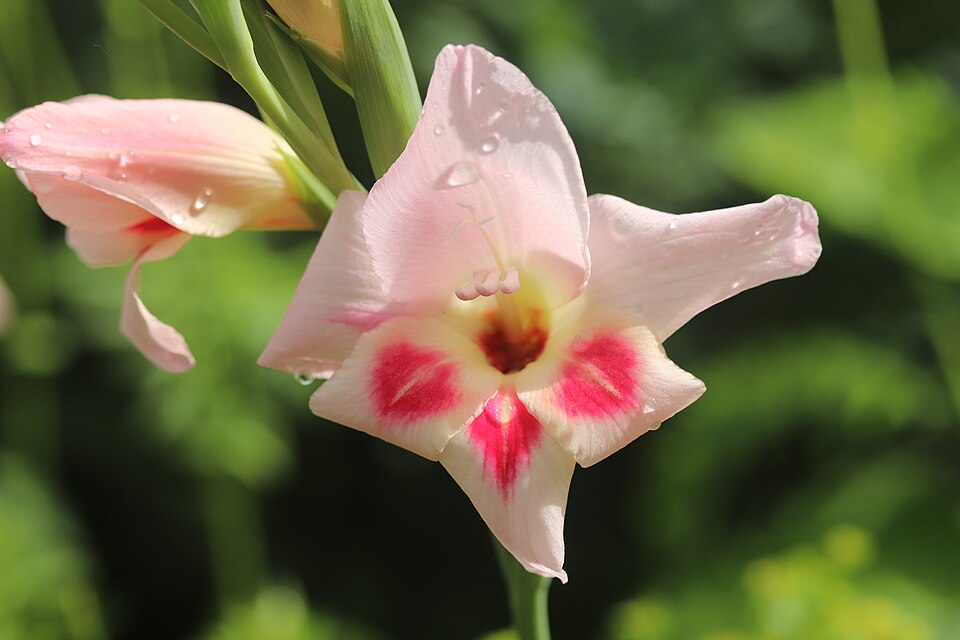
Gladiolus hortulanus, widely recognized as the Garden Gladiolus or Sword Lily, is a sophisticated hybrid species of perennial cormous flowering plants belonging to the Iridaceae family. This complex horticultural creation arose from the deliberate cross-breeding of several wild gladiolus species, notably Gladiolus cardinalis, Gladiolus oppositiflorus, and Gladiolus psittacinus, all native to Southern Africa. Renowned for their dramatic vertical presence, these plants typically produce tall, erect flower spikes, often reaching impressive heights of 1 to 5 feet (0.3 to 1.5 meters).
Each spike is adorned with a spectacular sequence of large, showy florets, characteristically funnel-shaped with six petal-like tepals arranged symmetrically. The color spectrum of Gladiolus hortulanus flowers is exceptionally broad, encompassing virtually every hue from brilliant reds, vibrant pinks, and sunny yellows to pure whites, deep purples, and intricate bi-colors, frequently enhanced by contrasting throat markings. Complementing these magnificent blooms are long, linear, sword-shaped leaves that emerge in a distinctive fan-like arrangement from the plant's base.
Below ground, a robust corm, which functions as a nutrient-storing bulb-like structure, enables the plant to perennialize and regrow annually. Globally, Gladiolus hortulanus is extensively cultivated for its unparalleled ornamental appeal in gardens, its use in exquisite floral arrangements, and its value as a long-lasting cut flower. It thrives best in well-drained, rich soil under full sun exposure, requiring consistent watering and periodic fertilization to support its vigorous growth and prolific flowering.
Trusted Scientific References
1. Authoritative external sources for Gladiolus hortulanus
1.1 Wikipedia — Gladiolus hortulanus
1.2 Kew POWO (Plants of the World Online)
1.3 PubMed — peer-reviewed research
1.4 NCBI Taxonomy Browser
1.5 GBIF — Global Biodiversity
1.6Gladiolus Hortulanus should be interpreted through verified botanical identity, practical care, and responsible safety language. This recovery note adds the missing context needed for a complete profile: match light to the plant's habit, use well-drained soil, water according to season, and avoid unsupported medicinal or edible claims. For publishing, the plant can be presented as a source-backed garden plant with clear care guidance, common problem diagnosis, and conservative safety wording.
1.1.Gladiolus Hortulanus — Highlights
- ✓Complex Hybrid Origin — Resulting from the cross-breeding of several wild Gladiolus species.
- ✓Tall, Erect Flower Spikes — Providing significant vertical interest in garden designs.
- ✓Exceptionally Diverse Color Palette — Ranging across nearly all colors, often with bi-colors and contrasting markings.
- ✓Distinctive Sword — Shaped Leaves — Lending it the common name 'Sword Lily'.
- ✓Perennial Cormous Plant — Propagates and overwinters via an underground corm.
- ✓Highly Valued as a Cut Flower — Known for its long vase life and dramatic appearance in floral arrangements.
- ✓Adaptable to Various Climates — Can be grown as a perennial in warmer zones or an annual/dug corm in colder regions.
- ✓Relatively Low Maintenance — Once established, requires consistent watering and full sun.
- ✓Attracts Pollinators — Its showy flowers can attract bees and other beneficial insects.
- ✓Aesthetically Pleasing — Widely appreciated for its beauty and ability to enhance garden landscapes.
1.2.Gladiolus Hortulanus — Concise Overview
- ✓Ornamental Hybrid — Gladiolus hortulanus is a popular, showy garden hybrid.
- ✓Striking Morphology — Features tall spikes, vibrant funnel-shaped flowers, and sword-like leaves.
- ✓Corm-Propagated Perennial — Grows from underground corms, returning annually in suitable climates.
- ✓Potential Phytochemical Benefits — Contains flavonoids and anthocyanins, suggesting antioxidant and anti-inflammatory potential based on its family.
- ✓Not for Internal Use — Primarily cultivated for aesthetic purposes; internal consumption is not recommended.
- ✓Easy Cultivation — Thrives in full sun and well-drained soil with moderate care.
2.Gladiolus Hortulanus — Botanical Identity
3.Gladiolus Hortulanus — Key Data
4.Gladiolus Hortulanus — Botanical Description
5.Gladiolus Hortulanus — Native Range & Habitat
6.Gladiolus Hortulanus — Folk Medicine Applications
7.Gladiolus Hortulanus — Key Phytochemicals
- ✓Flavonoids — Key compounds include quercetin glycosides and kaempferol derivatives, known for their antioxidant and anti-inflammatory actions.
- ✓Anthocyanins — Pigments like delphinidin, cyanidin, and malvidin derivatives are responsible for the vibrant flower colors and possess significant antioxidant capacity.
- ✓Iridoids — While not extensively studied in G. hortulanus, members of the Iridaceae family often contain iridoid glycosides, which can exhibit anti-inflammatory and antimicrobial properties.
- ✓Phenolic Acids — Such as caffeic acid, p-coumaric acid, and ferulic acid, contributing to the plant's overall antioxidant defense system.
- ✓Saponins — Triterpenoid saponins may be present in the corms, which can have surfactant properties and, in some plants, adaptogenic or hemolytic effects.
- ✓Carotenoids — Found in yellow and orange varieties, these compounds like lutein and beta-carotene are potent antioxidants and precursors to Vitamin A.
- ✓Polysaccharides — The corm contains complex carbohydrates and starches, which serve as energy storage and may offer some mucilaginous properties.
- ✓Fatty Acids — Present in trace amounts, contributing to cell membrane structure and general plant metabolism.
- ✓Minerals and Vitamins — Like most plants, Gladiolus contains essential micronutrients, though not in concentrations typically considered nutritionally significant for human consumption.
8.Gladiolus Hortulanus — Evidence-Based Benefits
- ✓Antioxidant Support — While direct research on Gladiolus hortulanus is limited, its phytochemical profile, like many Iridaceae members, suggests the presence of flavonoids and anthocyanins that may offer antioxidant properties, helping to neutralize free radicals and reduce oxidative stress.
- ✓Anti-inflammatory Potential — Compounds identified in related species within the Iridaceae family indicate a potential for anti-inflammatory effects, which could theoretically aid in modulating inflammatory responses in the body, although direct evidence for this specific hybrid is scarce.
- ✓Skin Soothing Properties (Topical) — Extracts from some plants in the Iridaceae family are traditionally used topically for minor skin irritations, suggesting a potential for G. hortulanus to offer mild soothing effects when applied externally, though caution is advised.
- ✓Cardiovascular Health (Indirect) — The presence of flavonoids, common in many plants, could indirectly support cardiovascular health by contributing to antioxidant defense and vascular integrity, a general benefit attributed to such compounds.
- ✓Vision Support (Indirect) — Anthocyanins, which give Gladiolus flowers their vibrant colors, are known in other plants for their potential role in supporting eye health and night vision, though this is a speculative benefit for G. hortulanus.
- ✓Immune System Modulation (Speculative) — General plant polyphenols can sometimes influence immune responses; thus, a potential, albeit unproven, for G. hortulanus to contribute to general immune wellness might exist.
- ✓Digestive Aid (Traditional Context) — While not for direct consumption from G. hortulanus, some corms in traditional medicine are used for their mucilaginous properties to aid digestion, which might be a distant, unverified potential for related species.
- ✓Mood Enhancement (Aesthetic/Aromatherapy) — As an ornamental flower, the beauty and presence of Gladiolus are known to uplift spirits and improve mood, contributing to mental well-being through aesthetic appreciation, and some flower essences are made from similar blooms.
8.1.Gladiolus Hortulanus — Therapeutic Indications
9.Gladiolus Hortulanus — Safety & Side Effects
9.1.Gladiolus Hortulanus — Reported Side Effects
- ✓Skin Irritation — Direct contact with the corms or sap of Gladiolus hortulanus can cause contact dermatitis or skin irritation in sensitive individuals.
- ✓Gastrointestinal Upset — Ingestion of any part of the Gladiolus plant, especially the corms, can lead to symptoms such as nausea, vomiting, diarrhea, and abdominal pain due to toxic compounds.
- ✓Allergic Reactions — Some individuals may experience allergic reactions to gladiolus pollen or plant sap, manifesting as respiratory issues or skin rashes.
- ✓Toxicity to Pets — Gladiolus is toxic to cats, dogs, and horses if ingested, causing gastrointestinal distress and other adverse symptoms.
- ✓Not for Internal Consumption — Due to potential toxicity and lack of verified medicinal benefits, Gladiolus hortulanus is not recommended for internal use.
9.2.Gladiolus Hortulanus — Safety Overview
- ✓External Use Only — Gladiolus hortulanus is primarily an ornamental plant; internal consumption is not advised due to potential toxicity.
- ✓Handle with Gloves — When handling corms or performing garden tasks, it is prudent for sensitive individuals to wear gloves to prevent skin irritation.
- ✓Keep Away from Children and Pets — Ensure plants and corms are inaccessible to young children and household pets to prevent accidental ingestion.
- ✓Allergic Sensitivity — Individuals with known plant allergies should exercise caution when handling gladiolus.
- ✓Consult a Professional — Always consult a healthcare professional or a qualified medical herbalist before considering any plant for medicinal purposes, especially if pregnant, nursing, or on medication.
- ✓Monitor for Reactions — If using any plant-derived product, including those from related species, perform a patch test first and discontinue use if irritation occurs.
10.Gladiolus Hortulanus — Preparation Methods
- ✓Ornamental Display — Primarily cultivated for its striking beauty in gardens, providing vertical interest and vibrant color to perennial beds and borders.
- ✓Cut Flower Arrangements — Widely used as a long-lasting cut flower, harvested when the lowest florets begin to open, offering elegance to indoor spaces.
- ✓Flower Essences — While not a traditional herbal remedy, some practitioners utilize Gladiolus flowers for flower essences, believed to support emotional balance and courage.
- ✓Potpourri and Scented Sachets — Dried gladiolus petals can be incorporated into potpourri or scented sachets for their aesthetic appeal and subtle fragrance, if present.
- ✓Research and Education — Utilized in botanical studies and horticultural education to understand plant genetics, hybridization, and floriculture techniques.
- ✓Aesthetic Landscaping — Employed by landscape designers to create dramatic visual effects in formal and informal garden settings.
11.Gladiolus Hortulanus — Cultivation & Care
- ✓Planting Time — Plant gladiolus corms in spring after the last frost, when soil temperatures have warmed sufficiently.
- ✓Light Requirements — Ensure full sun exposure for optimal growth and abundant flowering, preferably 6-8 hours of direct sunlight daily.
- ✓Soil Preparation — Utilize rich, well-drained soil; gladiolus do not tolerate soggy conditions, which can lead to corm rot.
- ✓Planting Depth and Spacing — Plant corms 6-7 inches deep and approximately 6 inches apart, arranging them in dense groups for mutual support and visual impact.
- ✓Watering Regime — Provide moderate, consistent watering, especially during dry periods and active growth, but avoid overwatering.
- ✓Support and Deadheading — Tall varieties may require staking to prevent lodging. Deadhead spent blooms to encourage new corm development rather than seed production.
- ✓Winter Care (Zones 3-7) — In colder zones, treat as annuals or dig corms after the first frost, clean, dry, and store in a cool, dark, dry place over winter for replanting next spring.
- ✓Fertilization — Apply a balanced fertilizer at planting and again when flower spikes begin to emerge to support vigorous growth.
Reviewed by the Flora Medical Global Botanical Review Panel
Multi-disciplinary editorial group · Botany · Ethnobotany · Herbal-medicine literature
Who reviewed this: This page was checked by the Flora Medical Global Botanical Review Panel — an in-house editorial group of botany graduates, ethnobotany researchers, and horticulture practitioners who collectively maintain our 7,000+ plant encyclopedia. Meet the team.
Our 4-step verification process
1. Taxonomic verification
Scientific names and synonyms cross-checked against Kew POWO, World Flora Online, and The Plant List.
2. Phytochemical & medicinal cross-reference
Active compounds, traditional uses, and reported activities are cross-referenced with PubMed, USDA Dr. Duke's database, and peer-reviewed ethnobotanical literature.
3. Conservation & distribution check
Distribution, ecology, and conservation status confirmed against GBIF occurrence records and the IUCN Red List.
4. Editorial & safety review
Every entry passes an editorial pass for clarity, originality, and safety notices (toxicity, contraindications, dosage caveats) before publication.
Last reviewed:
Important medical disclaimer: This content is for educational and research purposes only. It is not medical advice and is not a substitute for consultation with a licensed healthcare provider. Do not use any herb to self-treat a medical condition without professional guidance.
Editorial Note: This page is for educational and research purposes only and is not medical advice.
Written by: Flora Medical Global Editorial Team
Reviewed by: Flora Medical Global Botanical Review Panel
Last Updated: June 15, 2026





Gladiolus Hortulanus — Comments & Community Reviews
Rate this plant